Whitecheek surgeonfish
Acanthurus nigricans
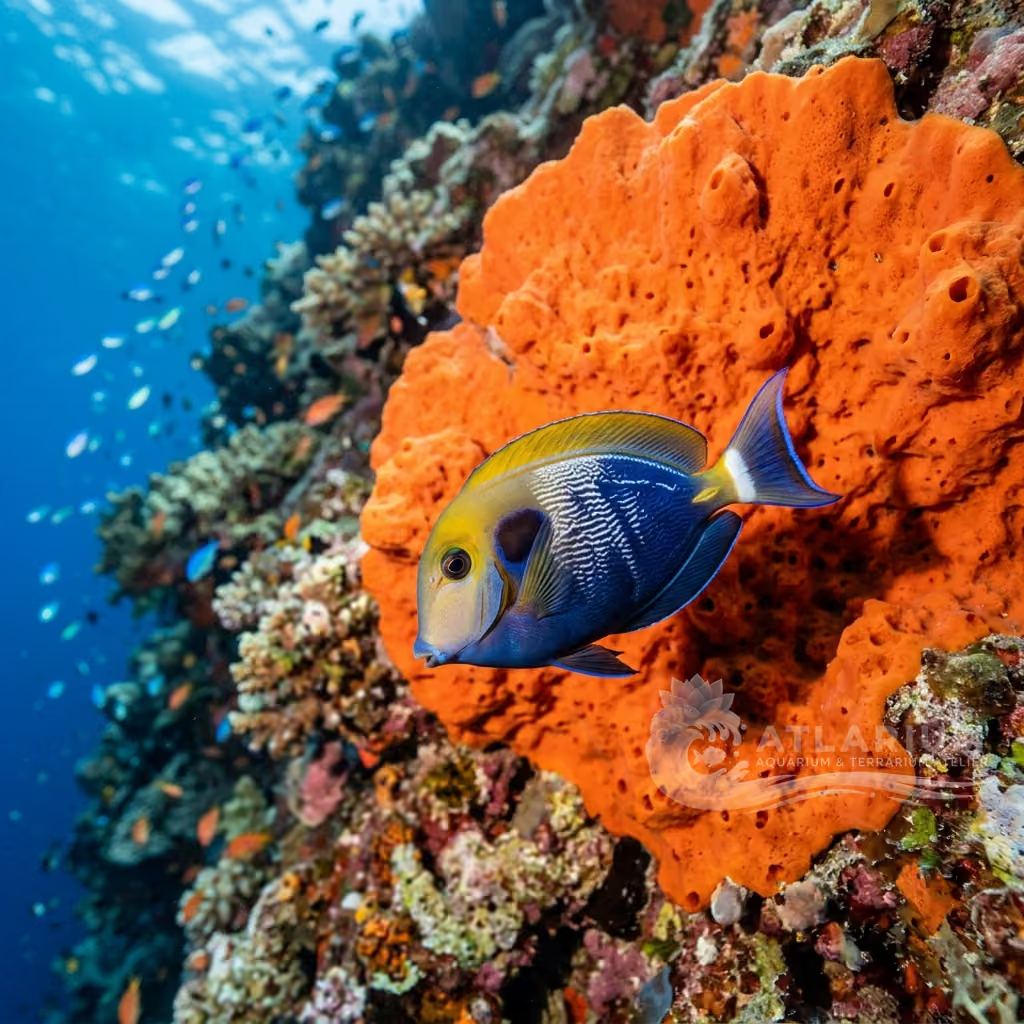
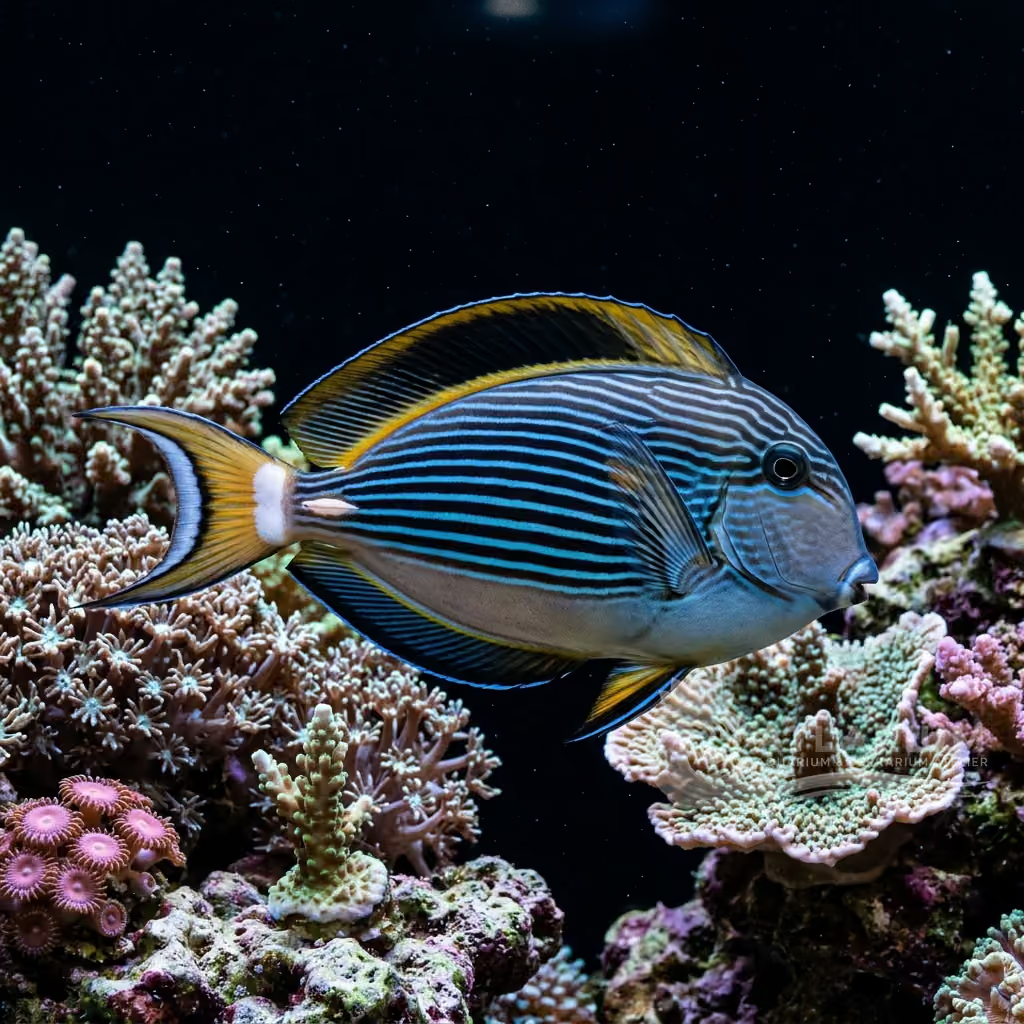
Acanthurus glaucopareius is an Indo-Pacific surgeonfish with a dark blue body and yellow fin outlines. Active and territorial, it requires a spacious marine aquarium.
Water Temperature
22 - 26 °C
pH Value
8.1 - 8.4
Water type
Marine
Tank level
All levels
Adult size
21 cm
Minimum tank volume
>= 470 L
Minimum group
>= 1
KH
8 - 12 dKH

Species description
Geographical Origin and Habitat:
This species is widely distributed across the tropical waters of the Central and Western Pacific Ocean, ranging from southern Japan to Australia and Indonesia, extending east to Hawaii and French Polynesia. It primarily inhabits seaward reef slopes exposed to strong surge, deep drop-offs, and clear lagoons at depths between 1 and 30 meters, actively swimming close to coral structures.
Taxonomy and Morphology:
Belonging to the family Acanthuridae, it is also frequently referred to in scientific literature as Acanthurus japonicus. It features an oval, deep, laterally compressed body with a terminal mouth containing small teeth adapted for grazing on algae. Adults reach a maximum total length of approximately 20 centimeters. It features a sharp caudal spine on each side of the peduncle.
Social Behavior:
It is a highly active, diurnal, and territorial fish. In the wild, it is solitary or forms small grazing aggregations to feed on algal turf. In the aquarium, it exhibits strong territorial aggression toward conspecifics and other similarly shaped surgeonfish, requiring plenty of swimming space and visual barriers to minimize conflict.
Coloration and Sexual Dimorphism:
The coloration is highly distinct: the body is dark grayish-blue to near-black, with a prominent white crescent-shaped patch below the eye. The dorsal and anal fins feature a bright yellow band along their bases and electric blue edges, while the caudal fin is white with a vertical yellow band. No external sexual dimorphism is visible.

Care, breeding and tankmates
Aquarium Setup:
Requires a mature marine aquarium of at least 450-500 liters for a single specimen. The tank should be furnished with a large amount of established live rock to allow for natural grazing on algae, while providing a wide open area for active swimming. High water movement, strong oxygenation, and a robust protein skimmer are essential.
Diet and Feeding:
A specialized herbivore feeding on filamentous algae in nature. In captivity, it must be offered a diet rich in vegetable matter, consisting of dried nori sheets, spirulina-rich flakes, and high-quality herbivore pellets. Supplement with frozen foods like mysis and brine shrimp to support its high metabolic rate and prevent weight loss.
Water Quality:
Requires stable and pristine water parameters: temperature between 24°C and 26°C, pH range from 8.1 to 8.4, specific gravity (SG) from 1.020 to 1.025, and carbonate hardness (KH) of 8 to 12 dKH. Ammonia and nitrite must be zero, with nitrates kept below 15 ppm through regular water changes and efficient filtration.
Compatibility and Cohabitation:
Completely reef safe, as it will not harm corals or sessile invertebrates. It coexists peacefully with smaller reef fish like wrasses, anthias, gobies, and clownfish. However, it will exhibit strong territorial behavior toward other Acanthurus species of similar shape (such as Acanthurus leucosternon). Introduce it last to minimize aggression.
Aquarium Breeding:
Captive breeding in home aquariums has not been achieved. They are broadcast spawners that release pelagic eggs into the water column. The drifting eggs hatch into delicate larvae that drift with ocean currents. Rearing these larvae in closed systems is currently impossible due to their microscopic live food requirements.
Risks and Diseases:
Highly susceptible to marine ectoparasites such as Cryptocaryon irritans (marine ich) and Oodinium (velvet) due to a very thin protective mucus layer. It is also prone to Head and Lateral Line Erosion (HLLE) if its diet is deficient in vitamins or if water quality is poor. A strict quarantine period and a UV sterilizer are highly advised.

Geographic origin and distribution
This species is widely distributed across the tropical waters of the Central and Western Pacific Ocean, ranging from southern Japan to Australia and Indonesia, extending east to Hawaii and French Polynesia. It primarily inhabits seaward reef slopes exposed to strong surge, deep drop-offs, and clear lagoons at depths between 1 and 30 meters, actively swimming close to coral structures.
Origin
Tropical oceans and reefsSouth and Southeast AsiaEast AsiaAustralia, New Guinea, and Oceania

Fish profile
- Temperament
- Semi-aggressive
- This species exhibits a semi-aggressive to aggressive temperament, especially as it matures and establishes its territory. While generally peaceful towards unrelated, non-surgeonfish tankmates, they are highly hostile toward other tangs, particularly those of the genus Acanthurus or those with similar body shapes. They will actively defend their grazing areas and can cause serious injury using the sharp, scalpel-like spines located on the base of their tail. Introducing them as the final addition to a community tank can help mitigate some of their territorial aggression.
- Diet
- Herbivore
- Acanthurus nigricans is primarily a herbivore, requiring a diet dominated by marine algae and plant matter to maintain its health and vibrant coloration. In the aquarium, they should be offered high-quality dried seaweed (nori), spirulina, herbivore flakes, and pellets on a daily basis. They will also continuously graze on microalgae growing naturally on the live rock, which should be encouraged in their enclosure. While they will accept meaty foods like mysis or brine shrimp, these should only be fed occasionally as they do not provide the proper fiber content required for their digestive system.
- Life expectancy
- 5-15 years
- Adult size
- 21 cm
- Sex ratio
- Solitary
- In a standard home aquarium, Acanthurus nigricans should be kept singly, as they are exceptionally territorial and aggressive towards conspecifics. Stocking multiple individuals of this species or similar-looking tangs in the same tank will almost certainly lead to severe, often fatal, fighting. In extremely large public aquaria, they might be kept in groups if introduced simultaneously, but this is not recommended for home hobbyists. Consequently, the recommended stocking ratio is one specimen per system, unless a confirmed mated pair is housed in a system of several hundred gallons.
- Feeding frequency
- Twice daily
- To support their active lifestyle and rapid metabolism, the Gold-rimmed Surgeonfish should be fed small amounts multiple times throughout the day. Offering food 2 to 3 times daily is ideal, ensuring that they receive constant nutrition without overloading the filtration system. Feeding nori on an algae clip that remains in the tank for several hours is an excellent way to allow natural grazing behavior. Consistent feeding helps curb territorial aggression by ensuring the fish is well-nourished and not competing fiercely for resources.
- Bioload
- High
- Acanthurus nigricans is a highly active marine fish with a fast metabolism, which translates to a high biological load in the aquarium. They consume large amounts of algae and prepared foods daily, resulting in substantial organic waste production. To maintain optimal water quality and prevent the accumulation of nitrates and phosphates, a powerful protein skimmer, mechanical filtration, and a regular water change schedule are absolute necessities. Neglecting filtration can lead to increased stress, making this species particularly vulnerable to skin parasites and bacterial infections.
- Flow
- Strong
- Hailing from surge zones, shallow reef flats, and seaward reefs, Acanthurus nigricans thrives in strong, turbulent water movement. The aquarium should feature high-turnover flow rates, which can be achieved through the strategic placement of powerful wavemakers or powerheads. Well-oxygenated water is essential for their respiratory health, as they are accustomed to highly aerated, fast-moving environments. Proper water flow also prevents debris from settling, ensuring a cleaner environment that supports their delicate immune systems.
- Jump risk
- Yes
- Acanthurus nigricans possesses a high risk of jumping, especially when startled, during aggressive chases, or when lights are suddenly turned on or off. As a naturally skittish species, they can bolt at high speed across the tank and easily leap out of an open aquarium. A tight-fitting lid or a secure mesh cover is highly recommended to prevent tragic accidents. Additionally, providing ample hiding places within the rockwork helps the fish feel secure and reduces the likelihood of panic-induced jumping.
- Reproduction
- Oviparous
- Reproduction of Acanthurus nigricans in the home aquarium is currently considered virtually impossible and has not been reliably documented. In their natural habitat, they are broadcast spawners that release their gametes into the open water column, where fertilization takes place externally. The eggs and larvae then float as plankton for an extended period, which is exceptionally difficult to replicate in captive conditions. Consequently, all specimens available in the aquarium trade are wild-harvested, making conservation and sustainable collection practices highly important.
- Compatibility & tankmates
- Semi-aggressive
- Acanthurus nigricans is compatible with a wide variety of reef fish, such as wrasses, clownfish, damselfish, and larger gobies, provided they do not compete for the same ecological niche. They are also completely reef-safe, as they will not harm corals or sessile invertebrates. However, they are highly incompatible with other surgeonfish, especially conspecifics or close relatives like the Powder Blue or Powder Brown Tangs. Tankmates should be selected carefully, and any other aggressive species should be introduced prior to this surgeonfish to minimize territorial disputes.
- Tank level
- All levels
- The Gold-rimmed Surgeonfish is a constant swimmer that occupies all levels of the aquarium, requiring significant open water to thrive. While they spend much of their time in the middle and upper water columns cruising in search of food or swimming against currents, they will also frequent the bottom areas to graze on algae-covered live rock. A proper aquascape should feature a blend of rockwork on the sides or back for shelter and a vast, unobstructed central swimming channel. Providing this open horizontal space is critical to satisfying their energetic nature and reducing stress-related behaviors.

Scientific Parameters & Models
FishBase
Window to the official scientific data of the species
FishBase v25.04Data synced on: 06/15/2026
- Trophic level
- 2 ± 0 se
- Resilience
- Medium (1.4 - 4.4 years)
- Phylogenetic uniqueness (PD50)
- 0.5
- Bayesian Length-Weight
- a = 0.02188, b = 2.95
- VulnerabilityLow to moderate vulnerability (30 / 100)

Related species
Recommendations grouped by close relatives, companion choices, and similar care.