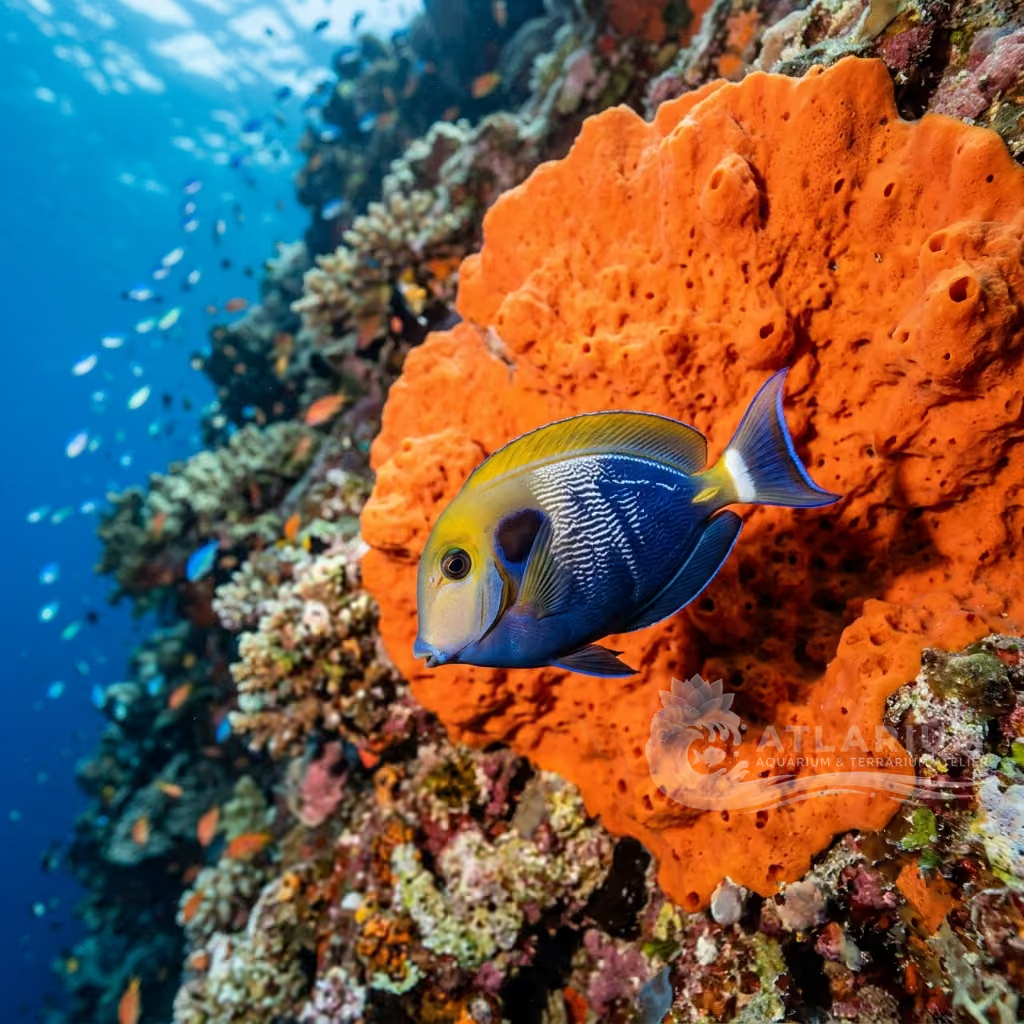
Blonde Naso Tang
Naso elegans
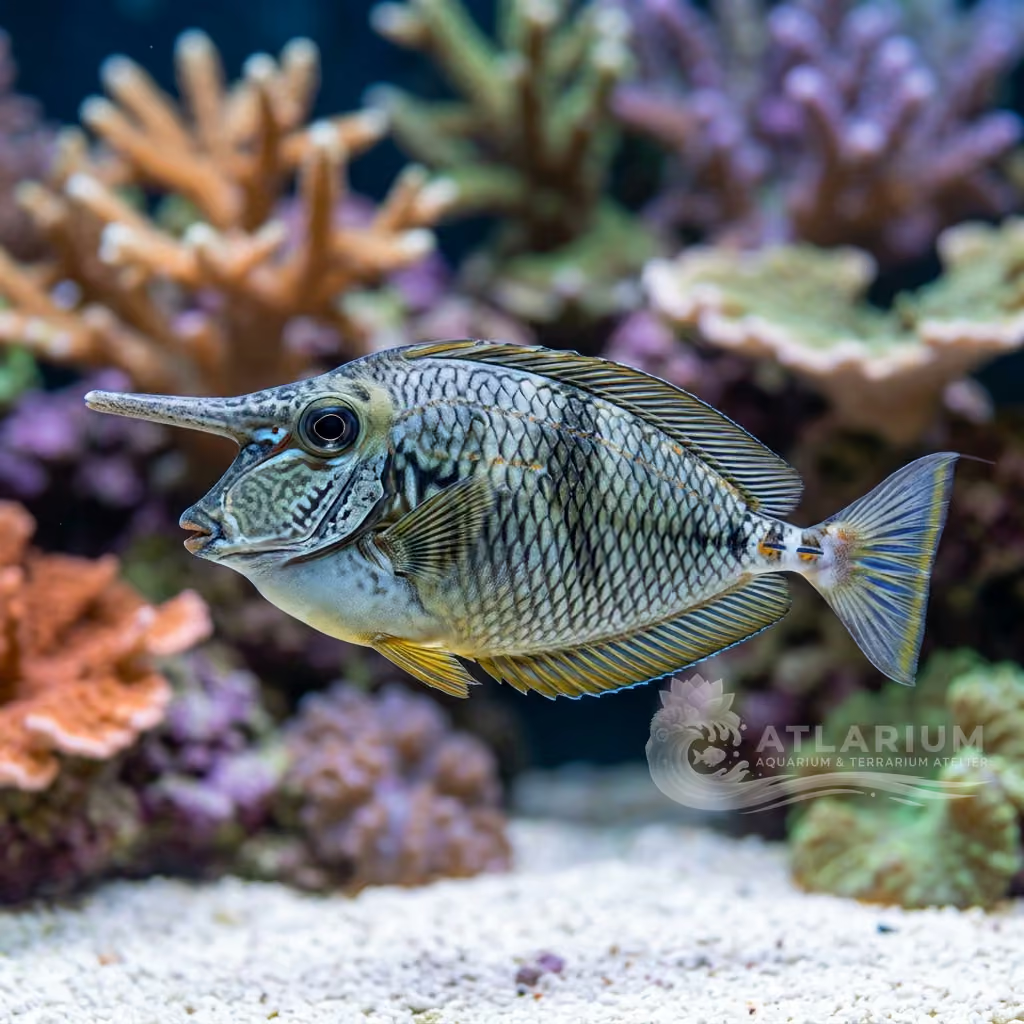
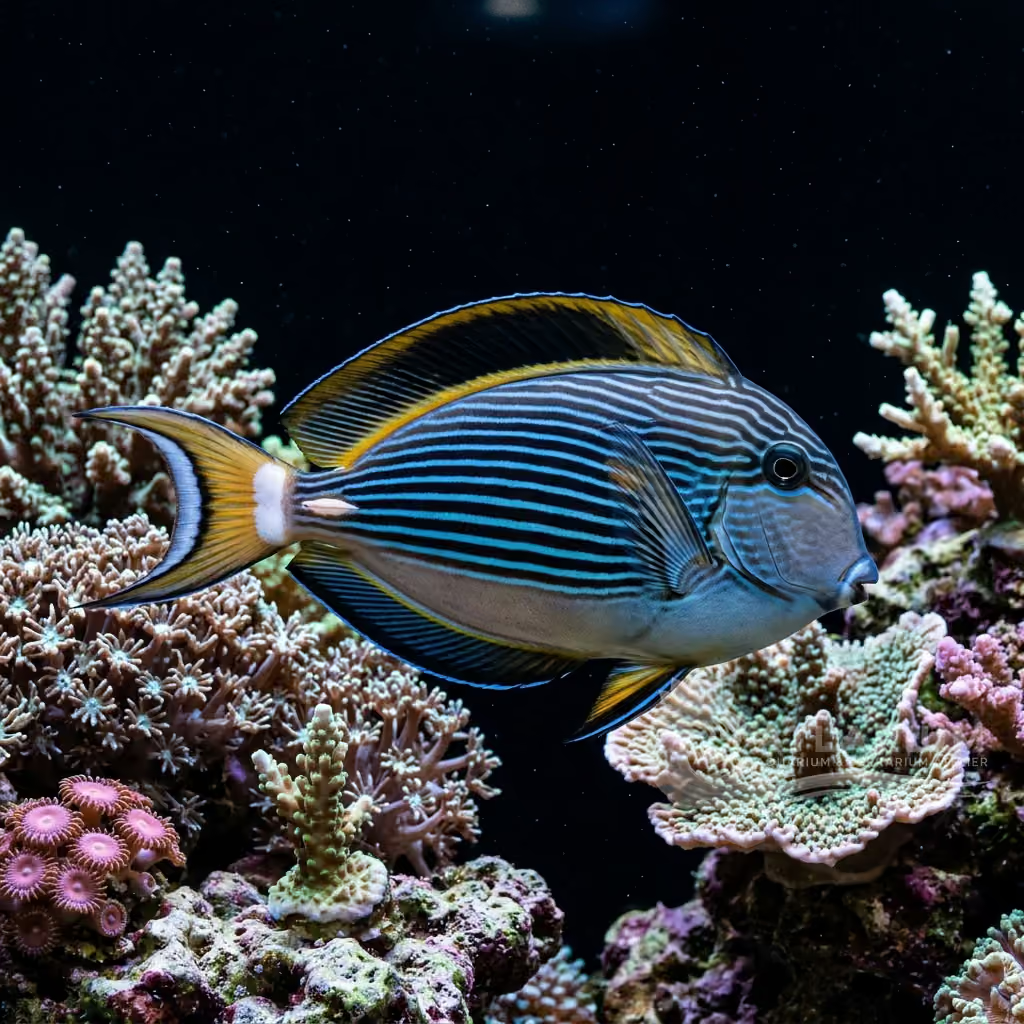
A magnificent Indian Ocean surgeonfish prized for its bright yellow dorsal fin and orange tail spines. It demands massive open swimming spaces and a herbivorous, algae-rich diet.
Water Temperature
24 - 28 °C
pH Value
8.1 - 8.4
Water type
Marine
Tank level
All levels
Adult size
45 cm
Minimum tank volume
>= 1,000 L
Minimum group
>= 1
KH
8 - 12 dKH

Species description
Geographical Origin and Habitat: Naso elegans is native to the tropical waters of the Indian Ocean, including the Red Sea, and ranging east to Bali, Indonesia. It replaces its closely related Pacific counterpart, Naso lituratus. It inhabits seaward reef slopes, deep lagoons, and current-swept channels at depths ranging from 5 to 90 meters. It is a pelagic reef dweller, swimming actively in open water just above the coral heads.
Taxonomy and Morphology: This species belongs to the family Acanthuridae and subfamily Nasinae. It features a compressed, oval body with a sloped profile that does not develop the protruding horn found in other unicornfish species. On the caudal peduncle, it has two sharp, forward-curved bony spines on each side, which are surrounded by bright orange patches acting as a warning signal to potential predators.
Social Behavior: It is a strong, continuous swimmer with a peaceful disposition. In the wild, it is found singly or in small, loose shoals patrolling the reef for food. In the aquarium, it is generally peaceful toward non-related species but can become highly territorial and aggressive toward other surgeonfish, especially other Naso species, if kept in cramped conditions.
Coloration and Sexual Dimorphism: The color pattern is striking: a greyish-brown body, a black facial mask extending from the eyes to the mouth, orange lips, and a yellow line running from the eyes to the mouth. The key difference from Naso lituratus is its bright yellow dorsal fin (which is black in the Pacific species). Adult males develop long black lyretail filaments on the caudal fin, which are absent or very short in females.

Care, breeding and tankmates
Aquarium Setup: This species requires an exceptionally large marine aquarium of at least 800 to 1000 liters to accommodate its constant swimming and large size. The aquascape should feature live rock arranged along the back and sides to leave the center of the tank completely open. Strong water circulation and high oxygenation via powerful powerheads are required.
Diet and Feeding: It is a specialized herbivore, feeding mainly on brown macroalgae (such as Sargassum) in the wild. In captivity, it must be fed a diet rich in marine algae: daily dried nori seaweed attached to a clip, spirulina, and high-quality herbivore pellets. Offer frozen foods like mysis and krill occasionally to maintain weight and prevent muscle wasting.
Water Quality: High water quality and stability are essential: temperature of 24°C to 28°C, pH of 8.1 to 8.4, and salinity between 1.022 and 1.025. A heavy-duty protein skimmer and efficient mechanical filtration are necessary to handle its metabolic waste. A UV sterilizer is highly recommended to control parasites.
Compatibility and Cohabitation: Reef-safe and compatible with hard and soft corals. It coexists peacefully with smaller reef fish like wrasses, gobies, and clownfish. Hosing it with other surgeonfish requires a very large tank and simultaneous introduction to mitigate territorial fights.
Aquarium Breeding: Breeding in home aquariums is not possible due to their size and pelagic spawning behavior. In the wild, they form spawning pairs or groups that release gametes into the water column. The fertilized eggs float and develop as planktonic larvae before settling onto the reef.
Risks and Diseases: Like other tangs, it has a thin protective slime coat and is highly susceptible to external parasites such as marine ich (Cryptocaryon) and marine velvet (Oodinium). It is also prone to Head and Lateral Line Erosion (HLLE) if its diet lacks vitamins or if low-grade activated carbon is used. Quarantine is critical.

Geographic origin and distribution
Naso elegans is native to the tropical waters of the Indian Ocean, including the Red Sea, and ranging east to Bali, Indonesia. It replaces its closely related Pacific counterpart, Naso lituratus. It inhabits seaward reef slopes, deep lagoons, and current-swept channels at depths ranging from 5 to 90 meters. It is a pelagic reef dweller, swimming actively in open water just above the coral heads.
Origin
Tropical oceans and reefsSouth and Southeast Asia

Fish profile
- Temperament
- Active
- This species has a bold and active temperament, constantly cruising the aquarium. While peaceful with unrelated species, they can use their scalpel-like caudal spines defensively if threatened. Overall, they become very personable and often learn to recognize their owners.
- Diet
- Herbivore
- This tang is primarily an herbivore that grazes constantly on macroalgae. Their diet must be heavily supplemented with marine algae sheets (nori), spirulina, and high-quality herbivore pellets. Occasional meaty foods like mysis shrimp should be offered to ensure balanced nutrition.
- Life expectancy
- 10-15 years
- Adult size
- 45 cm
- Sex ratio
- Solitary
- Mature males develop elegant, long streamers on their tail fins and can be identified visually. In the confines of a home aquarium, it is highly recommended to keep only a single specimen. Keeping a pair or a group usually results in severe, sometimes fatal, aggression.
- Feeding frequency
- 3-4 times daily
- Because they are continuous grazers in the wild, they require multiple daily feedings. Offering food three times a day, alongside constant access to an algae clip, is ideal. Underfeeding will quickly lead to weight loss and lateral line disease.
- Bioload
- High
- The Blonde Naso Tang is a large, active marine fish that produces a massive bioload. Due to their voracious appetite and significant waste output, they demand heavy, oversized protein skimming. Powerful biological and mechanical filtration is absolutely essential to maintain pristine water conditions.
- Flow
- Strong
- These fish originate from high-energy reef environments with strong, surging currents. They thrive in aquariums with vigorous water movement and high dissolved oxygen levels. Powerful wavemakers are essential to recreate the turbulent flow they naturally enjoy.
- Jump risk
- Yes
- Like many large tangs, Naso elegans is easily spooked and possesses a high risk of jumping. A sturdy, tightly fitting mesh lid is absolutely required for their tank. Without a cover, startled tangs can easily propel themselves out of large open-top aquariums.
- Reproduction
- Oviparous
- Breeding the Blonde Naso Tang in a home aquarium is considered nearly impossible. They are pelagic spawners that release their gametes into the open water column. The larval stage is prolonged and extremely difficult to rear in captivity.
- Compatibility & tankmates
- Peaceful
- They are generally peaceful toward other fish and are considered reef safe. However, they can be highly aggressive toward other tangs, particularly those with a similar body shape. They are best housed with other robust, peaceful to semi-aggressive fish in a very large community aquarium.
- Tank level
- All levels
- They are open-water swimmers that utilize the entire water column. They will continuously pace the middle and upper levels of the tank. Providing vast expanses of open swimming space is far more critical than intricate rockwork.

Scientific Parameters & Models
FishBase
Window to the official scientific data of the species
FishBase v25.04Data synced on: 06/15/2026
- Trophic level
- 2 ± 0 se
- Resilience
- Medium (1.4 - 4.4 years)
- Phylogenetic uniqueness (PD50)
- 0.5
- Bayesian Length-Weight
- a = 0.02344, b = 2.97
- VulnerabilityModerate vulnerability (42 / 100)

Related species
Recommendations grouped by close relatives, companion choices, and similar care.