Lipstick Tang (Naso Tang)
Naso lituratus
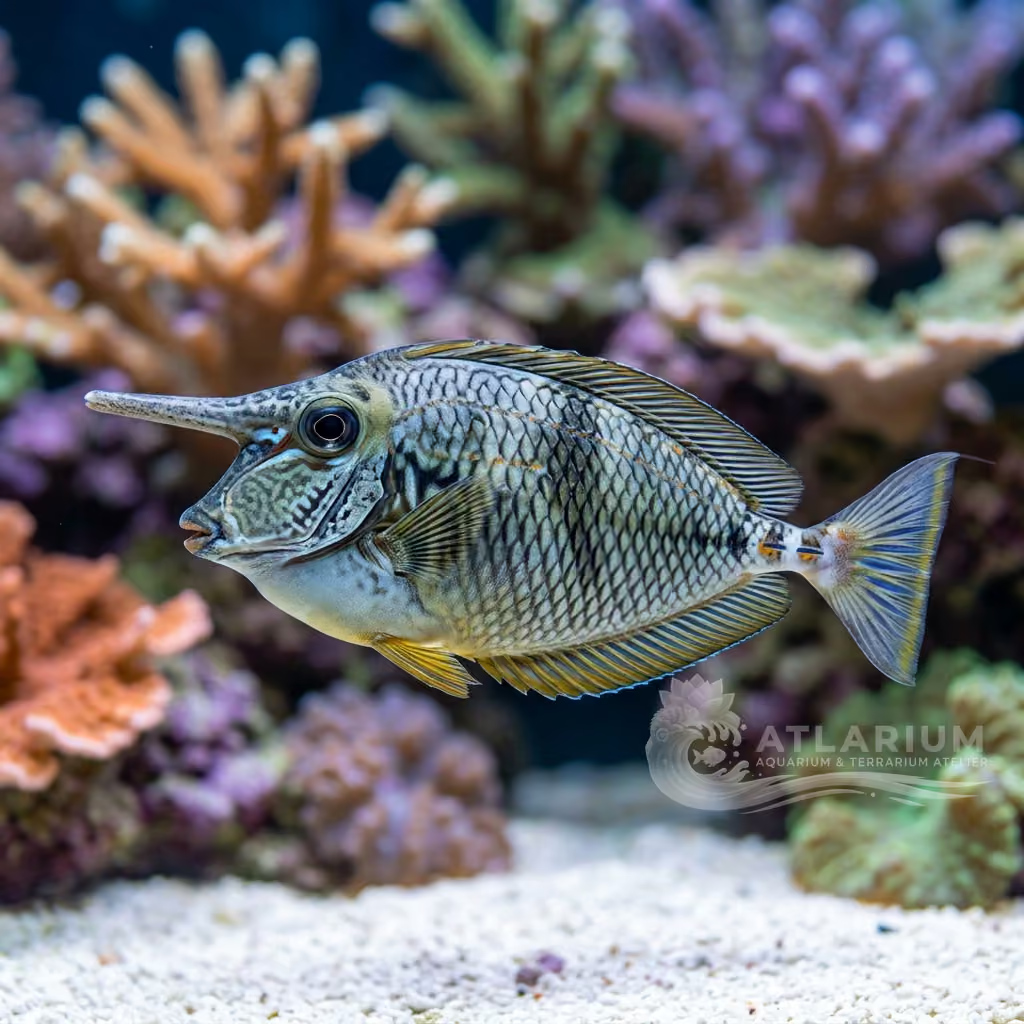
The Orangespine Unicornfish (Naso lituratus) is an active, large marine tang that can reach 18 inches. It requires a massive aquarium of at least 180 gallons with ample open swimming space. As a dedicated herbivore, its diet must feature daily offerings of marine algae, nori, and spirulina to maintain optimal digestive health and vibrant coloration.
Water Temperature
24 - 27 °C
pH Value
8.1 - 8.4
Water type
Marine
Tank level
Middle
Adult size
45 cm
Minimum tank volume
>= 500 L
Minimum group
>= 1
KH
7 - 15 dKH

Species description
Geographical Origin and Habitat: Indo-Pacific Ocean and Red Sea. Inhabits exclusively coral reefs exposed to strong oceanic currents, outer lagoon reefs and drop-offs.
Taxonomy and Morphology: Lipstick Tang / Naso Tang (Naso lituratus). Surgeonfish (Acanthuridae) of formidable size. Massive body, fleshy beak-like lips, two lethal bony "scalpels" on the sides of the caudal peduncle and two crazy filamentous extensions on the tail.
Social Behavior: Titanic pelagic swimmer. Despite the blades, it is a very sociable "gentle giant" with heterospecific fish, but needs boundless spaces to avoid stressing by hitting the glass.
Coloration and Sexual Dimorphism: Spectacular "makeup". Silky gray-brown body; lips "painted" with vibrant neon orange lipstick, yellow facial mask that goes up to the eye and black dorsal fin edged with electric blue. The caudal scalpels (bistouries) are bright orange. Adult males develop extremely extended "streamers" (filiform tails).

Care, breeding and tankmates
Aquarium Setup: Monstrous marine aquarium (minimum 180-200 cm / 72-80 inches for ONE young individual; over 800 liters / 210 gallons for adults). No cubic tanks: they only need length to swim and hurricane-style return/wavemaker pumps (to oxygenate the marine water). Marine water SG 1.020-1.025.
Diet and Feeding: Voracious grazer of marine macroalgae. Algae-eating machine. In captivity it must munch on Nori algae (whole sheets fixed with clips) all day, supplementing with spirulina, krill and mysis, otherwise it will rapidly lose weight ("Pinch belly").
Water Quality: Impeccable marine water quality. Like all surgeonfish, they are "canaries in the coal mine": the slightest drop in redox, oxygen or jump in nitrates will cover them with white spots and suffocate them.
Compatibility and Cohabitation: Excellent reef fish (Reef-Safe). Totally ignores corals. Perfect with angelfish, butterflyfish, damselfish, clownfish. Not recommended with other conspecific Surgeons of the Naso family (they would fight with caudal scalpels with lethal wounds).
Aquarium Breeding: Impossible. Oceanic pelagic: the fertile eggs will float at the mercy of marine currents among the reefs for tens of kilometers before hatching into larvae that eat microscopic plankton.
Risks and Diseases: The scalpel and Marine Ich. Risk 1: the surgeon gets scared and delivers a tail strike slicing the aquarist's hand (down to the tendon) with the horny orange spines. Risk 2: Cryptocaryon irritans (Marine Ich); lacking the "thick mucus" of other fish, the Naso is scourged by it if the immune system fails.

Geographic origin and distribution
Indo-Pacific Ocean and Red Sea. Inhabits exclusively coral reefs exposed to strong oceanic currents, outer lagoon reefs and drop-offs.
Origin
Tropical oceans and reefs

Fish profile
- Temperament
- Semi-aggressive
- The Lipstick Tang is very peaceful toward completely different types of fish. They are charismatic, energetic, and often become the centerpiece pet of a large reef display. However, their size alone can easily intimidate smaller, shy tankmates.
- Diet
- Omnivore
- They are dedicated herbivores requiring copious amounts of vegetable matter. Brown macroalgae, spirulina flakes, and fresh nori must form the bulk of their daily diet. Without enough greens, they suffer from dietary deficiencies and compromised immune systems.
- Life expectancy
- 15-20 years
- Adult size
- 45 cm
- Sex ratio
- Pair
- Adult males display prominent streamers on the top and bottom of their tail fins. Due to the massive tank size required for just one, keeping pairs is highly impractical. It is standard practice to maintain only one Naso lituratus per system.
- Feeding frequency
- Twice daily
- Continuous access to grazing materials is the key to keeping this species healthy. In addition to daily scheduled feedings of pellets or mysis, an algae clip should be restocked daily. Feeding them 3-4 times a day prevents them from losing mass.
- Bioload
- High
- The Lipstick Tang reaches an impressive size and contributes a very heavy bioload to a marine system. Their substantial diet results in a huge amount of physical waste. A robust filtration system with a heavy-duty protein skimmer is completely mandatory.
- Flow
- Moderate
- Naso lituratus needs steady, moderate circulation distributed across the aquarium rather than a narrow, forceful jet. Monstrous marine aquarium (minimum 180-200 cm / 72-80 inches for ONE young individual; over 800 liters / 210 gallons for adults). No cubic tanks: they only need length to swim and hurricane-style return/wavemaker pumps (to oxygenate the marine water). This preserves useful water exchange while retaining calmer shelter for rest and feeding.
- Jump risk
- Yes
- Because of their speed and startle reflex, they pose a significant jump risk. An appropriately sized mesh cover is critical to prevent a tragic loss. Open-top aquariums are not suitable for housing large tangs like this one.
- Reproduction
- Oviparous
- They are broadcast spawners and do not reproduce in standard home aquaria. The larval stages drift in the ocean currents for months before settling on the reef. Commercial captive breeding is still practically non-existent for this species.
- Compatibility & tankmates
- Reef safe
- They are completely reef safe and generally ignore corals and mobile invertebrates. They get along perfectly with most reef-dwelling species but will battle other Naso tangs. They should be housed in massive tanks to prevent territorial aggression with other large fish.
- Tank level
- Middle
- They are perpetual motion machines that dominate the middle and upper open water zones. They will constantly swim from one end of the tank to the other. They rarely hide in rockwork unless they are sleeping or feeling ill.

Scientific Parameters & Models
FishBase
Window to the official scientific data of the species
FishBase v25.04Data synced on: 06/15/2026
- Trophic level
- 2.3 ± 0.19 se
- Resilience
- Medium (1.4 - 4.4 years)
- Generation time
- 3.1 years
- Phylogenetic uniqueness (PD50)
- 0.5
- Bayesian Length-Weight
- a = 0.02818, b = 2.96
- VulnerabilityLow to moderate vulnerability (34 / 100)

Related species
Recommendations grouped by close relatives, companion choices, and similar care.