Encyclopaedia

FishFreshwaterEasy
©AI Generated·Proprietary

Bicolor Blenny

Ecsenius bicolor

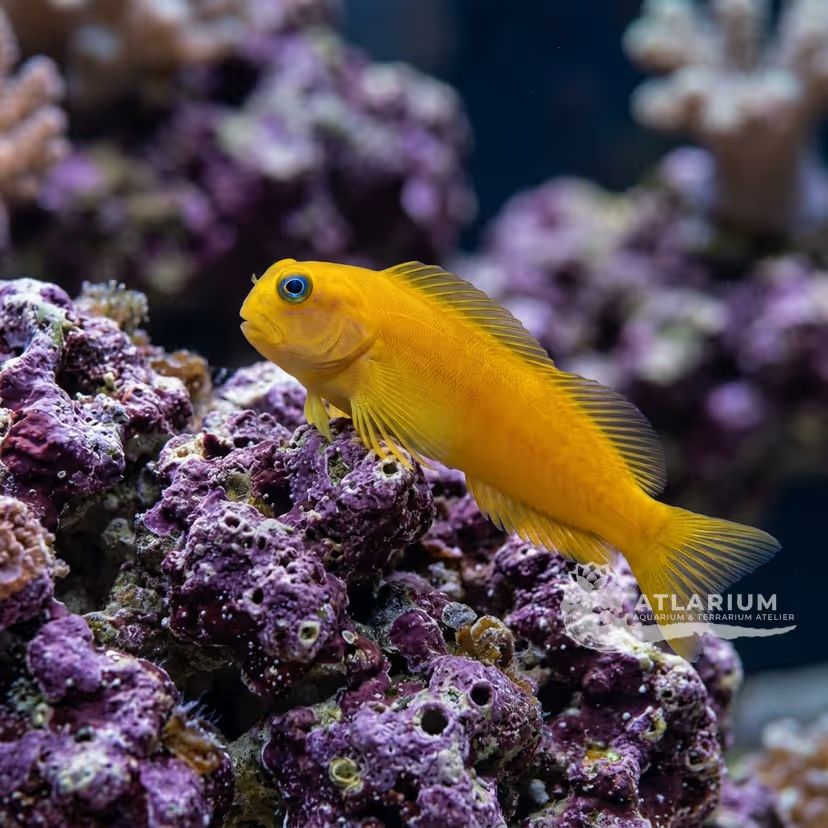
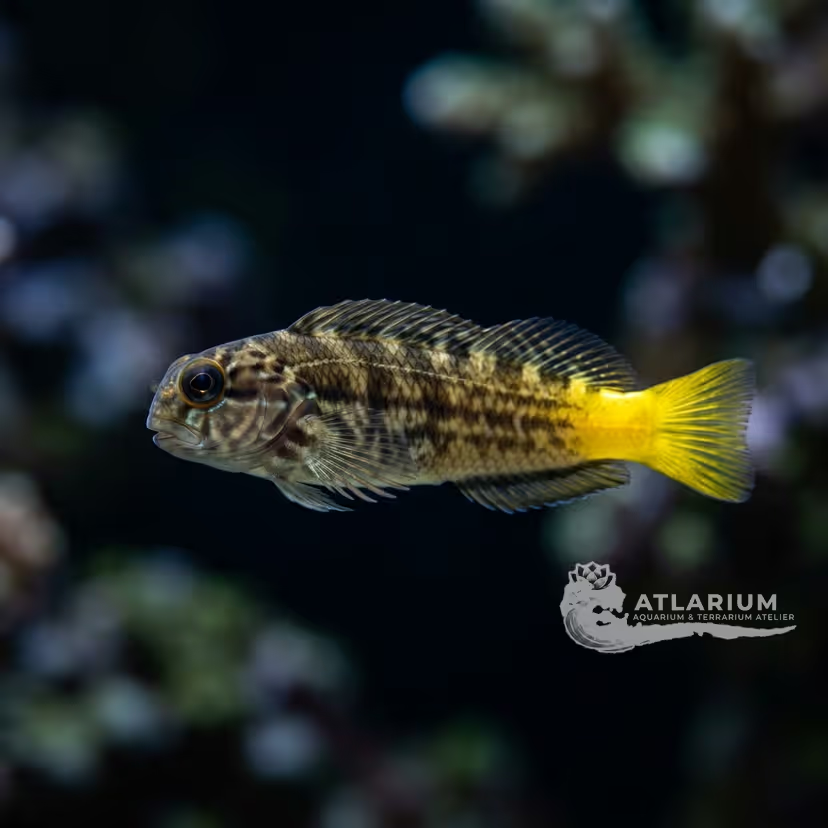
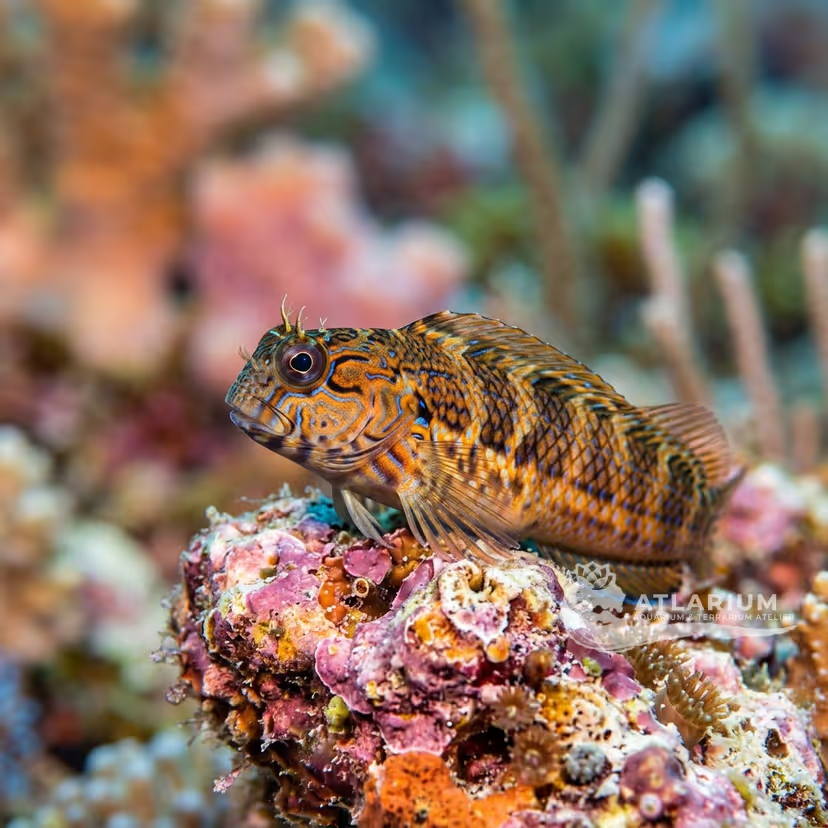
The Hole-Dwelling Observer (4 inches / 10 cm). Half purple, half orange. It finds a tiny, perfectly round hole in the live rock and backs into it, watching the room all day.

Taxonomy
Class:Actinopteri
Order:Perciformes
Family:Blenniidae
Genus:Ecsenius
Species:Ecsenius bicolor

Share

Check out Bicolor Blenny on Atlarium

PracticeRecognition quizzesPhotos, names, origins, and puzzles to review Atlas species.Open quizzes
Water Temperature

24 - 28 °C

pH Value

8.1 - 8.4

Water type

Freshwater

Tank level

Bottom and middle

Adult size

10 cm

Minimum tank volume

>= 100 L

Minimum group

>= 1

GH

8 - 12 dGH

KH

4 - 6 dKH

TDS

160 - 240 ppm

Conductivity

250 - 375 uS/cm

Species description

Geographical Origin and Habitat: MARINE species native to Indo-Pacific coral reefs (Maldives to the Great Barrier Reef, Micronesia). Inhabits clear coastal lagoons and rocky slopes rich in microalgae and hard corals.
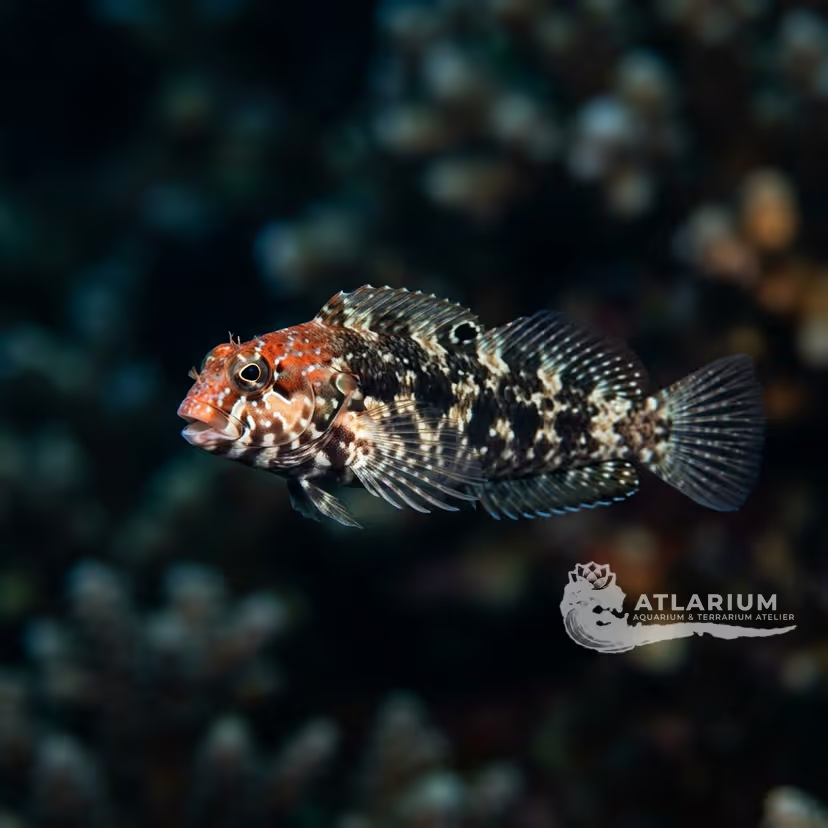
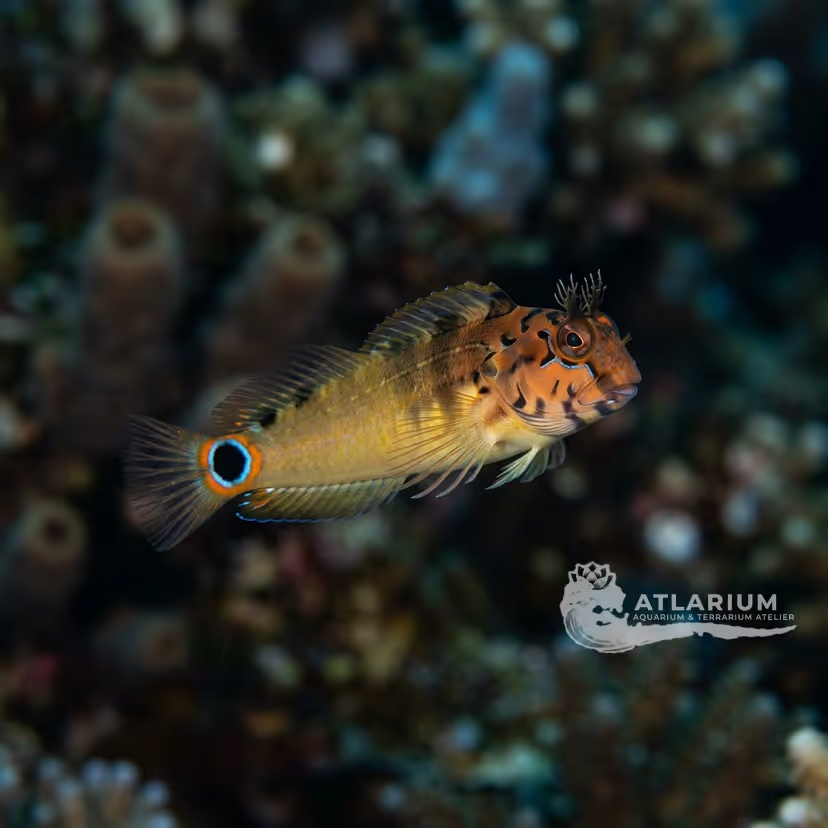
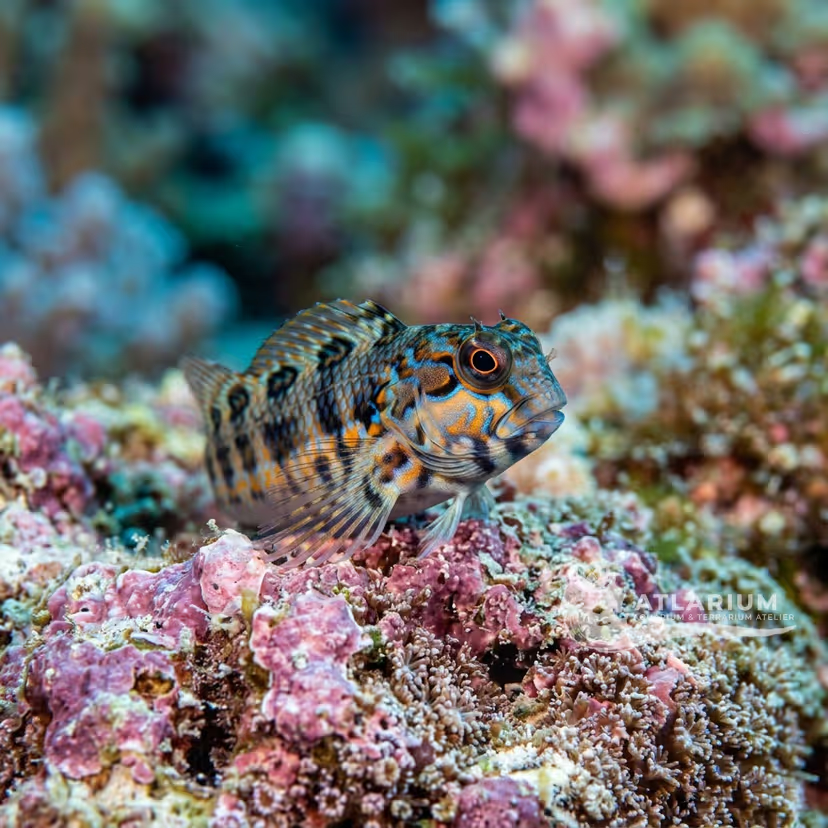
Taxonomy and Morphology: Bicolor Blenny (Ecsenius bicolor). Small fish of the Blenniidae family. Scaleless body, movable eyes placed high on the head that give it a "human" or funny expression, and small cirri (little antennas) above the eyes.
Social Behavior: Curious, extremely comical and intelligent. Finds a hole in a rock that it elects as "home" and backs into it, sticking out only its head to observe the environment. Moves by hopping from one rock to another.
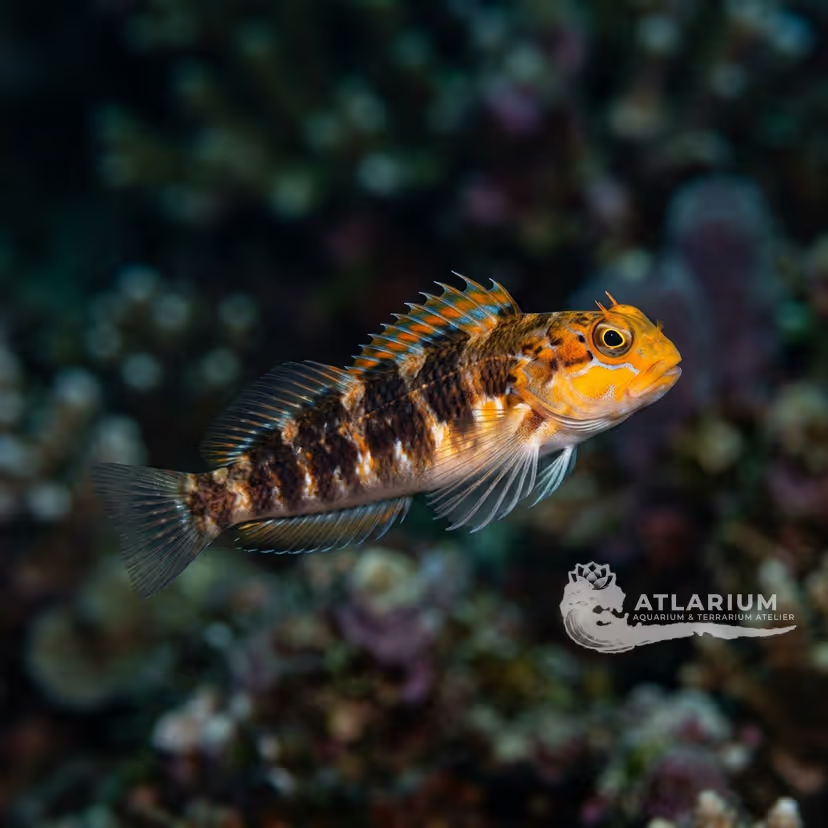
Coloration and Sexual Dimorphism: Classic "bicolor" livery: the anterior half of the body is dark black/purple, while the posterior half is vibrant orange-yellow. There are variants that are almost entirely bluish or brown. Adult males may show longer caudal filaments.

Care, breeding and tankmates

Aquarium Setup: Nano-reef or community aquarium of minimum 100 liters (25 gallons). Many porous live rocks with natural holes for hiding are vital. Not demanding on lighting, but enough light to grow microalgae is beneficial.
Diet and Feeding: Omnivore with a strong herbivorous preference. Scrapes microalgae and algal film from rocks and glass all day. In the aquarium, it must be fed daily with flake foods or pellets based on Spirulina or seaweed (Nori).
Water Quality: Classic reef aquarium parameters: Salinity 1.023-1.025, pH 8.1-8.4, zero ammonia and nitrites. Sensitive to pH drops and nitrate accumulation which depress its immune system.
Compatibility and Cohabitation: Excellent for reef aquariums (Reef Safe). Peaceful towards other fish. May show extreme territoriality towards other Blennies of the same species or fish of identical shape and color. Occasionally (rarely) may nip at clam mantles or fleshy LPS corals.
Aquarium Breeding: The male attracts the female to his rocky hole to lay adhesive eggs, which he will then fiercely guard until hatching. Reproduction recorded but rearing the microscopic pelagic larvae is for experts.
Risks and Diseases: Blennies are scaleless fish, thus vulnerable to skin diseases and medications (especially copper treatments must be dosed at half concentration). Can jump out of the tank if frightened.

Geographic Origin and Distribution

MARINE species native to Indo-Pacific coral reefs (Maldives to the Great Barrier Reef, Micronesia). Inhabits clear coastal lagoons and rocky slopes rich in microalgae and hard corals.

Origin

Tropical oceans and reefs

Fish profile

Temperament
Semi-aggressive
Overall, the Ecsenius bicolor boasts a peaceful, comical, and highly engaging temperament. They are extremely curious fish that will often observe the aquarist through the glass. While peaceful with dissimilar species, they will fiercely defend their chosen perch against similar blennies or gobies. Providing ample rockwork and line-of-sight breaks easily mitigates any mild territorial disputes.
Diet
Omnivore
The Ecsenius bicolor is primarily an omnivore with a strong preference for marine microalgae. They will actively graze on rocks, keeping nuisance algae growth under control. Their diet must be heavily supplemented with high-quality spirulina flakes, algae wafers, and occasional meaty items like mysis shrimp. A varied diet ensures they receive the necessary vitamins for vibrant coloration and long-term health.
Sex ratio
Solitary
It is generally best to keep them individually unless you can acquire a confirmed mated pair. Housing two males or two females of the same species in a standard-sized tank will usually result in intense territorial aggression. Visual sexing can be challenging, though males sometimes exhibit slightly larger bodies or elongated fin rays. A solitary individual will comfortably establish its own territory without stress.
Feeding frequency
Twice daily
Because they have small stomachs and are constant grazers, they benefit from being fed one to two times daily. Providing small, frequent meals mimics their natural foraging behavior on the reef. An established aquarium with plenty of live rock will allow them to snack on algae between scheduled feedings. Ensuring they have a continuous food source prevents undesirable nipping at corals.
Bioload
The Ecsenius bicolor adds a very low bioload to the aquarium system, making it an excellent choice for smaller tanks. Their small size and efficient metabolism ensure that they do not heavily pollute the water. Routine maintenance and a standard protein skimmer are more than adequate to handle their waste. This makes them highly suitable for delicate reef environments where water purity is paramount.
Flow
Stagnant
They thrive in environments with moderate to strong water flow that replicates the dynamic currents of a natural reef. Good circulation helps keep their favored resting spots clear of detritus and promotes healthy oxygenation. They will often be seen perched on rocks right in the path of the current, watching for passing food. Adequate flow is essential for their overall well-being and active behavior.
Reproduction
Oviparous
The Ecsenius bicolor is a demersal spawner, laying their eggs in small crevices or empty shells. The male will diligently guard and fan the nest until the eggs hatch into pelagic larvae. While spawning is frequently observed in home aquariums, successfully raising the tiny fry is incredibly difficult. It requires specialized microscopic live foods and dedicated rearing systems.
Compatibility & tankmates
This species is considered reef safe and is generally a fantastic community fish. They get along well with most peaceful tank mates and will not actively bother corals or mobile invertebrates. However, they may occasionally nip at the mantles of clams or large-polyp stony corals if underfed. They can display territorial behavior towards other blennies or fish with a similar body shape.
Tank level
Middle/Bottom
This fish is predominantly a bottom to mid-level dweller, spending most of its time perched on live rock. They find a favorite crevice or barnacle shell and reverse into it, leaving only their curious head exposed. While they occasionally dart into the water column to catch food, they quickly return to their rocky perches. Their comical perching behavior is a defining characteristic of the species.

Window to the official scientific data of the species

Data synced on: 06/15/2026

Scientific Parameters & Models

Trophic level
2 ± 0 se
Resilience
High (less than 15 months)
Phylogenetic uniqueness (PD50)
0.5
Bayesian Length-Weight
a = 0.00851, b = 2.86
VulnerabilityLow vulnerability (10 / 100)

Image gallery

Licensed images linked to the species or, when marked, to the closest representative taxon.

Related species

Recommendations grouped by close relatives, companion choices, and similar care.

Variants and close relatives

Same atlas type, nearby scientific identity, genus, or family.
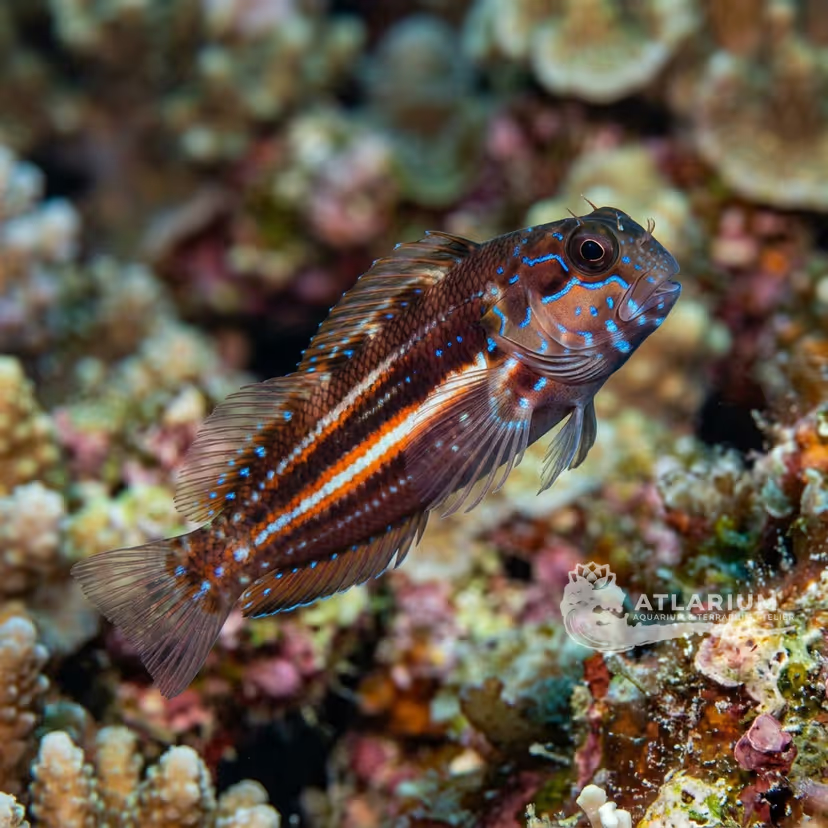
Beautiful Blenny

Beautiful Blenny

Ecsenius pulcher

View details->
Midas blenny

Midas blenny

Ecsenius midas

View details->
Yaeyama Blenny

Yaeyama Blenny

Ecsenius yaeyamaensis

View details->
Tailspot blenny

Tailspot blenny

Ecsenius stigmatura

View details->
Allen's blenny

Allen's blenny

Ecsenius alleni

View details->
Axelrod's blenny

Axelrod's blenny

Ecsenius axelrodi

View details->
Black combtooth blenny

Black combtooth blenny

Ecsenius namiyei

View details->
Bluebelly blenny

Bluebelly blenny

Ecsenius caeruliventris
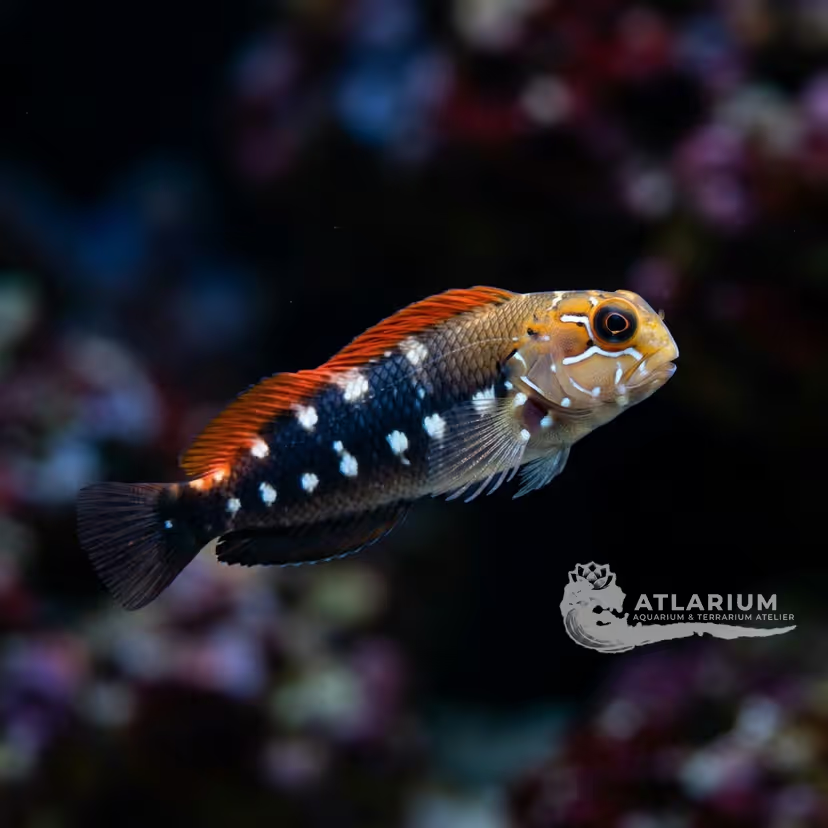
View details->
Fiji Blenny

Fiji Blenny

Ecsenius fijiensis

View details->
Linear Blenny

Linear Blenny

Ecsenius lineatus

View details->
Monoculus blenny

Monoculus blenny

Ecsenius monoculus

View details->
Ocular Blenny

Ocular Blenny

Ecsenius oculus

View details->
Portenoy's Blenny

Portenoy's Blenny

Ecsenius portenoyi

View details->
Saddle blenny

Saddle blenny

Ecsenius sellifer

View details->
Yelloweye Combtooth Blenny

Yelloweye Combtooth Blenny

Ecsenius opsifrontalis

View details->
Yellowtail Clown Blenny

Yellowtail Clown Blenny

Ecsenius melarchus

View details->

Recommended companions

Compatible cards from coherent ecosystems with matching parameters.

Ammannia sp. 'Bonsai'
Plant

Ammannia sp. 'Bonsai'

Ammannia sp. 'Bonsai'

View details->
Ammannia latifolia
Plant

Ammannia latifolia

Ammannia latifolia

View details->
Arrowhead Anubias
Plant

Arrowhead Anubias

Anubias hastifolia

View details->
Amazon Sword
Plant

Amazon Sword

Aquarius grisebachii

View details->
Anubias barteri var. nana 'Round Leaf'
Plant

Anubias barteri var. nana 'Round Leaf'

Anubias barteri var. nana 'Round Leaf'

View details->
Anubias congensis
Plant

Anubias congensis

Anubias congensis

View details->
Anubias gigantea
Plant

Anubias gigantea

Anubias gigantea

View details->
Anubias lanceolata
Plant

Anubias lanceolata

Anubias lanceolata
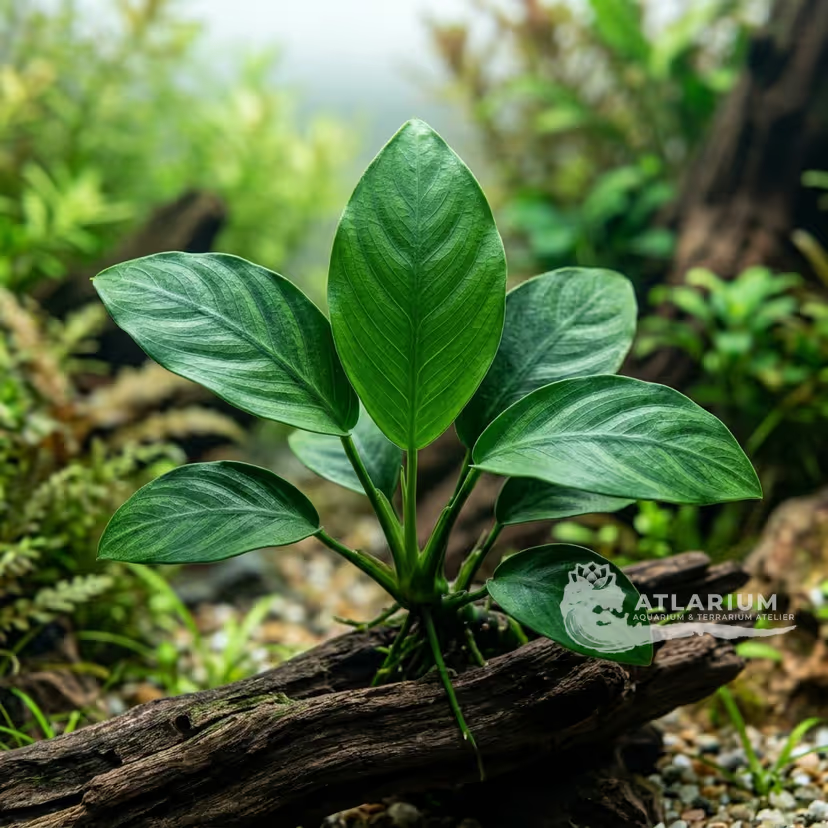
View details->
Anubias minima
Plant

Anubias minima

Anubias minima

View details->
Anubias
Plant

Anubias

Anubias barteri

View details->
Anubias nana
Plant

Anubias nana

Anubias barteri var. nana

View details->
Bacopa sp. "Japan"
Plant

Bacopa sp. "Japan"

Bacopa sp. "Japan"

View details->
Bolbitis heteroclita
Plant

Bolbitis heteroclita

Bolbitis heteroclita

View details->
Bucephalandra motleyana "Braun-rot" ("Serimbu")
Plant

Bucephalandra motleyana "Braun-rot" ("Serimbu")

Bucephalandra motleyana "Braun-rot" ("Serimbu")

View details->
Bucephalandra motleyana "Kapit"
Plant

Bucephalandra motleyana "Kapit"

Bucephalandra motleyana "Kapit"

View details->
Bucephalandra motleyana "Pancuraji"
Plant

Bucephalandra motleyana "Pancuraji"

Bucephalandra motleyana "Pancuraji"

View details->

Similar care

Cards with similar requirements, difficulty, habitat, and husbandry profile.

Yellow Dwarf Cichlid (Yellow Convict)

Yellow Dwarf Cichlid (Yellow Convict)

Amatitlania nanolutea

View details->
Amazon Cichlasoma (Cichlasoma amazonarum)

Amazon Cichlasoma (Cichlasoma amazonarum)

Cichlasoma amazonarum
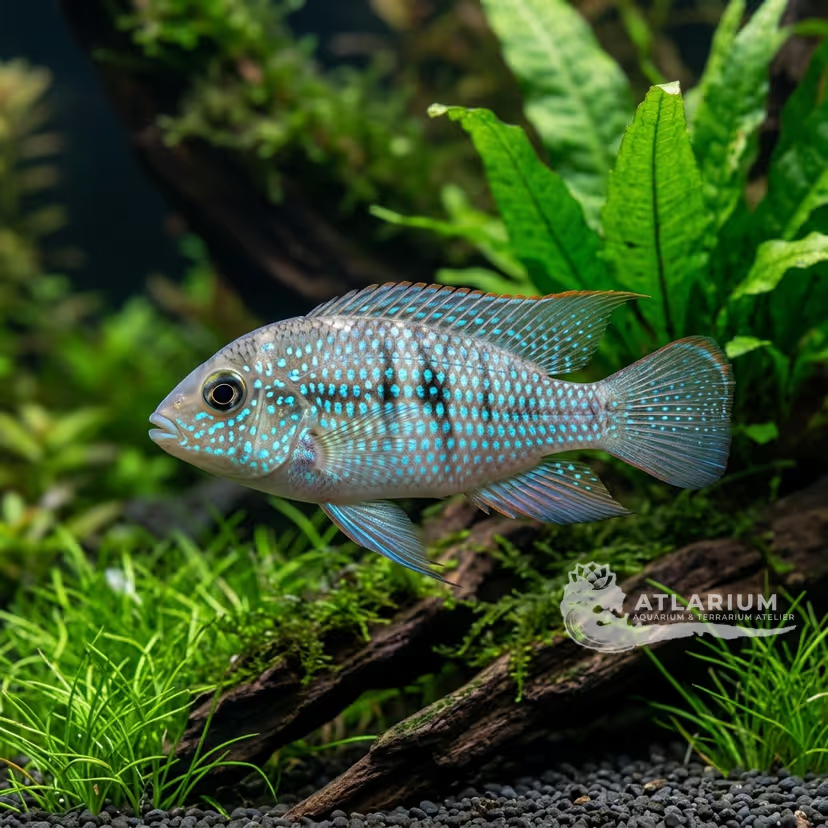
View details->
African Butterfly Cichlid

African Butterfly Cichlid

Anomalochromis thomasi

View details->
T-Bar Cichlid (Sajica)

T-Bar Cichlid (Sajica)

Amatitlania sajica
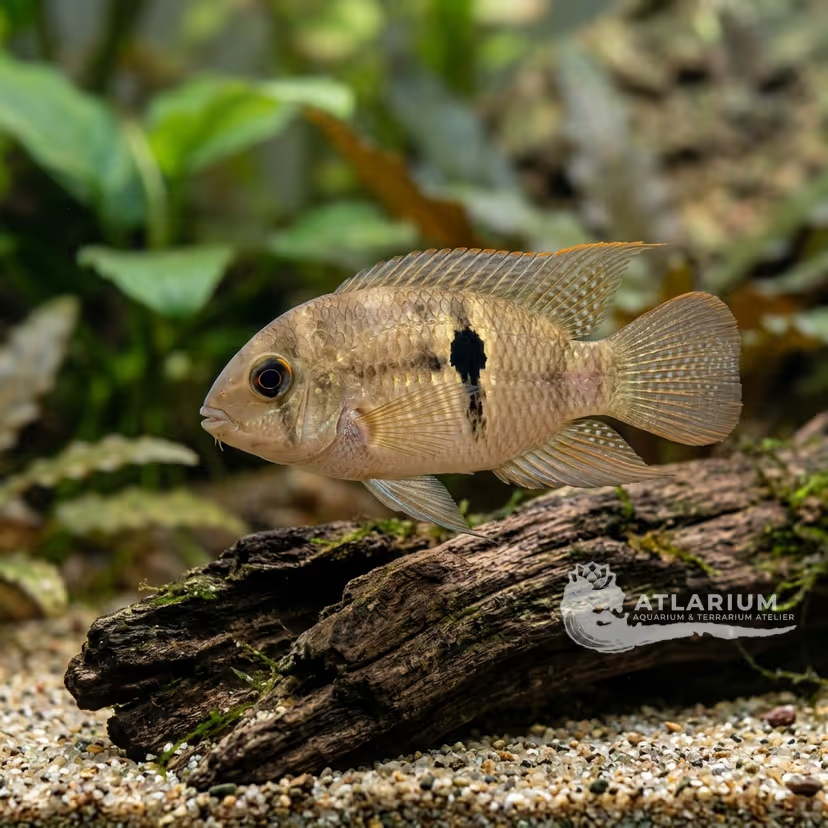
View details->
Keyhole cichlid

Keyhole cichlid

Cleithracara maronii

View details->
Red-eye Krobia

Red-eye Krobia

Krobia xinguensis

View details->
Forest Betta

Forest Betta

Betta pugnax

View details->
Bolivian Ram

Bolivian Ram

Mikrogeophagus altispinosus
View details->
Redbreast Acara

Redbreast Acara

Laetacara dorsigera

View details->
Common Bristlenose Pleco

Common Bristlenose Pleco

Ancistrus cf. cirrhosus

View details->
Bass Tetra

Bass Tetra

Hemigrammus marginatus

View details->
Black Phantom Tetra

Black Phantom Tetra

Hyphessobrycon megalopterus

View details->
Three Stripe Corydoras (False Julii)

Three Stripe Corydoras (False Julii)

Corydoras trilineatus

View details->
Blue Acara

Blue Acara

Andinoacara pulcher

View details->
Nicaragua Cichlid (Macaw Cichlid)

Nicaragua Cichlid (Macaw Cichlid)

Hypsophrys nicaraguensis
View details->
Ocellated Shell-dweller (L. ocellatus)

Ocellated Shell-dweller (L. ocellatus)

Lamprologus ocellatus

View details->
Last updated: 06/30/2026
Bicolor Blenny (Ecsenius bicolor) Care Guide & Tank Setup | Atlarium