

Encyclopaedia
T-Bar Cichlid (Sajica)
Amatitlania sajica
The T-Bar Cichlid (*Cryptoheros sajica*) is a small and gorgeous Central American cichlid closely related to the much more infamous Convict, but fortunately equipped with a distinctly more manageable temperament. It takes its name from the distinct dark vertical band in the center of the body which, crossing with the horizontal lateral line, forms a perfect letter "T". Males exhibit breathtaking purple and metallic blue reflections with a marked bright blue eye, while the smaller females sport golden yellow fins. Barely reaching 10-12 cm (4-5 inches), it is a very robust cichlid perfect for those who want the bursting character of Central American fish in a medium-sized tank.
Share
Check out T-Bar Cichlid (Sajica) on Atlarium
24 - 28 °C
7 - 8
Freshwater
Bottom and middle
12 cm
>= 100 L
>= 2
10 - 20 dGH
5 - 10 dKH
200 - 400 ppm
313 - 625 uS/cm
Species description
Care, breeding and tankmates
Geographic Origin and Distribution
Origin
Fish profile
- Temperament
- Semi-aggressive
- Diet
- Omnivore
- Sex ratio
- Pair
- Feeding frequency
- Twice daily
- Bioload
- The T-bar Cichlid has a moderate bioload. Like many Central American cichlids, they are robust eaters and produce a fair amount of waste. Strong, efficient filtration is highly recommended to manage their biological output. Consistent weekly water changes are necessary to prevent the buildup of nitrates and ensure their long-term health.
- Flow
- Moderate
- Jump risk
- No
- Reproduction
- Oviparous
- Compatibility & tankmates
- Territorial
- Tank level
- Middle/Bottom
Window to the official scientific data of the species
Scientific Parameters & Models
- Trophic level
- 2.3 ± 0.17 se
- Resilience
- High (less than 15 months)
- Phylogenetic uniqueness (PD50)
- 0.502
- Bayesian Length-Weight
- a = 0.02692, b = 3.02
Image gallery
Licensed images linked to the species or, when marked, to the closest representative taxon.
Related species
Recommendations grouped by close relatives, companion choices, and similar care.
Variants and close relatives
Same atlas type, nearby scientific identity, genus, or family.

Convict Cichlid
Amatitlania nigrofasciata

Yellow Dwarf Cichlid (Yellow Convict)
Amatitlania nanolutea

Midas Cichlid / Red Devil
Amphilophus citrinellus

Nicaragua Cichlid (Macaw Cichlid)
Hypsophrys nicaraguensis
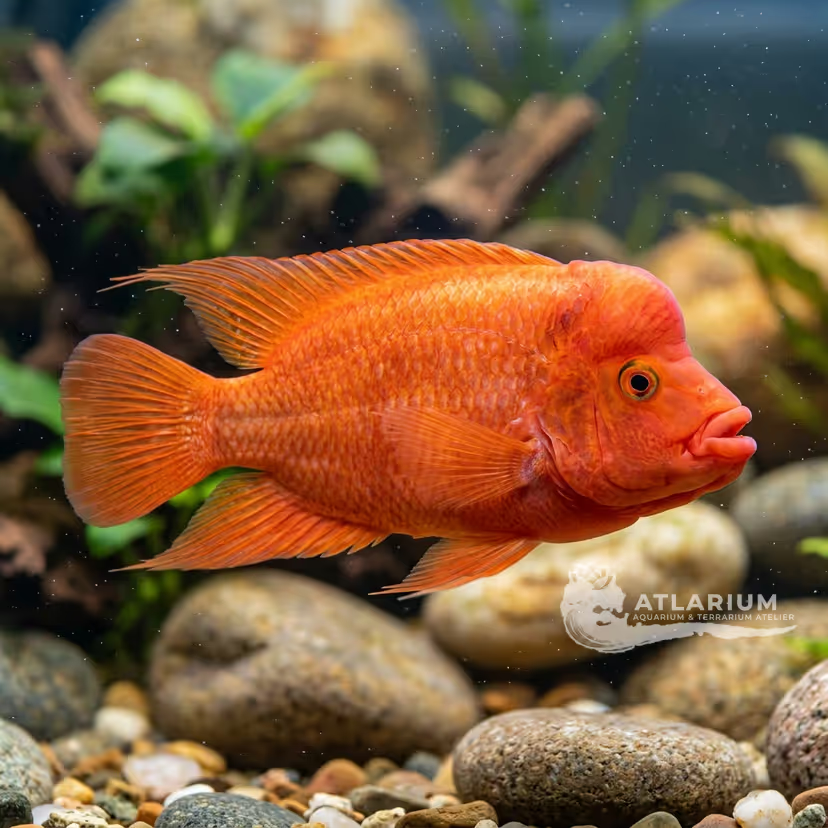
Red Devil Cichlid
Amphilophus labiatus

Calvus Cichlid
Altolamprologus calvus

Compressiceps Cichlid (Altolamprologus)
Altolamprologus compressiceps

Eureka Red Peacock
Aulonocara jacobfreibergi
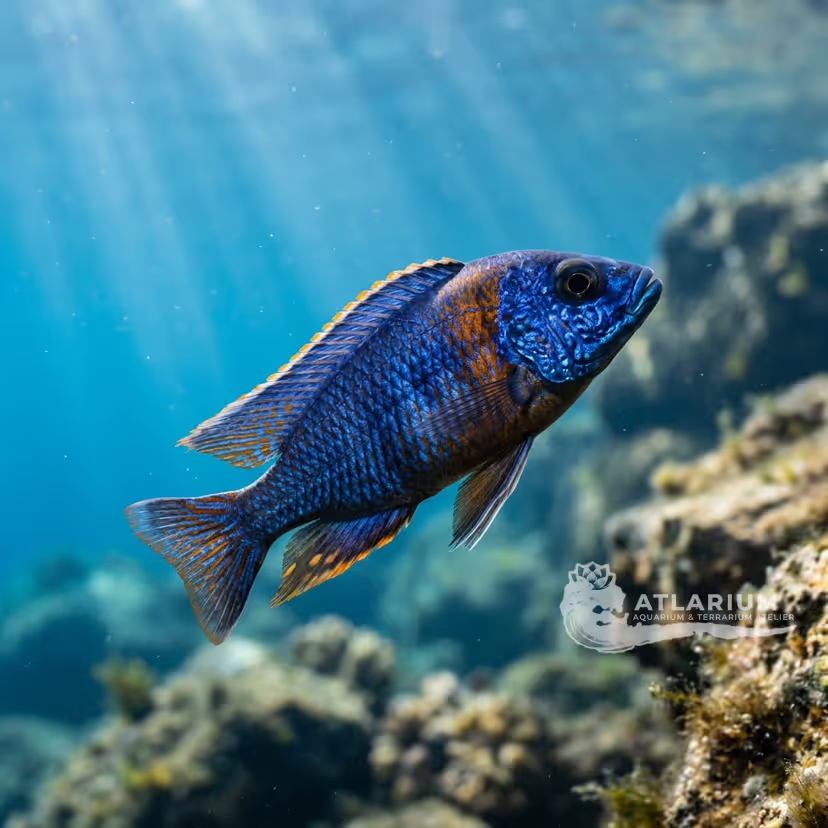
Flavescent Peacock / Stuartgrant's Peacock
Aulonocara stuartgranti

Kadango Red Fin
Copadichromis borleyi

Peacock Cichlid
Aulonocara baenschi

Emperor Cichlid / Giant Cichlid
Boulengerochromis microlepis
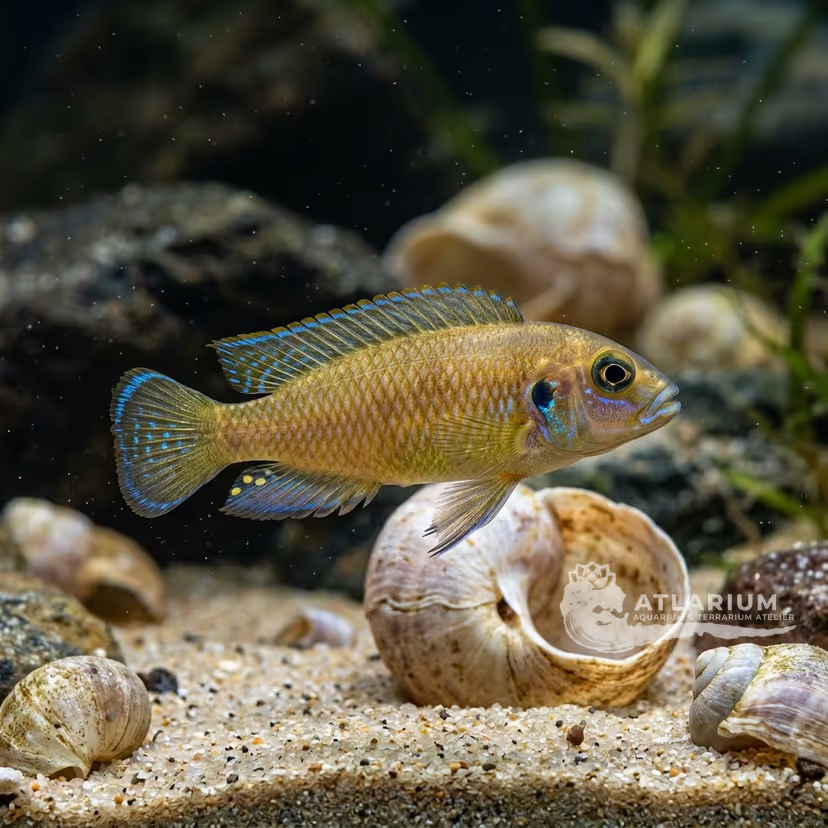
Ocellated Shell-dweller (L. ocellatus)
Lamprologus ocellatus

Blue Acara
Andinoacara pulcher

Brichard's Masked Cichlid
Chalinochromis brichardi

Angelfish
Pterophyllum scalare
Recommended companions
Compatible cards from coherent ecosystems with matching parameters.

Anubias barteri var. nana 'Round Leaf'
Anubias barteri var. nana 'Round Leaf'

Anubias congensis
Anubias congensis

Anubias gigantea
Anubias gigantea

Anubias lanceolata
Anubias lanceolata
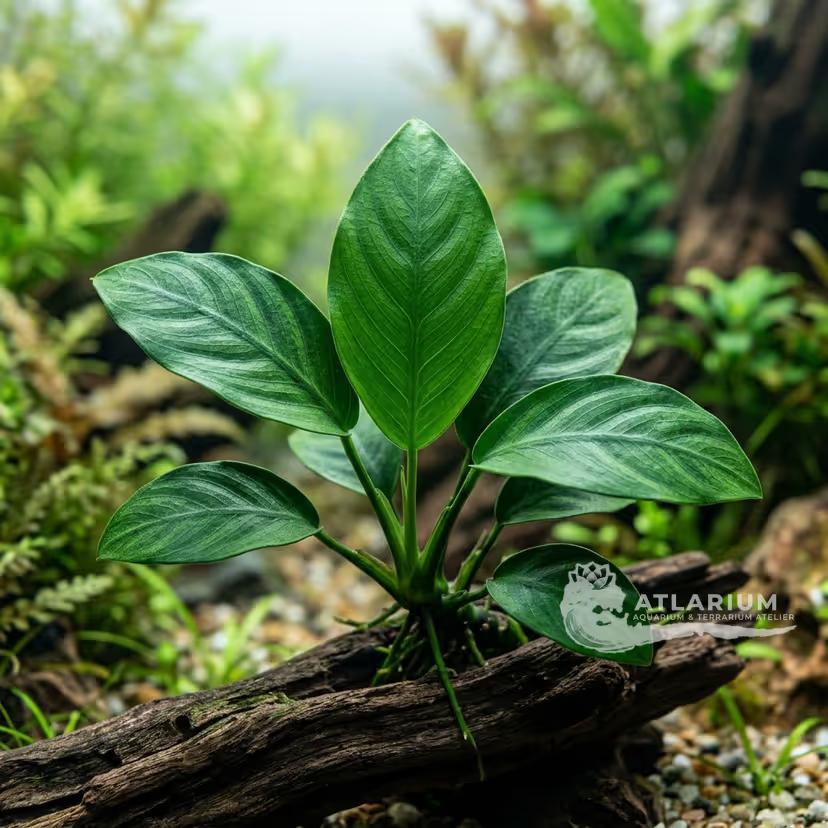
Anubias minima
Anubias minima
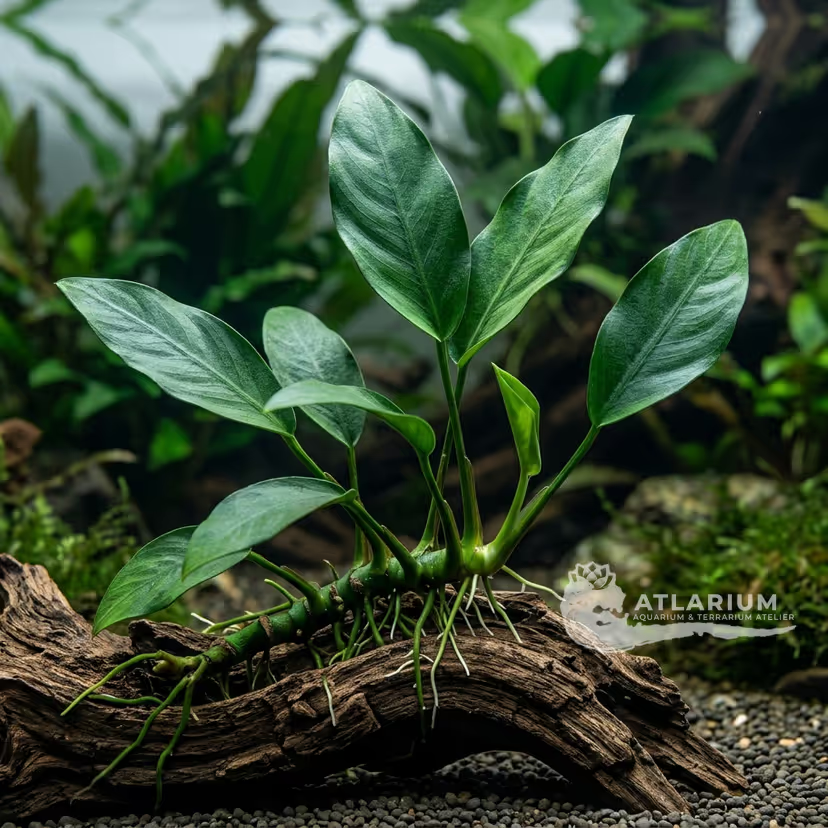
Anubias
Anubias barteri

Anubias nana
Anubias barteri var. nana
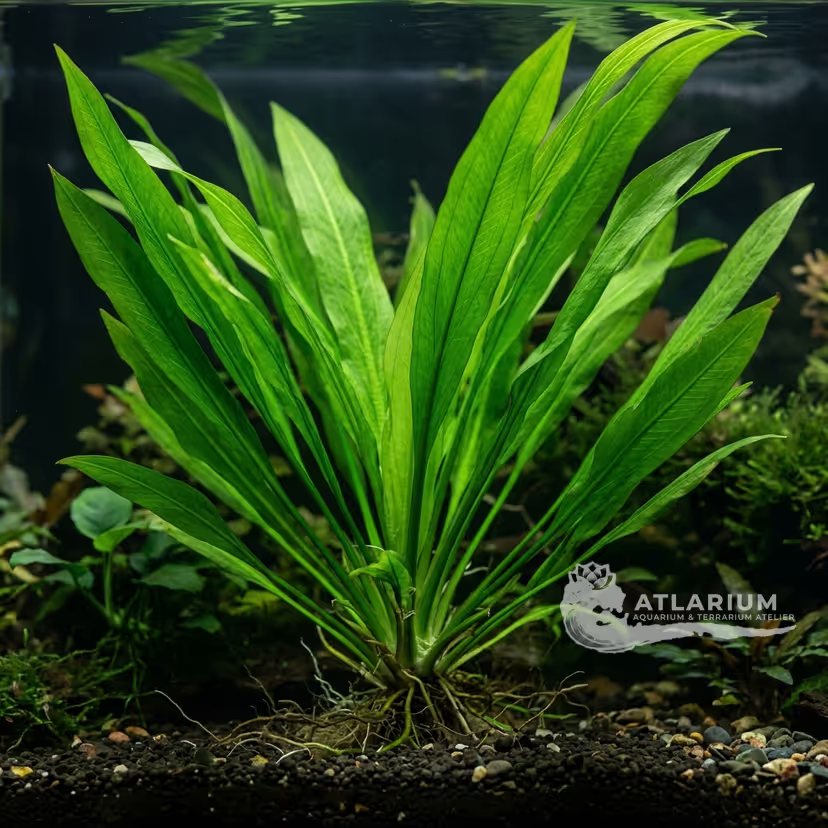
Amazon Sword
Aquarius grisebachii

Arrowhead Anubias
Anubias hastifolia

Azolla caroliniana
Azolla caroliniana

Azolla mexicana
Azolla mexicana

Ammannia sp. 'Bonsai'
Ammannia sp. 'Bonsai'

Bacopa sp. "Japan"
Bacopa sp. "Japan"

Bolbitis heteroclita
Bolbitis heteroclita

Bucephalandra motleyana "Braun-rot" ("Serimbu")
Bucephalandra motleyana "Braun-rot" ("Serimbu")

Bucephalandra motleyana "Kapit"
Bucephalandra motleyana "Kapit"
Similar care
Cards with similar requirements, difficulty, habitat, and husbandry profile.

Amazon Cichlasoma (Cichlasoma amazonarum)
Cichlasoma amazonarum

Dimerus Cichlid
Cichlasoma dimerus
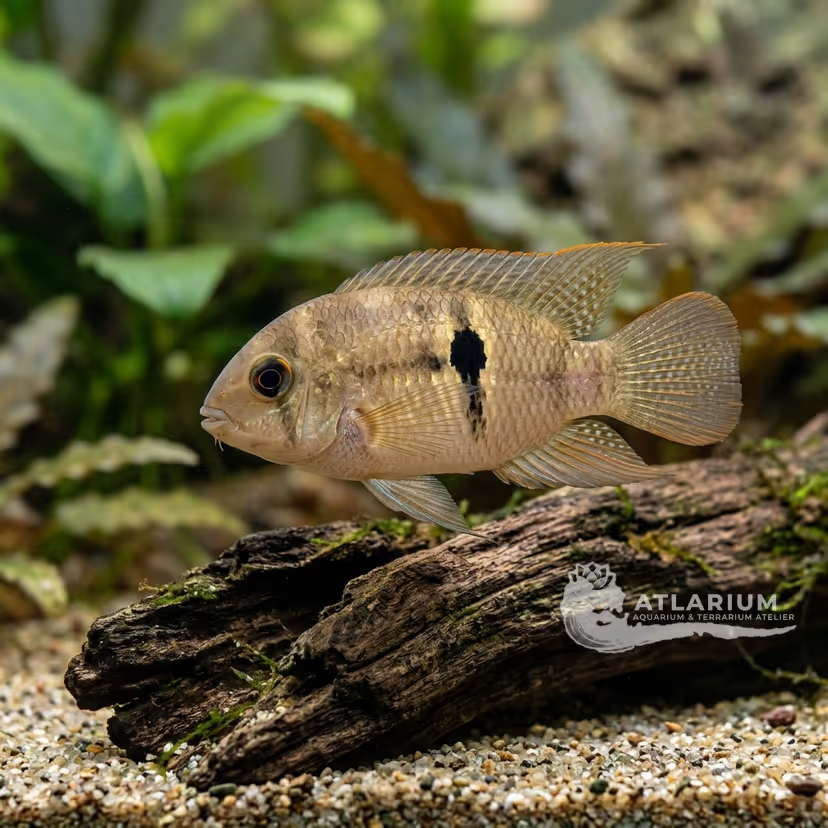
Keyhole cichlid
Cleithracara maronii
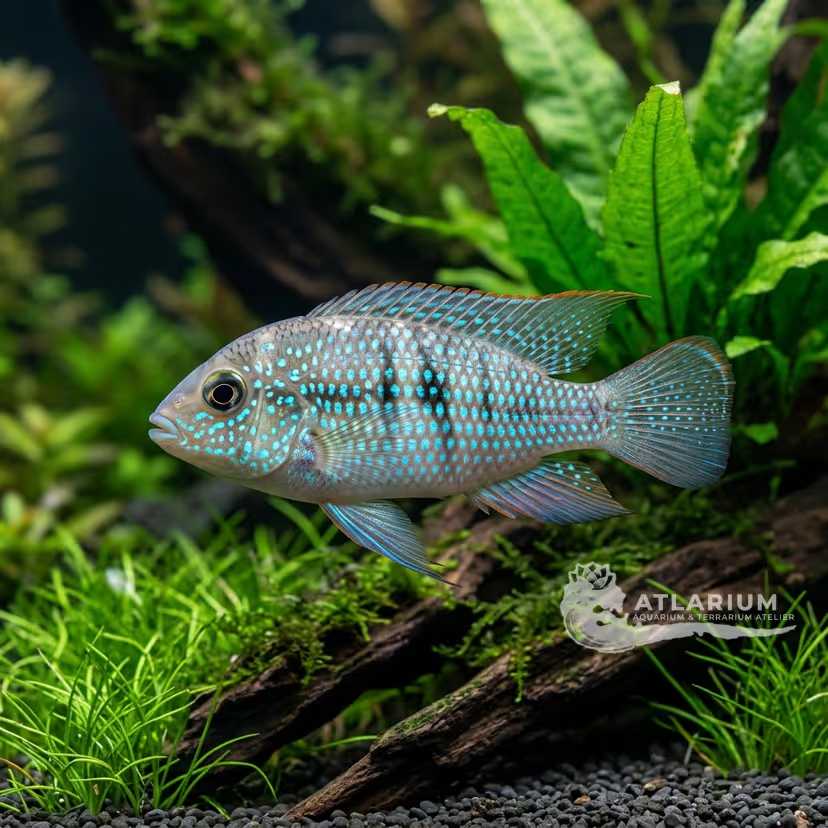
African Butterfly Cichlid
Anomalochromis thomasi

Red-eye Krobia
Krobia xinguensis

Blue Acara
Andinoacara pulcher

Paraguay Mouthbrooder (Bujurquina vittata)
Bujurquina vittata

Diadem Cichlid (Aequidens diadema)
Aequidens diadema

Cockatoo Cichlid
Apistogramma cacatuoides
Bicolor Blenny
Ecsenius bicolor
Redbreast Acara
Laetacara dorsigera

Java Barb
Systomus rubripinnis

Bolivian Ram
Mikrogeophagus altispinosus

Common Bristlenose Pleco
Ancistrus cf. cirrhosus

Chameleon land crab
Metasesarma aubryi
Double-spot Acara (Aequidens pallidus)
Aequidens pallidus