

Encyclopaedia
Blue Acara
Andinoacara pulcher
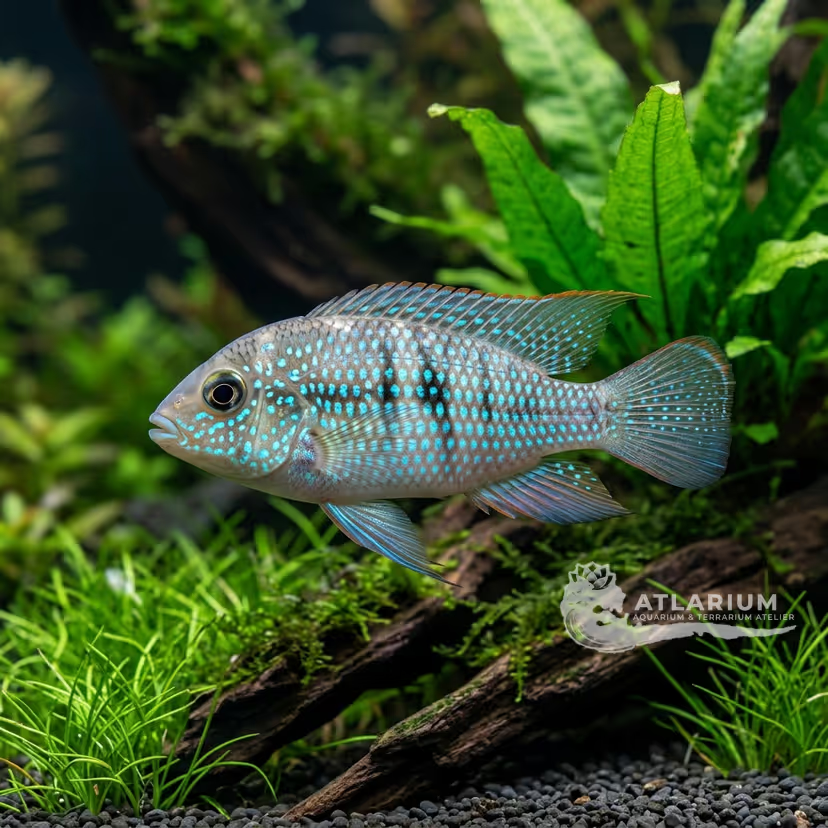
The Blue Acara (*Andinoacara pulcher*) represents the perfect alternative for those who are in love with the sparkling shapes and colors of the Green Terror, but do not own thousand-liter tanks nor wish to manage the murderous nature of "Monster Fish". Decidedly more contained (it stops around 15-16 cm / 6 inches), the Blue Acara is famous for being an exceptionally robust and tolerant cichlid. The body is greyish-blue crossed by weak dark vertical bands, but the cheeks and most of the flanks are illuminated by horizontal lines and dots of a brilliant iridescent blue (hence the name "pulcher", which in Latin means "beautiful"). In recent years the controversial artificial variety 'Electric Blue Acara', totally neon blue, has caught on.
Share
Check out Blue Acara on Atlarium
22 - 30 °C
6.5 - 8
Freshwater
Bottom and middle
16 cm
>= 150 L
>= 2
3 - 15 dGH
1 - 7 dKH
55 - 295 ppm
86 - 461 uS/cm
Species description
Care, breeding and tankmates
Geographic Origin and Distribution
Origin
Fish profile
- Temperament
- Aggressive
- Diet
- Omnivore
- Life expectancy
- 8-10 years
- Sex ratio
- ONE_TO_ONE
- Feeding frequency
- Twice daily
- Bioload
- Medium to High
- Flow
- Strong
- Jump risk
- Yes
- Reproduction
- Oviparous
- Compatibility & tankmates
- Community
- Tank level
- Middle/Bottom
Window to the official scientific data of the species
Scientific Parameters & Models
- Trophic level
- 3.3 ± 0.4 se
- Resilience
- High (less than 15 months)
- Phylogenetic uniqueness (PD50)
- 0.5039
- Bayesian Length-Weight
- a = 0.03311, b = 3.07
Image gallery
Licensed images linked to the species or, when marked, to the closest representative taxon.
Related species
Recommendations grouped by close relatives, companion choices, and similar care.
Variants and close relatives
Same atlas type, nearby scientific identity, genus, or family.

Blue Acara
Andinoacara pulcher

Green terror
Andinoacara rivulatus

Cockatoo Cichlid
Apistogramma cacatuoides

Oscar
Astronotus ocellatus
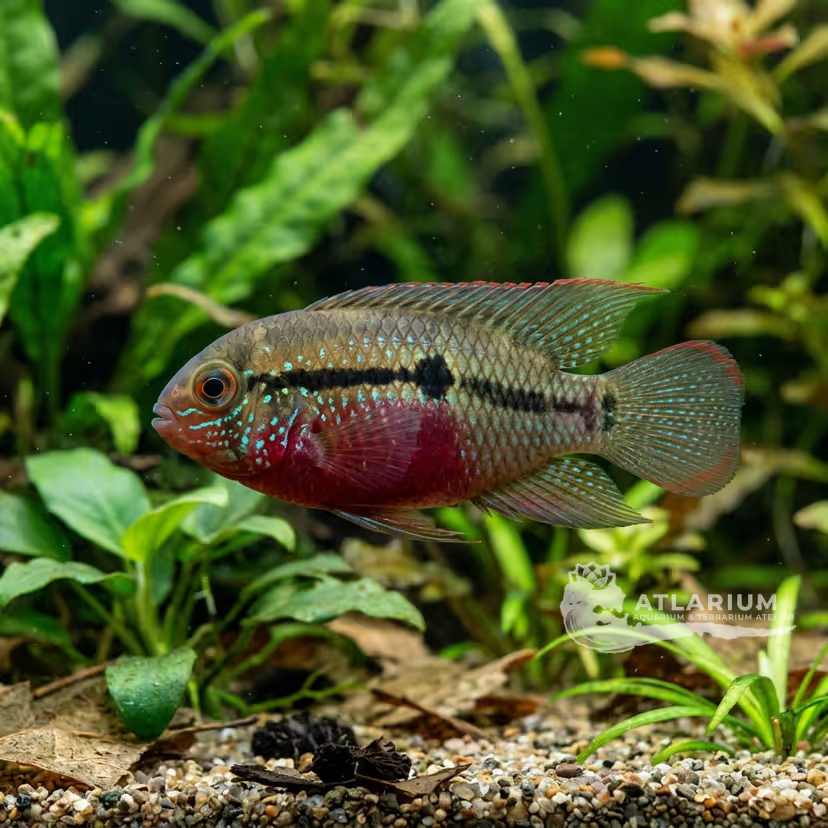
Redbreast Acara
Laetacara dorsigera

Dimerus Cichlid
Cichlasoma dimerus

Bolivian Ram
Mikrogeophagus altispinosus

Kraussii Basketmouth (Caquetaia kraussii)
Caquetaia kraussii

Umbrella dwarf cichlid
Apistogramma borellii
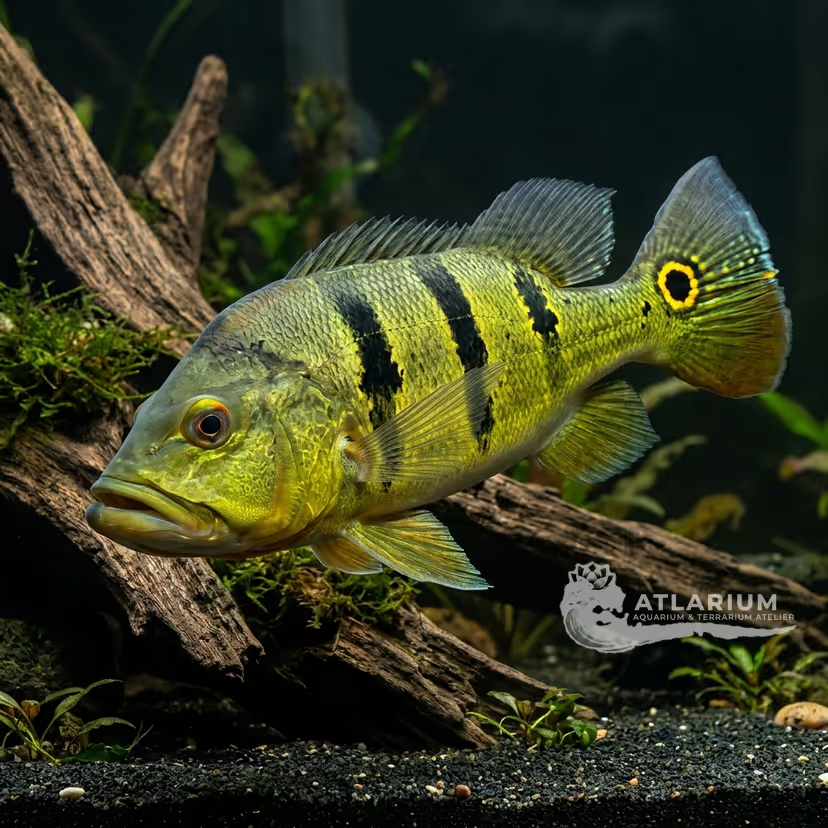
Peacock Bass (Butterfly Cichla)
Cichla ocellaris
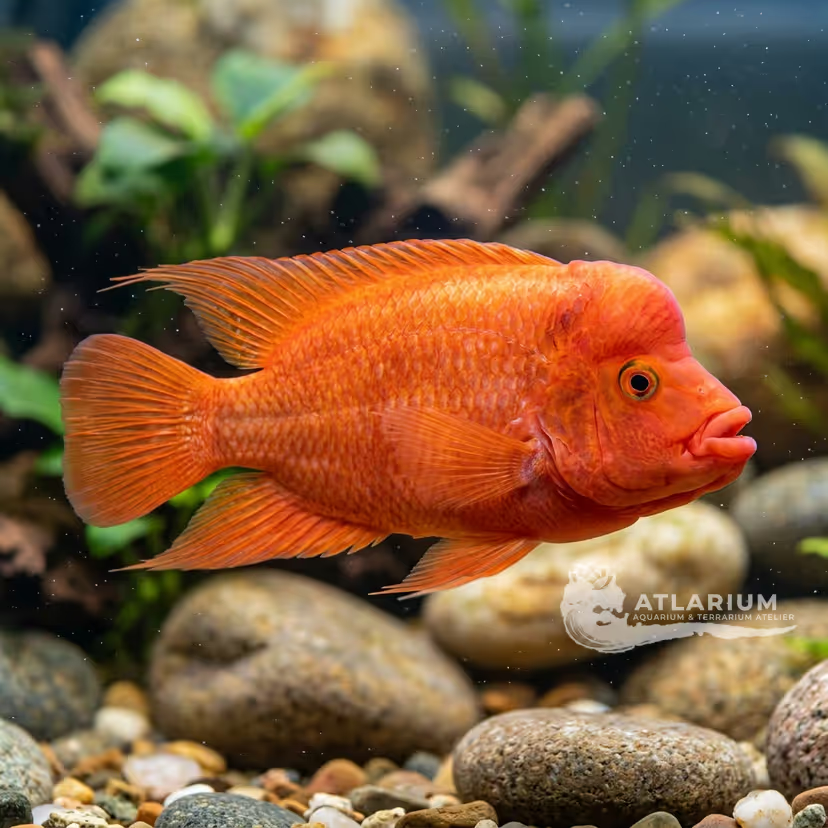
Red Devil Cichlid
Amphilophus labiatus
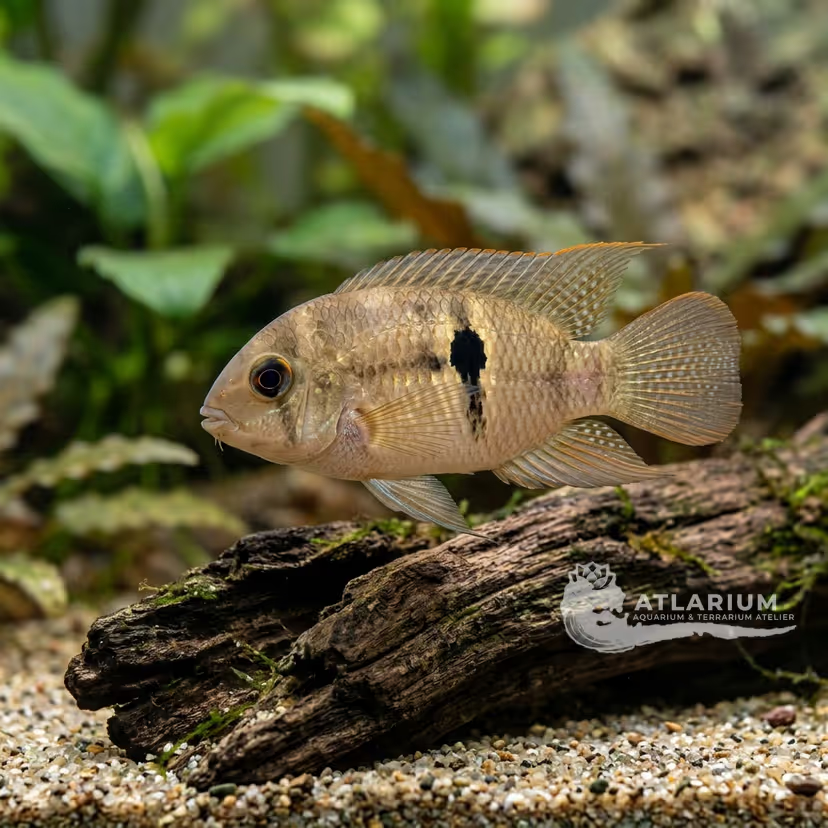
Keyhole cichlid
Cleithracara maronii

Paraguay Mouthbrooder (Bujurquina vittata)
Bujurquina vittata

Angelfish
Pterophyllum scalare
African Butterfly Cichlid
Anomalochromis thomasi

Black Acara (Two-spot Cichlid)
Cichlasoma bimaculatum
Recommended companions
Compatible cards from coherent ecosystems with matching parameters.
Anubias
Anubias barteri

Anubias nana
Anubias barteri var. nana

Anubias barteri var. nana 'Round Leaf'
Anubias barteri var. nana 'Round Leaf'

Anubias congensis
Anubias congensis

Anubias gigantea
Anubias gigantea

Anubias lanceolata
Anubias lanceolata
Anubias minima
Anubias minima
Amazon Sword
Aquarius grisebachii

Ammannia sp. 'Bonsai'
Ammannia sp. 'Bonsai'

Bacopa sp. "Japan"
Bacopa sp. "Japan"

Bolbitis heteroclita
Bolbitis heteroclita

Arrowhead Anubias
Anubias hastifolia

Azolla caroliniana
Azolla caroliniana

Azolla mexicana
Azolla mexicana

Anubias afzelii
Anubias afzelii

Ammannia latifolia
Ammannia latifolia
Similar care
Cards with similar requirements, difficulty, habitat, and husbandry profile.

Diadem Cichlid (Aequidens diadema)
Aequidens diadema

Yoyo Loach
Botia almorhae

Amazon Cichlasoma (Cichlasoma amazonarum)
Cichlasoma amazonarum
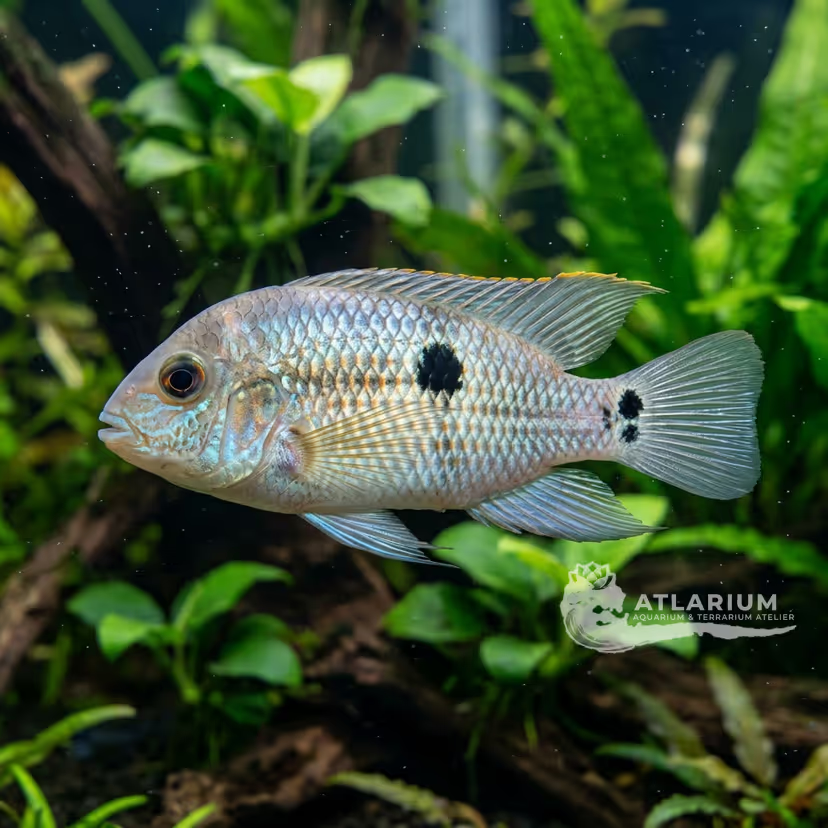
Double-spot Acara (Aequidens pallidus)
Aequidens pallidus

Convict Cichlid
Amatitlania nigrofasciata

Threadfin Acara
Acarichthys heckelii

Yellow Dwarf Cichlid (Yellow Convict)
Amatitlania nanolutea
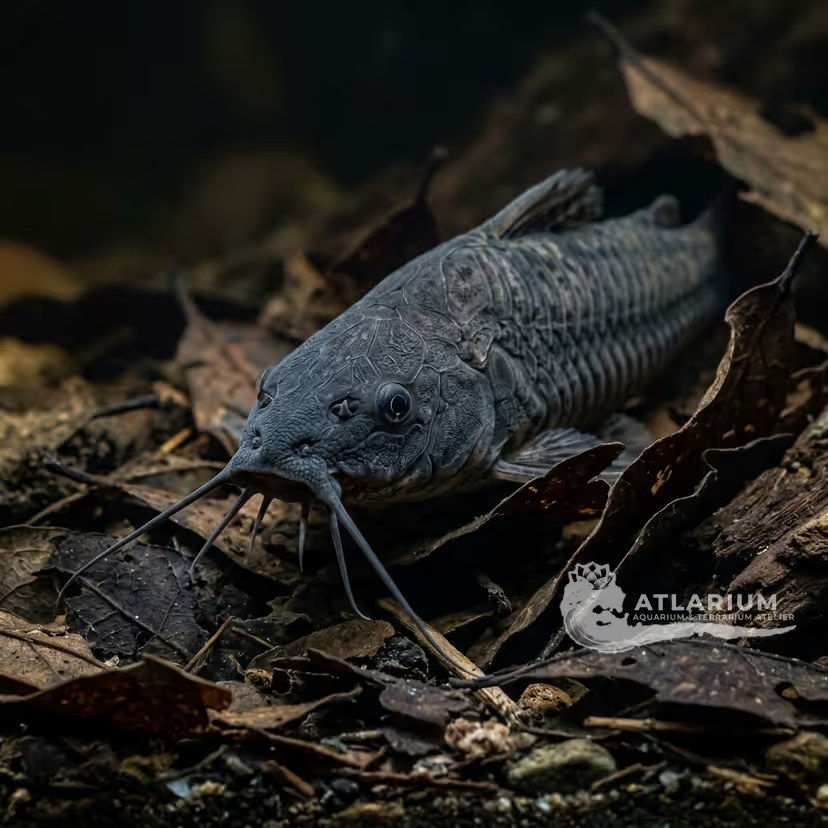
Cascarudo, Armored Catfish
Callichthys callichthys

Cupid cichlid
Biotodoma cupido

T-Bar Cichlid (Sajica)
Amatitlania sajica

Bristlenose Pleco (Ancistrus)
Ancistrus cirrhosus

Silver Dollar
Metynnis argenteus

Three-Stripe Dwarf Cichlid (Apistogramma trifasciata)
Apistogramma trifasciata

Giant Danio
Devario aequipinnatus

Meta Cichlid / Yellow Acara (Aequidens metae)
Aequidens metae

Skunk cory
Corydoras arcuatus