African Butterfly Cichlid
Anomalochromis thomasi
A delightful, hyper-peaceful dwarf cichlid (only 8 cm). Looks like a drab grey rock in the pet store, but rapidly transforms into a stunning pale jewel studded with neon-blue diamonds and thick black bars in a dark, planted tank. Completely plant-safe and highly docile.
Water Temperature
23 - 27 °C
pH Value
6 - 7.5
Water type
Freshwater
Tank level
Bottom and middle
Adult size
8 cm
Minimum tank volume
>= 100 L
Minimum group
>= 1
GH
4 - 15 dGH
KH
2 - 7 dKH
TDS
80 - 295 ppm
Conductivity
125 - 461 uS/cm

Species description
Geographical Origin and Habitat: Atypical African origins for a "dwarf" cichlid: comes from the dense coastal forests of Sierra Leone, Liberia and Guinea. Inhabits small shaded streams and slow rivers saturated with oxygen and loaded with fallen leaves and branches.
Taxonomy and Morphology: African Butterfly Cichlid. Belongs to a monotypic genus (Anomalochromis, the only one of its kind). Reaches only 6-8 cm (2.5-3 inches), presenting a stocky and compact rhomboidal shape, very similar to that of South American cichlids (like the Ramirezi).
Social Behavior: The antithesis of the classic brawling African cichlid. The Thomasi is shy, gentle and wonderfully peaceful, showing a strong attachment to its partner (stable and monogamous). Spends its time docilely exploring rocks and logs.
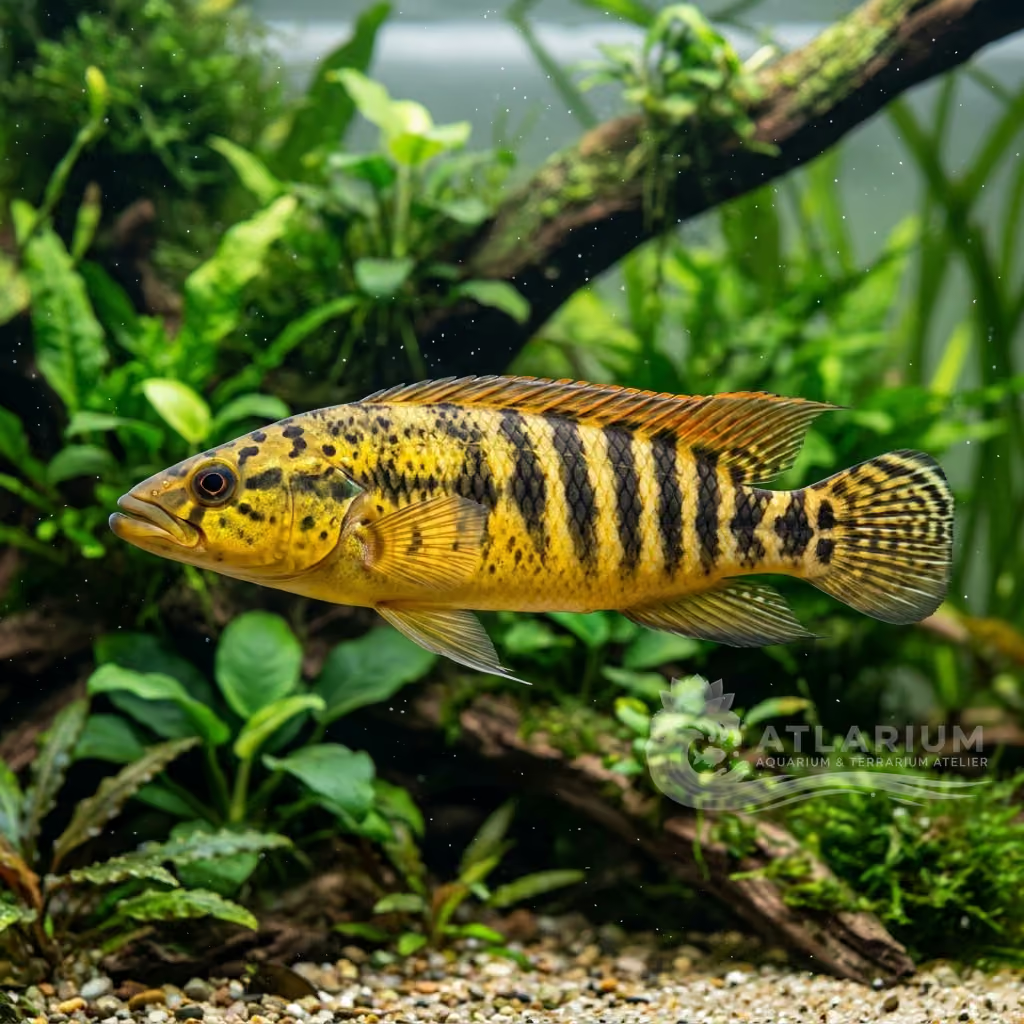
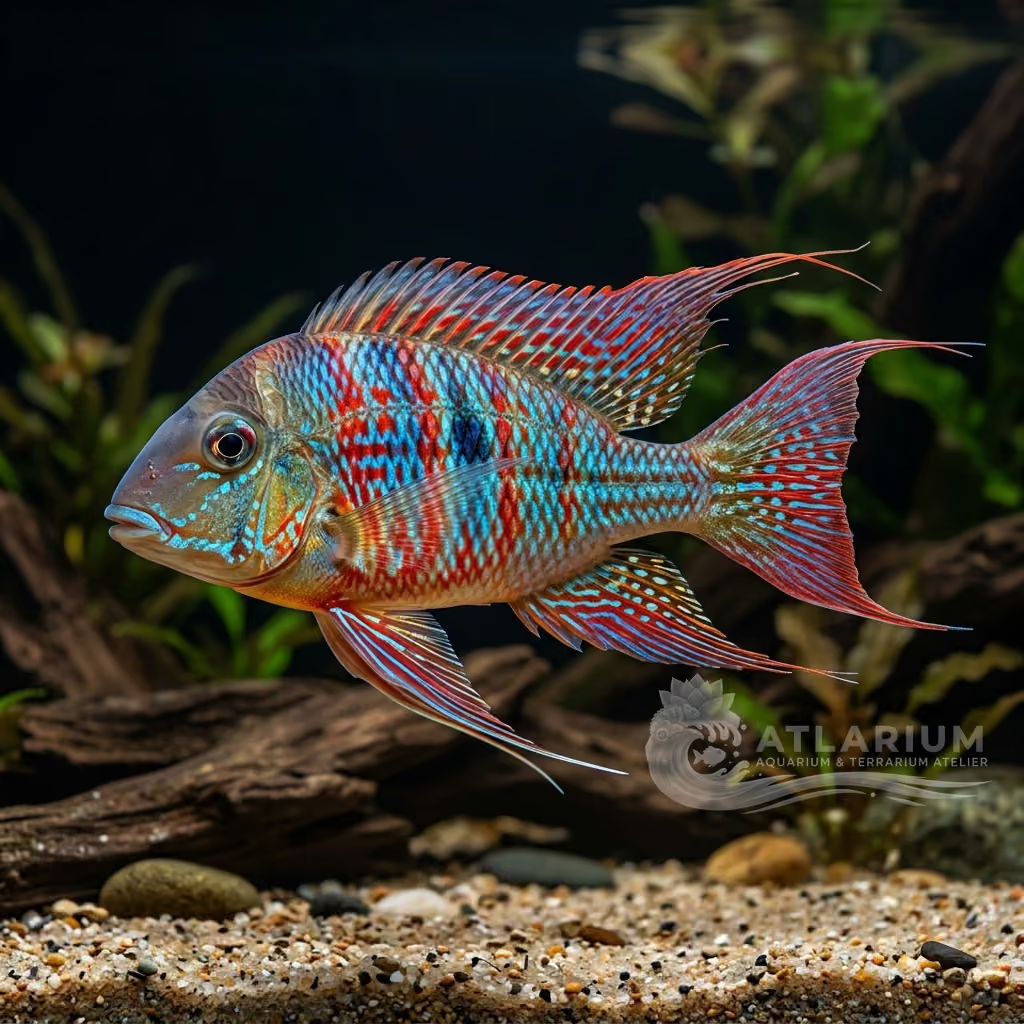
Coloration and Sexual Dimorphism: As a juvenile it is a modest silver-gray, but as an adult it explodes in a kaleidoscope: golden or light brown background, embellished with perfect rows of iridescent light blue/green scales (the "sequins"). A black band crosses the eye and a black spot marks the flank.

Care, breeding and tankmates
Aquarium Setup: Excellent for modest aquariums (80 cm / 32 inches). Requires a heavily planted setup (Anubias, Bolbitis), a dark fine sand bottom and countless coconut shell or flat stone shelters. The water must be slightly amber to encourage its emergence from shelter.
Diet and Feeding: Omnivore and easy to feed. An exceptional micro-snail predator (will eradicate Physa infestations). Provide high quality sinking granules for small cichlids, to be alternated frequently with frozen prey (bloodworms, mysis).
Water Quality: Much less demanding than its dwarf cousins from South America. They tolerate pH between 6.0 and 7.5 and moderate hardness (GH 4-15). The ideal temperature is 23-27°C (73-81°F). However, they cannot stand nitrate spikes, so regular partial changes are necessary.
Compatibility and Cohabitation: The perfect cichlid for a peaceful community aquarium. Splendid in African river biotope tanks with Congo Tetras and African Hatchetfish, but cohabits perfectly with small Amazonian Characins, Asian Rasboras and Corydoras. No aggressive fish in the tank.
Aquarium Breeding: Beautiful and instructive. The pair, after meticulously cleaning a broad leaf or a smooth stone, lays up to 500 eggs. They are exemplary and cooperative parents, and will graze the clouds of tiny fry around the aquarium for weeks.
Risks and Diseases: The most serious threat is food competition or aggression by turbulent tankmates: if frightened by Botia or large Angelfish, it will hole up until it starves to death. Sensitive to skin bacteria in poorly oxygenated waters.

Geographic origin and distribution
Atypical African origins for a "dwarf" cichlid: comes from the dense coastal forests of Sierra Leone, Liberia and Guinea. Inhabits small shaded streams and slow rivers saturated with oxygen and loaded with fallen leaves and branches.
Origin
Tropical oceans and reefsAfrica and Madagascar

Fish profile
- Temperament
- Semi-aggressive
- This species is generally peaceful and retiring, making it one of the most docile dwarf cichlids suitable for community aquariums. They do not dig extensively in the substrate or damage live plants, unlike many larger cichlids. However, they will establish small territories, and their behavior becomes significantly more aggressive and protective when breeding. Outside of spawning periods, they are shy and may hide if kept with overly energetic or boisterous fish.
- Diet
- Omnivore
- Anomalochromis thomasi is a carnivorous micro-predator that feeds on small invertebrates, insects, and snails in the wild. In the aquarium, they are not picky eaters and will readily accept high-quality dry pellets, flakes, and freeze-dried foods. Supplementing their diet with live or frozen foods such as bloodworms, brine shrimp, and daphnia is highly recommended to enhance their coloration and condition. They are also known to eat small pest snails, which can help control snail populations in the tank.
- Life expectancy
- 5-8 years
- Adult size
- 8 cm
- Sex ratio
- 1:1 ratio
- These dwarf cichlids are monogamous and form strong, long-lasting pair bonds, making a 1:1 male-to-female ratio the ideal stocking choice. Buying a group of six or more juveniles is the most effective way to allow them to select their own partners naturally. Once a compatible pair has formed, they will establish a territory and should ideally be kept together. Keeping multiple pairs is possible but requires a much larger aquarium with plenty of visual barriers to prevent conflict.
- Feeding frequency
- Twice daily
- It is recommended to feed the African Butterfly Cichlid once or twice a day with small portions that they can completely consume within a couple of minutes. Providing small, frequent meals helps mimic their natural foraging behavior and prevents water quality degradation from uneaten food. Fasting them for one day a week can also support healthy digestion and keep their activity levels high. For breeding pairs or growing juveniles, multiple small feedings throughout the day can support their higher energy demands.
- Bioload
- Low to Medium
- Anomalochromis thomasi has a relatively low to moderate biological load due to its small adult size of approximately 6 to 7 centimeters. However, like all dwarf cichlids, they are sensitive to accumulating organic waste, nitrates, and sudden shifts in water parameters. Efficient biological filtration and a regular maintenance schedule of partial water changes are essential to keep their environment clean. It is recommended to avoid heavy feeding that could overwhelm the biological filter.
- Flow
- Stagnant
- This species prefers gentle to moderate water flow, reflecting their native slow-moving coastal streams, rivers, and swampy forest pools. High-output filters or strong powerheads that create rapid currents should be avoided, as they can cause physical stress to these dwarf cichlids. A simple air-operated sponge filter or a hang-on-back filter with adjustable flow is ideal for their setup. Gentle water movement is sufficient to maintain proper oxygenation and filtration without blowing the fish around.
- Jump risk
- No
- Reproduction
- Oviparous
- Anomalochromis thomasi is an open-substrate spawner that is relatively easy to breed in captivity. The female will carefully clean a flat stone, driftwood, or a broad plant leaf where she lays up to 500 eggs, which the male then fertilizes. Both parents are highly dedicated and share the duties of guarding the eggs, fanning them with their fins, and moving the hatched larvae to pre-dug pits in the substrate. The fry hatch in about 48 hours and become free-swimming in another 72 hours, after which they can be fed microworms and newly hatched brine shrimp.
- Compatibility & tankmates
- Peaceful
- The African Butterfly Cichlid is highly compatible with other peaceful, small to medium-sized species in a community tank. Ideal tank mates include small tetras, rasboras, barbs, Corydoras catfish, and other non-aggressive West African dwarf cichlids. They should not be kept with large, aggressive, or overly boisterous fish that might easily intimidate them. During spawning, they will defend their territory vigorously, so providing enough space and visual barriers is important if keeping them with other bottom dwellers.
- Tank level
- Middle/Bottom
- The African Butterfly Cichlid primarily occupies the bottom and middle levels of the aquarium. They actively swim in the open areas of the lower half of the tank, search the substrate for food, and rest near shelter. When breeding, they will stay very close to the bottom where they clean flat rocks or broad leaves for spawning. The upper level of the tank is rarely visited unless they are feeding or searching for shelter near floating plants.

Scientific Parameters & Models
FishBase
Window to the official scientific data of the species
FishBase v25.04Data synced on: 06/15/2026
- Trophic level
- 3.2 ± 0.4 se
- Resilience
- Medium (1.4 - 4.4 years)
- Phylogenetic uniqueness (PD50)
- 1
- Bayesian Length-Weight
- a = 0.01445, b = 2.99
- VulnerabilityLow vulnerability (10 / 100)

Image gallery
Licensed images linked to the species or, when marked, to the closest representative taxon.

Related species
Recommendations grouped by close relatives, companion choices, and similar care.