Umbrella dwarf cichlid
Apistogramma borellii
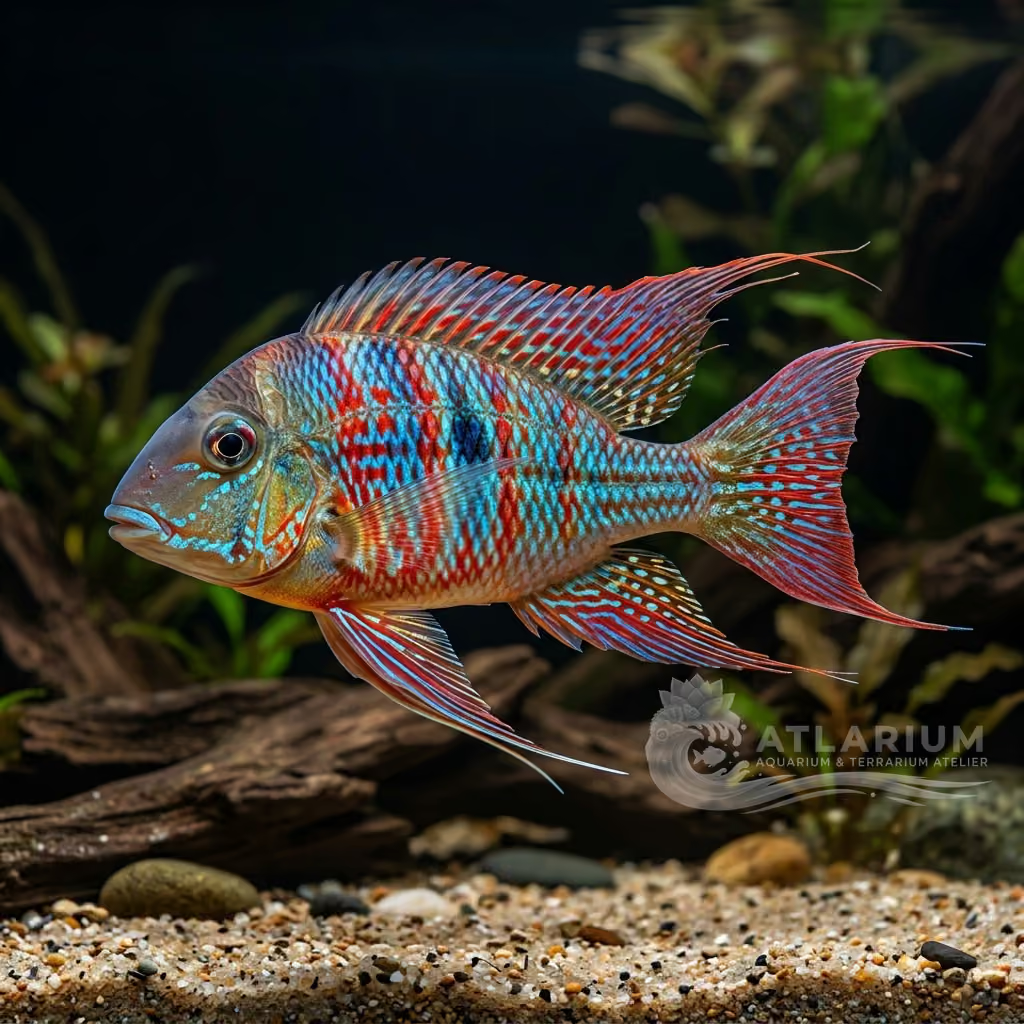
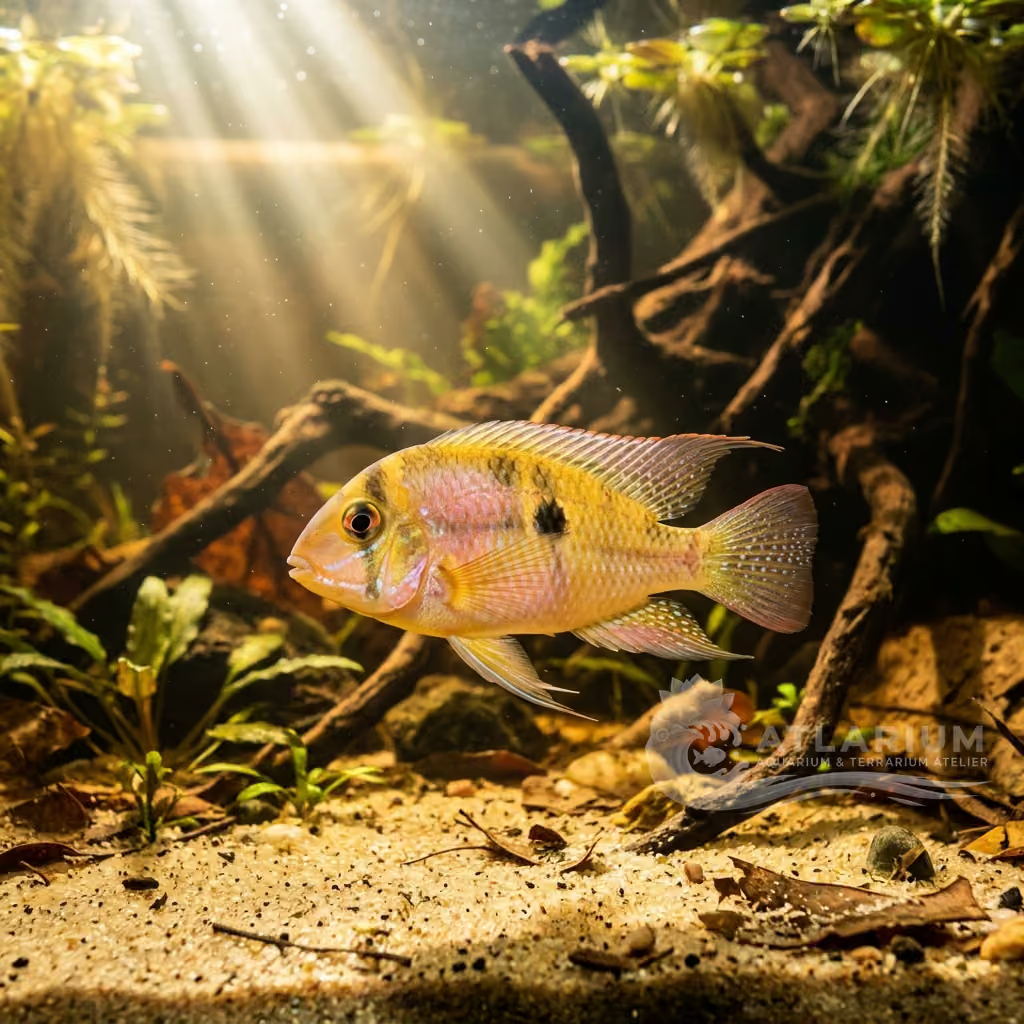
One of the most peaceful and cold-tolerant dwarf cichlids: thrives at 20–26 °C, cooler than Amazonian cousins. Males display metallic blue-yellow iridescence with umbrella-shaped spread fins — hence the name. Females turn bright yellow during breeding. Native to Paraguay and the lower Paraná. Cave spawner with maternal care. In pairs or harems (1 male: 2–3 females). Ideal for communities with small, peaceful fish.
Water Temperature
20 - 25 °C
pH Value
6 - 8
Water type
Freshwater
Tank level
Bottom and middle
Adult size
7 cm
Minimum tank volume
>= 55 L
Minimum group
>= 2
GH
2 - 15 dGH
KH
1 - 7 dKH
TDS
40 - 295 ppm
Conductivity
63 - 461 uS/cm

Species description
Geographical Origin and Habitat: Paraguay River and Paraná River basin (Mato Grosso, northern Argentina). Mainly inhabits cold marginal areas covered by dense aquatic vegetation (such as water hyacinth) or seasonally flooded.
Taxonomy and Morphology: Borell's Dwarf Cichlid (Apistogramma borellii / Synonym: A. reitzigi). Dwarf cichlid with a stocky and compact body. Famous for the impressive and disproportionate sail of the dorsal fin of adult males, which can exceed the body itself in height.
Social Behavior: Known as one of the mildest and most peaceful Apistogrammas. Its introverted nature allows it to be kept in small groups even in non-enormous tanks, since male skirmishes are mere displays with flattened fins without real bites.
Coloration and Sexual Dimorphism: The male boasts a magnificent golden-yellow or opaline-blue livery ("Opal" morph) with elaborate tangles of red, black or light blue lines on the cheeks ("worm-lines"). Females much smaller and roundish, bright yellow with clearly evident central black spots when breeding.

Care, breeding and tankmates
Aquarium Setup: Tank for a pair even of just 60 cm (24 inches). Obligation of fine sand to sift and extreme richness of hiding places (smooth rocks, coconut tubes, thick thickets of Cryptocoryne). The addition of floating plants instills security against strong light.
Diet and Feeding: Omnivore / Benthic micro-predator. To be scrupulously fed with live or frozen white worms, brine shrimp, daphnia and nauplii. Rarely integrable with a very soft sinking specific pellet.
Water Quality: A miracle of hardiness. Easily tolerates hard tap water (up to 15 GH and pH 8.0) and thrives in unheated sub-tropical waters (20-25°C / 68-77°F). Not to be kept permanently at 28°C (82°F) or it will prematurely decay due to hyper-metabolism.
Compatibility and Cohabitation: Unsuitable for rowdy tanks. Cohabits perfectly with Endler Guppies, calm Tetras, Minor Tetras and Dwarf Corydoras. If oppressed by large and lively Loricariids or Botias, it will stop feeding and will waste away holed up.
Aquarium Breeding: Excellent for beginners. Chooses a tiny den, the female (yellow and black, super-aggressive in this phase) triggers the exclusive care. Numerous broods; the fry devour nauplii from the first day of swimming.
Risks and Diseases: An incorrect diet of "dry industrial flakes only" will generate Bloat problems or the total regression of the growth of the portentous dorsal fin in young males.

Geographic origin and distribution
Paraguay River and Paraná River basin (Mato Grosso, northern Argentina). Mainly inhabits cold marginal areas covered by dense aquatic vegetation (such as water hyacinth) or seasonally flooded.
Origin
Amazon, Orinoco, and Guianas

Fish profile
- Temperament
- Semi-aggressive
- This species has a relatively peaceful temperament compared to other Apistogramma members, making it one of the most docile dwarf cichlids. However, they are still territorial and will defend their chosen caves and immediate nesting sites, especially during the breeding season. Males can engage in minor skirmishes to establish dominance, but these are rarely harmful if sufficient space and cover are provided. Females can become hyper-aggressive toward any intruders, including the male, when guarding their eggs and fry.
- Diet
- Omnivore
- Apistogramma borellii is primarily carnivorous, feeding on tiny invertebrates and benthic organisms in their natural habitat. In the aquarium, they thrive on a protein-rich diet consisting mainly of live and frozen foods such as brine shrimp, daphnia, cyclops, and bloodworms. While captive-bred specimens will often accept high-quality sinking pellets and flakes, these should only supplement their fresh diet. Feeding a varied diet is crucial for enhancing their vibrant coloration and ensuring successful breeding conditioning.
- Life expectancy
- 2-5 years
- Adult size
- 7 cm
- Sex ratio
- Harem
- In the aquarium, Apistogramma borellii can be successfully housed as a single compatible pair or in a harem ratio of one male to several females. Keeping a harem (e.g., one male with three to four females) is highly recommended in larger, well-planted tanks to distribute any male attention and establish distinct territories for each female. If kept in too small a space or with incorrect ratios, dominant individuals may excessively harass submissive ones. In smaller tanks, keeping a single pair is often the safest stocking option to prevent intense territorial disputes.
- Feeding frequency
- Twice daily
- It is recommended to feed Borelli's Dwarf Cichlid small portions once or twice a day. This feeding routine mimics their natural browsing habits and prevents overfeeding, which can lead to water quality issues and digestive problems like bloating. Spreading the food across different areas of the aquarium is beneficial to ensure that subordinate fish and females can feed without being intimidated by dominant males. During breeding conditioning, feeding frequency can be slightly increased with high-quality live foods to support egg production.
- Bioload
- Low to Medium
- Borelli's Dwarf Cichlid is a small species with a relatively low biological load compared to larger cichlids, producing minimal waste. However, because they are sensitive to nitrates and organic pollutants, efficient mechanical and biological filtration is still required to maintain pristine water conditions. Regular weekly water changes of about 10-15% are highly recommended to ensure the parameters remain stable. A well-oxygenated environment with a mature filter is necessary to keep toxic ammonia and nitrite levels at zero.
- Flow
- Strong
- In their native South American river basins, Apistogramma borellii inhabits slow-moving or still waters, such as quiet tributaries, margins, and oxbows. Therefore, they prefer weak to gentle water flow in the aquarium, as strong currents can stress them and exhaust their swimming energy. Filtration should be effective but set up in a way that minimizes heavy turbulence, utilizing spray bars or sponge filters if necessary. Creating calm areas with plants and driftwood will allow the fish to rest comfortably in their preferred low-flow spots.
- Jump risk
- Yes
- Apistogramma borellii is not classified as a notorious jumper, but they can leap out of the water if startled, stressed, or chased by aggressive tank mates. This risk is particularly high during territory disputes, breeding conflicts, or when lights are suddenly turned on or off. To prevent accidental escapes, a secure, tight-fitting lid or cover is highly recommended. Utilizing floating plants can also create a natural barrier at the surface while helping the fish feel more secure in their environment.
- Reproduction
- Oviparous
- Breeding Apistogramma borellii is relatively accessible to hobbyists compared to other dwarf cichlids. They are substrate spawners, with the female selecting a hidden cave, coconut shell, or crevice to deposit her eggs. The female takes sole responsibility for guarding the eggs and fry, displaying vibrant yellow warning colors and intense territorial defense. In smaller setups, the male may need to be temporarily removed after spawning to protect him from the female's nesting aggression. The fry can be fed newly hatched brine shrimp nauplii and microworms once they become free-swimming.
- Compatibility & tankmates
- Community
- Borelli's Dwarf Cichlid is highly compatible with small, peaceful community tank mates that occupy the upper and middle water layers. Ideal companions include quiet characins, pencilfish, and small livebearers, which can also act as "dither fish" to make the cichlids feel more secure. Bottom-dwellers like Corydoras can be kept, but they may face aggression if they wander too close to the cichlids' breeding caves. Aggressive, large, or fast-swimming species should be avoided, as well as other Apistogramma species to prevent territorial fights and potential hybridization.
- Tank level
- Middle/Bottom
- This species primarily occupies the bottom and lower-middle levels of the water column, where they spend their time foraging for food and defending territories. They are closely associated with the substrate, preferring sandy areas decorated with leaf litter, driftwood, and low-lying caves. While they occasionally venture to the middle or upper layers of the tank during feeding times, their daily activities are concentrated near the tank floor. Providing ample cover in the lower zone helps them feel secure and exhibit natural behaviors.

Scientific Parameters & Models
FishBase
Window to the official scientific data of the species
FishBase v25.04Data synced on: 06/15/2026
- Trophic level
- 3.3 ± 0.4 se
- Resilience
- Low (4.5 - 14 years)
- Phylogenetic uniqueness (PD50)
- 0.5
- Bayesian Length-Weight
- a = 0.02138, b = 2.98
- VulnerabilityLow vulnerability (10 / 100)

Related species
Recommendations grouped by close relatives, companion choices, and similar care.