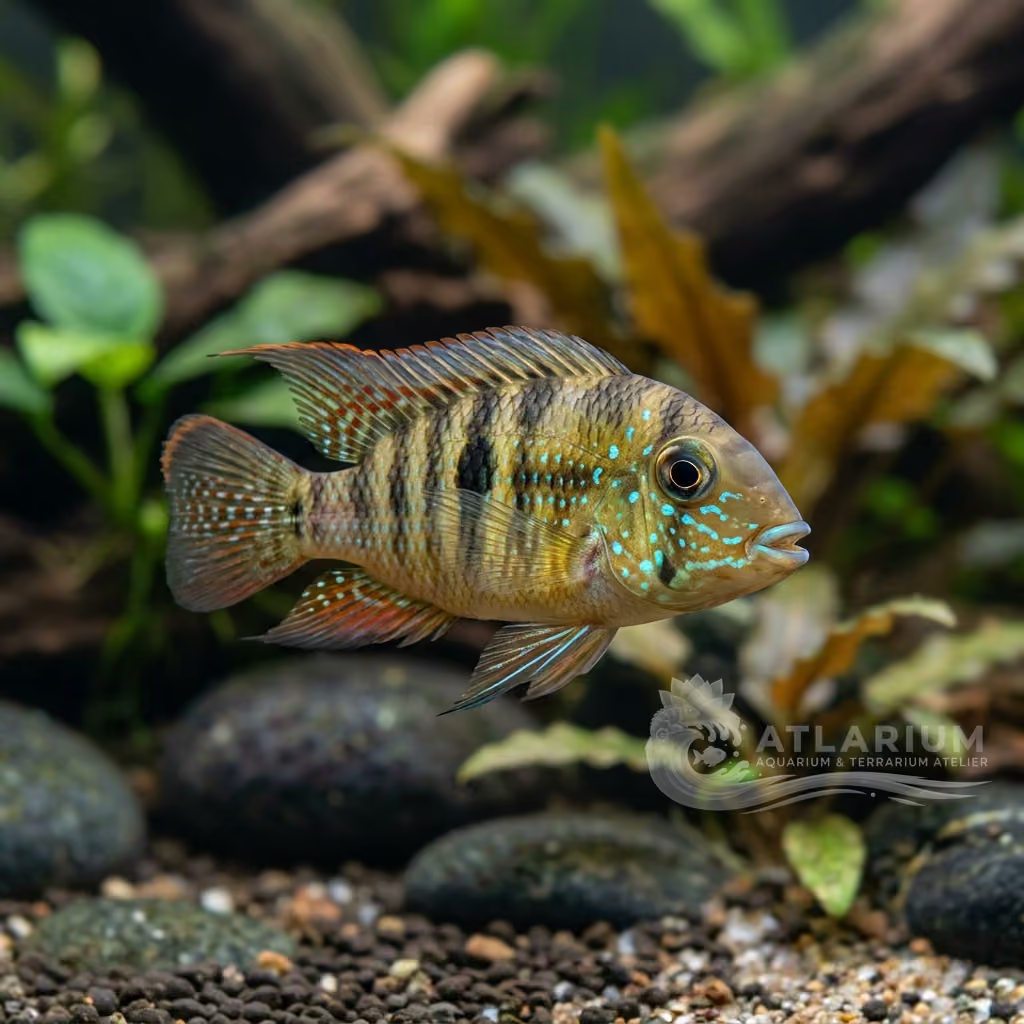
Bandtail Dwarf Cichlid
Apistogramma eunotus
A robust and attractive dwarf cichlid from the Peruvian Amazon, featuring beautiful blue-green iridescence and distinct vertical tail bands. It exhibits fascinating harem-forming behavior.
Water Temperature
23 - 28 °C
pH Value
5.5 - 7
Water type
Freshwater
Tank level
Bottom
Adult size
7.5 cm
Minimum tank volume
>= 60 L
Minimum group
>= 2
GH
2 - 8 dGH
KH
1 - 4 dKH
TDS
40 - 160 ppm
Conductivity
63 - 250 uS/cm

Species description
Geographical Origin and Habitat: South America: widely distributed in the Ucayali River basin in Peru and parts of western Brazil. It inhabits slow-moving forest streams, flooded areas, and shallow river margins characterized by dense leaf litter, submerged branches, and soft acidic waters.
Taxonomy and Morphology: Belongs to the family Cichlidae, subfamily Geophaginae, genus Apistogramma. A robust and stout dwarf cichlid with a relatively large head. Males grow to a maximum length of 6-7 cm (2.5 inches), while females remain significantly smaller at around 4-5 cm.
Social Behavior: Territorial and harem-forming. A single dominant male will claim a large territory encompassing the smaller territories of multiple females. They are cave-spawners. Aggression increases significantly during spawning and brood care.
Coloration and Sexual Dimorphism: Males display attractive blue-green iridescent scales on their cheeks and body, with vertical dark banding patterns on the rounded caudal fin. Females are smaller, generally greyish-brown, but turn a bright lemon-yellow color when breeding.

Care, breeding and tankmates
Aquarium Setup: Minimum tank size is 80 liters (approx. 20 gallons) for a pair. Use a soft, dark sand substrate, dry leaf litter (like Catappa leaves), and driftwood. Provide multiple caves (coconut shells or small clay pots) to establish territories and sight breaks.
Diet and Feeding: Carnivorous. Thrives on live or frozen foods such as brine shrimp nauplii, daphnia, cyclops, and bloodworms. Sinking micro-pellets and high-quality flakes are accepted, but should not be the sole diet. Feed small amounts twice daily.
Water Quality: Demands clean, soft, and acidic water: temperature 22-28°C (72-82°F), pH 5.5-7.0, and GH 1-8. Gentle filtration (sponge filters are ideal) is preferred to avoid strong currents. Perform regular water changes to maintain low nitrate levels.
Compatibility and Cohabitation: Perfect for Amazonian community setups. Best housed with peaceful mid-to-upper water column species such as small tetras or pencilfish, which act as dither fish. Avoid housing with large or aggressive tankmates.
Aquarium Breeding: Cave breeder. The female deposits eggs on the ceiling of a cave and assumes sole responsibility for guarding and raising the fry. The male patrols the outer perimeter of the territory. Fry can be fed Artemia nauplii.
Risks and Diseases: Highly susceptible to internal parasites (e.g., Hexamita) and bacterial infections if water quality is neglected. They do not tolerate high levels of dissolved organic waste or sudden swings in water parameters.

Geographic origin and distribution
South America: widely distributed in the Ucayali River basin in Peru and parts of western Brazil. It inhabits slow-moving forest streams, flooded areas, and shallow river margins characterized by dense leaf litter, submerged branches, and soft acidic waters.
Origin
Amazon, Orinoco, and GuianasEast Asia

Fish profile
- Temperament
- Territorial
- They possess a bold but generally peaceful temperament compared to other dwarf cichlids, except when breeding. They are highly territorial over their chosen caves and will chase away any fish that encroaches. Overall, they are highly intelligent and interactive fish that make a stunning centerpiece.
- Diet
- Carnivore
- In their natural habitat, they are micropredators that hunt small invertebrates among the leaf litter. In the aquarium, they thrive on a varied diet of frozen bloodworms, brine shrimp, and daphnia. They generally adapt well to high-quality, sinking carnivore micro-pellets over time.
- Life expectancy
- 3-5 years
- Adult size
- 7.5 cm
- Sex ratio
- Harem
- They can be kept successfully in pairs or small harems if the aquarium footprint is large enough to support multiple territories. Males are fiercely territorial toward each other and will fight continuously if kept together in small spaces. Female-female aggression can also occur if caves are not spaced adequately apart.
- Feeding frequency
- Twice daily
- Feeding them small, controlled portions once or twice a day maintains their health and prevents water fouling. It is important to drop food near their territory to ensure they eat before mid-water fish consume it all. Overfeeding can quickly degrade the pristine water conditions they require.
- Bioload
- Low to Medium
- This dwarf cichlid has a minor bioload impact, making it an excellent candidate for appropriately sized community tanks. Their sensitivity to poor water parameters, rather than their waste production, dictates the required filtration and maintenance. Strict adherence to regular water changes is necessary to prevent disease.
- Flow
- Strong
- They originate from calm, slow-moving backwaters and heavily vegetated margins in Peru. They strongly prefer a gentle, diffused water flow that allows them to hover effortlessly over the substrate. Strong currents disrupt their natural behaviors and cause significant stress.
- Jump risk
- No
- Reproduction
- Oviparous
- They are cave spawners that exhibit fascinating biparental care, though the female does the bulk of the direct brood-tending. Spawning occurs in a secluded cave, and both parents aggressively defend the territory once the fry are free-swimming. Providing soft water and numerous small caves is essential for successful breeding.
- Compatibility & tankmates
- Territorial
- They are peaceful, somewhat robust community residents when kept with appropriate upper-water dither fish like tetras. They will aggressively defend their territory against other bottom-dwelling fish, particularly Corydoras or other cichlids. Large, predatory, or overly aggressive fish will quickly stress and dominate them.
- Tank level
- Bottom
- They are devoted bottom-dwellers that rarely venture above the lower third of the water column. They spend their days exploring the substrate, patrolling their territory, and hiding in caves or dense vegetation. Their behavior is tightly bound to the structure of the aquarium floor.

Scientific Parameters & Models
FishBase
Window to the official scientific data of the species
FishBase v25.04Data synced on: 06/15/2026
- Trophic level
- 3.4 ± 0.4 se
- Resilience
- High (less than 15 months)
- Phylogenetic uniqueness (PD50)
- 0.5
- Bayesian Length-Weight
- a = 0.02188, b = 3.02
- VulnerabilityLow vulnerability (10 / 100)

Related species
Recommendations grouped by close relatives, companion choices, and similar care.