

Encyclopaedia
Adolfo's cory
Corydoras adolfoi
Among the most elegant and sought-after Corydoras: a golden-orange patch on the nape and a black band along the dorsal ridge distinguish it from most congeners. Native to the dark, tannic waters of Brazil's Rio Negro basin, it requires soft, acidic water to show the best of its livery. Like all Corydoras, it is an armored, scaleless fish that breathes atmospheric air — surfacing for a gulp of air is perfectly normal. Gregarious to the core: a school of 5+ specimens sifting the sandy bottom in sync is a mesmerizing spectacle.
Share
Check out Adolfo's cory on Atlarium
22 - 26 °C
5.5 - 7
Freshwater
Bottom
6 cm
>= 60 L
>= 5
1 - 10 dGH
1 - 5 dKH
25 - 200 ppm
39 - 313 uS/cm
Species description
Care, breeding and tankmates
Geographic Origin and Distribution
Origin
Fish profile
- Temperament
- Peaceful
- Diet
- Omnivore
- Sex ratio
- Specific M:F ratio
- Feeding frequency
- Twice daily
- Bioload
- Low
- Flow
- Moderate
- Jump risk
- No
- Reproduction
- Oviparous
- Compatibility & tankmates
- Community
- Tank level
- Bottom
Window to the official scientific data of the species
Scientific Parameters & Models
- Trophic level
- 3 ± 0.4 se
- Resilience
- High (less than 15 months)
- Phylogenetic uniqueness (PD50)
- 0.5
- Bayesian Length-Weight
- a = 0.00741, b = 3.14
Image gallery
Licensed images linked to the species or, when marked, to the closest representative taxon.
Related species
Recommendations grouped by close relatives, companion choices, and similar care.
Variants and close relatives
Same atlas type, nearby scientific identity, genus, or family.

False Bandit Cory
Corydoras melini

Cryptic Corydoras
Corydoras crypticus
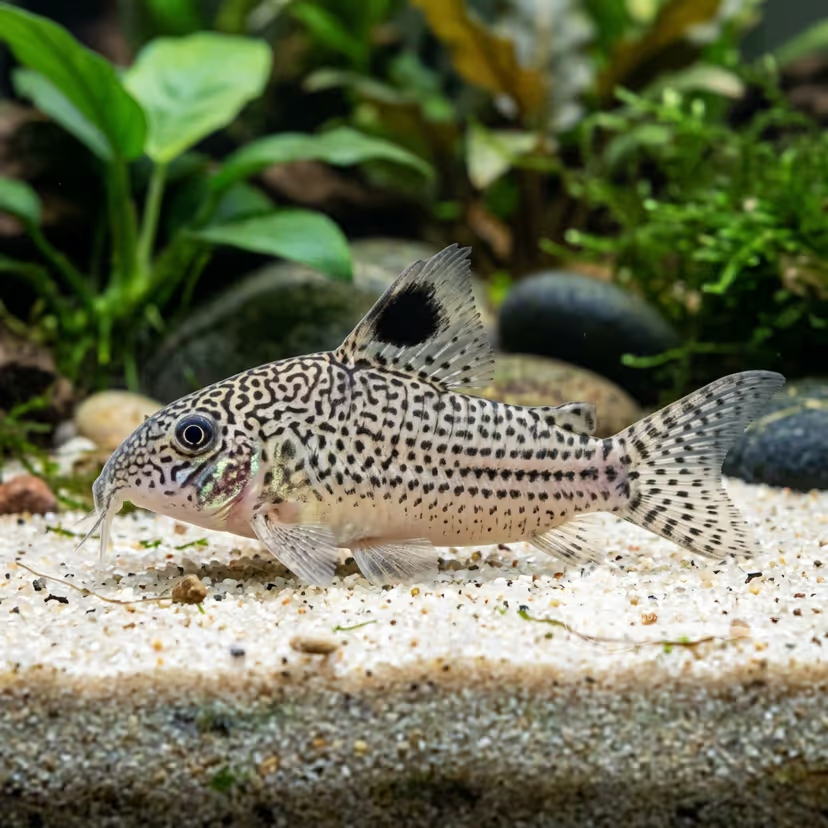
Agassiz's Corydoras
Corydoras agassizii

Bandit cory
Corydoras metae
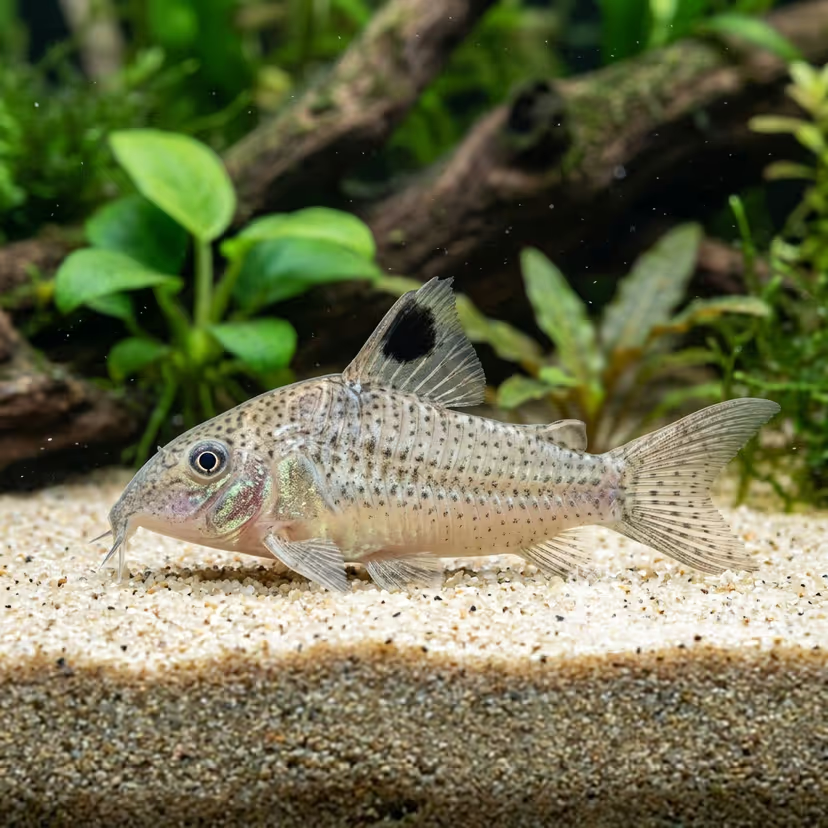
Blacktop Corydoras
Corydoras acutus

Concolor Cory
Corydoras concolor

Pink Corydoras (Axelrod's Cory)
Corydoras axelrodi

Reticulated Corydoras
Corydoras reticulatus

False Spotted Corydoras
Corydoras leucomelas

Burgess's Corydoras
Corydoras burgessi

Flag-tail Cory
Corydoras robineae

Blue Spotted Corydoras / Guianacara
Corydoras melanistius

Julii Corydoras / Leopard Cory
Corydoras julii

Bader's Corydoras
Corydoras baderi

Banded Corydoras
Corydoras vittatus

Bicolor Corydoras
Corydoras bicolor
Recommended companions
Compatible cards from coherent ecosystems with matching parameters.

Blyxa alternifolia
Blyxa alternifolia

Blyxa cf. vietii
Blyxa cf. vietii

Alternanthera reineckii "rosaefolia minor"
Alternanthera reineckii "rosaefolia minor"

Flag Acara (Smiling Cichlid)
Laetacara curviceps

Ammannia mauritiana
Ammannia mauritiana

Amblystegiaceae sp. "Manaus"
Amblystegiaceae sp. "Manaus"

Ammannia latifolia
Ammannia latifolia

Aciotis acuminifolia
Aciotis acuminifolia

Aldrovanda vesiculosa
Aldrovanda vesiculosa

Ammannia sp. 'Bonsai'
Ammannia sp. 'Bonsai'
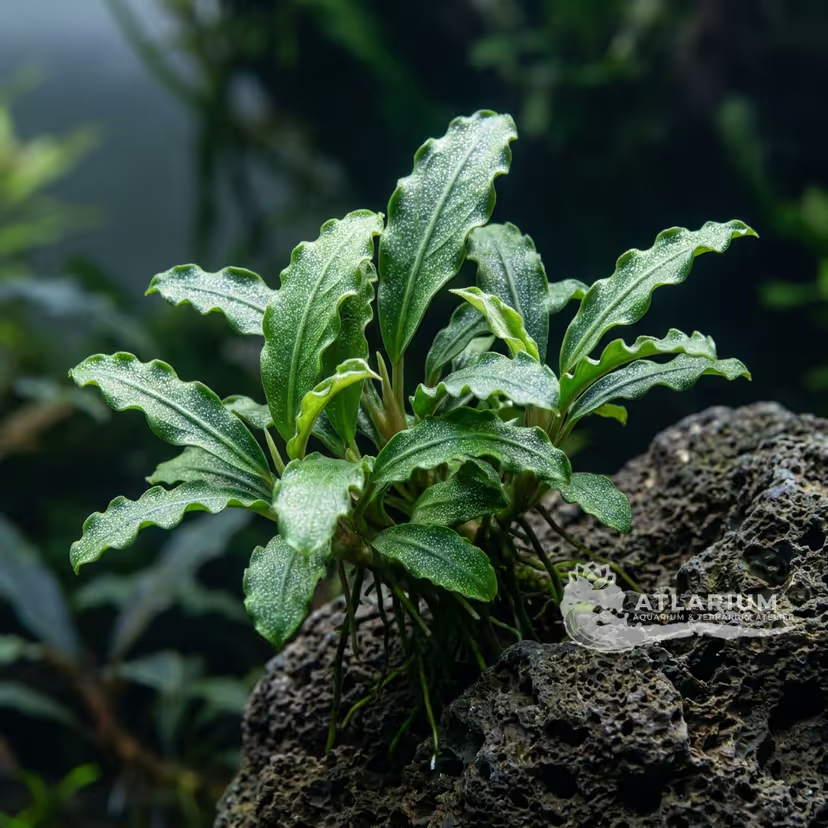
Bucephalandra pygmaea "Bukit Kelam / Sintang"
Bucephalandra pygmaea "Bukit Kelam / Sintang"
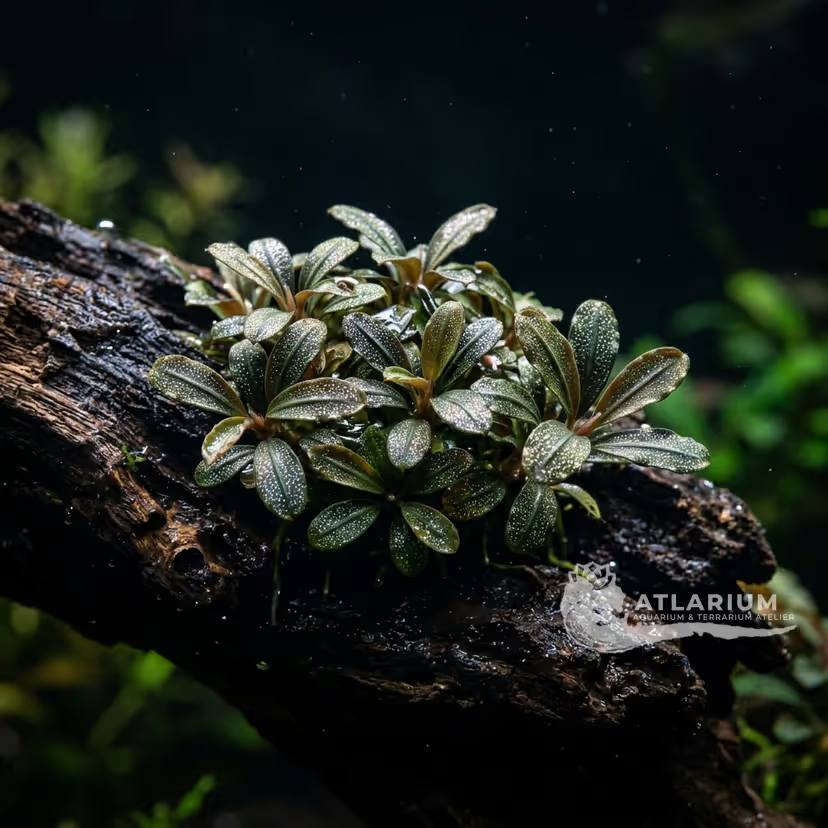
Bucephalandra pygmaea "Kapit"
Bucephalandra pygmaea "Kapit"
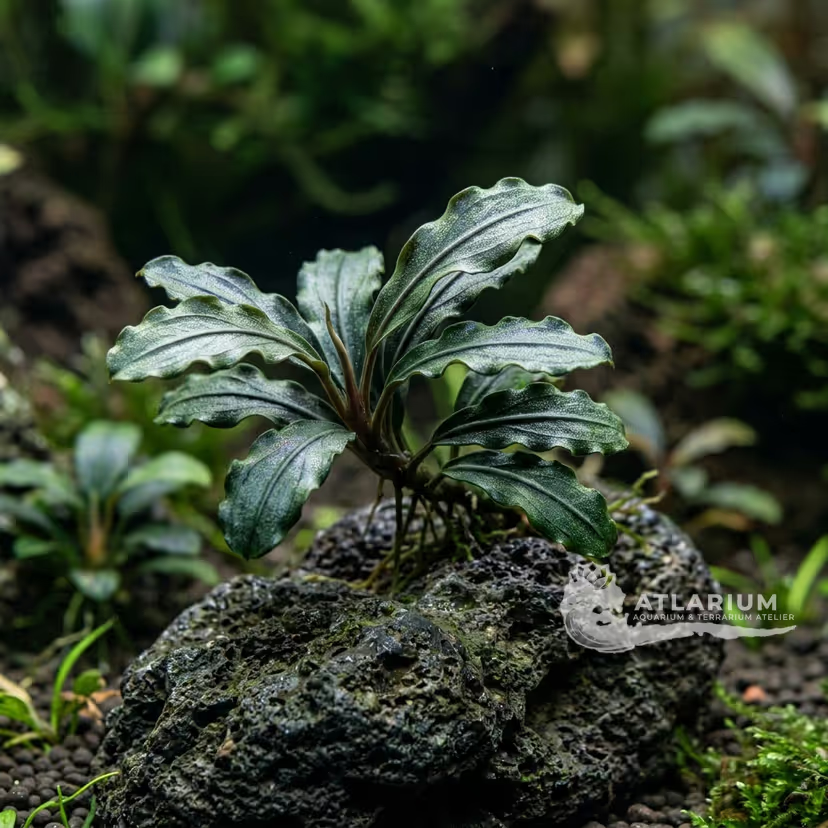
Bucephalandra sordidula
Bucephalandra sordidula
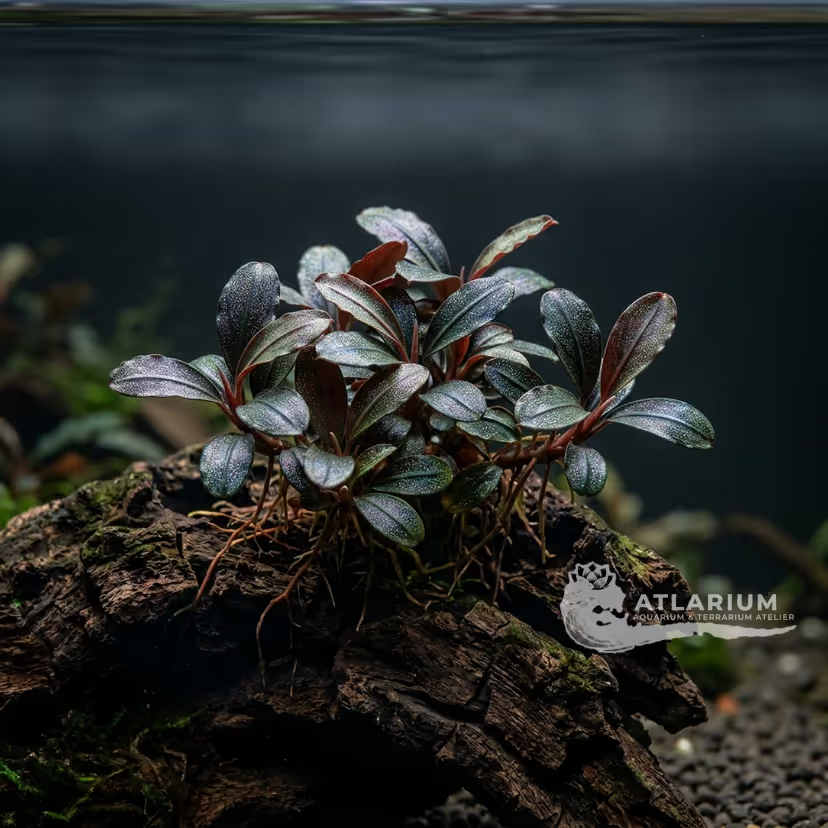
Bucephalandra sp. "Bodok"
Bucephalandra sp. "Bodok"

Bucephalandra sp. "Braun-rot narrow"
Bucephalandra sp. "Braun-rot narrow"
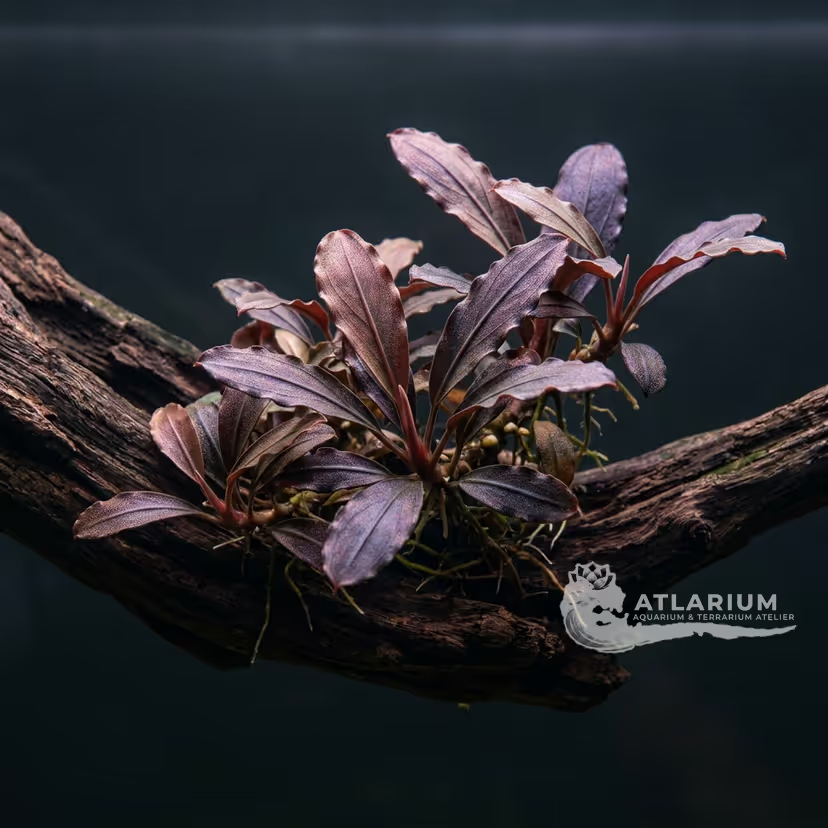
Bucephalandra sp. "Braun-rot" ("Serimbu")
Bucephalandra sp. "Braun-rot"
Similar care
Cards with similar requirements, difficulty, habitat, and husbandry profile.

Smudge Spot Cory
Corydoras similis

Skunk cory
Corydoras arcuatus

Desana Corydoras
Corydoras desana

Broad Corydoras
Corydoras latus

Carla's Cory
Corydoras carlae

Condiscipulus Cory
Corydoras condiscipulus

Cope's Corydoras
Corydoras copei

Corantijn Cory
Corydoras breei

Evelyn's Corydoras
Corydoras evelynae

False Blochi Cory
Corydoras delphax
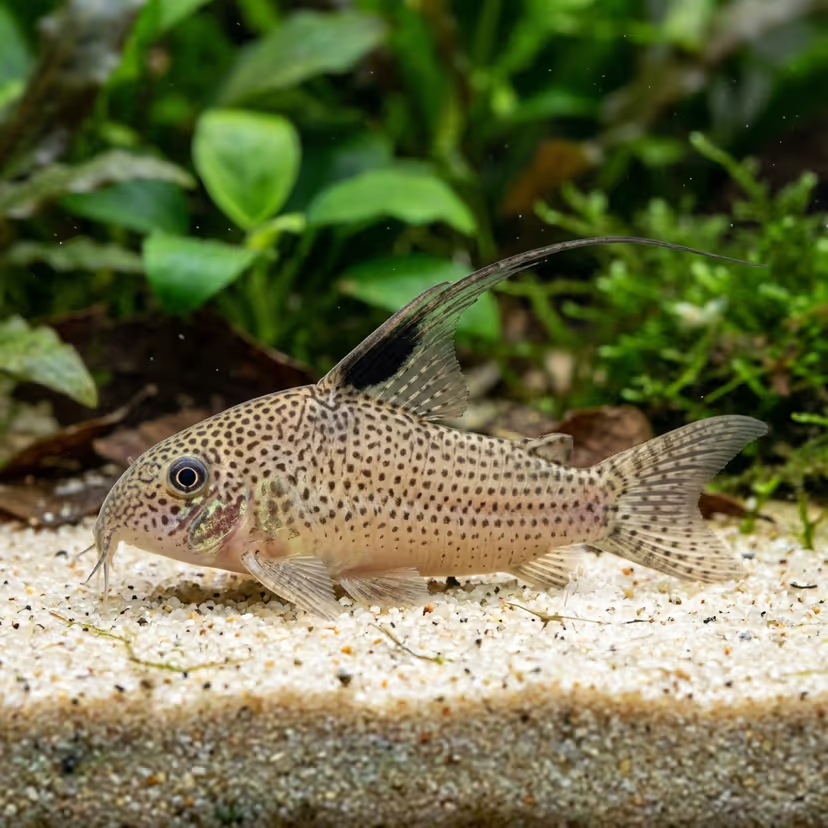
Filament Cory
Corydoras filamentosus

Fowler's Cory
Corydoras fowleri

Geoffroy's Corydoras
Corydoras geoffroy

Gery's Corydoras
Corydoras geryi

Gomez's Cory
Corydoras gomezi

Gray Cory
Corydoras griseus