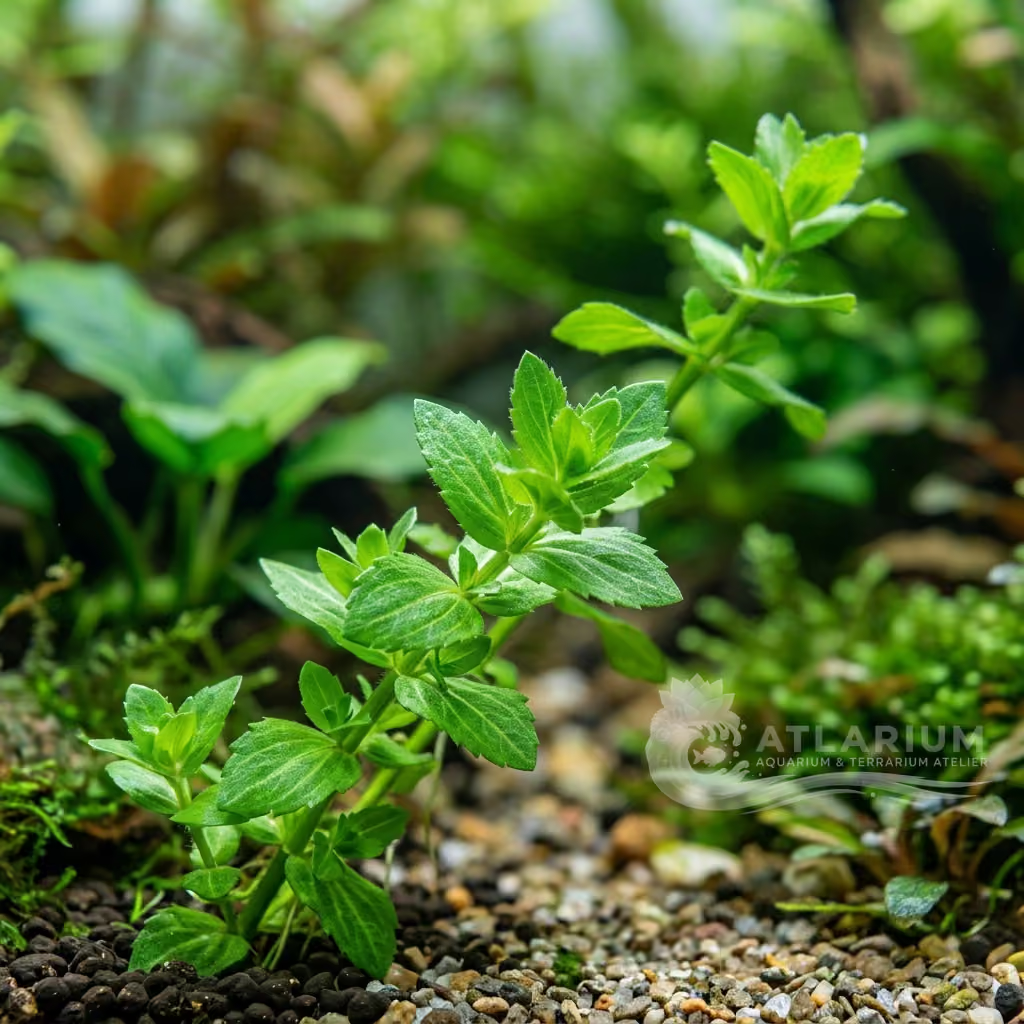
Aldrovanda vesiculosa
Aldrovanda vesiculosa
Aldrovanda vesiculosa is a rare, rootless floating carnivorous plant from lentic waters. It requires intense lighting and CO2 injection to thrive and capture prey.
Water Temperature
4 - 30 °C
pH Value
5 - 6.8
Water type
Freshwater
Light
Medium - High
CO2
Medium - High
Expected height
15 cm
GH
1 - 8 dGH
KH
0 - 5 dKH

Species description
Geographical Origin and Habitat: Aldrovanda vesiculosa, commonly known as the waterwheel plant, has an extremely fragmented but cosmopolitan geographical distribution, with native populations recorded in Central Europe, Africa, Asia (including Japan), and Australia. Its typical habitat consists of lentic, shallow, and warm fresh waters, such as acidic ponds, peat bogs, and wind-sheltered lake bays. It prefers oligotrophic waters rich in free carbon dioxide and surrounded by dense vegetation providing support and shelter, as well as an abundance of aquatic microfauna.
Taxonomy & Genetics: It belongs to the Droseraceae family and is the only living species of the genus Aldrovanda, representing a true living fossil closely related to the terrestrial Venus flytrap (Dionaea muscipula). Genetically, Aldrovanda vesiculosa is characterized by a reduced and highly specialized genome that manages the complex trap-triggering mechanism. World populations show low genetic diversity, making the species highly vulnerable to climate change and anthropogenic pollution.
Physical Structure: It is a floating aquatic plant completely devoid of roots. Its structure consists of a flexible central stem, 10-20 cm long, which grows constantly from an apex while the posterior part decays synchronously. Whorls composed of 5-9 leaves develop along the stem. Each leaf ends with a wedge-shaped petiole equipped with bristles and a hinged trap formed by two semicircular lobes with internal trigger hairs capable of snapping shut in milliseconds.
Color & Texture: It displays a light green or yellowish-green color, almost translucent, which can turn toward reddish or brownish shades under strong direct sunlight. The texture is extremely delicate, glassy, and fragile. The geometric radial arrangement of the leaf whorls resembles a wheel, giving this plant a unique and fascinating geometric appearance.

Care, breeding and tankmates
Lighting & CO2: It requires intense lighting (high-output LEDs or partial sunlight) to stimulate photosynthesis and trap function. Free CO2 supply in the
Water Chemistry: at medium to high levels (20-30 mg/L) is an absolute limiting factor for cultivation; in CO2-poor waters, the plant declines rapidly and stops producing functional traps.
Nutrition & Substrate: As a rootless floating plant, it does not require any substrate. Being a carnivorous plant, it draws most of its organic nutrients (such as nitrogen and phosphorus) from capturing and digesting small aquatic organisms (Daphnia, Cyclops, mosquito larvae). The presence of zooplankton in the aquarium is therefore essential for its long-term nutrition; mineral column fertilization must be extremely mild to prevent filamentous algae from smothering the plant.
Water Chemistry: It prefers soft and acidic waters, with an optimal pH range between 5.0 and 6.8. It tolerates wide temperature variations, from 4°C to 30°C; in cold climates, it produces dormant winter buds (turions) that sink to the bottom to overwinter, while in tropical aquariums it grows continuously at temperatures between 20°C and 25°C.
Space Management & Placement: It must be allowed to float freely on the water surface or among the fronds of other floating plants that limit its movement due to filter currents. It is important to cultivate it in tanks with weak surface flow to prevent physical damage.
Pruning: It does not require pruning in the traditional sense. The plant propagates naturally by fragmentation of the main stem: when the stem reaches a critical length, it splits spontaneously into two or more portions that grow independently. Any decaying posterior parts can be gently removed to preserve water quality.
Risks & Diseases: The primary risk is the proliferation of thread algae, which easily get tangled in the leaf whorls, smothering the plant and blocking trap function. Another risk is the lack of microscopic live prey, leading to slow starvation of the plant. It is highly sensitive to chlorine and heavy metals dissolved in the water.

Geographic origin and distribution
Aldrovanda vesiculosa, commonly known as the waterwheel plant, has an extremely fragmented but cosmopolitan geographical distribution, with native populations recorded in Central Europe, Africa, Asia (including Japan), and Australia. Its typical habitat consists of lentic, shallow, and warm fresh waters, such as acidic ponds, peat bogs, and wind-sheltered lake bays. It prefers oligotrophic waters rich in free carbon dioxide and surrounded by dense vegetation providing support and shelter, as well as an abundance of aquatic microfauna.
Origin
Europe, Mediterranean, and West AsiaAfrica and MadagascarEast AsiaAustralia, New Guinea, and Oceania

Plant profile
- Placement
- Midground
- A fascinating free-floating carnivorous plant. It must be placed directly on the water surface. Ensure it is not pushed under the water by strong filter outputs, as its leaves need access to atmospheric CO2 and direct light. Keeping it away from the highest surface agitation areas helps prevent physical damage. It provides excellent shade for low-light plants below.
- Botanical form
- Stem
- This plant is characterized by its specific morphological adaptations. A fascinating free-floating carnivorous plant. The leaves possess a distinct texture and structure that adds a unique visual element to the aquascape. When grown under optimal conditions, it exhibits its true botanical form vividly. Its unique structure makes it a valuable addition to diverse aquatic layouts.
- Growth
- Medium
- Under optimal conditions with high light and CO2, the growth rate is considered fast. A fascinating free-floating carnivorous plant. In lower tech setups, it will grow significantly slower and may adapt its morphology. Regular pruning may be necessary to maintain a compact growth form over time. Its growth speed is directly correlated with the availability of light, CO2, and dissolved nutrients.
- Substrate
- None
- A fascinating free-floating carnivorous plant. Being a strictly floating or water-column dwelling plant, substrate is completely irrelevant to its care. It derives zero nutrition from the tank bottom. You can use any substrate or no substrate at all without affecting its growth. Its specialized roots hang freely in the water.
- Column fertilization
- Recommended
- Liquid fertilization is crucial for this plant, as it draws a significant portion of its nutrients directly from the water column. A fascinating free-floating carnivorous plant. A comprehensive fertilizer containing nitrogen, phosphorus, potassium, and trace elements should be dosed regularly. Iron supplementation is especially important to maintain its coloration and prevent chlorosis. Dosing should be adjusted based on the plant mass and growth rate observed in the aquarium.
- Root fertilization
- None
- A fascinating free-floating carnivorous plant. Root tabs or substrate fertilizers are useless for this plant. It extracts 100% of its required nutrients through its leaves and the roots dangling directly into the water column. Rely entirely on liquid dosing to meet its heavy feeding requirements. Maintaining high nitrate and phosphate levels in the water is key to preventing deficiency.
- Trimming
- Occasional
- Regular trimming is required to maintain the desired shape and health of Aldrovanda vesiculosa. Using sharp aquascaping scissors ensures clean cuts that heal quickly without inviting rot. Pruning also encourages denser regrowth and prevents lower portions from being overly shaded. Remove any decaying trimmed leaves promptly to maintain optimal water quality.
- Propagation
- Cuttings
- A fascinating free-floating carnivorous plant. Propagation happens naturally and rapidly under good conditions through fragmentation or the production of side shoots. You can manually separate large clumps or cut stems to multiply it further. The detached pieces will quickly form new independent plants on the surface. Simply discard excess growth to prevent it from covering the entire tank.
- Sensitivity
- Moderate
- Aldrovanda vesiculosa can be somewhat sensitive to sudden fluctuations in water parameters. It may exhibit signs of stress or melt if exposed to abrupt changes in temperature or pH. Algae treatments containing copper or glutaraldehyde should be used with extreme caution around this plant. Maintaining a stable, clean environment is the best defense against health issues.
- Layout role
- Floating
- In the aquascape, Aldrovanda vesiculosa serves an important role by adding specific structural elements. It can be used to create focal points or to soften the transition between hardscape and open spaces. The plant's unique texture contrasts beautifully with both fine-leaved and broad-leaved neighbors. Thoughtful integration of this species greatly elevates the natural feel of the display.

Related species
Recommendations grouped by close relatives, companion choices, and similar care.