
Encyclopaedia

Plant atlas
PlantFreshwaterEasy
©AI Generated·Proprietary

Ceratopteris siliquosa

Ceratopteris siliquosa

Ceratopteris siliquosa: versatile water fern with finely divided fronds, excellent as a floating or background plant.

Taxonomy
Class:Liliopsida
Order:Polypodiales
Family:Pteridaceae
Genus:Ceratopteris
Species:Ceratopteris siliquosa

Share

Check out Ceratopteris siliquosa on Atlarium

PracticeRecognition quizzesPhotos, names, origins, and puzzles to review Atlas species.Open quizzes
Water Temperature

18 - 30 °C

pH Value

6 - 7.5

Water type

Freshwater

Light

Medium - High

CO2

Medium - High

Expected height

40 cm

Expected width

30 cm

KH

2 - 10 dKH

Species description

This species is widely distributed in tropical regions of Asia, including India, southern China, Vietnam, and Indonesia. It colonizes damp and aquatic habitats such as rice paddies, ditches, swamps, and calm, slow-moving rivers, adapting to live either fully submerged or floating on the water surface. Belongs to the Pteridaceae family and the genus Ceratopteris. Also known as the fine-leaf water fern, it possesses significant genetically inherited phenotypic plasticity, allowing it to drastically alter the shape and texture of its fronds depending on whether it grows emersed, submerged, or floating. It features a rosette arrangement from which large, finely lobed or divided fronds emerge.

Care, breeding and tankmates

Highly flexible, tolerating soft to hard water and pH levels between 5.0 and 8.0. The optimal temperature range is 18 to 30°C. Clean water and regular water changes prevent the lower leaves from melting or decaying. The fronds are soft and brittle, easily damaged by herbivorous fish or rough handling. Under low light or nutrient deficiency, the leaves tend to turn yellow and break down quickly.

Geographic Origin and Distribution

This species originates from: Tropical Asia.

Origin

South and Southeast AsiaEast Asia

Plant profile

Placement
Midground

Highly adaptable, it can be planted firmly in the substrate or used as a floating cover. When planting, ensure the crown is not buried too deeply to prevent rot.

Botanical form
Rosette

It is characterized by highly dissected, fine, and lacy bright green fronds, giving it a very delicate appearance. The intricate branching structure makes it visually striking and provides excellent surface area for biofilm.

Growth
Medium

It boasts an extremely fast growth rate, especially when provided with strong light and abundant nutrients. Routine pruning is essential to prevent it from smothering slower-growing species.

Substrate
Low

Ceratopteris siliquosa is an adaptable fern with low substrate demands, capable of growing well in plain gravel or sand. Its delicate but widespread root system functions primarily for anchorage when planted in a shallow bed of 3-5 centimeters. It derives the bulk of its nutritional needs from the water column, making active soils unnecessary. This species can also transition easily to a floating lifestyle, utilizing its roots to draw nutrients directly from the water.

Column fertilization
Recommended

It readily absorbs nutrients through its extensive leaf surface area from the water column. Regular liquid fertilization ensures healthy, continuous growth and prevents the lower leaves from yellowing.

Root fertilization
None

When rooted, it develops a surprisingly robust root network that benefits from a nutrient-rich substrate or root tabs. However, it can also thrive purely on water column nutrients if appropriately dosed.

Trimming
Occasional

Trimming involves removing older, larger outer fronds at the base to manage the plant's spread. It is better to remove whole leaves rather than cutting leaves in half, which can lead to decay.

Propagation
Division

It multiplies readily by forming small adventitious plantlets on the edges of its mature leaves. These can be left to detach naturally or carefully removed and planted once they show roots.

Sensitivity
Moderate

The extremely fine leaves are fragile and prone to collecting debris if mechanical filtration is inadequate. It thrives in calm water, as strong currents can easily break the delicate fronds.

Layout role
Background, Floating

It is commonly used as a fast-growing background plant that provides a bright, bushy, and highly textured look. It is also an exceptional refuge for small fish and shrimp due to its dense, complex foliage.

Image gallery

Licensed images linked to the species or, when marked, to the closest representative taxon.

Related species

Recommendations grouped by close relatives, companion choices, and similar care.

Recommended companions

Compatible cards from coherent ecosystems with matching parameters.

Amano Shrimp
Invertebrate

Amano Shrimp

Caridina multidentata

View details->
Bacopa sp. "Japan"

Bacopa sp. "Japan"

Bacopa sp. "Japan"

View details->
Bucephalandra sp. "Black Leaf"

Bucephalandra sp. "Black Leaf"

Bucephalandra sp. "Black Leaf"

View details->
Chlorophytum bichetii

Chlorophytum bichetii

Chlorophytum bichetii

View details->
Green babaulti shrimp
Invertebrate

Green babaulti shrimp

Caridina cf. babaulti "Green"

View details->
Ammannia sp. 'Bonsai'

Ammannia sp. 'Bonsai'

Ammannia sp. 'Bonsai'

View details->
Bucephalandra motleyana "Braun-rot" ("Serimbu")

Bucephalandra motleyana "Braun-rot" ("Serimbu")

Bucephalandra motleyana "Braun-rot" ("Serimbu")

View details->
Bucephalandra motleyana "Kapit"

Bucephalandra motleyana "Kapit"

Bucephalandra motleyana "Kapit"

View details->
Bucephalandra motleyana "Pancuraji"

Bucephalandra motleyana "Pancuraji"

Bucephalandra motleyana "Pancuraji"

View details->
Bucephalandra sp. "Bukit Kelam / Sintang"

Bucephalandra sp. "Bukit Kelam / Sintang"

Bucephalandra sp. "Bukit Kelam / Sintang"

View details->
Bucephalandra sp. "Melawi"

Bucephalandra sp. "Melawi"

Bucephalandra sp. "Melawi"

View details->
Commelinaceae sp. "Green"

Commelinaceae sp. "Green"

Commelinaceae sp. "Green"

View details->
Cordyline fruticosa

Cordyline fruticosa
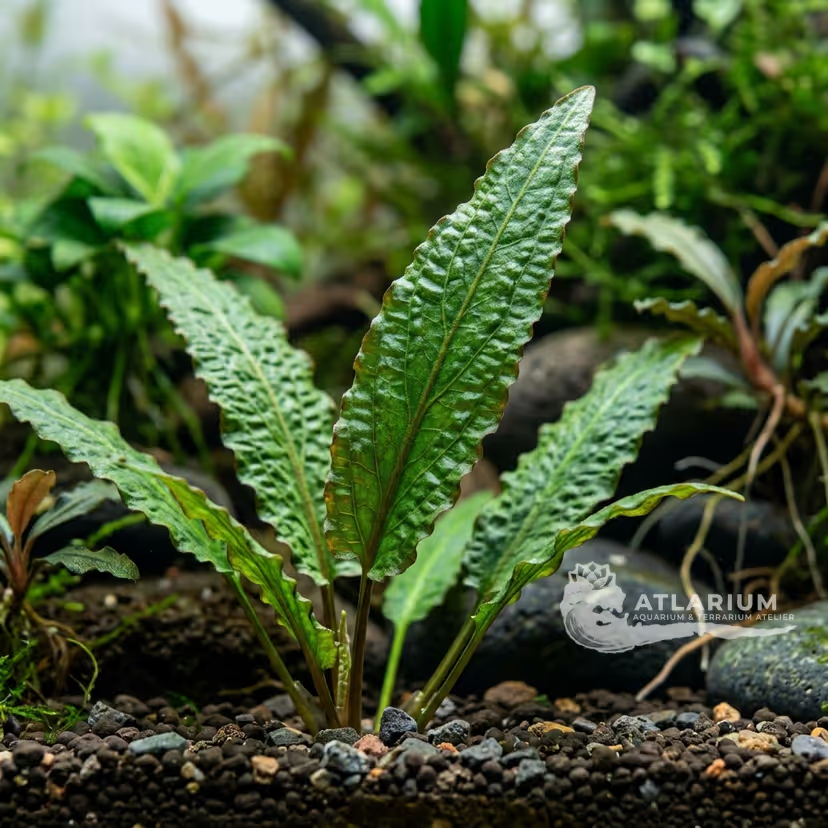
Cordyline fruticosa

View details->
Cryptocoryne balansae

Cryptocoryne balansae

Cryptocoryne balansae

View details->
Cryptocoryne bullosa

Cryptocoryne bullosa

Cryptocoryne bullosa

View details->
White Pearl Shrimp
Invertebrate

White Pearl Shrimp

Neocaridina zhangjiajiensis var. White

View details->

Similar care

Cards with similar requirements, difficulty, habitat, and husbandry profile.

Cabomba australis

Cabomba australis

Cabomba australis

View details->
Climacium japonicum

Climacium japonicum

Climacium japonicum

View details->
Marimo Moss Ball

Marimo Moss Ball

Cladophora aegagropila

View details->
Bucephalandra motleyana "Braun-rot narrow"

Bucephalandra motleyana "Braun-rot narrow"

Bucephalandra motleyana "Braun-rot narrow"

View details->
Bucephalandra motleyana "Riam Macam"

Bucephalandra motleyana "Riam Macam"
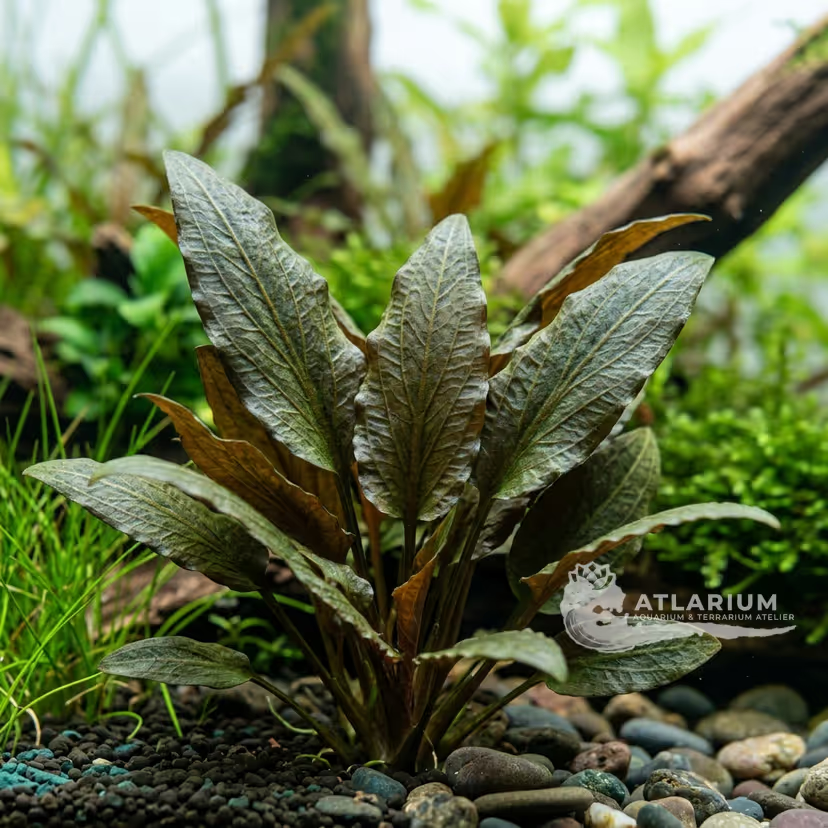
Bucephalandra motleyana "Riam Macam"

View details->
Cryptocoryne blassii

Cryptocoryne blassii

Cryptocoryne blassii

View details->
Cryptocoryne axelrodii

Cryptocoryne axelrodii
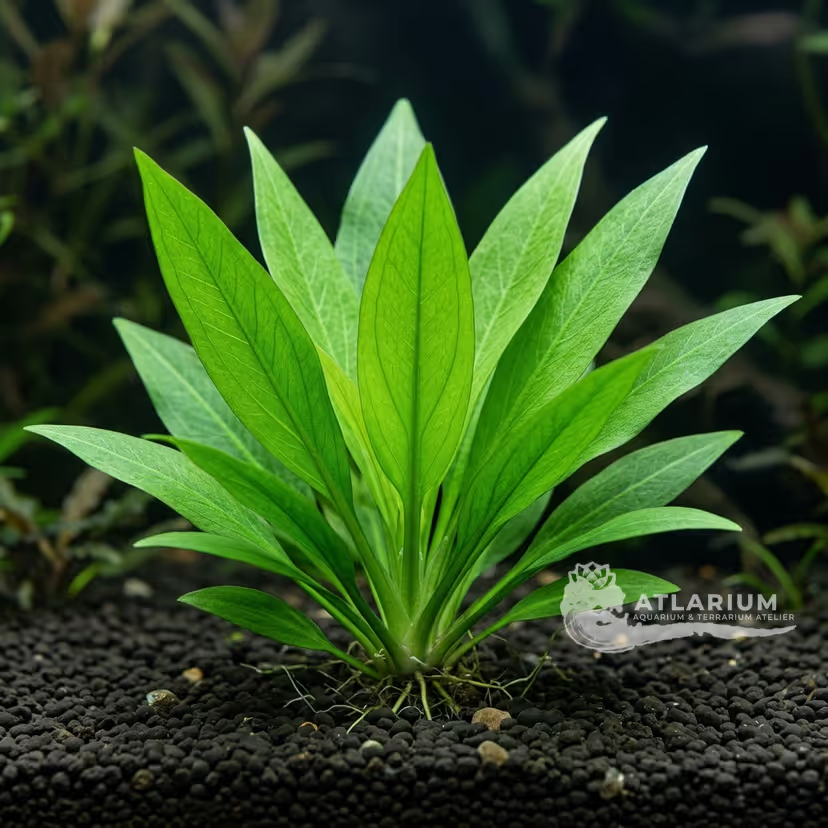
Cryptocoryne axelrodii

View details->
Cryptocoryne beckettii "Viridifolia"

Cryptocoryne beckettii "Viridifolia"

Cryptocoryne beckettii "Viridifolia"

View details->
Aponogeton rigidifolius

Aponogeton rigidifolius

Aponogeton rigidifolius

View details->
Cryptocoryne albida

Cryptocoryne albida

Cryptocoryne albida

View details->
Cryptocoryne beckettii

Cryptocoryne beckettii

Cryptocoryne beckettii

View details->
Cryptocoryne beckettii "Petchii"

Cryptocoryne beckettii "Petchii"

Cryptocoryne beckettii "Petchii"

View details->
Blyxa cf. vietii

Blyxa cf. vietii

Blyxa cf. vietii

View details->
Bolbitis heteroclita

Bolbitis heteroclita

Bolbitis heteroclita

View details->
Cabomba aquatica

Cabomba aquatica

Cabomba aquatica

View details->
Bacopa monnieri "Rundblättrig"

Bacopa monnieri "Rundblättrig"

Bacopa monnieri "Rundblättrig"

View details->
Last updated: 06/16/2026
Ceratopteris siliquosa Care Guide & Tank Setup | Atlarium