Ramshorn Snail
Planorbella duryi
The classic Ramshorn Snail, a tireless consumer of algae and leftover organic waste. Can multiply quickly if food is abundant. Geographical Origin and Habitat: Planorbella duryi (often...
Water Temperature
15 - 30 °C
pH Value
6.5 - 8.5
Water type
Freshwater
Invertebrate type
Freshwater snail
Adult size
2 cm
Minimum group
>= 1
GH
4 - 20 dGH
KH
2 - 15 dKH
TDS
100 - 500 ppm
Ecological role
Scavenger
Copper sensitivity
High

Species description
Geographical Origin and Habitat: Planorbella duryi (often classified as *Helisoma duryi*) is native to North America, particularly Florida. It inhabits marshes, slow streams, ponds, and lakes rich in organic material and aquatic plants, showing tolerance to low dissolved oxygen levels.
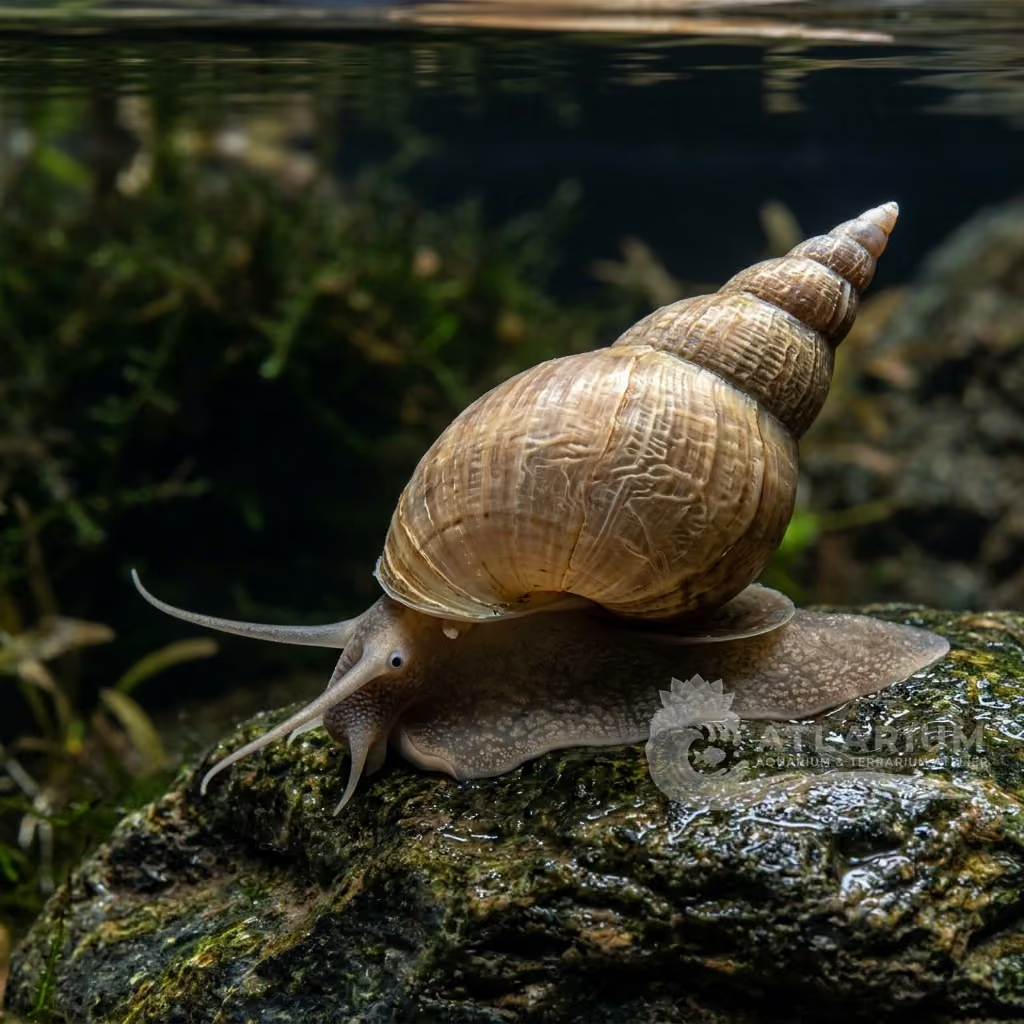
Taxonomy: Belonging to the family Planorbidae, this snail features a flat, coiled shell resembling a ram's horn. Adults reach a shell diameter of 1.5-2.5 cm. It lacks an operculum and possesses a lung-like organ to breathe atmospheric oxygen.
Social Behavior: Peaceful, active, and bold. They crawl continuously on plants, driftwood, and glass. They are completely harmless to fish and dwarf shrimp. They are excellent clean-up crew members for community, shrimp, or nano aquariums.
Coloration and Sexual Dimorphism: The wild shell is brown, but popular aquarium strains include pink, red, blue, and spotted (leopard) varieties. They are simultaneous hermaphrodites but require cross-fertilization with another snail to reproduce; no sexual dimorphism exists.

Care, breeding and tankmates
Tank Setup: Highly adaptable, suitable for any tank size starting from 10 liters. Provide plants, driftwood, and rocks. They do not require a specific type of substrate and can live on sand, gravel, or bare bottoms. A covered tank is recommended.
Diet and Feeding: Omnivorous detritivores. They feed on soft green algae, diatoms, decaying plant matter, fish food remnants, and biofilm. They do not damage healthy plants unless they are starving, focusing instead on dead leaves.
Water Quality: Very hardy: temperature 15-28°C, pH 7.0-8.0, GH 8-20, and KH 4-12. In acidic or soft water, their shells will suffer from calcium depletion, turning white and brittle. Keep ammonia and nitrites at zero. Avoid copper-based treatments.
Compatibility and Tankmates: Safe with peaceful fish and shrimp. Avoid keeping them with snail predators such as Clea helena (which hunts them), loaches (Botiidae), pufferfish, and large aggressive cichlids.
Aquarium Breeding: Extremely easy and prolific. They lay flat, clear gelatinous egg clutches containing 10-20 eggs on glass, plants, and decorations. Young hatch in 10-14 days. Their population grows in direct proportion to available nutrients.
Risks and Diseases: Overpopulation is the most common issue, indicating overfeeding of the tank. Shell erosion in soft, acidic water due to lack of calcium. Highly sensitive to copper and chemical algaecides.

Geographic origin and distribution
Planorbella duryi (often classified as *Helisoma duryi*) is native to North America, particularly Florida. It inhabits marshes, slow streams, ponds, and lakes rich in organic material and aquatic plants, showing tolerance to low dissolved oxygen levels.
Origin
Selective breeding and cultivarsNorth AmericaEast AsiaCosmopolitan or introduced

Invertebrate profile
- Diet
- Omnivore
- Omnivorous scavenger. Eats detritus, decaying plants, leftover food, and fish waste.
- Ecological role
- Scavenger
- Excellent tank scavenger and biological indicator of overfeeding.
- Life expectancy
- 1-2 years
- Adult size
- 2 cm
- Jump risk
- No
- Shock sensitivity
- Extreme
- Very low. Extremely hardy and tolerant.
- Calcium and minerals
- Medium
- Medium. Needs calcium for shell growth, but tolerates soft water better than nerites.
- Molting
- Yes
- Planorbella snails do not undergo molting. Their shell grows continually as they absorb calcium from the water to construct new layers. To prevent their shells from degrading or developing pitting, it is crucial to avoid highly acidic or very soft water, ensuring there are adequate minerals present for proper growth.
- Reproduction
- Oviparous
- As highly prolific hermaphrodites, these snails can quickly multiply if excess food is available. They lay small, transparent, gelatinous egg clutches on glass, plants, and decor. The most effective way to control an exploding population is simply to reduce fish feeding and keep the aquarium free of decaying organic debris.
- Compatibility & tankmates
- Peaceful
- Peaceful and undemanding, they are excellent additions to planted community tanks. They coexist perfectly with small, peaceful fish and dwarf shrimp. However, they are natural prey for snail-eating species, so they should never be housed with pufferfish, loaches, larger cichlids, or crayfish, which will quickly decimate their population.

Image gallery
Licensed images linked to the species or, when marked, to the closest representative taxon.

Related species
Recommendations grouped by close relatives, companion choices, and similar care.