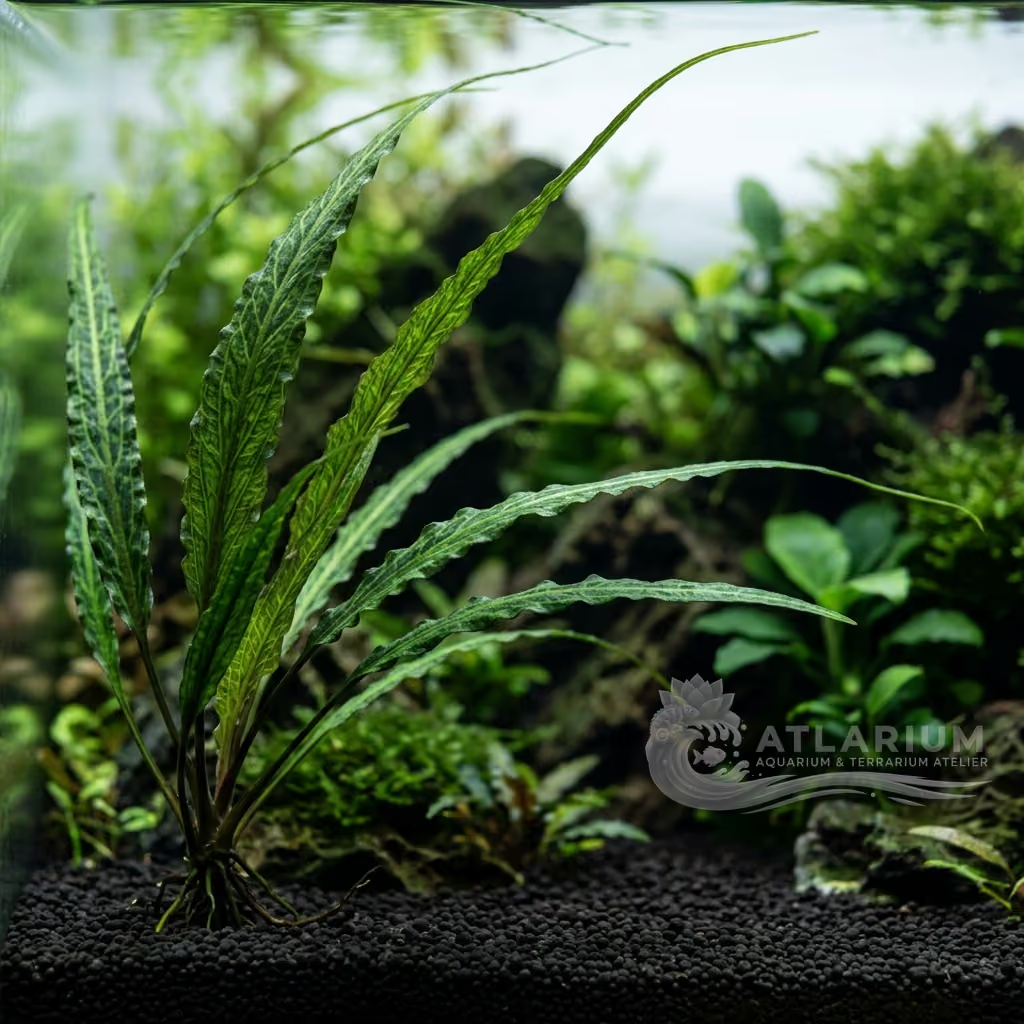
Barclaya longifolia
Barclaya longifolia
Tropical rosette plant belonging to the Nymphaeaceae family, featuring large, wavy, ribbon-like leaves. Suitable for midground or background, moderate growth.
Water Temperature
18 - 30 °C
pH Value
5.5 - 7.5
Water type
Freshwater
Light
Medium - High
CO2
Medium - High
Expected height
40 cm
Expected width
30 cm
GH
4 - 15 dGH
KH
2 - 20 dKH

Species description
Geographical Origin and Habitat: Barclaya longifolia is native to the tropical regions of Southeast Asia, widely distributed in Thailand, Myanmar, Malaysia, and Sumatra. It primarily grows in clear, warm forest streams, rivers, and shaded creeks with slow to moderate currents. It prefers sandy or muddy riverbeds rich in iron and organic deposits where its extensive roots can spread freely.
Taxonomy & Genetics: Taxonomically, it belongs to the family Nymphaeaceae and the genus Barclaya. It is an aquatic rosette-forming species closely related to water lilies. Genetically, it undergoes a natural lifecycle that includes a dormancy period, during which the plant may shed most of its leaves before regrowing from its basal tuberous rhizome. Propagation occurs via seeds or runner offsets.
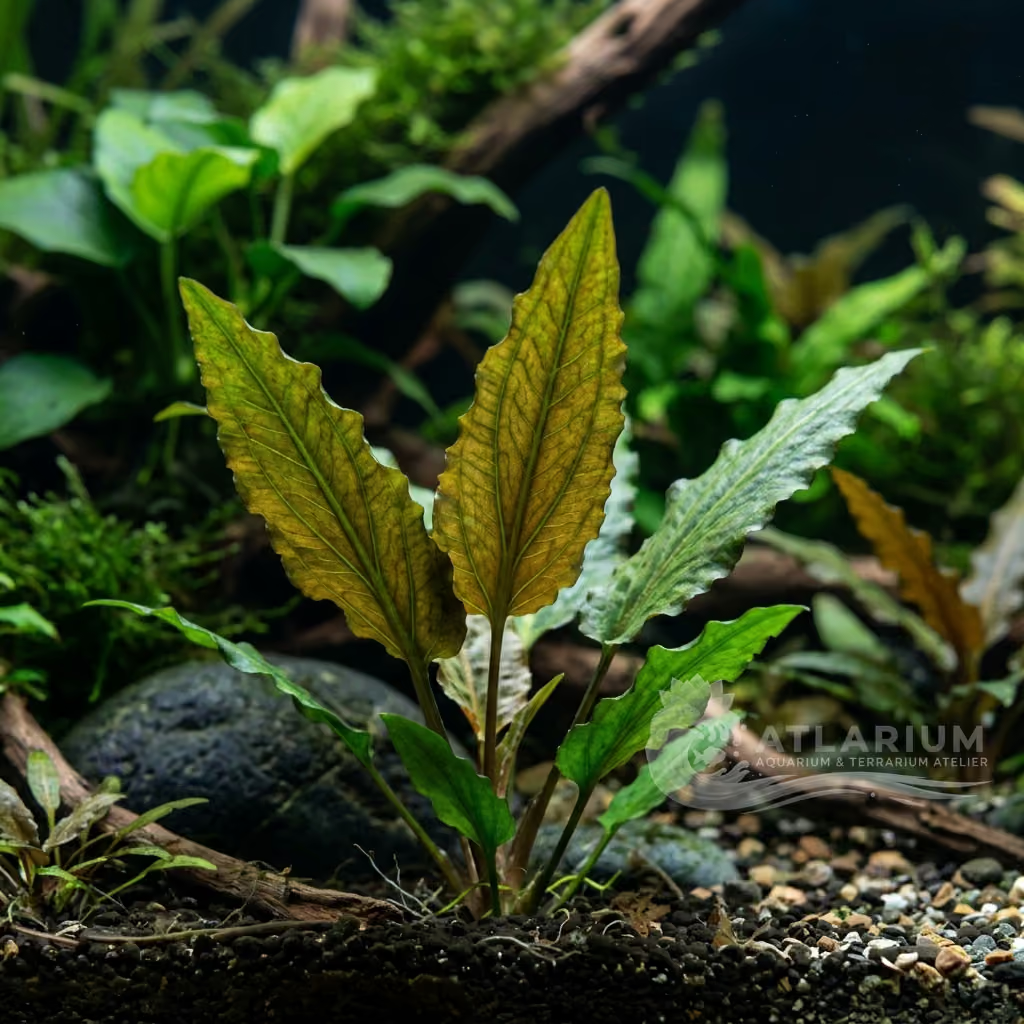
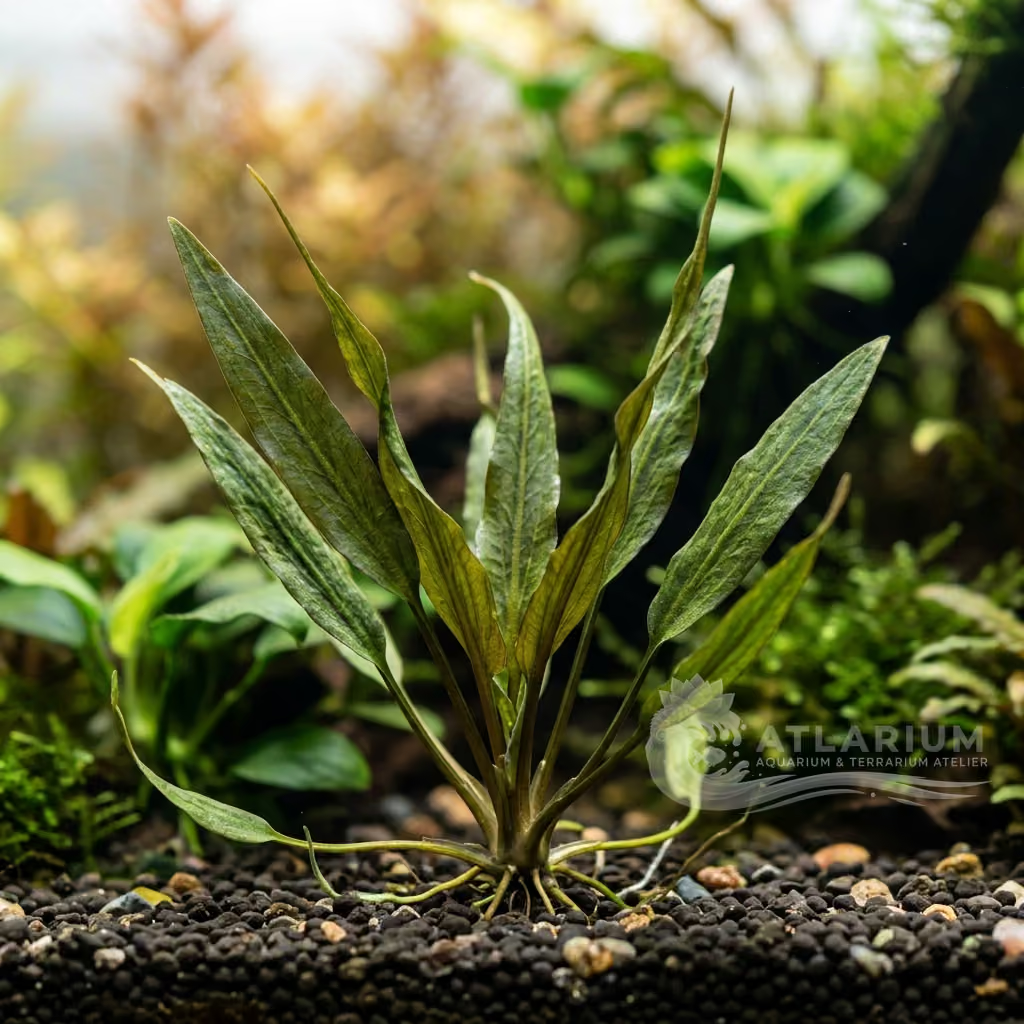
Physical Structure: The plant grows from a tuberous rhizome or bulb from which a dense rosette of leaves emerges. The leaves are long (up to 30-50 cm), lanceolate, and ribbon-like, with highly wavy margins and a heart-shaped base. The root system is thick, fleshy, and branched, anchoring the bulb and drawing minerals from the substrate.
Color & Texture: Leaves exhibit striking color variations from olive green to reddish-brown on the upper surface, with a deep ruby red on the underside. The leaf texture is soft, thin, and silky to the touch. The wavy margins of the long leaves create a unique visual movement in the water, making it a spectacular centerpiece plant.

Care, breeding and tankmates
Lighting & CO2: Requires moderate to high lighting. Under low light, the leaves remain short, thin, and green, losing their reddish hues. CO2 injection is highly recommended to support the growth of large leaves and prevent the plant from entering a premature dormancy phase.
Nutrition & Substrate: This species is a heavy root feeder and demands a highly fertile substrate rich in iron and organic matter. Regularly placing root tabs directly beneath the bulb is essential to sustain growth and prevent leaf deterioration.
Water Chemistry: Prefers soft to medium-hard water (KH 2-20 dKH) and a slightly acidic to neutral pH (5.5 - 7.5). Warm and stable water temperatures between 18°C and 30°C are required; temperatures below 18°C will trigger dormancy. Regular water changes are beneficial.
Space Management & Placement: Due to its large size, it is best placed in the midground or background of medium to large aquariums. It should be given sufficient space to expand its wavy leaves without being crowded or shaded by neighboring plants.
Pruning: Pruning is limited to removing older, damaged, or decaying outer leaves by cutting them near the base of the crown. Side shoots emerging from the tuber can be carefully separated and replanted once they have established their own roots.
Risks & Diseases: The main challenge is managing the dormancy period, during which the plant might melt back completely. The bulb should be left undisturbed as it will regrow new leaves. The thin leaves are also targets for herbivorous snails and herbivorous fish.

Geographic origin and distribution
Barclaya longifolia is native to the tropical regions of Southeast Asia, widely distributed in Thailand, Myanmar, Malaysia, and Sumatra. It primarily grows in clear, warm forest streams, rivers, and shaded creeks with slow to moderate currents. It prefers sandy or muddy riverbeds rich in iron and organic deposits where its extensive roots can spread freely.
Origin
South and Southeast Asia

Plant profile
- Placement
- Midground
- Due to its substantial size and distinct appearance, it serves as an excellent solitary focal point. Its long, flowing leaves need ample space to spread out without being crowded. It should be planted where it can be fully appreciated.
- Botanical form
- Rosette
- It features long, ribbon-like leaves with undulated margins that can range in color from olive green to deep reddish-brown. The leaves grow from a central bulb or rhizome, creating a dramatic effect. It is one of the most distinctive rosette plants.
- Growth
- Medium
- Once established in a suitable, nutrient-rich substrate, its growth rate is relatively fast. It will continuously produce new, large leaves from its central rosette. Adequate light and CO2 will further accelerate its growth and coloration.
- Substrate
- High
- Barclaya longifolia is a heavy root feeder that requires a deeply packed, nutrient-dense substrate to sustain its massive bulb and large leaf rosettes. A fertile aqua soil supplemented with root tabs or laterite is essential to provide the iron and trace elements this plant continuously demands. Insufficient substrate depth or a lack of root-level nutrients will severely stunt its growth and trigger an extended period of dormancy.
- Column fertilization
- Recommended
- Liquid fertilization provides supplementary nutrients, ensuring the leaves remain vibrant. Trace elements, particularly iron, are important for maintaining its color intensity. However, liquid dosing alone is usually insufficient without strong substrate nutrition.
- Root fertilization
- Required
- This is the most critical aspect of its care; a highly fertile substrate or frequent use of root tabs is mandatory. The plant relies heavily on its root system for sustenance. Lack of root nutrients will quickly lead to stunted growth.
- Trimming
- Occasional
- Maintenance consists primarily of removing older, damaged, or algae-covered leaves from the outer part. Cut the leaves close to the base using sharp scissors. Avoid disturbing the central bulb or rhizome during trimming.
- Propagation
- Division
- It propagates by producing offsets or small bulbs from the main root system. The offsets can be carefully detached once they have developed several leaves. Growing from seed is possible if it flowers but is more difficult.
- Sensitivity
- Moderate
- It is sensitive to cold water and prefers temperatures above 24C. It resents being moved once established, so choose its placement carefully. The bulb is prone to rot if the substrate is too compacted.
- Layout role
- Midground, Background
- It is utilized primarily as a striking specimen plant to break the monotony of finely textured plants. Its unique leaf shape and color make it a strong focal point. It adds a touch of exotic elegance to large layouts.

Related species
Recommendations grouped by close relatives, companion choices, and similar care.