Nymphaea rudgeana
Nymphaea rudgeana
Nymphaea rudgeana is a medium-growth aquatic lily ideal for midground placement in an aquarium, where it can develop striking submerged and floating leaves.
Water Temperature
18 - 30 °C
pH Value
6 - 7.5
Water type
Freshwater
Light
Medium to High
CO2
High
KH
0 - 14 dKH

Species description
Geographical Origin and Habitat: Nymphaea rudgeana is native to the tropical and subtropical regions of the Americas, encompassing parts of Central and South America. It typically thrives in slow-moving or still waters such as ponds, lakes, marshes, and ditches, where light conditions are often intense. These natural habitats are characterized by soft, organic-rich substrates, providing ample nutrient supply for its rhizomatous development and vigorous growth. Its presence in such environments highlights its adaptability to a wide range of water and light conditions, making it a resilient species.
Taxonomy & Genetics: Nymphaea rudgeana belongs to the genus Nymphaea, which comprises the quintessential water lilies, within the ancient family Nymphaeaceae. This family includes approximately 70 species of aquatic plants renowned for their striking flowers and characteristic leaf morphology. Molecular phylogenetic studies confirm its placement within the genus, distinguishing it from other Nymphaea species through unique genetic markers and specific floral characteristics. Its classification underscores its evolutionary adaptations to aquatic environments, shared across its diverse family members, and showcasing a long evolutionary history.
Physical Structure: Nymphaea rudgeana develops a robust rhizome system anchored in the substrate, from which both submerged and emergent leaves sprout. Submerged leaves are typically more delicate, often heart-shaped or sagittate, varying in
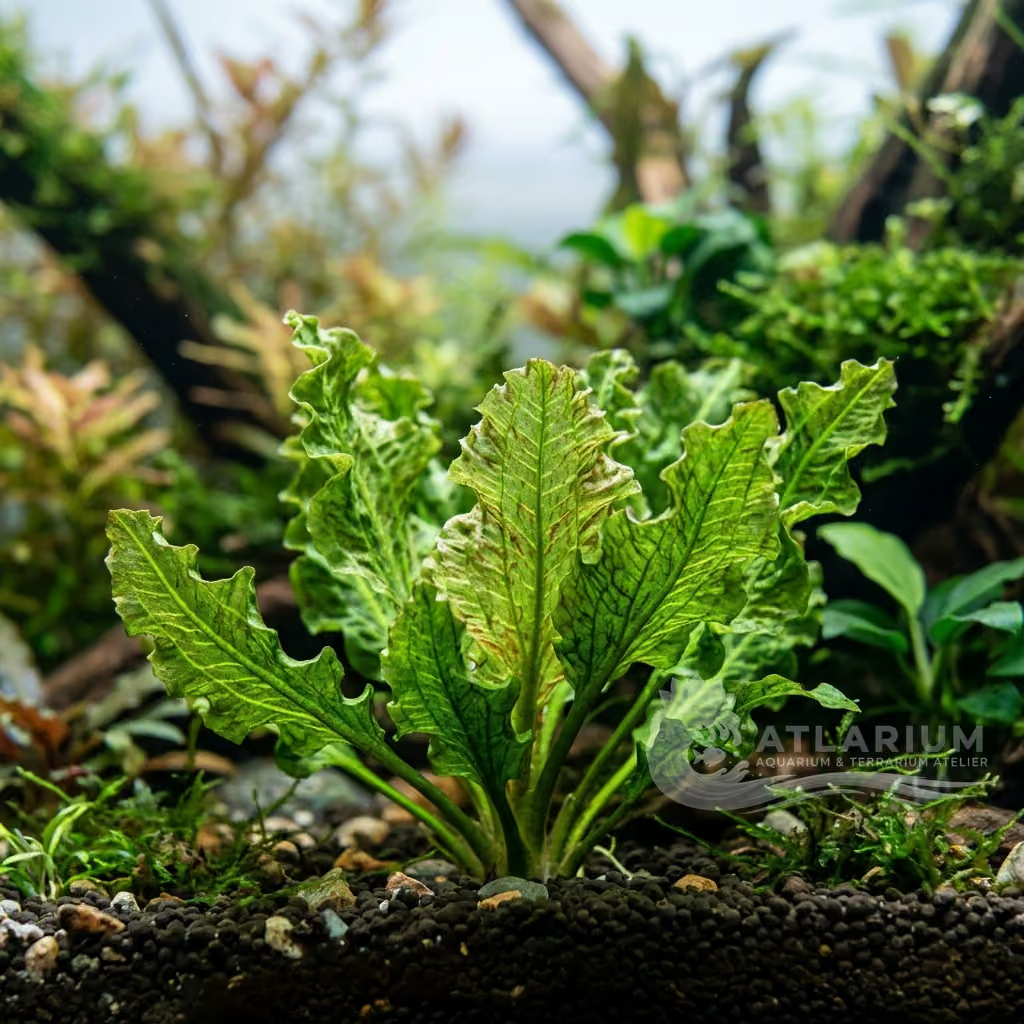
Color & Texture: The submerged leaves of Nymphaea rudgeana exhibit a fascinating range of colors, from vibrant green to deep reddish-brown or burgundy, particularly under higher light intensity. This striking coloration is due to anthocyanin pigments, which are produced as a protective mechanism against intense light exposure. The leaf texture can vary; submerged leaves are often delicate and somewhat wavy, while the floating leaves are tougher, leathery, and possess a waxy cuticle to effectively repel water. The underside of the leaves, especially the floating ones, may reveal a purple or reddish hue, adding another layer of visual interest to the aquascape.

Care, breeding and tankmates
Lighting & CO2: Nymphaea rudgeana thrives under medium to high light conditions, which are crucial for stimulating vibrant coloration and healthy, robust growth. Insufficient light will lead to pale, elongated leaves and a tendency for the plant to prioritize sending all its energy towards producing floating leaves, diminishing the submerged display. While not strictly dependent on CO2 injection, providing supplemental CO2 significantly enhances its growth rate, promotes robust development, and encourages more intense coloration, especially in high-light setups. A photoperiod of 8-10 hours daily is generally recommended to optimize photosynthesis without encouraging excessive algae growth.
Nutrition & Substrate: Being a heavy root feeder, Nymphaea rudgeana greatly benefits from a nutrient-rich substrate, such as aquasoil or a gravel substrate supplemented with root tabs. Iron is particularly important for its health and for enhancing the reddish hues in its leaves; deficiencies can lead to chlorosis or a lack of vibrant color. Regular dosing of a comprehensive liquid fertilizer, especially one rich in trace elements, will support overall plant health and compensate for nutrients absorbed from the
Water Chemistry: column. Ensure the substrate is at least 5-7 cm deep to allow ample
Space Management & Placement: Nymphaea rudgeana is quite adaptable regarding water chemistry, tolerating a wide temperature range of 18.0 - 30.0 C, making it suitable for many tropical aquariums. It prefers slightly acidic to neutral water, with a pH range of 6.0 - 7.5, which aligns with its natural habitat conditions. The plant can thrive in a broad spectrum of water hardness, from very soft to moderately hard (KH 0.0 - 14.0), indicating its resilience to varying water parameters. Stable water parameters, coupled with regular water changes, are more critical than hitting specific absolute values within its tolerant range, preventing stress and promoting consistent, healthy growth.
Space Management & Placement: Given its medium growth rate and potential for large floating leaves, Nymphaea rudgeana is best placed in the midground of larger aquariums, or even as a focal point in smaller tanks. Allow ample space around the plant to prevent it from overshadowing smaller foreground plants, especially as its broad leaves can block light. Its rhizomatous growth can spread, so consider its potential size when planning your aquascape layout to avoid overcrowding and ensure proper circulation. Strategic placement can also allow its floating leaves to provide natural shade and cover for fish, mimicking its natural riverine or pond environment.
Pruning: Regular pruning is essential to manage the size and form of Nymphaea rudgeana, especially to maintain its desired midground presence and prevent it from dominating the tank. Remove older, yellowing, or damaged leaves at the base of the stem near the rhizome to encourage new, healthy growth from the rhizome. Crucially, if you wish to maintain a lush submerged leaf display and prevent the plant from sending all its energy towards the surface, trim any developing petioles that are reaching for the surface as soon as they appear. Thinning out excessive floating leaves will ensure adequate light penetrates to plants below, while still allowing the Nymphaea to thrive.
Risks & Diseases: Nymphaea rudgeana is generally robust but can be susceptible to common aquatic plant issues if conditions are not optimal. Nutrient deficiencies, particularly iron or potassium, can lead to yellowing leaves, stunted growth, or a loss of vibrant coloration. Poor water circulation or excessive organic waste can encourage algae growth on its leaves, which can be detrimental to photosynthesis and overall plant health. While not highly prone to specific diseases, weak plants under stress are more vulnerable to opportunistic pathogens or pest infestations, so maintaining stable parameters and good husbandry practices is key to prevention.

Geographic origin and distribution
Nymphaea rudgeana is native to the tropical and subtropical regions of the Americas, encompassing parts of Central and South America. It typically thrives in slow-moving or still waters such as ponds, lakes, marshes, and ditches, where light conditions are often intense. These natural habitats are characterized by soft, organic-rich substrates, providing ample nutrient supply for its rhizomatous development and vigorous growth. Its presence in such environments highlights its adaptability to a wide range of water and light conditions, making it a resilient species.
Origin
Central America and CaribbeanAmazon, Orinoco, and GuianasExtra-Amazon South America

Plant profile
- Placement
- Midground
- This lily is best placed in the midground or background depending on the overall size of the tank. It is highly inclined to produce floating leaves, making it perfect for South American biotope setups where dappled shade is desired. If kept compact through rigorous pruning, it can form an attractive, low bushy rosette.
- Botanical form
- Rosette
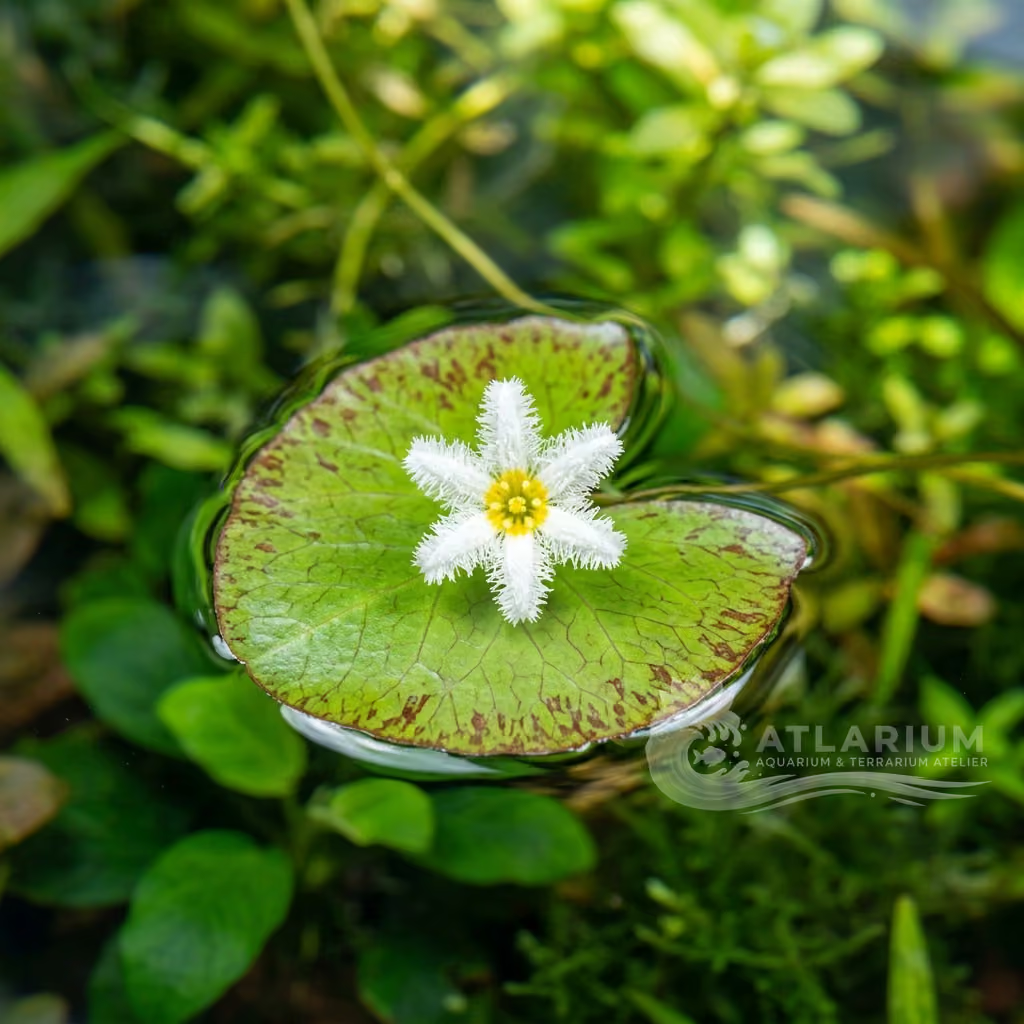
- The plant develops a stout central crown from which numerous wavy, almost circular leaves emerge. The submerged foliage often displays a striking light green coloration adorned with distinct reddish-brown mottling or spots. It is notable for its fragrant, night-blooming white flowers that occasionally exhibit a pinkish hue.
- Growth
- Medium
- Its growth rate is moderate to fast, particularly when the plant transitions to producing surface leaves. Under intense lighting, the plant eagerly rushes to the surface, demanding frequent trimming to retain its submerged form. In more shaded or lower-nutrient environments, it remains smaller and easier to manage.
- Substrate
- High
- A fine, nutrient-rich substrate allows the delicate roots of this species to anchor properly and spread. Using a specialized planted aquarium soil is highly recommended to encourage vigorous development from the base. Sand can be used, provided it is enriched with comprehensive root tabs on a regular schedule.
- Column fertilization
- Recommended
- Liquid fertilizers are useful for supporting the overall vigor of the plant and preventing nutrient deficiencies in the water column. Dosing micronutrients ensures the striking mottled patterns on the leaves remain sharp and pronounced. Proper water column dosing also supports the rapid elongation of petioles when reaching for the surface.
- Root fertilization
- Required
- Feeding the root zone is crucial for the long-term vitality of Nymphaea rudgeana. Burying high-quality root fertilizer capsules near the crown provides the heavy macronutrients required for sustained growth. Regular replenishment of the substrate's fertility prevents the plant from exhausting its energy reserves.
- Trimming
- Occasional
- Prune surface-reaching leaves at the base to maintain a bushy, submerged form. Removing older leaves encourages the plant to produce new, fresh growth. Do not cut the bulb during maintenance.
- Propagation
- Rhizome division
- The most common method of propagation in the aquarium is via the separation of basal offshoots that develop near the main crown. These daughter plants can be safely removed and replanted once they have sufficient root mass. It is also a prolific seed producer in open-top setups, readily propagating through seed dispersal.
- Sensitivity
- Moderate
- The bulb should not be completely buried to prevent rot; leave the top half exposed. It prefers warmer water temperatures. Sudden parameter shifts may cause melting.
- Layout role
- Midground, accent
- It acts as a strong specimen plant in the aquarium layout. It provides a strong visual contrast in leaf shape and color against typical stem plants. It is excellent for focal points in larger tanks.

Related species
Recommendations grouped by close relatives, companion choices, and similar care.