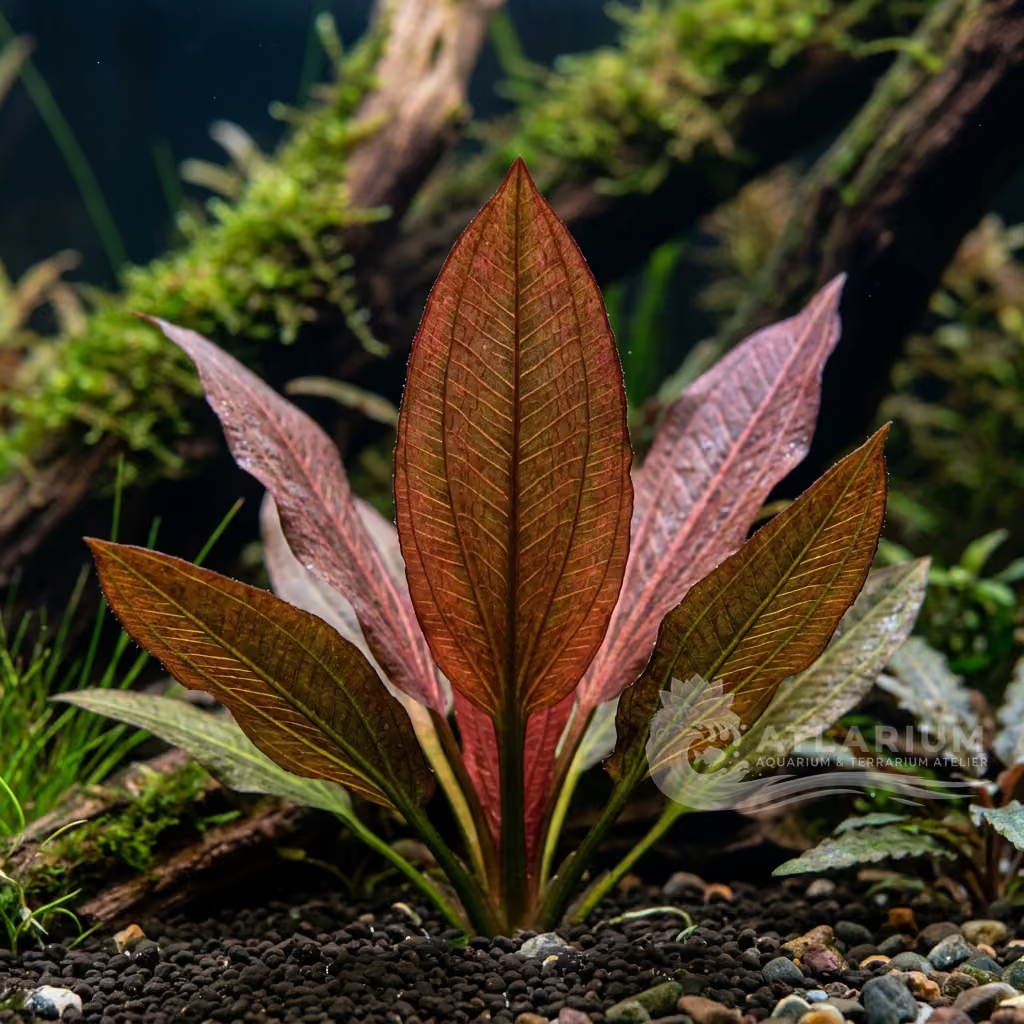
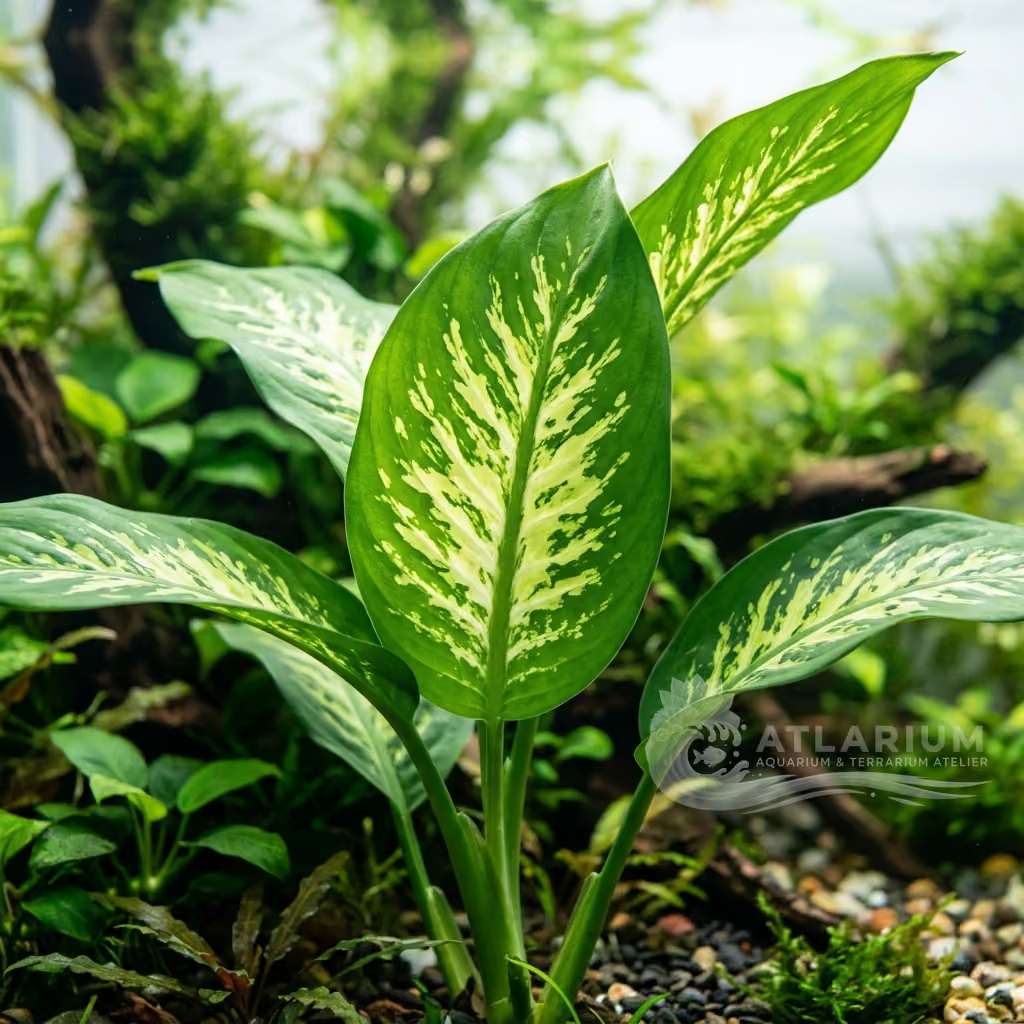
Ceratophyllum demersum "Mexiko" ("Rotstängelig")
Ceratophyllum demersum
This Mexican Hornwort variety develops unique brick-red stems under intense lighting while the needle-leaves remain green. It grows rapidly without true roots, absorbing nutrients directly from the water.
Water Temperature
18 - 30 °C
pH Value
6 - 8
Water type
Freshwater
Light
Medium to High
CO2
Low - High
Expected height
80 cm
Expected width
15 cm
KH
5 - 21 dKH

Species description
Geographical Origin and Habitat: This geographical variant originates from Mexico. While Ceratophyllum demersum is cosmopolitan, the "Mexiko" variety has adapted to warm, well-lit waters, growing in dense submerged beds in volcanic lakes, canals, and slow-flowing nutrient-rich rivers.
Taxonomy & Genetics: Belongs to the Ceratophyllaceae family and the genus Ceratophyllum. The "Mexiko" selection (known in German as "Rotstängelig") is genetically distinguished by its ability to synthesize red pigments in the stem and apical parts under strong light, unlike the entirely green wild form.
Physical Structure: Lacks true roots, anchoring itself to the substrate using modified, rhizoid-like leaves. The stems are rigid, rough, and highly branched. The leaves are arranged in dense whorls, needle-like and bifurcated, giving a bushy, compact look that is perfect for fry cover.
Color & Texture: Features a unique coloration: while the leaf needles remain a dark forest green, the stem develops a striking brick-red or brownish-red hue under intense light. The texture is rough, stiff, and brittle, with stems snapping easily if handled roughly.

Care, breeding and tankmates
Lighting & CO2: Requires medium to high lighting to display the signature red stems. Does not require CO2 injection to grow rapidly, but adding carbon dioxide encourages shorter internodes and a much bushier appearance.
Nutrition & Substrate: Lacking true roots, it absorbs all nutrients directly from the
Water Chemistry: Prefers moderately hard to hard water (KH 5-21) and a neutral or alkaline pH (6.0-8.0). Highly tolerant of high temperatures (up to 30°C), making it suitable for warm tropical tanks or outdoor summer ponds.
Space Management & Placement: Can be left floating freely on the surface to shade light, or anchored at the back of the tank using weights or wedged between rocks and wood. It grows extremely fast and needs ample space.
Pruning: Pruning simply involves snapping or cutting the stem to the desired length. Any stem fragment left in the water will continue to grow on its own, making propagation incredibly easy.
Risks & Diseases: Though highly resilient, it can experience sudden needle shedding (defoliation) if there are abrupt changes in water parameters or if treated with heavy doses of glutaraldehyde-based alghicides. It will heavily shade underlying plants if left unchecked.

Geographic origin and distribution
This geographical variant originates from Mexico. While Ceratophyllum demersum is cosmopolitan, the "Mexiko" variety has adapted to warm, well-lit waters, growing in dense submerged beds in volcanic lakes, canals, and slow-flowing nutrient-rich rivers.
Origin
Central America and CaribbeanSelective breeding and cultivars

Plant profile
- Placement
- Midground
- It is highly versatile and can be used as a floating plant to diffuse intense lighting or anchored to hardscape materials. Care should be taken not to plant the stems deep into the substrate, as the lack of true roots will lead to rotting.
- Botanical form
- Stem
- This variant is distinguished by its potential to develop striking reddish or brownish stems under strong light. The needle-like leaves remain dense and bushy, creating a beautiful contrast against the colored stems.
- Growth
- VERY_FAST
- It grows very rapidly, though sometimes slightly more compact than the common form depending on lighting. Constant trimming is usually required to manage its vigorous expansion.
- Substrate
- None
- The 'Rotstängelig' (red-stemmed) variety of Ceratophyllum demersum from Mexico is completely devoid of true roots, making substrate composition irrelevant for its nutritional needs. It grows vigorously while floating freely, pulling nitrogen and other compounds directly out of the water. To keep it stationary, the stems can be gently tucked into any standard aquarium gravel or secured to hardscape. It is crucial not to plant the stems too deep into the soil to prevent decay.
- Column fertilization
- Recommended
- Complete reliance on water column fertilization means it benefits greatly from regular dosing of comprehensive liquid fertilizers. Adequate iron dosing can help enhance the attractive reddish hues of its stems.
- Root fertilization
- None
- Root tabs are ineffective for this plant as it lacks a root system for substrate nutrient extraction. All nourishment must be provided via the water column.
- Trimming
- Occasional
- To trim, simply cut the top portions of the stems and remove or replant them. It is important to regularly thin out dense floating mats to ensure sufficient light reaches the lower areas of the tank.
- Propagation
- Cuttings
- It propagates effortlessly by vegetative fragmentation, where any broken stem piece can quickly grow into a full plant. This makes it very simple to multiply and share with other hobbyists.
- Sensitivity
- Moderate
- It shares the same sensitivity to liquid carbon supplements and certain fish medications as the common Hornwort, reacting by dropping its needles. It typically adapts well to a wide range of water parameters but appreciates clean, well-oxygenated water.
- Layout role
- Midground, Background
- The reddish stems make it an interesting focal point when used as a background plant or a floating element. It provides excellent cover for fry and shrimp while adding a subtle splash of color to the upper levels of the aquarium.

Related species
Recommendations grouped by close relatives, companion choices, and similar care.