Anubias barteri var. nana 'Golden Heart'
Anubias barteri var. nana
Striking commercial cultivar with bright golden leaves. Needs low-to-moderate light; slightly more demanding than regular green variants due to less chlorophyll.
Water Temperature
12 - 30 °C
pH Value
5 - 8
Water type
Freshwater
Light
Da bassa ad alta
CO2
Low
Expected height
10 cm
Expected width
20 cm
GH
4 - 20 dGH
KH
0 - 21 dKH

Species description
Geographical Origin and Habitat: This specific variant does not exist in the wild. It is a highly specialized, selectively bred commercial cultivar derived entirely in modern aquatic plant laboratories and high-end nurseries. Its genetic ancestor, the original Anubias barteri var. nana, originates from the deeply shaded, fast-flowing jungle streams of Cameroon and West Africa. While it shares the robust rheophytic adaptations of its wild ancestor, the "Golden Heart" was specifically bred to display a permanent chlorophyll mutation, meaning it would be highly disadvantaged and easily outcompeted in a natural, heavily shaded jungle environment.
Taxonomy & Genetics: Taxonomically, it remains Anubias barteri var. nana, but it carries a stabilized genetic mutation affecting its chloroplast density. This mutation is often referred to in the horticulture world as "aurea" or "golden." Unlike the "Snow White" or "Pinto" variants which exhibit extreme, patchy variegation (often struggling to survive), the "Golden Heart" mutation is uniform and highly stable. It sacrifices some of its photosynthetic efficiency to produce its famous, completely solid golden-yellow coloration, making it slightly slower-growing than the standard green nana.
Physical Structure: Structurally, it is identical to a standard Anubias nana. It features a thick, rock-hard creeping horizontal rhizome that acts as its primary anchor and energy reserve. From this creeping rhizome, incredibly rigid, short stems emerge, supporting tightly packed, broad, ovate (egg-shaped) leaves. The root system consists of thick, fibrous, wire-like tendrils designed exclusively for aggressively wrapping around porous hardscape materials rather than burrowing into soft mud.
Color & Texture: This is where the plant earns its legendary status. Unlike the dark, opaque emerald green of standard Anubias, every single leaf on the "Golden Heart" is a brilliant, glowing, highly vibrant lime-green or pure golden-yellow. New leaves emerge almost completely yellow and slowly mature into a bright chartreuse. The texture remains identical to its wild counterpart: phenomenally thick, rigid, and leathery, feeling like hard plastic to the touch.

Care, breeding and tankmates
Lighting & CO2: This is where its care diverges slightly from standard Anubias. Because its golden leaves lack the dense chlorophyll of dark green variants, it is slightly less efficient at photosynthesis. While it is still an obligate low-light plant, it benefits from slightly more illumination to maintain its striking golden color; in absolute, pitch-black shade, the leaves may slowly revert to a darker green to compensate. However, intense lighting is still strictly forbidden, as it will instantly cause aggressive Green Spot Algae (GSA) to completely ruin the bright yellow leaves. CO2 is unnecessary.
Nutrition & Substrate: Like all Anubias, it is an extreme water-column feeder. The thick, creeping golden-green rhizome MUST NOT be buried under gravel, sand, or aquasoil under any circumstances, or it will rapidly rot into a toxic mush. It requires absolutely no substrate. It absorbs all essential macro and micro nutrients directly through its leaves and exposed, free-floating roots via a comprehensive liquid fertilizer dosed into the water column. Iron supplementation is highly recommended to keep the golden color vibrant.
Water Chemistry: It is a highly robust, nearly unkillable plant. It thrives in standard tropical temperatures (22-28°C) and completely ignores severe, chaotic fluctuations in pH or extreme water hardness. It can survive in highly acidic, tannin-rich blackwater tanks just as effortlessly as it thrives in the hard, liquid rock of an African Cichlid setup. It requires virtually no water chemistry management.
Space Management & Placement: As an obligate epiphyte, it must be physically attached to pieces of dark driftwood or porous stones using cyanoacrylate superglue or cotton thread. Because of its intense, glowing coloration, its placement is critical for visual impact: it should be placed in the immediate foreground or midground, specifically mounted against very dark, shadowy wood or black rocks. The extreme contrast between the black wood and the glowing yellow leaves creates a stunning visual focal point.
Pruning: Pruning is almost non-existent due to its glacial growth rate. Propagation is the primary reason for pruning: simply use heavy, sharp aquascaping shears to cut the thick rhizome completely in half, ensuring each newly cut section retains healthy roots and leaves. To maintain the pristine aesthetic of the plant, occasionally snip off any ancient, damaged, or algae-infested outer leaves by cutting the stem close to the rhizome.
Risks & Diseases: The single monumental vulnerability of this plant is algae accumulation. Because the leaves are bright yellow, any dark algae (especially Black Beard Algae) will be instantly, glaringly visible and will completely ruin the aesthetic. Since a single leaf can live for over a year, prevention is mandatory. Ensure the tank has excellent flow, pristine water quality, and employ an army of Amano shrimp to keep the golden leaves polished.

Geographic origin and distribution
This specific variant does not exist in the wild. It is a highly specialized, selectively bred commercial cultivar derived entirely in modern aquatic plant laboratories and high-end nurseries. Its genetic ancestor, the original Anubias barteri var. nana, originates from the deeply shaded, fast-flowing jungle streams of Cameroon and West Africa. While it shares the robust rheophytic adaptations of its wild ancestor, the "Golden Heart" was specifically bred to display a permanent chlorophyll mutation, meaning it would be highly disadvantaged and easily outcompeted in a natural, heavily shaded jungle environment.
Origin
Selective breeding and cultivars

Plant profile
- Placement
- Midground
- This species works exceptionally well in the foreground or midground of the aquarium, depending on the overall tank size. It should ideally be attached to hardscape materials such as driftwood or rocks using thread or aquarium-safe glue. If planted in the substrate, it is absolutely critical to keep the rhizome exposed above the soil to prevent it from rotting.
- Botanical form
- Epiphyte, Stem
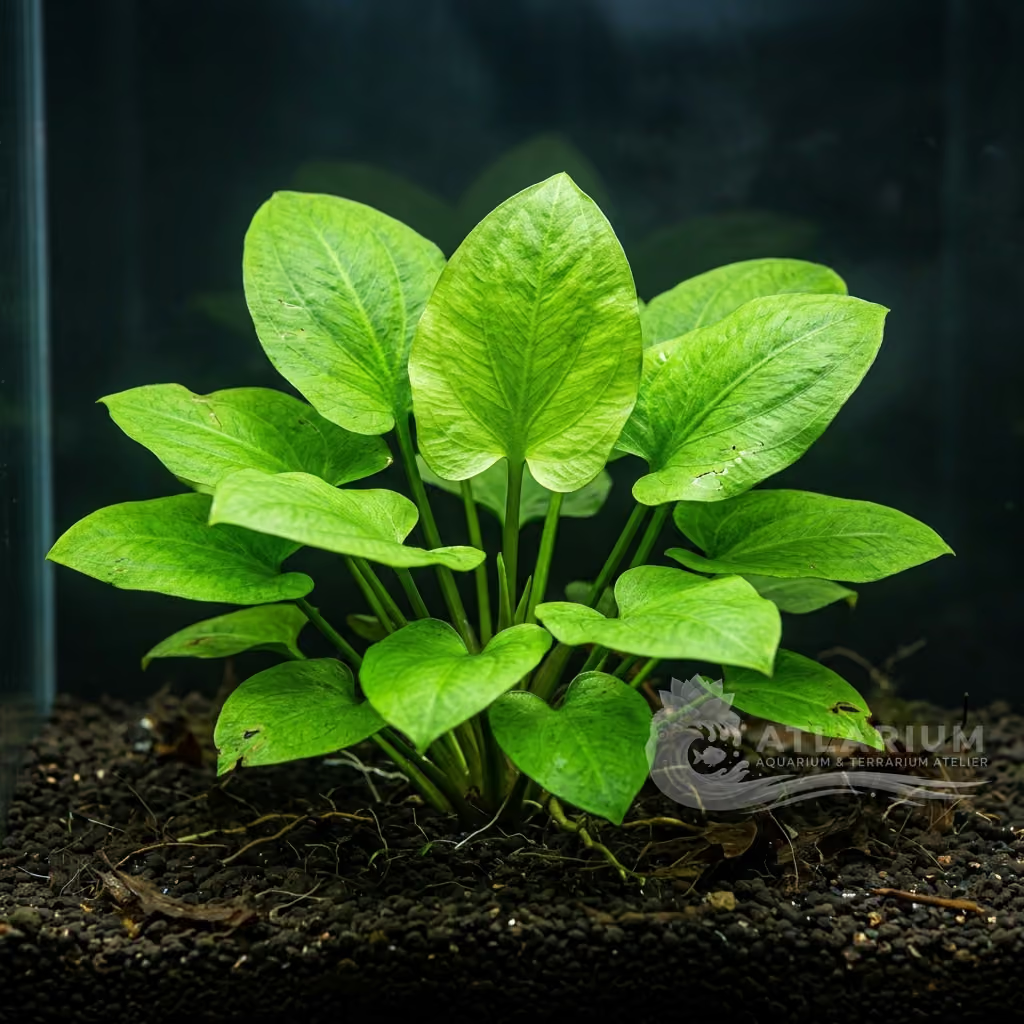
- Anubias barteri var. nana 'Golden Heart' features small, light green to slightly golden yellow leaves that stand out in any planted aquarium. The leaves grow from a thick, creeping rhizome that anchors the plant to various surfaces. Its sturdy, leathery foliage is highly resilient, making it a great option for aquariums with herbivorous fish.
- Growth
- Slow
- Like most Anubias species, Anubias barteri var. nana 'Golden Heart' exhibits a very slow growth rate. You can expect it to produce only one or two new leaves per month under standard aquarium conditions. Providing slightly higher carbon dioxide levels and optimal fertilization can marginally speed up this process, but it remains a slow grower. This slow pace makes it an excellent choice for low-maintenance setups.
- Substrate
- None
- The bright, vibrantly colored Anubias barteri var. nana 'Golden Heart' is a true epiphyte that foregoes the need for traditional rooting substrates. Its health hinges on leaving the thick horizontal rhizome entirely exposed to the water, as burying it will quickly suffocate the plant and invite bacterial rot. Its wiry roots excel at binding tightly to driftwood, lava rock, or decorative items, passively absorbing nutrients directly from the surrounding water. Because it doesn't draw sustenance from the soil, it thrives perfectly in tanks with minimal or purely inert gravel.
- Column fertilization
- Recommended
- Liquid fertilization in the water column is the primary and most effective method for feeding Anubias barteri var. nana 'Golden Heart'. A comprehensive liquid fertilizer applied weekly or bi-weekly will provide all the necessary trace elements and macronutrients. Since it is a slow grower, lean dosing is highly recommended to avoid excess nutrients accumulating in the water.
- Root fertilization
- None
- Root tabs or nutrient-rich substrates are generally unnecessary for Anubias barteri var. nana 'Golden Heart'. Because it is an epiphyte that prefers to be attached to hardscape, its roots primarily serve an anchoring function rather than a nutrient-absorbing one. Even if planted in the substrate, the plant relies more heavily on water column fertilization than root feeding.
- Trimming
- Occasional
- Trimming is rarely required due to its very slow growth rate. When pruning is necessary, simply cut the leaves as close to the rhizome as possible using sharp aquascaping scissors. Always remove any yellowing, damaged, or algae-covered leaves to maintain the plant's aesthetic appeal and overall health.
- Propagation
- Rhizome division
- Propagating Anubias barteri var. nana 'Golden Heart' is a simple and straightforward process. You simply cut the main rhizome into two or more pieces, ensuring each new section has at least three to four healthy leaves attached. These new sections can then be tied or glued to new pieces of hardscape, where they will eventually develop into full plants.
- Sensitivity
- Moderate
- This plant is incredibly hardy and tolerates a wide range of water parameters and temperatures. However, its slow-growing, broad leaves are particularly susceptible to spot algae and black beard algae if light intensity is too high. It is recommended to place it in shaded areas of the aquarium to mitigate this risk.
- Layout role
- Epiphyte, Midground
- Its unique leaf shape makes it an excellent bright color accent. It is often used to bridge the gap between different aquascaping elements or provide shelter for small fish and shrimp. The rich green foliage provides a strong visual anchor and adds a sense of maturity to the aquascape.

Image gallery
Licensed images linked to the species or, when marked, to the closest representative taxon.

Related species
Recommendations grouped by close relatives, companion choices, and similar care.