Anubias barteri var. nana 'Petite' ('Bonsai')
Anubias barteri var. nana
Highly coveted ultra-miniature epiphyte. Low-light obligate, but CO2 injection drastically accelerates its notoriously slow, compact growth rate.
Water Temperature
12 - 30 °C
pH Value
5 - 8
Water type
Freshwater
Light
Da bassa ad alta
CO2
Low
Expected height
6 cm
Expected width
20 cm
GH
4 - 20 dGH
KH
0 - 21 dKH

Species description
Geographical Origin and Habitat: Like many specialized Anubias cultivars, the "Petite" (also famously sold under the trade name "Bonsai") does not exist in the wild river basins of West Africa. It is a highly coveted, ultra-miniature genetic mutation that was selectively isolated and stabilized in premium Asian aquatic plant nurseries (most notably by Oriental Aquarium in Singapore). Its wild ancestor, Anubias nana, thrives as a rheophyte in shaded, fast-moving African streams, and the "Petite" variant retains all of these profound survival adaptations, merely scaled down to a microscopic level.
Taxonomy & Genetics: Taxonomically, it is classified as a stabilized dwarf mutation of Anubias barteri var. nana. True "Petite" is highly prized and genetically distinct from standard "nana"; it is not simply a young plant, but a variant genetically hardcoded to never exceed a microscopic size, regardless of age or nutrients. Further modern laboratory isolations have created even smaller variants like "Pangolino," but "Petite" remains the absolute global standard for miniature epiphytes in competitive aquascaping.
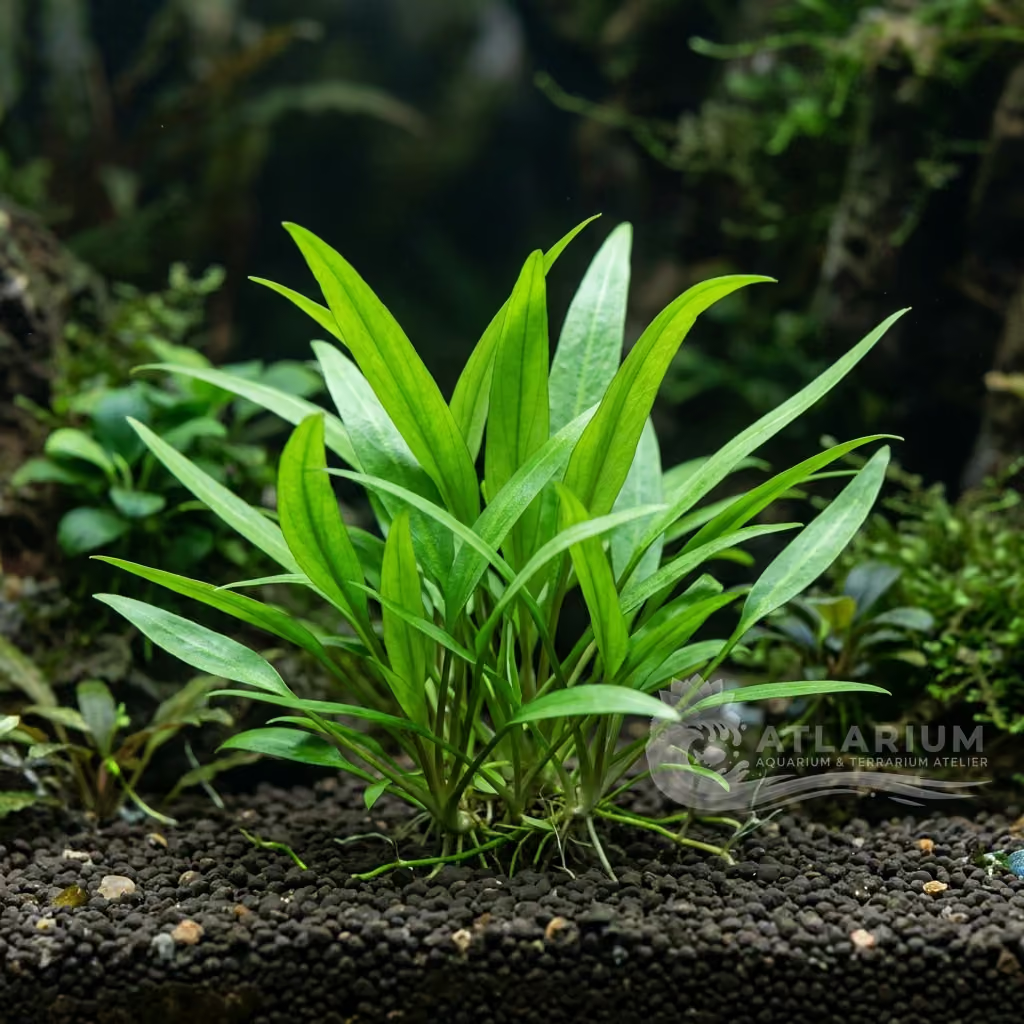
Physical Structure: The entire plant is a microscopic marvel of botanical engineering. It features a tiny, creeping horizontal rhizome that rarely exceeds the thickness of a toothpick. From this creeping base, hair-thin, ultra-rigid stems emerge, supporting perfectly formed, microscopic ovate leaves. The plant grows exceptionally dense, slowly forming a tight, impenetrable, creeping carpet of miniature foliage over wood and rock surfaces. Its root system is fibrous and aggressive, gripping tightly to the smallest crevices in the hardscape.
Color & Texture: The coloration is a striking, solid, and completely opaque dark emerald green, identical to its massive wild ancestors. Despite its tiny, delicate appearance, the texture of the "Petite" variant is shockingly tough. The microscopic leaves are incredibly rigid, leathery, and feel like hard plastic. This incredible cellular density makes the tiny leaves completely immune to being eaten by herbivorous shrimp, snails, or small fish.

Care, breeding and tankmates
Lighting & CO2: It is an obligate low-light plant. While it can survive without CO2, competitive aquascapers heavily rely on pressurized CO2 injection to drastically accelerate its notoriously slow growth rate and force it to grow in incredibly dense, compact clusters. If placed under intense, high-energy LED lighting without heavy shading, its microscopic leaves will instantly become permanently ruined and choked by Black Beard Algae (BBA) and Green Spot Algae (GSA). It must be kept in the shadows of larger plants or hardscape.
Nutrition & Substrate: It is strictly an epiphyte and a water-column feeder. The microscopic creeping rhizome MUST NOT be buried under aquasoil or gravel; burying it will instantly rot and kill the tiny plant. It requires absolutely no substrate to survive. It absorbs all necessary nutrients—particularly iron and potassium—directly through its tiny leaves and fine, free-floating roots via comprehensive liquid fertilization dosed into the water column.
Water Chemistry: Despite its fragile, microscopic appearance, it is a virtually indestructible, bulletproof plant. It thrives in standard tropical temperatures (22-28°C) but is highly tolerant of cooler water. It completely ignores chaotic fluctuations in pH or extreme water hardness, surviving effortlessly in both acidic blackwater setups and liquid rock. It is the perfect, unkillable detailing plant for high-end aquariums.
Space Management & Placement: This is the ultimate, undisputed king of nano-aquascaping detailing. Due to its microscopic size, it must be used exclusively in the immediate foreground or wedged meticulously into the tiniest cracks, crevices, and branch junctions of the hardscape. It must be attached using a tiny drop of cyanoacrylate superglue or tied with fine cotton thread. Using it anywhere near the background is a complete waste, as it will be entirely invisible.
Pruning: Pruning is a delicate, surgical operation due to the plant's tiny scale. To propagate it, you must carefully extract the plant and use sharp, fine-tipped spring scissors to sever the tiny rhizome. For cosmetic maintenance, use long aquascaping tweezers and fine scissors to surgically snip off any dead, yellowing, or algae-covered microscopic leaves directly at the base of the rhizome to keep the cluster looking pristine.
Risks & Diseases: Its microscopic size and glacial growth rate make it highly susceptible to being completely smothered by detritus (fish waste) and aggressive algae. Because the leaf cluster is so tight and dense, debris easily gets trapped inside. You MUST keep the water meticulously clean, ensure excellent flow to blast away detritus, and employ a massive army of Neocaridina or Amano shrimp to constantly pick the microscopic leaves clean.

Geographic origin and distribution
Like many specialized Anubias cultivars, the "Petite" (also famously sold under the trade name "Bonsai") does not exist in the wild river basins of West Africa. It is a highly coveted, ultra-miniature genetic mutation that was selectively isolated and stabilized in premium Asian aquatic plant nurseries (most notably by Oriental Aquarium in Singapore). Its wild ancestor, Anubias nana, thrives as a rheophyte in shaded, fast-moving African streams, and the "Petite" variant retains all of these profound survival adaptations, merely scaled down to a microscopic level.
Origin
Selective breeding and cultivarsEast Asia

Plant profile
- Placement
- Foreground
- This plant is best suited for foreground or midground placement, especially in nano aquariums. It should be attached to hardscape materials like rocks or driftwood. Burying the rhizome in the substrate will cause it to rot and die.
- Botanical form
- Rhizome
- It features miniature, dark green, ovate leaves that create a dense, bush-like appearance. The creeping rhizome is thick and anchors the plant firmly with strong adventitious roots. It is significantly smaller than the standard Anubias nana.
- Growth
- Slow
- The growth rate is exceptionally slow, often producing only one leaf per month. This minimal growth makes it very low-maintenance and unlikely to overgrow its space. Providing CO2 and moderate light can slightly increase its growth speed.
- Substrate
- None
- This incredibly small epiphyte, known as Anubias barteri var. nana 'Petite', requires hardscape attachment rather than planting in soil or gravel. The delicate but crucial rhizome must be positioned above any substrate layer to allow for necessary water flow and to prevent rot. The micro-roots function as highly effective anchors, wedging into the smallest crevices of wood or stone to stabilize the plant while absorbing nutrients exclusively from the water column. Consequently, substrate depth and composition are completely irrelevant to its care, provided the plant is securely tied or glued to an exposed surface.
- Column fertilization
- Recommended
- Column fertilization is the main source of nutrients for this epiphytic plant. A balanced liquid fertilizer dosed sparingly will keep the plant vibrant without triggering algae issues. Potassium and iron are particularly beneficial for leaf health.
- Root fertilization
- None
- Root fertilization is generally ineffective since the plant's roots should remain exposed. Its root system is primarily designed for gripping surfaces rather than absorbing soil nutrients. Using root tabs will not provide direct benefits.
- Trimming
- Occasional
- Due to its slow growth, trimming is rarely necessary. Simply remove any yellowing, damaged, or algae-infested leaves to maintain its appearance. Always use sharp scissors to cut the petiole as close to the rhizome as possible.
- Propagation
- Rhizome division
- Propagation is simple and is done by dividing the creeping rhizome. Ensure each separated section retains at least three healthy leaves and a few roots. Attach the new divisions to hardscape materials to establish new clusters.
- Sensitivity
- Moderate
- It is particularly sensitive to spot algae due to its slow-growing nature and extended light exposure. Placing it in partially shaded areas can help mitigate algae colonization. It is also completely intolerant of having its rhizome buried.
- Layout role
- Foreground, Epiphyte, Nano
- This miniature plant is excellent for creating a sense of scale and fine detail in aquascapes. It works beautifully to soften the harsh edges of hardscape elements or fill small crevices. Its deep green color provides a striking contrast against lighter plants.

Image gallery
Licensed images linked to the species or, when marked, to the closest representative taxon.

Related species
Recommendations grouped by close relatives, companion choices, and similar care.