Anubias barteri var. nana 'Round Leaf'
Anubias barteri var. nana
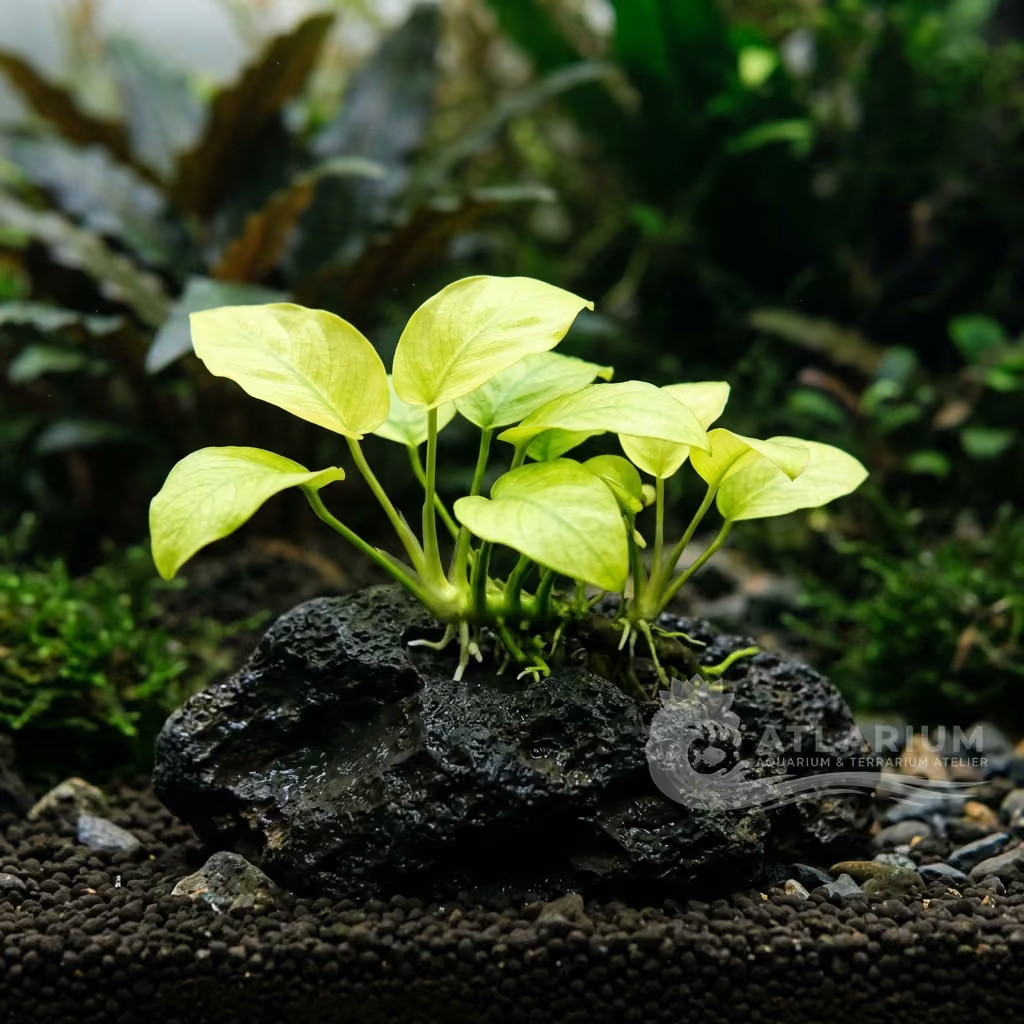
Charming dwarf cultivar with perfectly round leaves. Prefers low to medium light and attaches easily to rocks or driftwood without needing CO2 injection.
Water Temperature
22 - 28 °C
pH Value
6 - 8
Water type
Freshwater
Light
Medium - High
CO2
Low
Expected height
10 cm
Expected width
12 cm
GH
4 - 20 dGH
KH
2 - 15 dKH

Species description
Geographical Origin and Habitat: This cultivar is a horticultural selection derived from Anubias barteri var. nana, whose wild ancestors come from West Africa (Cameroon, Nigeria, Guinea). In nature, it grows in riparian zones of forest rivers and streams, anchoring itself to basalt rocks or submerged wood. This variant was selected in cultivation for its round, compact leaves, keeping the extraordinary adaptability of the original wild species.
Taxonomy & Genetics: It is a stabilized cultivar belonging to the Araceae family. The designation 'Round Leaf' (sometimes marketed as 'Coin Leaf') refers to the almost perfectly circular shape of its leaves. Genetically, it shares the typical robustness of Anubias barteri, but artificial selection has favored short internodes in the rhizome, ensuring an extremely dense, dwarf, and compact growth compared to the standard nana form.
Physical Structure: The plant features a dwarf structure formed by a slow-growing horizontal creeping rhizome. Very short petioles develop from it, bearing round or slightly oval leaves with a cordate base. The roots are thick and branched, ideal for penetrating rock crevices. The rhizome must never be buried to prevent suffocation and rot.
Color & Texture: The leaves show a bright and deep emerald green coloration. The leaf blade is thick, leathery, and stiff to the touch, with a glossy finish on the upper surface that reflects light. The texture is smooth with faint secondary veins, and a waxy cuticle protects it from snail and herbivore damage.

Care, breeding and tankmates
Lighting & CO2: Prefers low to medium lighting. If exposed to intense light, it is prone to green spot or black brush algae on its slow-growing leaves. CO2 injection is not necessary, but a small supply stimulates healthier leaves and reduces the risk of algal colonization.
Nutrition & Substrate: Does not require a fertile substrate since it is an epiphytic plant. It must be tied to driftwood, rocks, or hardscape elements. It draws nutrients directly from the
Water Chemistry: It is an extremely adaptable plant. It tolerates temperatures between 12°C and 30°C, pH between 5.5 and 8.0, and water hardness from very soft to hard. It is ideal for freshwater aquariums of any type due to its chemical resistance.
Space Management & Placement: Ideally placed in the foreground or midground, anchored to hardscape elements like lava rocks or roots. Its dwarf, compact habit makes it perfect for nano-aquariums or for creating small green details in larger aquariums.
Pruning: Pruning is minimal due to the very slow growth rate. It consists of removing damaged or yellowed leaves by cutting them with sharp scissors near the rhizome. Periodically cutting the rhizome into multiple parts stimulates the production of new shoots.
Risks & Diseases: Rhizome rot is the main risk if the plant is buried in fine substrate. Another issue is the accumulation of organic debris among the compact leaves, which can promote filamentous algae growth; placing it in areas with good water flow is recommended.

Geographic origin and distribution
This cultivar is a horticultural selection derived from Anubias barteri var. nana, whose wild ancestors come from West Africa (Cameroon, Nigeria, Guinea). In nature, it grows in riparian zones of forest rivers and streams, anchoring itself to basalt rocks or submerged wood. This variant was selected in cultivation for its round, compact leaves, keeping the extraordinary adaptability of the original wild species.
Origin
Africa and MadagascarSelective breeding and cultivars

Plant profile
- Placement
- Foreground
- This variety is perfect for the midground or foreground of the aquarium. It should always be attached to driftwood or rocks using thread or glue. Burying the rhizome in the substrate will inevitably cause rot and plant death.
- Botanical form
- Rhizome
- It is characterized by its distinctive, perfectly round, dark green leaves. The plant grows from a creeping rhizome that produces strong, thick roots for anchoring. It is slightly larger than the 'Petite' variety but maintains a compact form.
- Growth
- Slow
- Like most Anubias species, the growth rate is very slow and steady. It may take weeks to produce a single new round leaf. This slow pace makes it an excellent choice for low-maintenance aquariums, as it rarely requires pruning.
- Substrate
- None
- The Anubias barteri var. nana 'Round Leaf' functions primarily as an epiphyte and thrives when completely detached from conventional aquatic soils. Its thick rhizome must remain fully exposed to the water current, while its robust roots can freely cascade over hardscape materials to establish a firm grip. While the trailing roots may eventually reach and lightly penetrate a sandy or gravel substrate, they serve strictly for structural anchoring rather than nutrient absorption. Optimal growth is achieved by tying or gluing the plant directly to wood or stone, relying entirely on the water column for fertilization.
- Column fertilization
- Recommended
- It absorbs the majority of its required nutrients directly from the water column. Sparing use of liquid fertilizers will prevent nutrient deficiencies without causing algae blooms. Additions of iron and potassium can enhance the deep green coloration.
- Root fertilization
- None
- Root tabs are ineffective for this epiphytic plant, as its roots are not designed for soil absorption. The roots function primarily to hold the plant securely to hardscape elements. It relies entirely on water column nutrients.
- Trimming
- Occasional
- Pruning is seldom needed due to its unhurried growth habit. When necessary, use clean, sharp scissors to snip off old, dying, or algae-covered leaves close to the base. This redirects the plant's energy toward producing healthy new growth.
- Propagation
- Rhizome division
- Propagation is achieved by carefully cutting the rhizome into smaller sections. Ensure that each new piece has at least a few healthy leaves and intact roots. These sections can then be tied or glued to new hardscape locations.
- Sensitivity
- Moderate
- It is susceptible to spot algae if exposed to high light for extended periods. Placing the plant in the shade of larger plants or hardscape can prevent this issue. The rhizome is extremely sensitive to being buried in substrate.
- Layout role
- Foreground, Midground, Epiphyte, Nano, group
- Its unique round leaves provide excellent textural contrast in aquascape designs. It is often used to create a focal point in the midground or to detail pieces of wood. The dark green foliage stands out beautifully against lighter plants.

Related species
Recommendations grouped by close relatives, companion choices, and similar care.