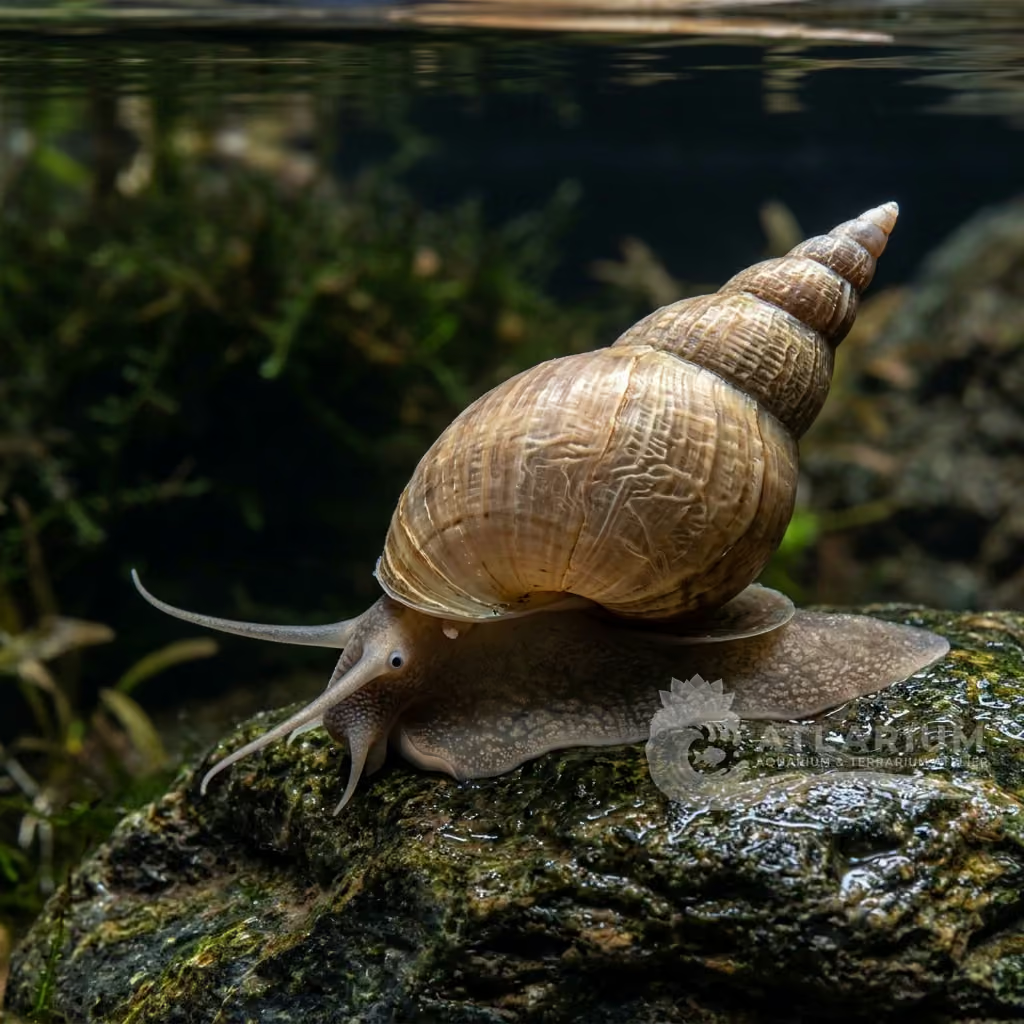
Asian apple snail
Pila ampullacea
Asian apple snail: aquarium gastropod in the family Ampullariidae, useful for biofilm, light algae, and substrate cleanup. Geographical Origin and Habitat: The Asian Apple Snail (*Pila...
Water Temperature
20 - 28 °C
pH Value
7 - 8.4
Water type
Freshwater
Invertebrate type
Freshwater snail
Adult size
6 cm
Minimum group
>= 1
GH
6 - 20 dGH
KH
3 - 15 dKH
TDS
120 - 450 ppm
Ecological role
Scavenger
Copper sensitivity
High

Species description
Geographical Origin and Habitat: The Asian Apple Snail (*Pila ampullacea*) is a colossal, notoriously voracious freshwater gastropod natively endemic to the warm, shallow lakes, slow-moving rivers, heavily vegetated swamps, and flooded rice paddies stretching across Southeast Asia (Thailand, Vietnam, Indonesia). Their natural biotope is defined by extreme seasonal flooding and severe dry seasons. To survive droughts, they plunge deep into the muddy substrate and "aestivate" (a state of dormant hibernation) for months.
Taxonomy: Scientifically classified within the Ampullariidae family, they are the Asian equivalent of the massive South American *Pomacea* snails. Fully mature adults reach an absolutely staggering 8.0 to 10.0 centimeters (3.1-4.0 inches) in shell length, functioning as true titans of the aquarium. They possess a massive, rounded, heavily robust globe-like shell. Like all Apple Snails, they possess a lung for breathing atmospheric air, a long breathing siphon, and a tough, calcified operculum (trapdoor).
Social Behavior: They are exceptionally peaceful, heavily armored, and famously clumsy biological bulldozers. Despite their immense, terrifying size, they possess zero predatory instincts and will completely ignore fish or dwarf shrimp. They are highly active scavengers, using their massive, muscular foot to effortlessly plow through substrate and plow over heavy hardscapes. Because they possess a lung, they will frequently climb the aquarium glass to the waterline to extend their siphon and breathe.
Coloration and Sexual Dimorphism: Sexual dimorphism is visually non-existent; male and female reproductive organs are completely internal. Their shell is incredibly thick and designed for camouflage in murky swamps. The base coloration ranges from light muddy brown to deep, saturated olive-green, often heavily banded with darker brown or faint reddish horizontal stripes. Their massive, fleshy foot and long sensory tentacles are typically a deeply mottled, dark grey-black or heavily speckled brownish-yellow.

Care, breeding and tankmates
Tank Setup: The aquarium architecture MUST accommodate their colossal adult size, their massive waste output, and their need to breathe atmospheric air. A minimum 100-liter (25-gallon) tank is absolutely mandatory for a single adult. Because they utilize a breathing siphon, a large, exposed air gap of 2-3 inches above the waterline is unconditionally mandatory. A heavy, tight-fitting lid is strictly required to prevent them from climbing out. The substrate should be soft sand to protect their massive foot.
Diet and Feeding: They are ravenous, unstoppable herbivores and heavy-duty macrophytes (plant eaters).
CRITICAL WARNING: The Asian Apple Snail is highly destructive to planted aquariums. They possess powerful jaws specifically evolved to shred and consume aquatic vegetation. They WILL completely obliterate and consume every single living plant, right down to the roots. In a bare aquarium, their massive appetite MUST be fueled daily with entire blanched zucchini halves and heavy sinking wafers.
Water Quality: Originating from the hot swamps of Southeast Asia, they demand stable tropical heat (24-28°C / 75-82°F). However, their massive size and ravenous appetite mean they produce an unbelievable amount of physical waste. Flawless, over-engineered filtration and heavy weekly water changes are unconditionally mandatory to prevent lethal Ammonia spikes. They strictly require hard, highly alkaline water (GH 8-20, pH 7.5 - 8.5) rich in dissolved calcium to maintain their massive, thick shells.
Compatibility and Tankmates: Compatibility is generally excellent due to their peaceful nature and immense, impenetrable shell. They are the perfect (though clumsy) giant cleanup crew for bare or rock-only community tanks. They completely ignore fish. However, they MUST NEVER be housed with aggressive, snail-eating predators (massive Loaches, large Cichlids) that will relentlessly attack their vulnerable soft foot. Excellent companions include fast schooling fish, Corydoras, and robust bottom-dwellers.
Aquarium Breeding: Breeding the Asian Apple Snail is highly prolific. Like their South American cousins, they are NOT hermaphrodites; distinct males and females are required. After mating, the female will climb completely OUT of the water to lay a large, hard, calcified, pink or chalky-white egg clutch firmly attached to the aquarium glass or lid. The eggs incubate in the humid air for 2-4 weeks before hatching. Hundreds of ravenous, plant-eating babies will then drop into the water.
Risks and Diseases: The absolute greatest physical risk is agonizing death from massive shell degradation caused by keeping them in soft, acidic water lacking calcium; extremely hard, highly alkaline water is unconditionally mandatory. The second major risk is massive, lethal water fouling (Ammonia spikes) if industrial-grade filtration is not utilized to handle their immense physical waste. Finally, they will completely decimate and destroy any planted aquarium they are introduced to.

Geographic origin and distribution
The Asian Apple Snail (*Pila ampullacea*) is a colossal, notoriously voracious freshwater gastropod natively endemic to the warm, shallow lakes, slow-moving rivers, heavily vegetated swamps, and flooded rice paddies stretching across Southeast Asia (Thailand, Vietnam, Indonesia). Their natural biotope is defined by extreme seasonal flooding and severe dry seasons. To survive droughts, they plunge deep into the muddy substrate and "aestivate" (a state of dormant hibernation) for months.
Origin
North AmericaSouth and Southeast Asia

Invertebrate profile
- Diet
- Biofilm grazer
- They are voracious herbivores with large appetites that will quickly devour most aquatic plants. Their diet should consist of copious amounts of blanched vegetables like zucchini and spinach, along with heavy sinking pellets. They are not suitable for planted aquariums, as they act essentially as aquatic lawnmowers.
- Ecological role
- Scavenger
- In their natural habitat, they are significant consumers of aquatic vegetation and contribute massively to nutrient cycling. In the aquarium, they are heavy waste producers due to their large food intake. They require substantial mechanical and biological filtration to maintain good water quality around them.
- Adult size
- 6 cm
- Jump risk
- Yes
- While they cannot jump, their reproductive instinct drives females to intentionally leave the water to deposit eggs. They are powerful enough to push open loose aquarium lids. A heavy, highly secure, tight-fitting lid is absolutely critical to prevent them from falling out of the tank and sustaining fatal shell damage.
- Shock sensitivity
- High
- Despite their large size, they can be sensitive to sudden shifts in water temperature or rapid accumulation of ammonia from their own waste. Slow acclimation is required when moving them. Maintaining highly stable, clean water is essential to prevent stress and shell deterioration.
- Calcium and minerals
- High
- Due to the massive size and thickness of their shell, they have extraordinarily high calcium requirements. The water must be hard and alkaline (high GH and pH) to prevent severe shell erosion. Providing calcium-rich foods, cuttlebone, and specific mineral supplements is absolutely mandatory for their health.
- Molting
- Shell growth
- As gastropods, they do not molt; they continuously expand their massive shell layer by layer. Healthy growth is seen as a smooth, uniform addition to the shell lip. Because of their size, any deficiency in calcium or poor water quality will immediately present as deep fissures or brittle shell edges.
- Reproduction
- Variable
- They are not hermaphroditic; both a distinct male and female are required to reproduce. The female will crawl completely out of the water to lay a large, calcified pinkish egg clutch on a dry surface. These eggs require warm, humid air to incubate successfully over several weeks before hatching into the water.
- Compatibility & tankmates
- Peaceful
- They are peaceful and slow-moving, making them suitable tankmates for medium to large, non-aggressive fish. They should never be kept with fin-nippers or aggressive cichlids that might bite at their long, delicate antennae. As they will consume almost all vegetation, they are entirely incompatible with delicate planted aquariums.

Image gallery
Licensed images linked to the species or, when marked, to the closest representative taxon.

Related species
Recommendations grouped by close relatives, companion choices, and similar care.