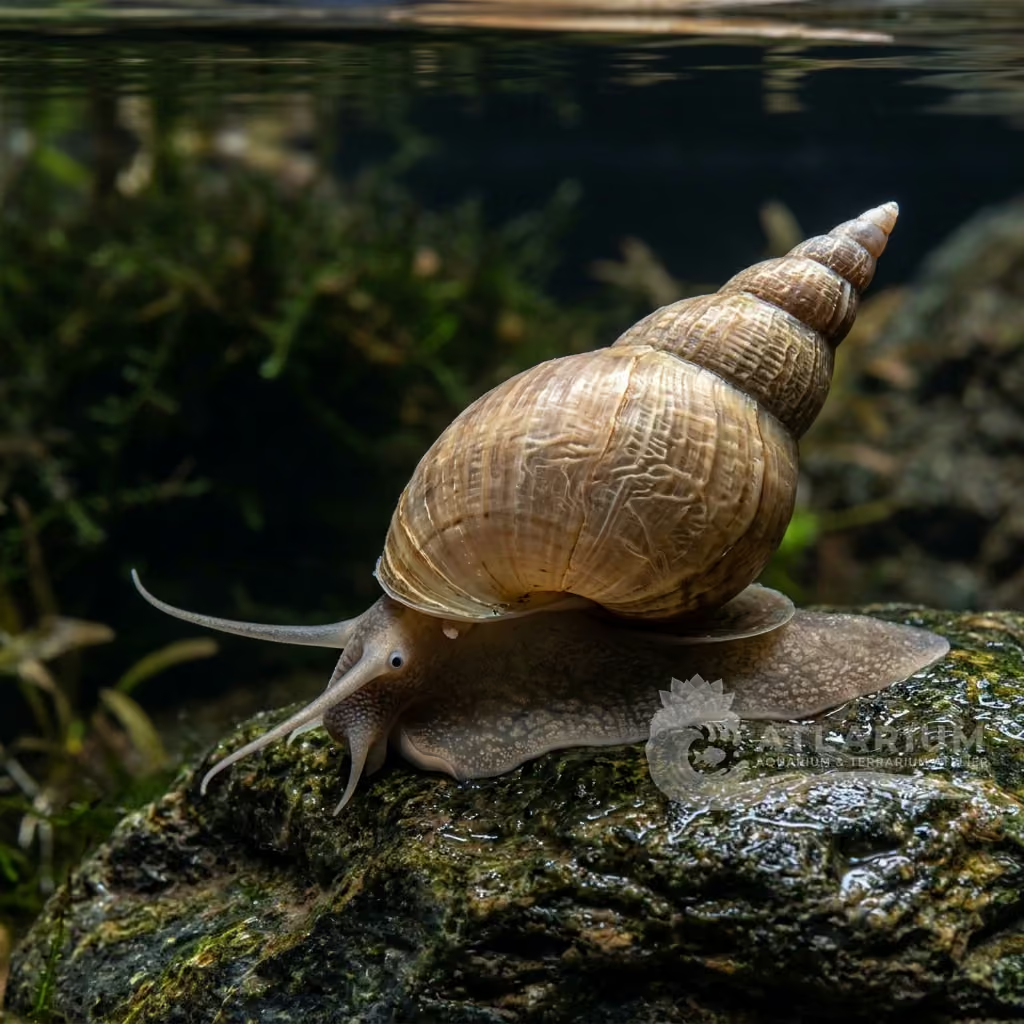
Ear pond snail
Radix auricularia
Ear pond snail: aquarium gastropod in the family Lymnaeidae, useful for biofilm, light algae, and substrate cleanup. Geographical Origin and Habitat: The Big-ear Radix, or Ear Pond Snail...
Water Temperature
20 - 28 °C
pH Value
7 - 8.4
Water type
Freshwater
Invertebrate type
Freshwater snail
Adult size
2.5 cm
Minimum group
>= 1
GH
6 - 20 dGH
KH
3 - 15 dKH
TDS
120 - 450 ppm
Ecological role
Scavenger
Copper sensitivity
High

Species description
Geographical Origin and Habitat: The Big-ear Radix, or Ear Pond Snail (*Radix auricularia*), is a highly robust, temperate freshwater gastropod natively endemic to the massive, slow-moving rivers, broad lakes, cold swamps, and muddy ponds stretching entirely across Europe and Northern Asia. Their natural biotope is defined by cooler, heavily vegetated, and highly stagnant waters where they spend their lives deeply submerged in thick mud, feeding extensively on vast amounts of decaying organic matter and thick algal mats.
Taxonomy: Scientifically classified within the Lymnaeidae (Pond Snail) family, they are a medium-to-large snail. Fully mature adults can reach an impressive 2.5 to 3.5 centimeters (1.0-1.4 inches) in shell length. Their defining morphological feature—and the direct origin of their common name—is their shell aperture (opening). Unlike standard pond snails, the final whorl of the *R. auricularia* shell flares out massively, creating an incredibly wide, flat, and distinctive shape that closely resembles a human ear. They lack an operculum and breathe via a lung.
Social Behavior: They are peaceful, highly resilient, and fiercely industrious detritivores. Due to their wide, flared shell, they possess a massive, muscular foot that allows them to glide with surprising speed across glass, soft mud, and broad plant leaves. They possess absolutely zero predatory instincts toward fish. They are highly active scavengers, constantly bulldozing through the substrate to unearth rotting organic matter. Like most lung-breathing snails, they occasionally travel to the surface for air.
Coloration and Sexual Dimorphism: Like Ramshorns and Bladder Snails, the Big-ear Radix is a simultaneous hermaphrodite, possessing both male and female reproductive capabilities, thereby eliminating any visual sexual dimorphism. The massively flared shell is generally thin and features a highly camouflaged, mottled pattern. The base color ranges from pale amber to dark horn-brown, often stippled with incredibly fine, light-colored or white spots. Their fleshy body and short, triangular tentacles are usually a pale grey-yellow.

Care, breeding and tankmates
Tank Setup: The aquarium architecture must accommodate their size and preference for cooler water. A minimum 40-liter (10-gallon) tank or an outdoor pond setup is recommended. They thrive in heavily planted environments with a soft sand or mud substrate that allows them to burrow and scavenge. Because they breathe atmospheric air via a lung, an exposed air gap above the waterline is unconditionally mandatory. A tight-fitting lid is recommended indoors, though they rarely attempt to escape completely.
Diet and Feeding: They are ravenous, heavy-duty detritivores and algae eaters.
CRITICAL WARNING: While they strongly prefer rotting vegetation and algae, unlike the harmless Bladder Snail, the massive Big-ear Radix CAN and WILL occasionally consume soft, delicate living aquarium plants if they are starving. To prevent plant damage, their massive appetite MUST be fueled. They must be regularly fed heavy sinking wafers, fish food leftovers, and large blanched vegetables (zucchini, carrots, spinach).
Water Quality: Originating from temperate Europe and Asia, their biological requirements lean strongly toward COOL to temperate water (10-24°C / 50-75°F). They are highly prized for outdoor ornamental ponds because they survive freezing winters. Keeping them in hot tropical tanks (28°C+) will severely accelerate their metabolism and drastically shorten their lifespan. They strictly require hard, alkaline water (GH 8-20, pH 7.2 - 8.5) rich in calcium to maintain their massive, flared shells.
Compatibility and Tankmates: Compatibility is excellent for cooler-water community tanks, but their lack of a trapdoor makes their soft bodies extremely vulnerable. They are perfect cleanup crews for unheated tanks with Goldfish, Hillstream Loaches, or White Cloud Mountain Minnows. They MUST NEVER be housed with aggressive, snail-eating predators (massive Loaches, large Cichlids, Pufferfish) that will effortlessly crush their shells or rip them out. They are excellent companions for Neocaridina shrimp.
Aquarium Breeding: Breeding is completely automatic and prolific, though their larger size makes them less explosive than tiny Bladder Snails. Because they are hermaphrodites, any two snails will constantly mate (and they can self-fertilize). They lay massive, thick, gelatinous, sausage-shaped egg clutches containing 50-150 eggs on the undersides of broad plant leaves, pond liners, and glass. In an overfed pond or tank, the population will explode to break down the excess waste, then stabilize naturally.
Risks and Diseases: The absolute greatest physical risk is shell degradation (pitting and whitening) caused by keeping them in soft, acidic water; hard, calcium-rich water is required. The second major risk is lethal metabolic exhaustion from keeping this temperate species in a constantly hot tropical aquarium. The greatest risk to the aquarist is plant damage if the snails are starved, or a massive population explosion resulting from severe overfeeding. Chemical copper treatments are instantly and brutally lethal.

Geographic origin and distribution
The Big-ear Radix, or Ear Pond Snail (*Radix auricularia*), is a highly robust, temperate freshwater gastropod natively endemic to the massive, slow-moving rivers, broad lakes, cold swamps, and muddy ponds stretching entirely across Europe and Northern Asia. Their natural biotope is defined by cooler, heavily vegetated, and highly stagnant waters where they spend their lives deeply submerged in thick mud, feeding extensively on vast amounts of decaying organic matter and thick algal mats.
Origin
North AmericaEurope, Mediterranean, and West AsiaEast Asia

Invertebrate profile
- Diet
- Biofilm grazer
- These snails are prolific grazers and scavengers that primarily consume soft green algae, diatoms, and decaying plant matter. They act as excellent natural cleaners, constantly rasping biofilms and uneaten fish food from hard surfaces without damaging healthy aquatic plants. Supplementing their diet with blanched greens and occasional calcium-rich invertebrate wafers ensures optimal shell health and sustained energy.
- Ecological role
- Scavenger
- In their native habitats and home aquariums, big-ear radix snails play a vital role in nutrient cycling by breaking down detritus and controlling nuisance algae growth. Their constant grazing pressure prevents biofilm overgrowth and contributes to a healthier, more balanced micro-ecosystem. By converting organic waste into more manageable forms, they actively assist the biological filtration of the tank.
- Adult size
- 2.5 cm
- Jump risk
- Yes
- These snails have a tendency to explore near the waterline to access atmospheric air, but they do not possess the ability to jump. However, they may occasionally wander out of an open aquarium, resulting in a fatal drying out process if not quickly discovered. Utilizing a well-fitted hood or glass lid is highly recommended to prevent accidental escapes and maintain humidity.
- Shock sensitivity
- High
- Radix auricularia is a highly adaptable species capable of tolerating a wide spectrum of water temperatures and chemical parameters. However, sudden and drastic shifts in water conditions, particularly rapid changes in pH, can induce severe physiological stress and shock. Employing a careful drip acclimation strategy ensures they adjust smoothly and safely to their new aquatic surroundings.
- Calcium and minerals
- High
- A readily available source of calcium is essential to maintain the structural integrity of their broad, delicate shells. In soft or acidic water, their shells will rapidly deteriorate, displaying signs of pitting, thinning, and potentially lethal cracks. Incorporating crushed coral into the substrate or providing specialized mineral blocks will help maintain the necessary hardness for healthy shell development.
- Molting
- Shell growth
- Because they are gastropods, big-ear radix snails do not experience a molting phase; instead, they continually accrete new shell layers along the leading edge of their aperture. This uninterrupted growth demands a steady, lifelong supply of dietary and dissolved calcium. Maintaining slightly alkaline water conditions further protects the existing shell from slow chemical erosion.
- Reproduction
- Variable
- These snails are simultaneous hermaphrodites, possessing both male and female reproductive organs, and can reproduce quite prolifically when food is abundant. They lay distinct, gelatinous egg masses containing dozens of transparent eggs on plants, glass, and hardscape materials. While their breeding can be rapid, controlling excess nutrient levels in the tank is an effective way to manage their population.
- Compatibility & tankmates
- Peaceful
- The big-ear radix snail is an exceptionally peaceful invertebrate that coexists perfectly with a vast array of small, community-friendly freshwater fish and shrimp. They lack any defensive mechanisms other than their shell, making them highly vulnerable to aggressive predators like puffers, loaches, and large cichlids. Their gentle nature makes them ideal inhabitants for planted nano-tanks and peaceful community setups.

Image gallery
Licensed images linked to the species or, when marked, to the closest representative taxon.

Related species
Recommendations grouped by close relatives, companion choices, and similar care.