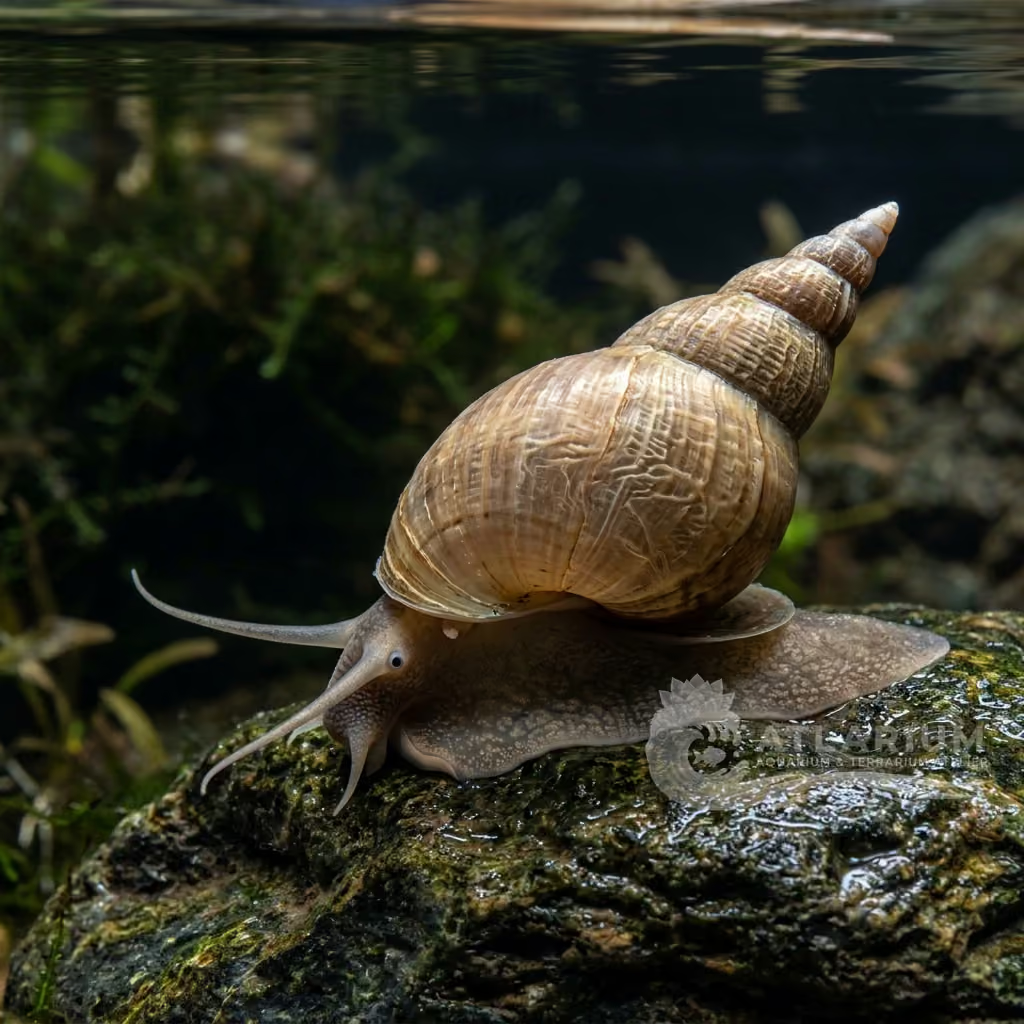
Spiny trumpet snail
Thiara winteri
Spiny trumpet snail: aquarium gastropod in the family Thiaridae, useful for biofilm, light algae, and substrate cleanup. Geographical Origin and Habitat: Endemic to a highly restricted...
Water Temperature
20 - 28 °C
pH Value
7 - 8.4
Water type
Freshwater / Brackish
Invertebrate type
Freshwater snail
Adult size
3 cm
Minimum group
>= 1
GH
6 - 20 dGH
KH
3 - 15 dKH
TDS
120 - 450 ppm
Ecological role
Scavenger
Copper sensitivity
High

Species description
Geographical Origin and Habitat: Endemic to a highly restricted geographical range in Southeast Asia and the Indo-Pacific, natively colonizing the shallow, fast-flowing mountain streams and clear rivers of the Philippines, Indonesia, and parts of the South Pacific islands. Thiara winteri (the Winter's Pagoda Snail, or Spiked Malayan Snail) uniquely inhabits highly oxygenated, crystal-clear freshwater environments. These specific micro-habitats are fundamentally characterized by extremely clean water rushing over massive fields of smooth river pebbles, coarse gravel, and vast stretches of fine, soft sand where they spend their days burrowing.
Taxonomy: Scientifically classified within the Thiaridae family (the trumpet snails), it is a highly specialized, morphologically spectacular relative of the common Malaysian Trumpet Snail. It is a robust, heavily armored species, reaching 3 to 4 centimeters (1.2-1.5 inches) in length. Its defining, breathtaking evolutionary adaptation is an incredibly elongated, steeply spiraled, cone-like shell. Uniquely, the edges of each spiral whorl are adorned with a magnificent crown of distinct, sharp, upward-pointing calcified spikes, giving the shell the distinct, tiered appearance of an ancient Asian pagoda temple.
Social Behavior: They are completely peaceful, non-aggressive, and intensely active burrowing invertebrates. Unlike nerite snails that exclusively graze on glass and rocks, Thiara winteri is a dedicated, obligate substrate sifter. They possess zero territorial instincts and completely ignore all other tank inhabitants. They spend the vast majority of daylight hours completely buried beneath the sand, plowing through the substrate like tiny biological tractors to consume decaying organic matter. They typically only emerge onto the substrate surface or lower glass during the night to forage for uneaten fish food.
Coloration and Sexual Dimorphism: Sexual dimorphism is non-existent visually; remarkably, the Thiaridae family reproduces primarily through parthenogenesis, meaning populations consist almost entirely of clonal females that do not require males to reproduce. The coloration is highly functional, mottled camouflage designed to blend perfectly into sandy riverbeds. The spectacular spiked shell is typically a deeply textured, earthy golden-brown, olive-green, or rich sandy beige. The shell is heavily overlaid with a complex, dizzying pattern of dark brown or reddish-mahogany horizontal bands and tiny, irregular speckles.

Care, breeding and tankmates
Tank Setup: The aquarium architecture must flawlessly accommodate their obligate burrowing behavior and delicate spiked shells. A minimum 30-liter tank is sufficient. The absolute, most critical, non-negotiable requirement is the substrate: it MUST be exclusively fine, soft sand (at least 5 cm deep). If kept on rough, sharp gravel or crushed coral, they cannot burrow, will suffer extreme stress, and the abrasive gravel will physically grind away their spectacular calcified spikes. The layout should feature scattered smooth river stones and dried Indian Almond leaves acting as a food source.
Diet and Feeding: In their clear Southeast Asian streams, they are continuous, meticulous benthic detritivores. They plow through the sand, consuming microscopic decaying plant matter, uneaten fish food, and soft algae. In captivity, they are ravenous bottom-feeders and the ultimate biological cleanup crew for the substrate. While they constantly consume detritus, their diet MUST be supplemented to prevent starvation. They readily consume high-quality sinking omnivore pellets, algae wafers, and blanched vegetables (zucchini, spinach). Crucially, they require calcium-rich foods to maintain the integrity of their magnificent spikes.
Water Quality: Originating from fast-flowing mountain streams, they demand excellent water chemistry and high oxygenation. They thrive in warm tropical temperatures (22-27°C / 72-80°F). Crucially, they strictly require hard, slightly alkaline water (pH 7.0 - 8.0, GH 8-20) saturated with dissolved calcium. If kept in soft, acidic water (like extreme blackwater setups), their spectacular spiked shells will rapidly dissolve, pitting and eroding until the snail dies. They possess absolute zero tolerance for ammonia, nitrites, or stagnant, poorly oxygenated water conditions.
Compatibility and Tankmates: They are the absolute perfect, highly functional substrate-sifting cleanup crew for any peaceful community tank. Because they are completely peaceful and spend their days buried beneath the sand, they are safe from most casual nipping. Excellent tankmates are peaceful community fish, dwarf shrimp (Neocaridina), and peaceful mid-water schooling fish. However, they MUST NEVER be housed with specialized snail-eating predators: large Pufferfish, massive Loaches (like Clown Loaches), or Assassin Snails (Clea helena), which will relentlessly dig them out of the sand and consume them.
Aquarium Breeding: Breeding is prolific, continuous, and completely automatic. Unlike nerite snails that require saltwater, Thiara winteri reproduces entirely in freshwater. They are livebearers that reproduce via parthenogenesis; a single female will independently produce fully formed, microscopic clones of herself. The tiny babies emerge from the mother's shell and immediately bury themselves in the sand to begin feeding. While they breed easily, they generally do not reach the plague-like, explosive population levels of standard Malaysian Trumpet Snails, largely due to their slower growth rate and larger adult size.
Risks and Diseases: The absolute greatest physical risk is severe shell erosion and the complete dissolving of their magnificent spikes, caused by keeping them in soft, acidic water lacking calcium. The second major risk is lethal starvation and stress caused by keeping them on sharp, abrasive gravel; they MUST have soft sand to burrow into. Medically, as invertebrates, they possess absolute zero tolerance for any copper-based medications, which will result in rapid, massive die-offs.

Geographic origin and distribution
Endemic to a highly restricted geographical range in Southeast Asia and the Indo-Pacific, natively colonizing the shallow, fast-flowing mountain streams and clear rivers of the Philippines, Indonesia, and parts of the South Pacific islands. Thiara winteri (the Winter's Pagoda Snail, or Spiked Malayan Snail) uniquely inhabits highly oxygenated, crystal-clear freshwater environments. These specific micro-habitats are fundamentally characterized by extremely clean water rushing over massive fields of smooth river pebbles, coarse gravel, and vast stretches of fine, soft sand where they spend their days burrowing.
Origin
Tropical oceans and reefsSouth and Southeast Asia

Invertebrate profile
- Diet
- Biofilm grazer
- The primary diet of Thiara winteri consists of various types of algae, biofilm, and decaying plant matter found on aquarium surfaces. It is an excellent clean-up crew member but may require supplemental feeding. Sinking algae wafers and blanched vegetables should be provided if natural food sources are depleted.
- Ecological role
- Scavenger
- In its natural habitat, Thiara winteri plays a crucial role as a detritivore and primary consumer, helping to process organic waste. By constantly grazing on algae and detritus, it prevents excessive nutrient buildup and keeps surfaces clean. This ecological function translates perfectly into the closed ecosystem of a home aquarium.
- Adult size
- 3 cm
- Jump risk
- Yes
- While Thiara winteri lacks the ability to physically jump, it is known to occasionally climb above the water line or out of the tank entirely. This wandering behavior can sometimes lead to fatal desiccation if they fall onto the floor. A tightly fitted lid or a wide rim is highly recommended to keep them safely enclosed.
- Shock sensitivity
- High
- Thiara winteri is remarkably sensitive to sudden fluctuations in water parameters, particularly temperature, pH, and hardness. Rapid changes can induce osmotic shock, leading to lethargy, shell damage, or death. A slow drip acclimation process over several hours is highly recommended when introducing it to a new tank.
- Calcium and minerals
- High
- Adequate calcium levels are absolutely critical for Thiara winteri to develop and maintain a strong, healthy shell. Soft, acidic water will gradually erode the shell, exposing the snail to infection and premature death. Hobbyists should supplement the water column or diet with cuttlebone, coral skeleton, or specialized mineral blocks.
- Molting
- Shell growth
- Unlike crustaceans, Thiara winteri is a gastropod and does not undergo a molting process to grow. Instead, it continuously adds new calcified layers to the aperture of its existing shell as it matures. Therefore, observing continuous, healthy shell growth lines without pitting or cracks is the best indicator of its well-being.
- Reproduction
- Oviparous
- The reproductive strategy of Thiara winteri varies, but many require specific conditions such as brackish water to successfully yield viable offspring. While they may lay eggs frequently in a freshwater aquarium, the larvae often fail to develop without the proper salinity. This trait makes them ideal for aquarists who wish to avoid overpopulation issues.
- Compatibility & tankmates
- Peaceful
- Thiara winteri is entirely peaceful and possesses no means to harm other tank inhabitants, making it perfect for community setups. It should not, however, be kept with aggressive loaches, pufferfish, or large crayfish that will prey on it. Ideal tank mates include small tetras, rasboras, and dwarf shrimp.

Image gallery
Licensed images linked to the species or, when marked, to the closest representative taxon.

Related species
Recommendations grouped by close relatives, companion choices, and similar care.