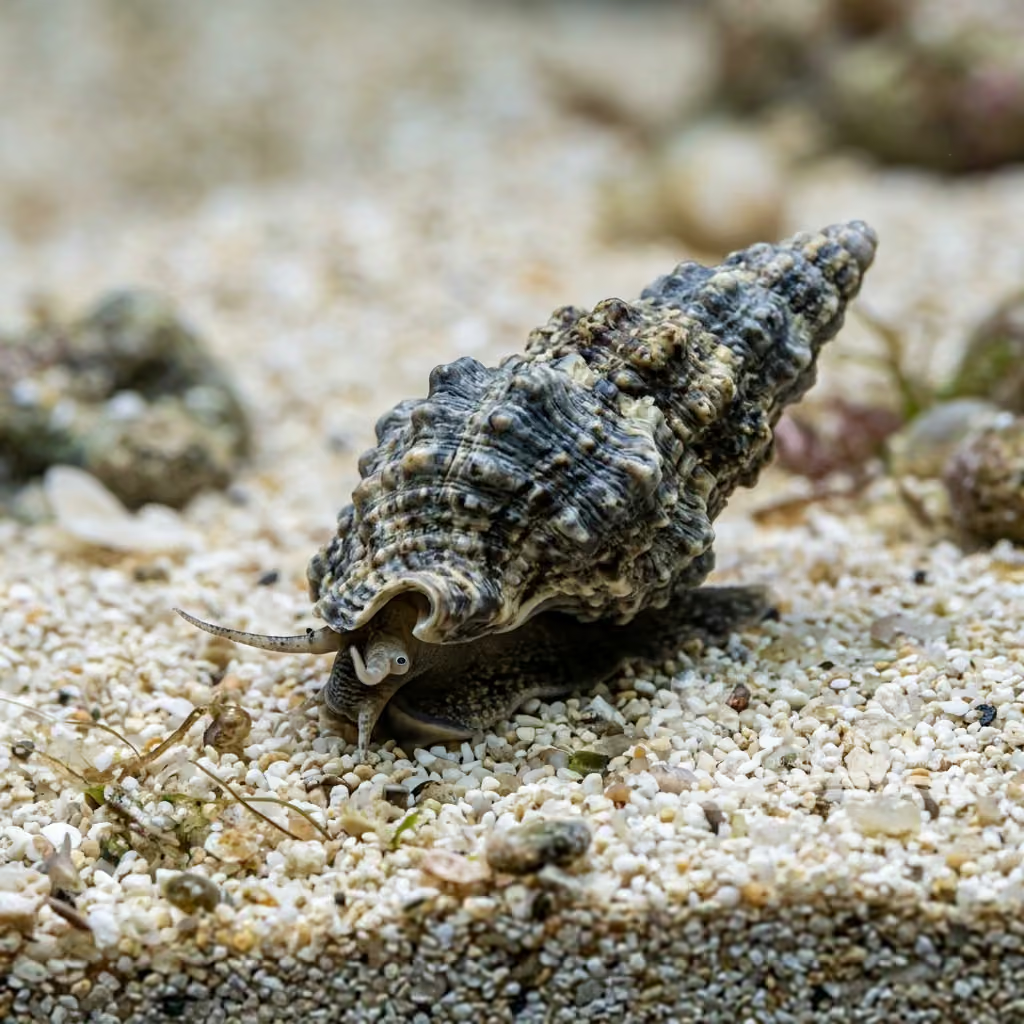
Brackish mud snail
Batillaria zonalis
The Zoned Horn Snail is a hardy estuarine species from East Asia. Crucially, it is a marine/brackish snail that will quickly perish if kept in freshwater aquariums.
Water Temperature
15 - 28 °C
pH Value
7 - 8.5
Water type
Brackish / Marine
Invertebrate type
Marine snail
Adult size
3 cm
Minimum group
>= 1
KH
3 - 15 dKH
Ecological role
Scavenger
Copper sensitivity
High

Species description
Geographical Origin and Habitat: The Zoned Horn Snail (*Batillaria zonalis*) is an extremely hardy, highly invasive marine and estuarine gastropod natively endemic to the muddy tidal flats, salt marshes, and shallow coastal waters of East Asia (Japan, Korea, China). Due to shipping, it has become heavily invasive along the Pacific coast of North America. Their natural biotope is defined by extreme tidal fluctuations: they spend half their day exposed to the sun on baking mudflats and the other half submerged in cold, high-salinity seawater.
Taxonomy: Scientifically classified within the Batillariidae family, they are known generically as "Horn Snails." Fully mature adults are small to medium-sized, typically reaching 2.0 to 3.0 centimeters (0.8-1.2 inches) in shell length. They feature a highly elongated, tightly spiraled, needle-like conical shell that is distinctly ribbed or corded along the whorls, providing immense structural strength against crushing crab claws. They breathe via gills and possess a tough, circular operculum.
Social Behavior: They are peaceful, relentless, and exceptionally tough substrate scavengers. In the wild, they form massive, densely packed colonies on tidal mudflats, numbering in the thousands per square meter. They spend their entire lives endlessly plowing through the upper millimeter of mud and sand, acting as critical detritivores. When the tide goes out, they seal themselves tightly with their operculum to survive hours of baking sun and desiccation. They are strictly bottom-dwellers.
Coloration and Sexual Dimorphism: Sexual dimorphism is visually non-existent; male and female reproductive organs are completely internal. Their shell coloration is designed for absolute camouflage against estuarine mud. The highly ribbed, elongated shell features a highly variable, banded pattern. The base color ranges from ashen grey to muddy brown, wrapped heavily with distinct, darker brown, black, or occasionally pale yellow horizontal bands (*zonalis* refers to these distinct zones or stripes).

Care, breeding and tankmates
Tank Setup: The aquarium architecture must reflect their estuarine, bottom-dwelling nature. A minimum 40-liter (10-gallon) tank is required.
CRITICAL SALINITY REQUIREMENT: This is absolutely NOT a freshwater snail. They unconditionally require heavy brackish to full marine (saltwater) setups (Specific Gravity 1.015 - 1.025). The substrate MUST consist of deep, soft marine sand or mud. They do not require a tight lid, as they rarely climb glass, preferring to endlessly bulldoze the sandy bottom.
Diet and Feeding: They are ravenous, highly effective detritivores and benthic diatom specialists. They DO NOT consume large macroalgae or seaweed. Instead, they spend their days vacuuming the sand bed, consuming microscopic diatoms, cyanobacteria, decaying organic matter, and uneaten fish food. In the aquarium, their massive appetite must be fueled by a mature, "dirty" sandbed. If the tank is too pristine, they must be supplemented with sinking omnivore pellets and powdered spirulina.
Water Quality: Originating from the tidal flats of the Pacific, they are incredibly adaptable to temperature swings. They easily tolerate cool to warm water (15-26°C / 59-79°F). However, their survival is entirely dependent on water chemistry. They absolutely CANNOT survive in freshwater; placing them in a freshwater tank will cause immediate osmotic shock and rapid death. They strictly require hard, alkaline marine or heavy brackish water (pH 7.8 - 8.4) rich in oceanic calcium and magnesium to maintain their thick shells.
Compatibility and Tankmates: Compatibility is excellent for brackish or marine tanks, provided they are not housed with dedicated shell-crushers. They are the perfect, indestructible cleanup crew for saltwater mudskipper tanks, brackish Pufferfish tanks (if the puffers are small enough to ignore their thick shells), or peaceful reef sumps. They completely ignore fish and shrimp. They MUST NOT be housed with massive, aggressive marine Hermit Crabs or large Wrasses that possess the jaw strength to crush their shells.
Aquarium Breeding: Breeding *Batillaria zonalis* in a standard home aquarium is highly complex. While they will mate and females will lay eggs, the eggs hatch into microscopic, free-swimming veliger larvae (plankton). These larvae require highly specific, fluctuating marine salinities and immense amounts of microscopic phytoplankton to survive their complex metamorphosis into juvenile snails. Consequently, they will almost NEVER successfully reproduce or overpopulate a home aquarium.
Risks and Diseases: The absolute greatest physical risk is instantaneous, agonizing death from osmotic shock caused by owners mistakenly placing this marine/brackish species into a standard freshwater aquarium; heavy salinity is unconditionally mandatory. The second major risk is slow starvation in pristine, newly established, "sterile" saltwater tanks that lack a mature sandbed rich in diatoms. Finally, they can be crushed and eaten by large marine predators if housed incorrectly.

Geographic origin and distribution
The Zoned Horn Snail (*Batillaria zonalis*) is an extremely hardy, highly invasive marine and estuarine gastropod natively endemic to the muddy tidal flats, salt marshes, and shallow coastal waters of East Asia (Japan, Korea, China). Due to shipping, it has become heavily invasive along the Pacific coast of North America. Their natural biotope is defined by extreme tidal fluctuations: they spend half their day exposed to the sun on baking mudflats and the other half submerged in cold, high-salinity seawater.
Origin
Cosmopolitan or introducedNorth AmericaEurope, Mediterranean, and West AsiaEast AsiaTropical oceans and reefs

Invertebrate profile
- Diet
- Biofilm grazer
- The diet of Batillaria zonalis typically reflects its natural foraging behavior as a brackish water snail. It thrives on a varied diet that can include specialized commercial foods, naturally occurring biofilm, and appropriately sized organic matter. Providing a balanced nutritional profile ensures robust health, strong coloration, and proper energy levels. Supplemental feeding should be adjusted based on the maturity of the tank and the presence of natural food sources.
- Ecological role
- Scavenger
- In its native habitat and the home aquarium, Batillaria zonalis plays a vital ecological role. It contributes significantly to the processing of organic waste and the maintenance of a balanced micro-ecosystem. By engaging in natural behaviors like scavenging, grazing, or sifting, it helps prevent the accumulation of detritus. This species is often considered a crucial component of a comprehensive clean-up crew.
- Adult size
- 3 cm
- Jump risk
- Yes
- Despite being aquatic, Batillaria zonalis can present a flight or jump risk under certain conditions. Many invertebrates will attempt to climb out of the water if parameters drop off, oxygen is low, or they are harassed by tank mates. A tightly fitting lid or screen top is highly recommended to prevent accidental desiccation. Ensuring ideal water conditions is the best deterrent to escape attempts.
- Shock sensitivity
- High
- Sudden shifts in water parameters can trigger severe osmotic shock in Batillaria zonalis. It requires slow, careful acclimation, preferably using the drip method over several hours. Rapid changes in temperature, salinity, or pH can lead to immediate stress, failed molts, or mortality. Maintaining absolute stability in the tank is more important than chasing specific target values.
- Calcium and minerals
- High
- Adequate calcium levels are absolutely essential for the structural integrity and growth of Batillaria zonalis. For crustaceans and snails, it facilitates proper shell and exoskeleton development, while for corals, it builds the skeletal structure. Aquarists must regularly monitor calcium concentration alongside alkalinity and magnesium. Supplementation through specialized products or mineral-rich foods may be necessary in depleted systems.
- Molting
- Shell growth
- If applicable to this species, the molting process is a highly vulnerable period for Batillaria zonalis. During this time, the animal will hide while its new exoskeleton hardens, requiring peace and stable water chemistry. The discarded molt should generally be left in the tank, as it provides a valuable source of recycled minerals. A lack of iodine or calcium can lead to fatal molting issues, often referred to as the 'white ring of death'.
- Reproduction
- Oviparous
- The reproductive strategy of Batillaria zonalis can range from simple cloning and fragmentation to complex larval stages requiring varying water conditions. Successful captive breeding often signifies excellent water quality and a well-balanced environment. While some species will readily multiply and populate the tank, others may require specialized rearing setups for the offspring to survive. Researching their specific larval development phase is critical for aquarists aiming to breed them.
- Compatibility & tankmates
- Peaceful
- When selecting tank mates for Batillaria zonalis, cautious planning is imperative to avoid predation or aggressive competition. Small or peaceful invertebrates should not be housed with aggressive fish, loaches, or large crabs that might view them as food. Conversely, some specialized invertebrates form symbiotic relationships that can be highlighted in a community setup. A heavily planted or intricately rock-scaped tank often provides necessary refuges.

Image gallery
Licensed images linked to the species or, when marked, to the closest representative taxon.

Related species
Recommendations grouped by close relatives, companion choices, and similar care.