Encyclopaedia

FishFreshwaterIntermediate
©AI Generated·Proprietary

Guppy

Poecilia reticulata

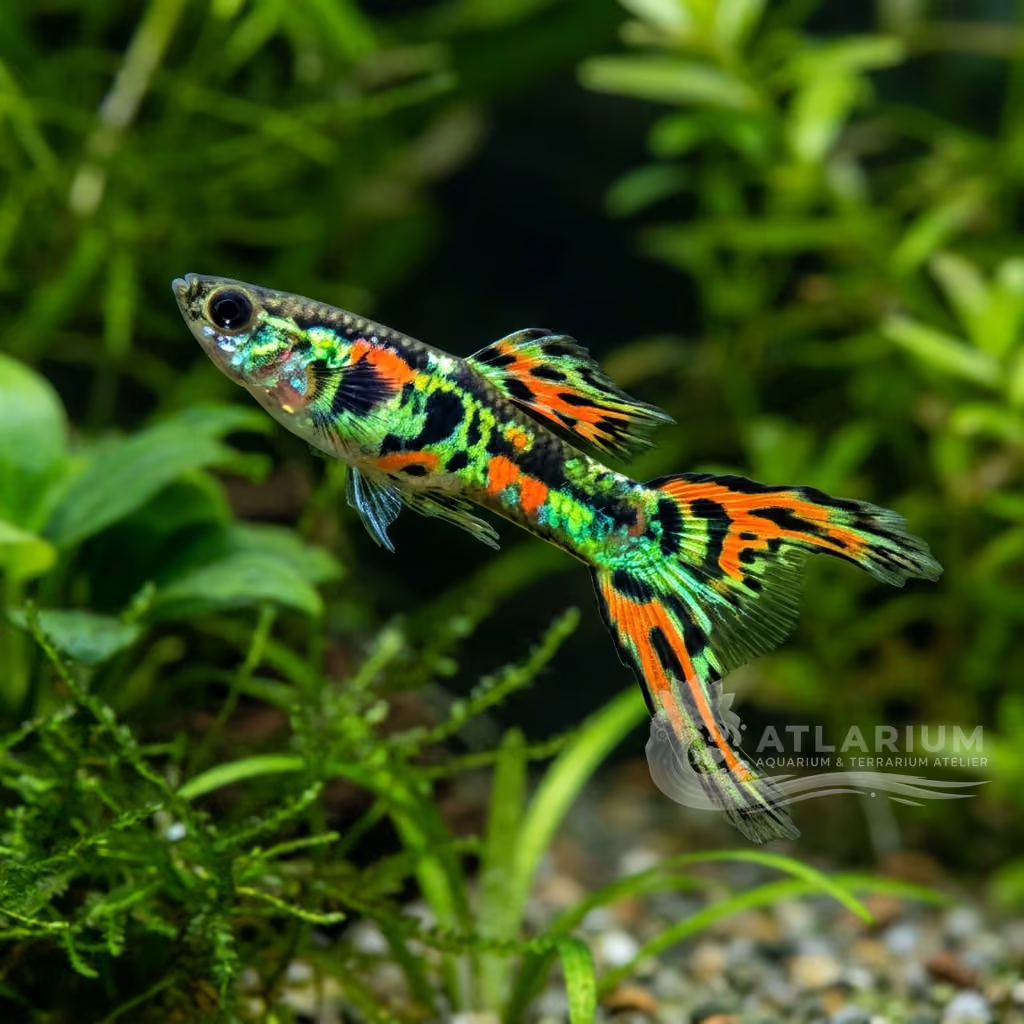
The most popular aquarium fish in the world — the 'millionfish': breeds so easily it earned the nickname. Males display fan-shaped tails in every color combination imaginable — red, blue, black, orange, cobra, mosaic. Prolific livebearer: females give birth every 4–6 weeks. 1 male: 2–3 females ratio mandatory — males chase relentlessly. Prefers slightly hard, alkaline water. Very easy omnivore. Males-only to avoid overpopulation.

Taxonomy
Class:Actinopteri
Order:Cyprinodontiformes
Family:Poeciliidae
Genus:Poecilia
Species:Poecilia reticulata

Share

Check out Guppy on Atlarium

PracticeRecognition quizzesPhotos, names, origins, and puzzles to review Atlas species.Open quizzes
Water Temperature

22 - 28 °C

pH Value

7 - 8.5

Water type

Freshwater

Tank level

Surface and middle

Adult size

6 cm

Minimum tank volume

>= 40 L

Minimum group

>= 3

GH

10 - 30 dGH

KH

3 - 10 dKH

TDS

180 - 550 ppm

Conductivity

281 - 859 uS/cm

Species description

Geographical Origin and Habitat: The Guppy is an incredibly famous, highly adaptable tropical fish originally endemic to the pristine, slow-moving freshwater rivers, extremely shallow streams, dense coastal estuaries, and warm, heavily vegetated pools of northeastern South America (specifically Venezuela, Guyana, and northern Brazil) and the southern Caribbean islands (Trinidad and Tobago). In their natural wild biotope, they natively colonize the shallowest margins of these water bodies, environments completely characterized by dense tangles of overhanging marginal plants, submerged roots, and abundant floating vegetation.
Taxonomy and Morphology: Scientifically classified within the Poeciliidae family (the livebearers), the Guppy is a spectacular, biologically fascinating, and arguably the most recognizable ornamental fish in the aquarium hobby. Morphologically, they are small, streamlined micro-predators. Fully mature wild-type females reach a maximum of roughly 5.0 to 6.0 centimeters (2.0-2.4 inches), while males remain significantly smaller at 2.5 to 3.5 centimeters (1.0-1.4 inches). The Guppy has been meticulously selectively bred for over a century, resulting in dozens of distinct morphological tail shapes (Delta, Lyretail, Swordtail).
Social Behavior: They are highly intelligent, incredibly hyperactive, and intensely social mid-to-top-dwelling community fish. They are completely peaceful toward other species but exhibit a frenetic, non-stop mating and chasing behavior within their own kind. They absolutely MUST be kept in a sizable shoal (minimum 6 individuals). Because males are relentless in their pursuit of mating, it is an unconditional, absolute requirement to maintain a strict ratio of at least two (preferably three) females for every one male to disperse the constant, exhausting harassment and prevent severe stress in the females.
Coloration and Sexual Dimorphism: Sexual dimorphism is absolute, extreme, and completely unmistakable; they are one of the most sexually dimorphic fish on Earth. Mature females are vastly larger, heavier-bodied, generally display a dull silvery-grey or olive base coloration, and exhibit a distinct dark "gravid spot" near the anal fin. Mature males are vastly smaller, possess a modified anal fin (the gonopodium) for internal fertilization, and boast breathtaking, intensely saturated, blindingly bright colors across their entire body and massively overgrown, flowing tail fins.

Care, breeding and tankmates

Aquarium Setup: The aquarium architecture MUST flawlessly accommodate their highly active swimming nature and provide massive physical barriers to break line-of-sight during mating chases. A minimum 40-liter (10-gallon) tank is required for a small harem. The absolute most critical requirement is overwhelming plant cover; the tank MUST feature massive thickets of tall, stem plants (like Water Sprite or Vallisneria) and specifically, dense carpets of floating plants (like Salvinia or Hornwort) which are unconditionally mandatory to provide a secure refuge for exhausted females and newborn fry.
Diet and Feeding: They are highly active, voracious omnivores and natural micro-predators (specifically preying on mosquito larvae in the wild). In the aquarium, their diet is notoriously easy but MUST be comprehensive and balanced. They strictly MUST be fed a high-quality mix of protein and vegetable matter. Daily offerings of premium micro-pellets, crushed tropical flakes, freeze-dried tubifex, and specifically, live or frozen meaty foods (bloodworms, daphnia, brine shrimp) are unconditionally mandatory for vibrant coloration, long-term health, and robust fry development.
Water Quality: Originating from highly adaptable tropical environments, they are famously hardy but possess specific preferences. They strictly demand highly oxygenated, warm tropical heat (24-28°C / 75-82°F). Crucially, while they can survive in soft water, they absolutely require moderately hard, heavily mineralized water (GH 8-15) and a neutral to slightly alkaline pH (7.0 - 8.0) to truly thrive and prevent osmotic stress. They are highly sensitive to Ammonia and Nitrites; a mature filter and weekly 25-30% water changes are unconditionally mandatory.
Compatibility and Cohabitation: Compatibility is excellent due to their completely peaceful nature, but their flowing fins make them highly vulnerable targets. They are the perfect centerpiece for a vibrant, peaceful community aquarium. They MUST NEVER be housed with aggressive fin-nippers (like Tiger Barbs or Serpae Tetras) or large, fast predatory fish (like Angelfish, Cichlids, or Gouramis) that will violently shred their massive tails and hunt them. Excellent companions include peaceful bottom-dwellers (Corydoras, Kuhli Loaches), Otocinclus, and peaceful dwarf shrimp (though fry may be eaten).
Aquarium Breeding: Breeding is spectacularly prolific, incredibly fast, and virtually unstoppable in any mixed-gender aquarium. They are livebearers; they do NOT lay eggs. Following internal fertilization, the female will gestate for roughly 21-30 days, evidenced by a massively swelling belly and a darkening gravid spot. She will then give live birth to 20-50 fully formed, free-swimming fry. The adults are completely devoid of parental care and are aggressively cannibalistic; massive, impenetrable thickets of floating plants (like Hornwort) are absolutely mandatory to ensure the fry survive.
Risks and Diseases: The absolute greatest physical risk is rapid, lethal toxicity from Ammonia/Nitrite spikes in overcrowded tanks (as they breed exponentially). The second major risk is lethal exhaustion; failing to maintain the strict 2:1 female-to-male ratio will inevitably result in the females being chased to death by the relentless males. Finally, their massive, flowing tails are highly susceptible to fin rot (caused by poor water quality) and physical shredding by aggressive tankmates or sharp, jagged plastic decorations.

Geographic Origin and Distribution

The Guppy is an incredibly famous, highly adaptable tropical fish originally endemic to the pristine, slow-moving freshwater rivers, extremely shallow streams, dense coastal estuaries, and warm, heavily vegetated pools of northeastern South America (specifically Venezuela, Guyana, and northern Brazil) and the southern Caribbean islands (Trinidad and Tobago). In their natural wild biotope, they natively colonize the shallowest margins of these water bodies, environments completely characterized by dense tangles of overhanging marginal plants, submerged roots, and abundant floating vegetation.

Origin

Amazon, Orinoco, and GuianasCentral America and CaribbeanEast Asia

Fish profile

Temperament
Peaceful
Poecilia reticulata has a bright, active, and peaceful temperament. They are constantly in motion, adding brilliant flashes of color to the aquarium. Males will continuously court females with frantic swimming displays. They are completely harmless to other fish and are considered one of the best species for beginners.
Diet
Omnivore
Guppies are omnivores that will readily accept almost any commercially available fish food. A high-quality micro-pellet or flake food should form the staple of their diet. To enhance their stunning colors, supplement with live or frozen foods like daphnia, baby brine shrimp, and bloodworms. They also enjoy grazing on soft algae present in the tank.
Life expectancy
2-3 years
The Guppy has an average lifespan of 2 to 3 years in a home aquarium. As small fish with a rapid metabolism, their lifespan is significantly affected by water temperature and the stress of continuous breeding. Keeping the water at moderate temperatures and ensuring adequate hardness will help stabilize their metabolism and extend their lifespan.
Sex ratio
Flexible
Males are smaller, much more vibrantly colored, and possess a pointed gonopodium for mating. Females are larger, less colorful, and have a dark gravid spot near their anal fin. It is crucial to maintain a ratio of at least two or three females for every male. This disperses the males' constant harassment and reduces stress on the females.
Feeding frequency
Twice daily
Because of their small stomachs and high energy levels, they do best with small feedings twice a day. They will aggressively swarm the surface during feeding time. Care must be taken not to overfeed, as uneaten food will foul the water. A varied diet will ensure strong immune systems and bright coloration.
Bioload
Low
Poecilia reticulata has a relatively low individual bioload due to its small size. However, because they breed so rapidly, a population explosion can quickly overwhelm an aquarium's filtration. It is vital to monitor the population size to prevent water quality from deteriorating. Regular maintenance and water changes are necessary to keep the environment healthy.
Flow
Moderate
They prefer a gentle to moderate water flow. While wild guppies live in streams, the highly bred ornamental varieties have large, heavy fins that make swimming in strong currents exhausting. A sponge filter or a baffled hang-on-back filter provides the perfect amount of circulation. Stagnant water should be avoided to maintain proper oxygenation.
Jump risk
Yes
Guppies are known to be surprisingly adept jumpers, especially when spooked or if the water parameters drop in quality. A secure aquarium lid is highly recommended to prevent them from leaping to their deaths. Floating plants can also help deter them from jumping by providing a sense of overhead security. Always cover any large gaps around filter intakes.
Reproduction
Viviparous
They are famous for their explosive breeding rates and are often called the 'millionfish'. They are livebearers, meaning the females give birth to fully formed, free-swimming fry. Without intervention, they will quickly overpopulate a tank. To save the fry, dense vegetation like Java moss must be provided, as parents will readily cannibalize their young.
Compatibility & tankmates
Peaceful
They are incredibly peaceful and make perfect residents for a gentle community aquarium. Ideal tankmates include small tetras, rasboras, corydoras, and peaceful bottom dwellers. They should never be kept with fin-nipping species like tiger barbs, which will destroy the males' flowing tails. Large or aggressive fish will easily view them as a quick snack.
Tank level
Top/Middle
They are highly active and utilize the top and middle levels of the aquarium. They are constantly swimming in the open water and investigating their surroundings. They appreciate heavily planted tanks which offer them places to rest and hide. Floating plants are particularly favored by fry for shelter.

Window to the official scientific data of the species

Data synced on: 06/13/2026

Scientific Parameters & Models

Trophic level
3.2 ± 0.4 se
Resilience
High (less than 15 months)
Generation time
0.6 years
Phylogenetic uniqueness (PD50)
0.5
Bayesian Length-Weight
a = 0.01288, b = 3.14
VulnerabilityLow to moderate vulnerability (33 / 100)

Image gallery

Licensed images linked to the species or, when marked, to the closest representative taxon.

Related species

Recommendations grouped by close relatives, companion choices, and similar care.

Variants and close relatives

Same atlas type, nearby scientific identity, genus, or family.

Cobra Guppy (Snakeskin)

Cobra Guppy (Snakeskin)

Poecilia reticulata var. Cobra

View details->
Dumbo Ear Guppy

Dumbo Ear Guppy

Poecilia reticulata var. Dumbo

View details->
Full Red Albino Guppy

Full Red Albino Guppy

Poecilia reticulata var. Albino Full Red

View details->
Moscow Blue Guppy

Moscow Blue Guppy

Poecilia reticulata var. Moscow Blue

View details->
Tiger Endler Hybrid Guppy

Tiger Endler Hybrid Guppy

Poecilia reticulata x wingei

View details->
Black Guppy

Black Guppy

Poecilia reticulata var. Black

View details->
Full Red Guppy

Full Red Guppy

Poecilia reticulata var. Full Red

View details->
Multicolor Guppy

Multicolor Guppy

Poecilia reticulata var. Multicolor

View details->
Platinum Guppy

Platinum Guppy

Poecilia reticulata var. Platinum

View details->
Tuxedo Guppy

Tuxedo Guppy

Poecilia reticulata var. Tuxedo

View details->
Dalmatian Molly

Dalmatian Molly

Poecilia sphenops var. Dalmatian

View details->
Gold Dust Molly

Gold Dust Molly

Poecilia sphenops var. Gold Dust

View details->
Endler's Livebearer

Endler's Livebearer

Poecilia wingei

View details->
Black Molly

Black Molly

Poecilia sphenops

View details->
Black Molly

Black Molly

Poecilia sphenops var. Black

View details->
Balloon Molly

Balloon Molly

Poecilia latipinna var. Balloon

View details->

Recommended companions

Compatible cards from coherent ecosystems with matching parameters.

Black devil snail
Invertebrate

Black devil snail

Faunus ater

View details->
Olive nerite snail
Invertebrate

Olive nerite snail

Vitta usnea

View details->
Spotted nerite snail
Invertebrate

Spotted nerite snail

Neritona juttingae

View details->
Thick-lipped nerite snail
Invertebrate

Thick-lipped nerite snail

Neritona labiosa

View details->
Mystery Snail
Invertebrate

Mystery Snail

Pomacea bridgesii

View details->
Longtail Tadpole Shrimp
Invertebrate

Longtail Tadpole Shrimp

Triops longicaudatus

View details->
Bladder snail
Invertebrate

Bladder snail

Physella acuta

View details->
Chinese mystery snail
Invertebrate

Chinese mystery snail

Cipangopaludina chinensis

View details->
Ear pond snail
Invertebrate

Ear pond snail

Radix auricularia

View details->
Florida apple snail
Invertebrate

Florida apple snail

Pomacea paludosa

View details->
Giant ramshorn snail
Invertebrate

Giant ramshorn snail

Marisa cornuarietis

View details->
Great pond snail
Invertebrate

Great pond snail

Lymnaea stagnalis

View details->
Hercules snail
Invertebrate

Hercules snail

Brotia herculea

View details->
Mystery apple snail
Invertebrate

Mystery apple snail

Pomacea diffusa

View details->
Orange rabbit snail
Invertebrate

Orange rabbit snail

Tylomelania gemmifera

View details->
Patriarch rabbit snail
Invertebrate

Patriarch rabbit snail

Tylomelania patriarchalis

View details->

Similar care

Cards with similar requirements, difficulty, habitat, and husbandry profile.

Mickey Mouse platy

Mickey Mouse platy

Xiphophorus maculatus var. Mickey Mouse

View details->
Coral Red Platy

Coral Red Platy

Xiphophorus maculatus var. Coral Red

View details->
Pineapple Swordtail

Pineapple Swordtail

Xiphophorus hellerii var. Pineapple

View details->
Wagtail Platy

Wagtail Platy

Xiphophorus maculatus var. Wagtail

View details->
Koi swordtail

Koi swordtail

Xiphophorus hellerii var. Koi

View details->
Red Swordtail

Red Swordtail

Xiphophorus hellerii

View details->
Lyretail Swordtail

Lyretail Swordtail

Xiphophorus hellerii var. Lyretail

View details->
Platy

Platy

Xiphophorus maculatus

View details->
Variable platy

Variable platy

Xiphophorus variatus

View details->
Green Swordtail

Green Swordtail

Xiphophorus hellerii var. Green

View details->
Sailfin Molly

Sailfin Molly

Poecilia latipinna

View details->
Blue-eyed livebearer

Blue-eyed livebearer

Priapella intermedia

View details->
Bronze cory

Bronze cory

Corydoras aeneus

View details->
Blackline Tetra

Blackline Tetra

Hyphessobrycon scholzei

View details->
Yucatan sailfin molly

Yucatan sailfin molly

Poecilia velifera

View details->
Skunk cory

Skunk cory

Corydoras arcuatus

View details->
Last updated: 06/30/2026