Encyclopaedia

FishFreshwaterIntermediate
©AI Generated·Proprietary

Dumbo Ear Guppy

Poecilia reticulata var. Dumbo

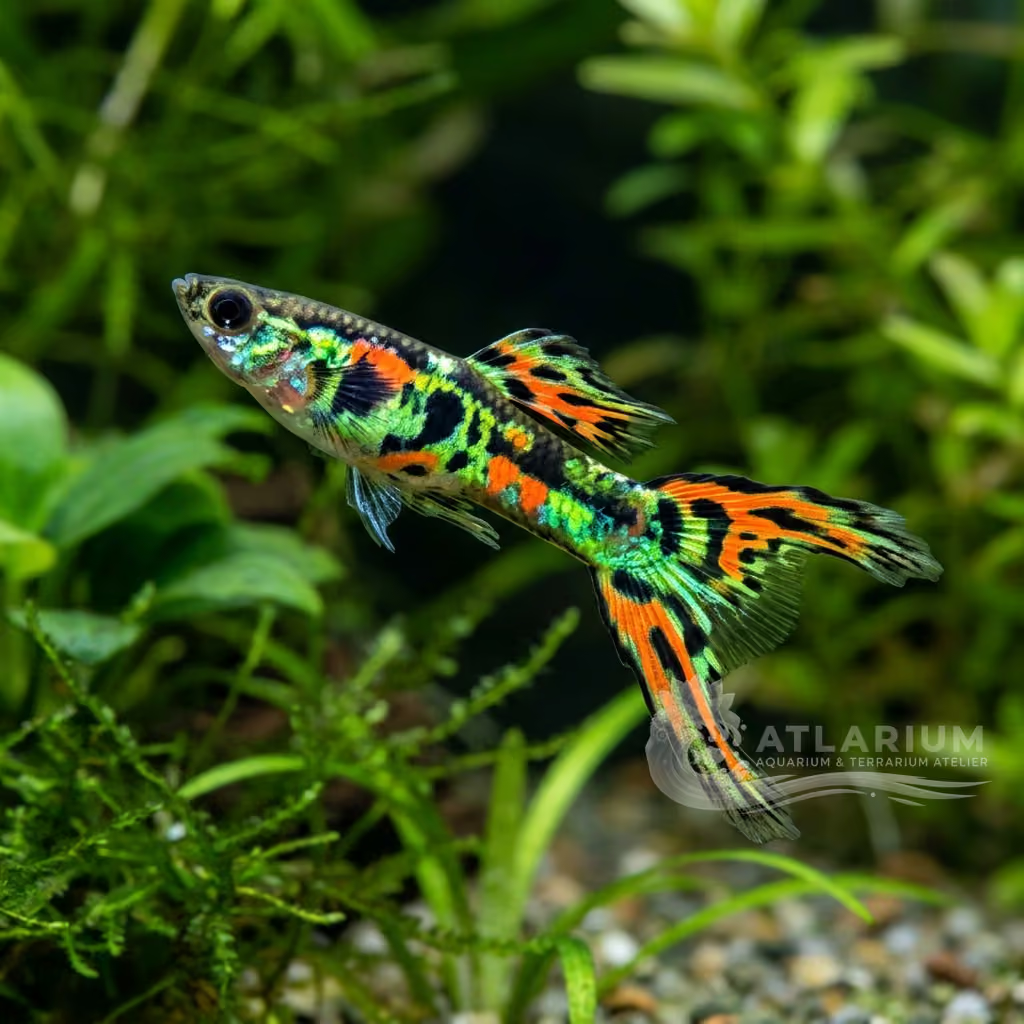
The Dumbo Ear Guppy is the absolute extreme of ornamental selection. It is characterized by disproportionately large and colorful pectoral fins, which vividly recall the ears of the flying elephant Dumbo when swimming. The visual effect is stunning, but severely compromises hydrodynamics: the Dumbo struggles terribly to swim. It cannot tolerate strong water flows, which would exhaust it to death, and its slowness makes it the perfect prey for aggressive, fin-nipping fish. It requires calm, hard water and strictly peaceful tanks.

Taxonomy
Class:Actinopteri
Order:Cyprinodontiformes
Family:Poeciliidae
Genus:Poecilia
Species:Poecilia reticulata var. Dumbo

Share

Check out Dumbo Ear Guppy on Atlarium

PracticeRecognition quizzesPhotos, names, origins, and puzzles to review Atlas species.Open quizzes
Water Temperature

22 - 28 °C

pH Value

7 - 8.5

Water type

Freshwater

Tank level

All levels

Adult size

5 cm

Minimum tank volume

>= 50 L

Minimum group

>= 4

GH

10 - 25 dGH

KH

5 - 12 dKH

TDS

200 - 495 ppm

Conductivity

313 - 773 uS/cm

Species description

Geographical Origin and Habitat: Russian-Asian commercial hybrid. Developed by exasperating an Asian mutation (Big Ear) paired with "Moscow" or "Tuxedo" guppies of American origin.
Taxonomy and Morphology: Dumbo Ear Guppy (Poecilia reticulata). Grotesque or wonderful poeciliid (depending on taste). The mutation transforms the two microscopic pectoral fins into gigantic "Elephant Ears" similar to butterfly wings.
Social Behavior: The strenuous swimmer. The pectoral fins, normally used for micro-directional corrections, have become real, very heavy "oars". The male spends his life "rowing" strenuously to keep up with the females.
Coloration and Sexual Dimorphism: Dumbo Mosaic/Moscow. The pectoral "ears" (generally very black, blue or purple) fiercely contrast with the body livery (often rainbow or red Mosaic). Dumbo females have slightly enlarged and black pectoral fins, an unusual trait for female guppies.

Care, breeding and tankmates

Aquarium Setup: Tank for the disabled. A standard filter will hurl them against the glass causing them to die of fatigue. They require sponge filters (Air-driven) in calm tanks with many resting spots (large Anubias leaves).
Diet and Feeding: Voracious eater. Slower than other guppies in pouncing on food. You have to make sure to scatter the feed or use granules of varying weight so that something reaches the Dumbos without the more agile fish stealing everything.
Water Quality: Like all hyper-selected Asian guppies, they do not tolerate new tap water or thermal instability well. Hard water, non-iodized sea salt (slight addition) and total hygiene are the keys to success.
Compatibility and Cohabitation: The "Ears" are magnets for bullies. Rasboras, Barbs and even too lively Platies will systematically bite the Dumbo's large black oars. Pair strictly only with Neocaridina, dwarf Corydoras or in a "Dumbo Only tank".
Aquarium Breeding: The Big Ear (Dumbo) gene is incomplete dominant. By mating two Dumbos, you will have mixed litters (some huge, others normal). Females are ruthless hunters of their own young.
Risks and Diseases: Parasites and collapse. The immense black pectoral fins, if examined closely, are the first place where Ichthyophthirius (Ich) and fungi (Saprolegnia) nest. A healthy Dumbo "rows" constantly and keeps them open; if it closes them and collapses, it is near the end.

Geographic Origin and Distribution

Russian-Asian commercial hybrid. Developed by exasperating an Asian mutation (Big Ear) paired with "Moscow" or "Tuxedo" guppies of American origin.

Origin

Selective breeding and cultivarsNorth America

Fish profile

Temperament
Peaceful
Poecilia reticulata var. Dumbo has a bright, active, and peaceful temperament. They are constantly in motion, adding brilliant flashes of color to the aquarium. Males will continuously court females with frantic swimming displays. They are completely harmless to other fish and are considered one of the best species for beginners.
Diet
Omnivore
Guppies are omnivores that will readily accept almost any commercially available fish food. A high-quality micro-pellet or flake food should form the staple of their diet. To enhance their stunning colors, supplement with live or frozen foods like daphnia, baby brine shrimp, and bloodworms. They also enjoy grazing on soft algae present in the tank.
Sex ratio
Specific M:F ratio
Males are smaller, much more vibrantly colored, and possess a pointed gonopodium for mating. Females are larger, less colorful, and have a dark gravid spot near their anal fin. It is crucial to maintain a ratio of at least two or three females for every male. This disperses the males' constant harassment and reduces stress on the females.
Feeding frequency
Twice daily
Because of their small stomachs and high energy levels, they do best with small feedings twice a day. They will aggressively swarm the surface during feeding time. Care must be taken not to overfeed, as uneaten food will foul the water. A varied diet will ensure strong immune systems and bright coloration.
Bioload
Poecilia reticulata var. Dumbo has a relatively low individual bioload due to its small size. However, because they breed so rapidly, a population explosion can quickly overwhelm an aquarium's filtration. It is vital to monitor the population size to prevent water quality from deteriorating. Regular maintenance and water changes are necessary to keep the environment healthy.
Flow
Stagnant
They prefer a gentle to moderate water flow. While wild guppies live in streams, the highly bred ornamental varieties have large, heavy fins that make swimming in strong currents exhausting. A sponge filter or a baffled hang-on-back filter provides the perfect amount of circulation. Stagnant water should be avoided to maintain proper oxygenation.
Reproduction
Oviparous
They are famous for their explosive breeding rates and are often called the 'millionfish'. They are livebearers, meaning the females give birth to fully formed, free-swimming fry. Without intervention, they will quickly overpopulate a tank. To save the fry, dense vegetation like Java moss must be provided, as parents will readily cannibalize their young.
Compatibility & tankmates
Harem only
They are incredibly peaceful and make perfect residents for a gentle community aquarium. Ideal tankmates include small tetras, rasboras, corydoras, and peaceful bottom dwellers. They should never be kept with fin-nipping species like tiger barbs, which will destroy the males' flowing tails. Large or aggressive fish will easily view them as a quick snack.
Tank level
All levels
They are highly active and utilize the top and middle levels of the aquarium. They are constantly swimming in the open water and investigating their surroundings. They appreciate heavily planted tanks which offer them places to rest and hide. Floating plants are particularly favored by fry for shelter.

Window to the official scientific data of the species

Data synced on: 06/15/2026

Scientific Parameters & Models

Trophic level
3.2 ± 0.4 se
Resilience
High (less than 15 months)
Generation time
0.6 years
Phylogenetic uniqueness (PD50)
0.5
Bayesian Length-Weight
a = 0.01288, b = 3.14
VulnerabilityLow to moderate vulnerability (33 / 100)

Image gallery

Licensed images linked to the species or, when marked, to the closest representative taxon.

Related species

Recommendations grouped by close relatives, companion choices, and similar care.

Variants and close relatives

Same atlas type, nearby scientific identity, genus, or family.

Cobra Guppy (Snakeskin)

Cobra Guppy (Snakeskin)

Poecilia reticulata var. Cobra

View details->
Full Red Albino Guppy

Full Red Albino Guppy

Poecilia reticulata var. Albino Full Red

View details->
Moscow Blue Guppy

Moscow Blue Guppy

Poecilia reticulata var. Moscow Blue

View details->
Tiger Endler Hybrid Guppy

Tiger Endler Hybrid Guppy

Poecilia reticulata x wingei

View details->
Guppy

Guppy

Poecilia reticulata

View details->
Black Guppy

Black Guppy

Poecilia reticulata var. Black

View details->
Full Red Guppy

Full Red Guppy

Poecilia reticulata var. Full Red

View details->
Multicolor Guppy

Multicolor Guppy

Poecilia reticulata var. Multicolor

View details->
Platinum Guppy

Platinum Guppy

Poecilia reticulata var. Platinum

View details->
Tuxedo Guppy

Tuxedo Guppy

Poecilia reticulata var. Tuxedo

View details->
Endler's Livebearer

Endler's Livebearer

Poecilia wingei

View details->
Dalmatian Molly

Dalmatian Molly

Poecilia sphenops var. Dalmatian

View details->
Gold Dust Molly

Gold Dust Molly

Poecilia sphenops var. Gold Dust

View details->
Black Molly

Black Molly

Poecilia sphenops

View details->
Black Molly

Black Molly

Poecilia sphenops var. Black

View details->
Balloon Molly

Balloon Molly

Poecilia latipinna var. Balloon

View details->

Recommended companions

Compatible cards from coherent ecosystems with matching parameters.

Anubias barteri var. nana 'Round Leaf'
Plant

Anubias barteri var. nana 'Round Leaf'

Anubias barteri var. nana 'Round Leaf'

View details->
Anubias congensis
Plant

Anubias congensis

Anubias congensis

View details->
Anubias gigantea
Plant

Anubias gigantea

Anubias gigantea

View details->
Anubias lanceolata
Plant

Anubias lanceolata

Anubias lanceolata

View details->
Anubias minima
Plant

Anubias minima

Anubias minima

View details->
Anubias
Plant

Anubias

Anubias barteri

View details->
Anubias nana
Plant

Anubias nana

Anubias barteri var. nana

View details->
Amazon Sword
Plant

Amazon Sword

Aquarius grisebachii

View details->
Arrowhead Anubias
Plant

Arrowhead Anubias

Anubias hastifolia

View details->
Ammannia sp. 'Bonsai'
Plant

Ammannia sp. 'Bonsai'

Ammannia sp. 'Bonsai'

View details->
Anubias afzelii
Plant

Anubias afzelii

Anubias afzelii

View details->
Aegagropila linnaei
Plant

Aegagropila linnaei

Aegagropila linnaei

View details->
Bucephalandra motleyana "Braun-rot" ("Serimbu")
Plant

Bucephalandra motleyana "Braun-rot" ("Serimbu")

Bucephalandra motleyana "Braun-rot" ("Serimbu")

View details->
Bucephalandra motleyana "Kapit"
Plant

Bucephalandra motleyana "Kapit"

Bucephalandra motleyana "Kapit"

View details->
Bucephalandra motleyana "Pancuraji"
Plant

Bucephalandra motleyana "Pancuraji"

Bucephalandra motleyana "Pancuraji"

View details->
Bucephalandra sp. "Bukit Kelam / Sintang"
Plant

Bucephalandra sp. "Bukit Kelam / Sintang"

Bucephalandra sp. "Bukit Kelam / Sintang"

View details->

Similar care

Cards with similar requirements, difficulty, habitat, and husbandry profile.

Mickey Mouse platy

Mickey Mouse platy

Xiphophorus maculatus var. Mickey Mouse

View details->
Coral Red Platy

Coral Red Platy

Xiphophorus maculatus var. Coral Red

View details->
Wagtail Platy

Wagtail Platy

Xiphophorus maculatus var. Wagtail

View details->
Pineapple Swordtail

Pineapple Swordtail

Xiphophorus hellerii var. Pineapple

View details->
Koi swordtail

Koi swordtail

Xiphophorus hellerii var. Koi

View details->
Red Swordtail

Red Swordtail

Xiphophorus hellerii

View details->
Sailfin Molly

Sailfin Molly

Poecilia latipinna

View details->
Lyretail Swordtail

Lyretail Swordtail

Xiphophorus hellerii var. Lyretail

View details->
Platy

Platy

Xiphophorus maculatus

View details->
Variable platy

Variable platy

Xiphophorus variatus

View details->
Green Swordtail

Green Swordtail

Xiphophorus hellerii var. Green

View details->
Blackline Tetra

Blackline Tetra

Hyphessobrycon scholzei

View details->
Zebra Nerite Snail
Invertebrate

Zebra Nerite Snail

Vittina coromandeliana

View details->
Yucatan sailfin molly

Yucatan sailfin molly

Poecilia velifera

View details->
Tiger teddy

Tiger teddy

Neoheterandria elegans

View details->
Olive nerite snail
Invertebrate

Olive nerite snail

Vitta usnea

View details->
Last updated: 06/30/2026
Dumbo Ear Guppy (Poecilia reticulata var. Dumbo) Care Guide & Tank Setup | Atlarium