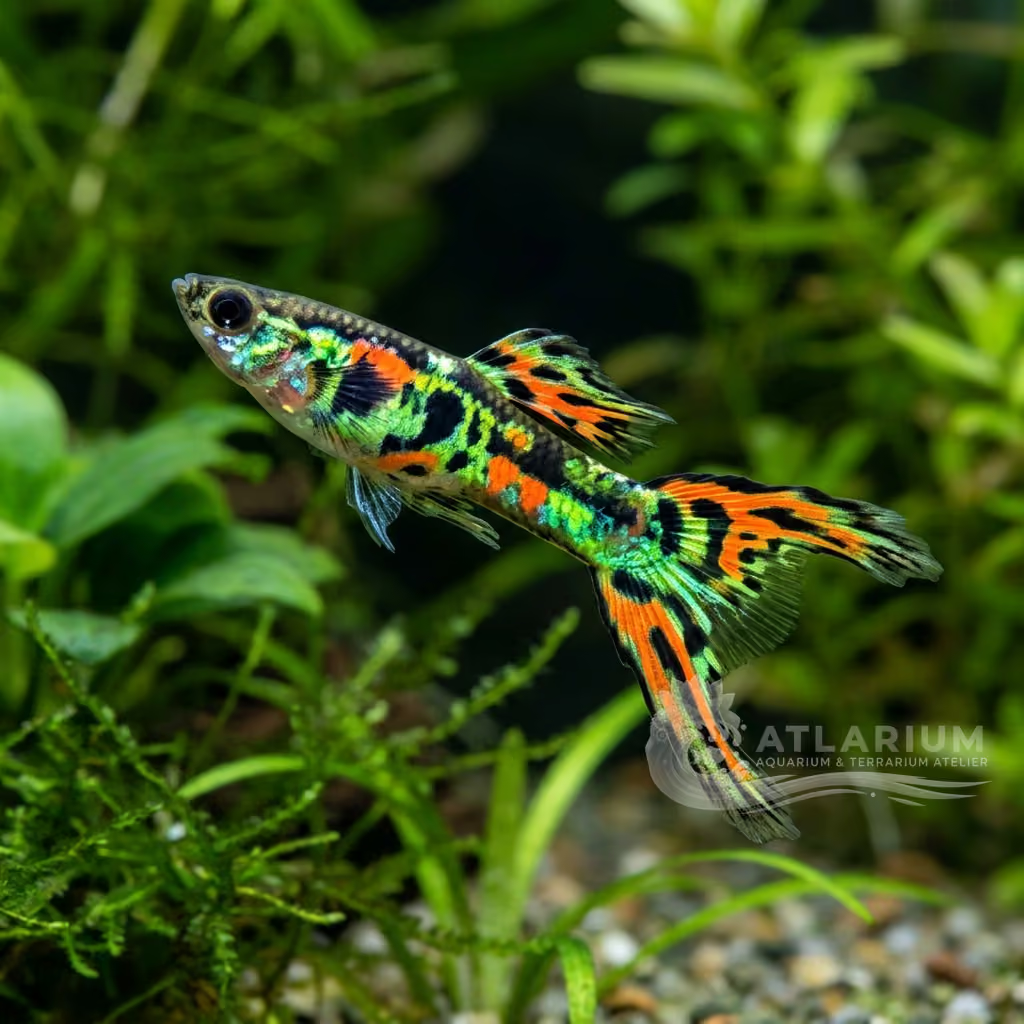
Full Red Albino Guppy
Poecilia reticulata
The Full Red Albino is a fish of surreal beauty: completely fire red with blood-colored eyes. But albinism in aquariums is not a boast, it is a disability. The absence of melanin in their eyes makes them extremely sensitive to light. Powerful modern LED ceiling lights painfully blind them, causing constant panic. They are frail, slow, and have severe visual defects. Buying this fish to put it in a bright mixed tank is an act of pure cruelty.
Water Temperature
22 - 28 °C
pH Value
7 - 8.5
Water type
Freshwater
Tank level
All levels
Adult size
5 cm
Minimum tank volume
>= 40 L
Minimum group
>= 1
GH
10 - 25 dGH
KH
5 - 12 dKH
TDS
200 - 495 ppm
Conductivity
313 - 773 uS/cm

Species description
Geographical Origin and Habitat: Purest artificial form. Isolation of the recessive gene (albinism) in bred strains. In nature guppies inhabit rivers, swamps and canals in South America (Venezuela).
Taxonomy and Morphology: Albino Guppy (Poecilia reticulata). Poeciliid. Total absence of melanin (black/dark pigment). Eyes compulsorily red (distinctive trait of true albinos) as the iris is transparent and shows the blood vessels.
Social Behavior: Hyperactive and exhausting. Males spend 95% of their lives swimming backwards in front of females with extended fins to fertilize them. Females constantly run away to feed.
Coloration and Sexual Dimorphism: Bright albinism. Without black, the body becomes an almost translucent pinkish-white, while the primary colors (red, yellow, light blue) "explode" in blinding pastel shades on the immense fins of the males. Whitish females with a barely shaded tail.

Care, breeding and tankmates
Aquarium Setup: Guppy Tank (60 cm / 24 inches). Thick vegetation (Ceratophyllum, Egeria) is essential to allow exhausted females to hide from males (mandatory ratio: 1 male per 3 females).
Diet and Feeding: Omnivorous scavengers. Literally devour everything on the surface or in mid-water: vegetable flakes, daphnia, mosquitoes. Must be fed with color-enhancing feeds to keep the pastel pigments vibrant.
Water Quality: Extremely delicate hybrids. Unlike the wild guppy, "Red Eye" albinos are inbred (consanguineous) for generations. They suffer atrociously from pH fluctuations and bacteria. They require hard (GH 12-20) and perfectly clean water.
Compatibility and Cohabitation: Blind victims. Albinos have terrible eyesight. Males with huge tails are the perfect target for Barbs, Bettas and Characins who will bite them off. Best kept in a monospecific tank or with Corydoras.
Aquarium Breeding: Baby-producing machines. Ovoviviparous females generate 20-50 young every 28 days. Albino mothers, not seeing well, sometimes struggle to hunt and eat their own offspring, guaranteeing a very high survival rate if there are hiding places.
Risks and Diseases: Lighting blindness. The transparent red iris does not filter light: overly powerful LED fixtures will blind them or push them to hide perpetually due to photophobic pain. Provide shade with floaters.

Geographic origin and distribution
Purest artificial form. Isolation of the recessive gene (albinism) in bred strains. In nature guppies inhabit rivers, swamps and canals in South America (Venezuela).
Origin
Extra-Amazon South America

Fish profile
- Temperament
- Peaceful
- Poecilia reticulata var. Albino Full Red has a bright, active, and peaceful temperament. They are constantly in motion, adding brilliant flashes of color to the aquarium. Males will continuously court females with frantic swimming displays. They are completely harmless to other fish and are considered one of the best species for beginners.
- Diet
- Omnivore
- Guppies are omnivores that will readily accept almost any commercially available fish food. A high-quality micro-pellet or flake food should form the staple of their diet. To enhance their stunning colors, supplement with live or frozen foods like daphnia, baby brine shrimp, and bloodworms. They also enjoy grazing on soft algae present in the tank.
- Life expectancy
- 1.5-3 years
- Adult size
- 5 cm
- Sex ratio
- Specific M:F ratio
- Males are smaller, much more vibrantly colored, and possess a pointed gonopodium for mating. Females are larger, less colorful, and have a dark gravid spot near their anal fin. It is crucial to maintain a ratio of at least two or three females for every male. This disperses the males' constant harassment and reduces stress on the females.
- Feeding frequency
- Twice daily
- Because of their small stomachs and high energy levels, they do best with small feedings twice a day. They will aggressively swarm the surface during feeding time. Care must be taken not to overfeed, as uneaten food will foul the water. A varied diet will ensure strong immune systems and bright coloration.
- Bioload
- Low to Medium
- Poecilia reticulata var. Albino Full Red has a relatively low individual bioload due to its small size. However, because they breed so rapidly, a population explosion can quickly overwhelm an aquarium's filtration. It is vital to monitor the population size to prevent water quality from deteriorating. Regular maintenance and water changes are necessary to keep the environment healthy.
- Flow
- Stagnant
- They prefer a gentle to moderate water flow. While wild guppies live in streams, the highly bred ornamental varieties have large, heavy fins that make swimming in strong currents exhausting. A sponge filter or a baffled hang-on-back filter provides the perfect amount of circulation. Stagnant water should be avoided to maintain proper oxygenation.
- Jump risk
- Yes
- Guppies are known to be surprisingly adept jumpers, especially when spooked or if the water parameters drop in quality. A secure aquarium lid is highly recommended to prevent them from leaping to their deaths. Floating plants can also help deter them from jumping by providing a sense of overhead security. Always cover any large gaps around filter intakes.
- Reproduction
- Oviparous
- They are famous for their explosive breeding rates and are often called the 'millionfish'. They are livebearers, meaning the females give birth to fully formed, free-swimming fry. Without intervention, they will quickly overpopulate a tank. To save the fry, dense vegetation like Java moss must be provided, as parents will readily cannibalize their young.
- Compatibility & tankmates
- Harem only
- They are incredibly peaceful and make perfect residents for a gentle community aquarium. Ideal tankmates include small tetras, rasboras, corydoras, and peaceful bottom dwellers. They should never be kept with fin-nipping species like tiger barbs, which will destroy the males' flowing tails. Large or aggressive fish will easily view them as a quick snack.
- Tank level
- All levels
- They are highly active and utilize the top and middle levels of the aquarium. They are constantly swimming in the open water and investigating their surroundings. They appreciate heavily planted tanks which offer them places to rest and hide. Floating plants are particularly favored by fry for shelter.

Scientific Parameters & Models
FishBase
Window to the official scientific data of the species
FishBase v25.04Data synced on: 06/15/2026
- Trophic level
- 3.2 ± 0.4 se
- Resilience
- High (less than 15 months)
- Generation time
- 0.6 years
- Phylogenetic uniqueness (PD50)
- 0.5
- Bayesian Length-Weight
- a = 0.01288, b = 3.14
- VulnerabilityLow to moderate vulnerability (33 / 100)

Related species
Recommendations grouped by close relatives, companion choices, and similar care.