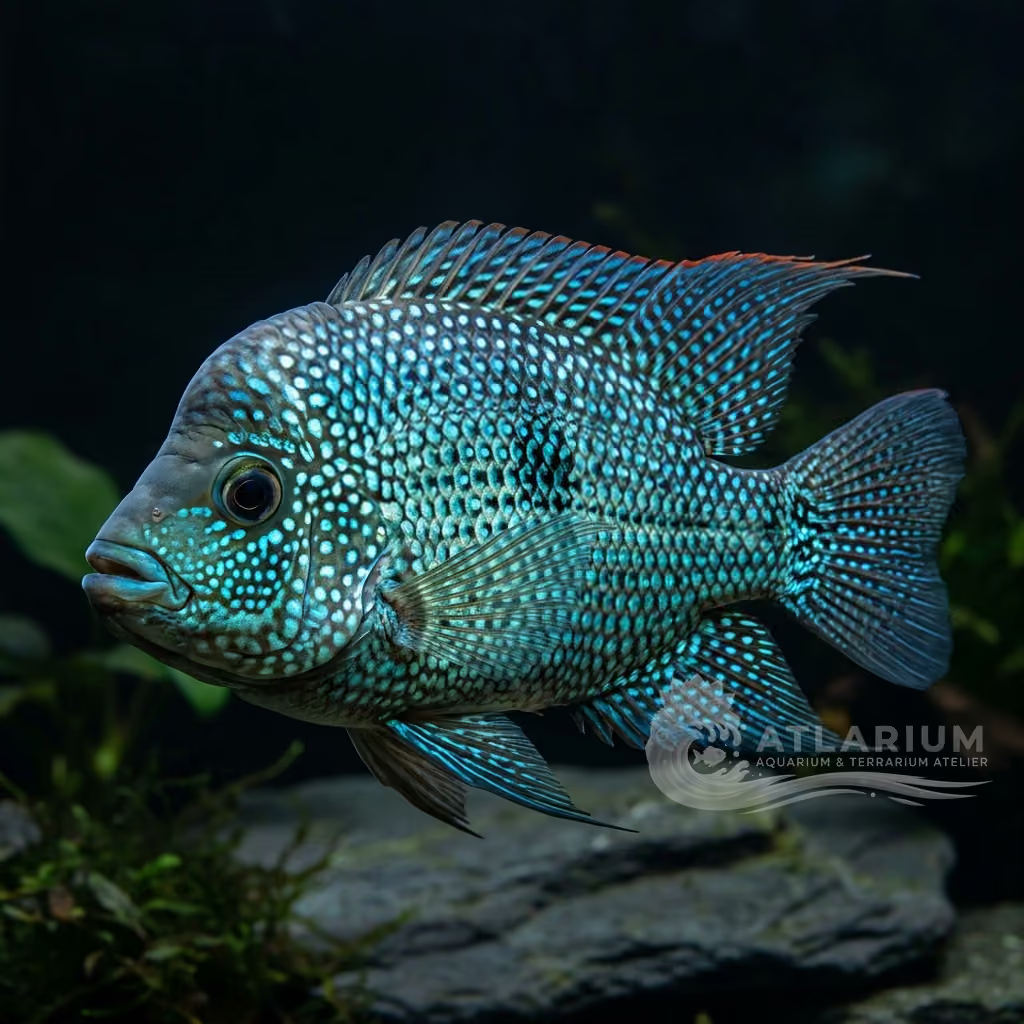
Redfin Hap
Copadichromis borleyi
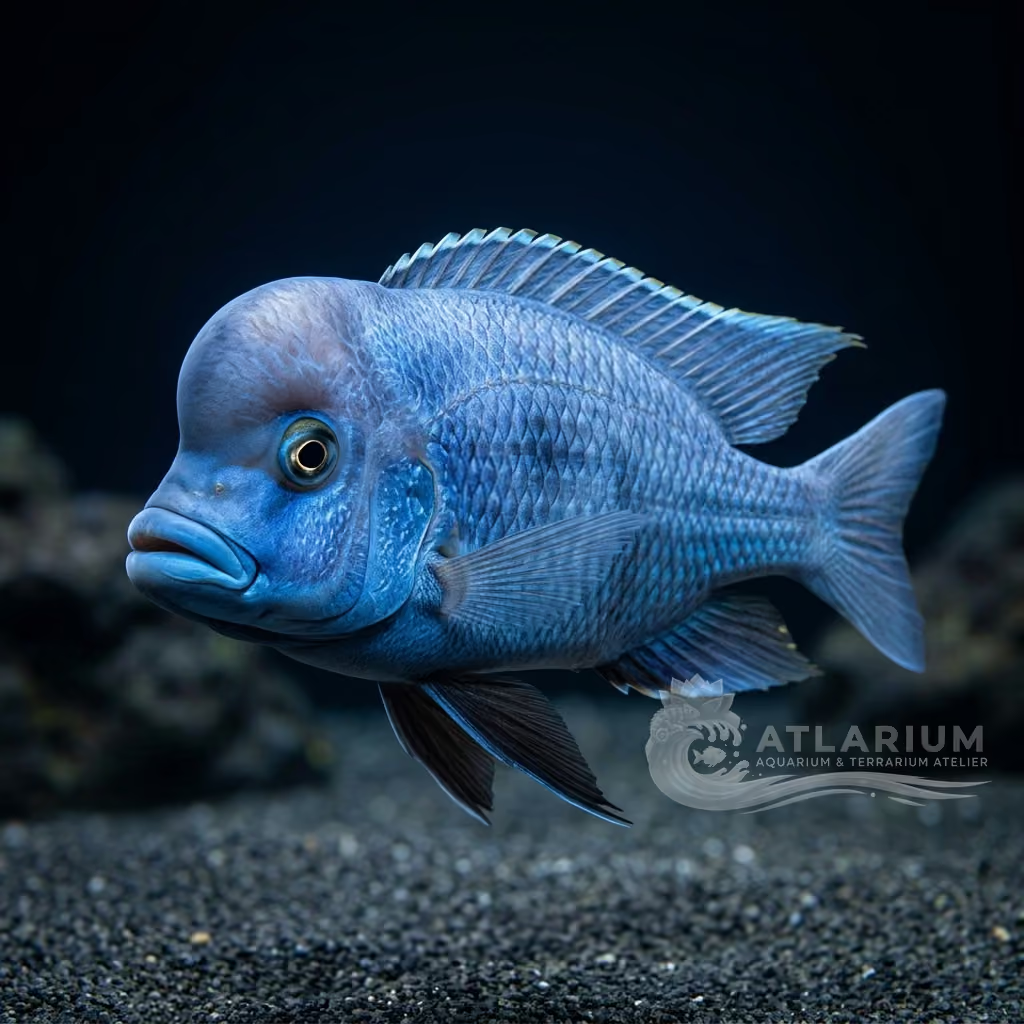
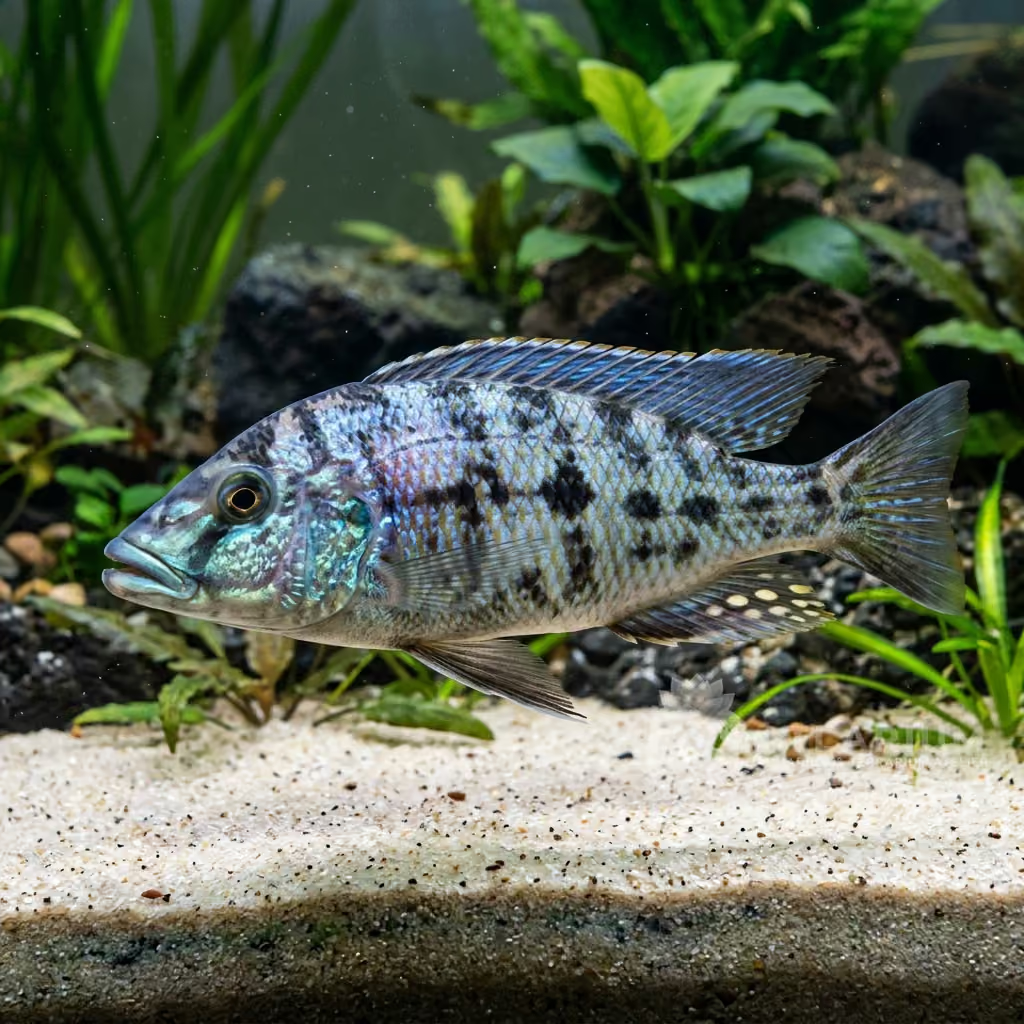
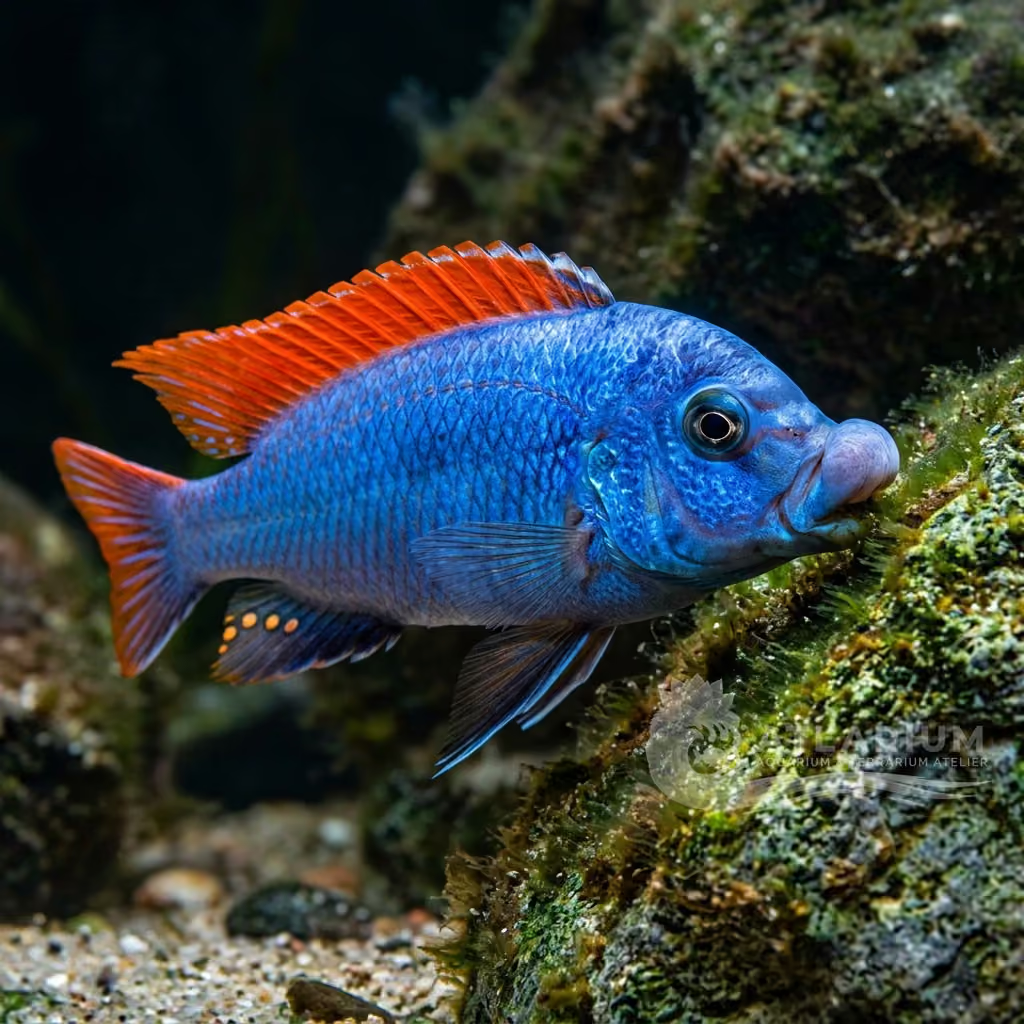
Copadichromis borleyi, the Redfin Hap, is a freshwater cichlid endemic to Lake Malawi. It is recorded near large boulders and, in shallow water, in schools at rocky islets on sand, feeding on plankton in the water column. FishBase lists 14 cm total length for a male or unsexed specimen. Trade labels do not verify a locality form, genetic lineage or a fixed colour pattern.
Water Temperature
24 - 26 °C
pH Value
8 - 8.5
Water type
Freshwater
Tank level
Surface and middle
Adult size
14 cm
Minimum tank volume
>= 300 L
Minimum group
>= 4
GH
10 - 25 dGH
KH
5 - 12 dKH
TDS
200 - 495 ppm
Conductivity
313 - 773 uS/cm

Species description
Geographic Origin and Habitat: Copadichromis borleyi is endemic to Lake Malawi in eastern Africa. FishBase classifies it as freshwater and benthopelagic, reporting it mostly near large boulders. In shallow water it also records schools at rocky islets on sand. Those field observations support a mixed boulder, sand and open-water context; a trade name does not establish a collecting locality, lineage or identical habitat for every aquarium fish.
Taxonomy and Morphology: The accepted name is Copadichromis borleyi (Iles, 1960), in Cichlidae, Pseudocrenilabrinae. Eschmeyer's Catalog records Haplochromis borleyi Iles, 1960 as the original combination, while FishBase uses Cichliformes. FishBase reports 14.0 cm total length for a male or unsexed specimen. That method-specific maximum corrects the previous 16 cm scalar; it does not establish one invariant captive size.
Social Behaviour: In the field, males defend spawning sites on large boulders. That observation makes space, cover, sight lines and feeding access relevant in captivity, but it does not establish a universally peaceful temperament or one safe sex ratio. The current profile labels are management prompts only. Observe chasing, exclusion, injury and missed feeding in the actual group, and retain a practical way to separate fish if sustained social pressure develops.
Colouration and Sexual Dimorphism: The sources reviewed for this reconciliation do not establish a diagnostic colour rule for sexing every individual or a verified colour pattern for each trade form. The FishBase size entry is male or unsexed, not a male-female comparison. Use reliable provenance and taxonomic information where available, and do not treat labels such as Redfin or Kadango as proof of locality, lineage, sex or genetic identity.

Care, breeding and tankmates
Aquarium Setup: The current record sets a 300 L minimum and a group size of four, but the reviewed taxon-specific sources do not verify either as a universal welfare threshold. Build around usable open water, sand, large secure boulders, cover and broken sight lines, reflecting the reported habitat. Secure rockwork independently of sand movement, leave retreat routes and feeding access, and keep a practical separation plan for social conflict.
Diet and Feeding: FishBase records plankton feeding, and functional-morphology studies support water-column suction capture. Use varied, suitably sized foods, then adjust amount and frequency from appetite, body condition and measured water quality. Do not make one commercial formula, live food, a fasting day, one-to-two meals or a two-minute rule into a taxon-wide requirement. Uneaten food and persistent changes in feeding need assessment, not automatic treatment.
Water Quality: FishBase's taxon-specific entry gives 24–26 °C, pH 8.0–8.5 and dH 15–?. The structured temperature and pH ranges are updated to those documented values; GH remains unchanged because that entry gives no upper dH bound. These are not automatic correction or treatment targets. Maintain stable, tested freshwater conditions, oxygenation and nitrogen-waste control, and acclimate changes gradually rather than chasing a profile label.
Compatibility and Cohabitation: Do not use the peaceful profile scalar or a named community list as a tankmate guarantee. Field spawning-site defence, size differences, sex composition, floor area, cover, sight lines and feeding access can all affect outcomes. Avoid combinations that cause continual retreat or prevent feeding. Persistent chasing, injury, exclusion or missed feeding shows that the arrangement requires change or separation, not that a fixed stock list is safe.
Aquarium Breeding: Males are reported to defend sites on large boulders and to spawn on a vertical face or in a small fine-sand bower on a boulder; females mouthbrood about 60 eggs. This does not promise breeding, clutch size, holding duration or success in an aquarium. Avoid unnecessary disturbance and prepare to reduce social pressure when needed. Do not strip, medicate or isolate by default without a case-specific reason and competent advice.
Risks and Disease: No taxon-specific disease or treatment protocol was established by the reviewed sources. Prevention includes measured water quality, suitable nutrition, sanitation and quarantine of new stock where practical. Abnormal appetite, respiration, posture, lesions or social withdrawal do not diagnose a cause. Treatment should follow assessment and qualified aquatic-health advice; do not use a universal medication regimen or assume that every change is infection.

Geographic origin and distribution
This species originates from: Africa (Endemic to Lake Malawi).
Origin
Africa and Madagascar

Fish profile
- Temperament
- Peaceful
- The reviewed evidence does not establish an unconditional peaceful or aggressive temperament in captivity. Spawning-site defence is documented in the field, and social risk in an aquarium also depends on sex, size, tank footprint, cover, competitor density and observed chasing. The current peaceful scalar is only a starting label, not a compatibility guarantee; retain a way to separate fish if persistent exclusion, injury or failed feeding develops.
- Diet
- Carnivore
- FishBase records plankton feeding, while morphology studies support a water-column and suction-capture context. Offer varied, suitably sized foods that reflect this evidence, then adjust portions to body condition, intake and measured water quality. The sources do not establish one commercial formula, a compulsory live-food programme or a universal recipe for every life stage. Avoid treating the current carnivore profile label as a complete feeding plan.
- Life expectancy
- 7-12 years
- Adult size
- 14 cm
- Sex ratio
- Harem
- The current harem scalar is a management convention, not a taxon-specific guarantee established by the reviewed sources. Field evidence of male spawning-site defence and female mouthbrooding makes social pressure relevant, but does not prove one safe male-to-female formula. Do not infer sex or provenance from colour names alone. Observe individual behaviour, feeding access and injury risk, and retain a separation option for the actual group.
- Feeding frequency
- Twice daily
- The sources reviewed do not validate a fixed meal number, fasting day or time-to-finish rule for C. borleyi. Set portions and frequency according to size, body condition, appetite, reproductive state and the system's capacity to process waste. Remove uneaten food and investigate persistent appetite or condition changes with water testing and appropriate health assessment, rather than treating a routine schedule as therapy or proof of natural behaviour.
- Bioload
- High
- The current high-bioload scalar is a management prompt, not a taxon-specific measurement established by the reviewed sources. Filtration and maintenance must match actual feeding, stocking, waste and system volume rather than a categorical label or fixed turnover schedule. Use measured ammonia, nitrite and nitrate with observation of intake and condition to set maintenance. A profile scalar cannot substitute for testing or for gradual, documented adjustments.
- Flow
- Strong
- No reviewed source supplies a taxon-specific aquarium flow rate. Functional-morphology studies describe water-column suction capture, but do not prescribe still, weak or strong filtration flow for home aquaria. Provide circulation that maintains oxygenation and waste control while preserving usable open water, sand and shelter. Judge adjustments from fish behaviour and measured water conditions, not from the current strong-flow profile label alone.
- Jump risk
- Yes
- No reviewed taxon-specific source establishes a quantified tendency for C. borleyi to jump. A fitted cover is a sensible general containment precaution, particularly during maintenance or social disruption, but it must not be presented as proof that this species is a specialist jumper. Check openings around equipment and make escape prevention part of ordinary aquarium design while responding to observed behaviour rather than a risk label alone.
- Reproduction
- Oviparous
- FishBase reports male defence of spawning sites on large boulders, either a vertical boulder face or a small fine-sand bower on a boulder. Females are reported as mouthbrooding about 60 eggs. This field account supports planning for changed social pressure, but does not guarantee breeding, a clutch size, a holding time or a handling method in an aquarium. Avoid treating a commercial breeding routine as universal.
- Compatibility & tankmates
- Peaceful
- A universal community list is not established by the reviewed evidence. Habitat use, spawning-site defence and female mouthbrooding mean that outcomes depend on footprint, cover, size differences, sex composition, feeding access and observed competition. The peaceful compatibility scalar is not a tankmate guarantee. Avoid arrangements that prevent feeding or continual retreat, and plan separation if chasing, injury, exclusion or missed feeding becomes persistent.
- Tank level
- Top/Middle
- FishBase classifies C. borleyi as benthopelagic and reports fish near large boulders, with shallow-water schools at rocky islets on sand. That supports usable open water together with bottom access, sand and cover; it does not confine every individual to one fixed layer. A depth label cannot replace observation of use of cover, open space, feeding response, social interactions and retreat opportunities in the actual aquarium.

Scientific Parameters & Models
FishBase
Window to the official scientific data of the species
FishBase v25.04Data synced on: 06/15/2026
- Trophic level
- 3.4 ± 0.45 se
- Resilience
- High (less than 15 months)
- Phylogenetic uniqueness (PD50)
- 0.5
- Bayesian Length-Weight
- a = 0.01445, b = 2.99
- VulnerabilityLow vulnerability (10 / 100)

Related species
Recommendations grouped by close relatives, companion choices, and similar care.