Encyclopaedia

FishFreshwaterExpert

Compressiceps Cichlid (Altolamprologus)

Altolamprologus compressiceps

Extraordinary and iconic Lake Tanganyika cichlid (12 cm) known for its very thin body, enormous sloping predatory mouth and 'Copper-Golden' color (Golden head). Furtive and elusive ambush predator.

Taxonomy
Class:Actinopteri
Order:Perciformes
Family:Cichlidae
Genus:Altolamprologus
Species:Altolamprologus compressiceps

Share

Check out Compressiceps Cichlid (Altolamprologus) on Atlarium

PracticeRecognition quizzesPhotos, names, origins, and puzzles to review Atlas species.Open quizzes
Water Temperature

24 - 27 °C

pH Value

8 - 9

Water type

Freshwater

Tank level

Bottom and middle

Adult size

15 cm

Minimum tank volume

>= 30 L

Minimum group

>= 1

GH

10 - 20 dGH

KH

5 - 10 dKH

TDS

200 - 400 ppm

Conductivity

313 - 625 uS/cm

Species description

Geographical Origin and Habitat: Endemic to Lake Tanganyika (East Africa). Exclusively populates the shallow rocky coastline, living perpetually wedged in narrow rock crevices where pelagic predators cannot reach.
Taxonomy and Morphology: Compressiceps Cichlid (Altolamprologus compressiceps). Incredible evolutionary form: laterally compressed body beyond belief ("thin as a blade") to squeeze into crevices. Massive head and thick fins for perfect anchoring among the stones.
Social Behavior: Very slow, measured and cryptic. "Ambush" predator and thief of eggs or larvae. Stares at the potential prey positioning its body with bizarre angular inclinations (often tilted head down) before launching a very rapid attack.
Coloration and Sexual Dimorphism: Brownish, golden or rust base color (depending on the geographical variety), marked by wide dark vertical bands (stripes) and elegant dotting on the fins. Adult males significantly larger (up to 15 cm / 6 inches) than females (10 cm / 4 inches).

Care, breeding and tankmates

Aquarium Setup: A lithophilic setup (Tanganyika biotope) is imperative. Many smooth rocks and overlapping slabs to form very deep and dark crevices. Coral sand or aragonite bottom to act as an alkaline buffer.
Diet and Feeding: Pure micro-predator. Enormously appreciates brine shrimp nauplii, mysis, krill and mosquito larvae (glassworms). Accepts protein pellets but dry feeding must always be accompanied by live or top-quality frozen food.
Water Quality: Mandatory Lake Tanganyika parameters: crystal clear, hard water (GH 10-20), intensely alkaline (pH 8.0-9.0). A sudden drop in pH is intolerable and can be fatal.
Compatibility and Cohabitation: It is not quarrelsome. Golden match with peaceful "Rock-dwellers" Tanganyika Cichlids (Julidochromis, Neolamprologus) or pelagic ones (Cyprichromis). Will devour any tiny crustacean (Neocaridina) or very small fry. Do not keep with furious Mbuna.
Aquarium Breeding: Closed cave spawners. The female finds a crevice where the (larger) male cannot enter. She lays eggs there, and the male fertilizes the entrance by dispersing sperm outside. She will care for the young inside for weeks.
Risks and Diseases: Unscratchable fish ("armored") to superficial wounds, but very subject to intestinal blockage or internal parasitosis (Bloat) if fed improperly. Vulnerable to sudden water changes.

Geographic Origin and Distribution

Endemic to Lake Tanganyika (East Africa). Exclusively populates the shallow rocky coastline, living perpetually wedged in narrow rock crevices where pelagic predators cannot reach.

Origin

Africa and Madagascar

Fish profile

Temperament
Semi-aggressive
Altolamprologus compressiceps is a specialized predator but remains peaceful and rather shy toward similarly sized tank mates. They do not show high levels of aggression unless they are breeding or defending their chosen cave. Territorial behavior is primarily directed at conspecific males or cichlids with a similar physical shape. However, their peaceful nature disappears in the presence of tiny fish or fry, which they will actively hunt as prey.
Diet
Omnivore
In their natural habitat, this cichlid is a specialized carnivore that hunts small fish, crustaceans, and invertebrates within rock crevices. In captivity, they must be fed a high-protein, meat-based diet to support their health and vitality. They respond best to live or frozen foods such as brine shrimp, mysis, krill, and bloodworms, supplemented with high-quality sinking pellets. Offering a varied diet is crucial to support their slow but steady physical growth.
Life expectancy
8-12 years
The lifespan of Altolamprologus compressiceps in captivity ranges from 8 to 12 years when provided with proper care. This species is exceptionally slow-growing and requires up to two years just to reach full sexual maturity. Maintaining high water quality and offering a balanced, species-appropriate diet are key to ensuring their long-term health. Under stress-free conditions and stable environment parameters, these cichlids frequently live beyond a decade.
Sex ratio
Harem
The ideal stocking recommendation for Altolamprologus compressiceps is a harem ratio of one male to several females to disperse territorial aggression. Males establish territories and can persistently harass females if there are not enough partners to share the attention. Designing the aquarium layout with plenty of caves and visual barriers is crucial to provide safety for females. Alternatively, in smaller setups, keeping a single established compatible pair is a successful option.
Feeding frequency
Twice daily
It is recommended to feed Altolamprologus compressiceps once or twice daily in small, controlled amounts that are consumed within minutes. Due to their slow metabolism, overfeeding can quickly lead to health issues and disrupt water quality in the aquarium. Care should be taken to ensure that food reaches the shyer individuals who may hover at the back of the tank. Implementing a weekly fasting day is highly beneficial to maintain their digestive health and prevent obesity.
Bioload
Low to Medium
Altolamprologus compressiceps produces a low-to-medium biological waste load due to its relatively sedentary lifestyle and slow metabolism. However, since it is a predatory species that requires a high-protein diet, organic waste and uneaten food can rapidly deteriorate water conditions. A highly efficient filtration system with robust biological media is essential to process this waste and maintain stable parameters. Regular partial water changes are also critical to keep nitrate levels low, as this species does not tolerate poor water chemistry.
Flow
Stagnant
This species prefers a weak-to-moderate water flow, reflecting the sheltered rocky shorelines of Lake Tanganyika where they originate. Excessive water current can cause physical fatigue and force these cichlids to remain hidden within the rockwork. It is essential to ensure efficient water circulation to maintain high oxygen levels without generating strong turbulence. Directing filter returns against the aquarium glass or using spray bars helps create comfortable quiet areas.
Jump risk
Yes
Although Altolamprologus compressiceps is generally a slow-moving fish, it presents a significant risk of jumping when startled. Sudden movements around the tank or chasing by active tank mates can cause them to dart upwards and leap out of the water. To prevent tragic accidents, a secure, tight-fitting lid must be kept on the aquarium at all times. Providing surface cover like floating plants can also reduce stress and make the fish feel more secure.
Reproduction
Oviparous
Breeding Altolamprologus compressiceps is of moderate difficulty and requires a tank set up with very specific spawning sites. They are cave spawners that look for extremely tight crevices or large snail shells that only the smaller female can access. The male fertilizes the eggs by releasing milt at the entrance of the cave, which the female then fans over the clutch. The female takes sole responsibility for guarding the nest until the fry are free-swimming and ready to leave.
Compatibility & tankmates
Altolamprologus compressiceps is compatible with other Lake Tanganyika cichlids of similar size and non-aggressive temperaments. Genera such as Julidochromis, Neolamprologus, and Cyprichromis make excellent tank mates, provided there is enough space to establish territories. Very small fish or dwarf shrimp must never be kept in the same tank, as they will be eaten immediately due to the predator's nature. Hyperactive or highly aggressive tank mates should also be avoided to prevent this shy cichlid from becoming stressed.
Tank level
Middle/Bottom
This cichlid is a benthopelagic species that spends most of its time in the lower and middle regions of the aquarium. They prefer to stay close to rocky structures, hovering near caves and exploring deep crevices in search of prey. They rarely swim in the upper open waters of the tank, preferring the security of nearby shelters. Their strongly compressed body shape is a specialized adaptation that allows them to navigate narrow vertical gaps.

Window to the official scientific data of the species

Data synced on: 06/15/2026

Scientific Parameters & Models

Trophic level
3.6 ± 0.6 se
Resilience
Medium (1.4 - 4.4 years)
Phylogenetic uniqueness (PD50)
0.75
Bayesian Length-Weight
a = 0.01445, b = 2.99
VulnerabilityLow vulnerability (10 / 100)

Image gallery

Licensed images linked to the species or, when marked, to the closest representative taxon.

Related species

Recommendations grouped by close relatives, companion choices, and similar care.

Variants and close relatives

Same atlas type, nearby scientific identity, genus, or family.

Calvus Cichlid

Calvus Cichlid

Altolamprologus calvus

View details->
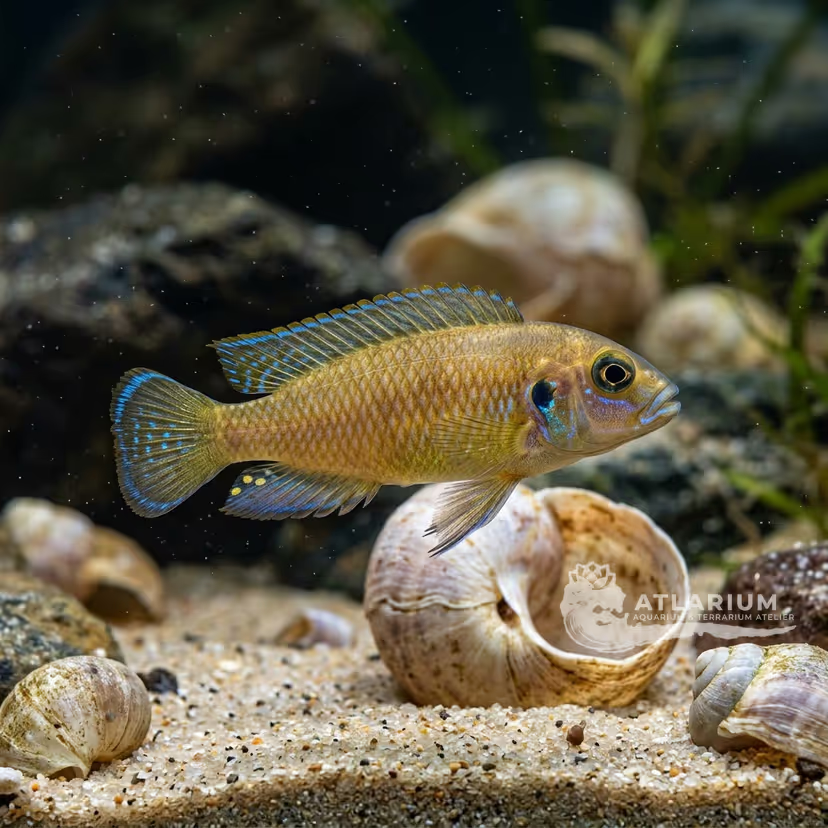
Brichard's Masked Cichlid

Brichard's Masked Cichlid

Chalinochromis brichardi
View details->
Ocellated Shell-dweller (L. ocellatus)

Ocellated Shell-dweller (L. ocellatus)

Lamprologus ocellatus

View details->
Emperor Cichlid / Giant Cichlid

Emperor Cichlid / Giant Cichlid

Boulengerochromis microlepis

View details->
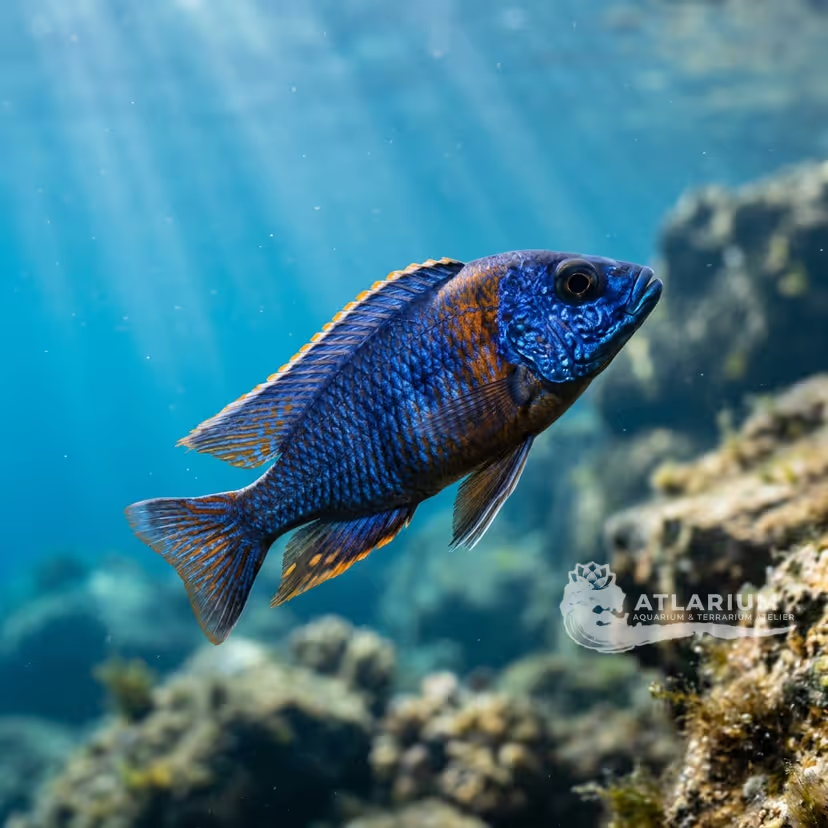
Eureka Red Peacock

Eureka Red Peacock

Aulonocara jacobfreibergi
View details->
Flavescent Peacock / Stuartgrant's Peacock

Flavescent Peacock / Stuartgrant's Peacock

Aulonocara stuartgranti

View details->
Kadango Red Fin

Kadango Red Fin

Copadichromis borleyi

View details->
Peacock Cichlid

Peacock Cichlid

Aulonocara baenschi

View details->
Convict Cichlid

Convict Cichlid

Amatitlania nigrofasciata

View details->
Midas Cichlid / Red Devil

Midas Cichlid / Red Devil

Amphilophus citrinellus

View details->
T-Bar Cichlid (Sajica)

T-Bar Cichlid (Sajica)

Amatitlania sajica

View details->
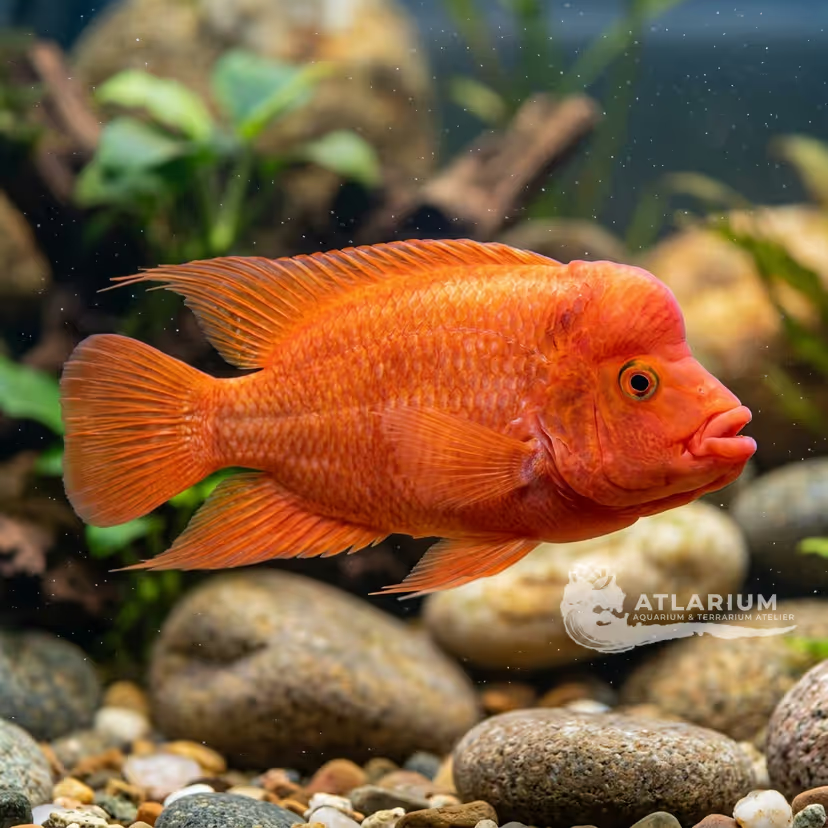
Nicaragua Cichlid (Macaw Cichlid)

Nicaragua Cichlid (Macaw Cichlid)

Hypsophrys nicaraguensis
View details->
Red Devil Cichlid

Red Devil Cichlid

Amphilophus labiatus

View details->
Yellow Dwarf Cichlid (Yellow Convict)

Yellow Dwarf Cichlid (Yellow Convict)

Amatitlania nanolutea

View details->
Angelfish

Angelfish

Pterophyllum scalare

View details->
African Butterfly Cichlid

African Butterfly Cichlid

Anomalochromis thomasi

View details->

Recommended companions

Compatible cards from coherent ecosystems with matching parameters.

Arrowhead Anubias
Plant

Arrowhead Anubias

Anubias hastifolia

View details->
Amazon Sword
Plant

Amazon Sword

Aquarius grisebachii

View details->
Anubias barteri var. nana 'Round Leaf'
Plant

Anubias barteri var. nana 'Round Leaf'

Anubias barteri var. nana 'Round Leaf'

View details->
Anubias congensis
Plant

Anubias congensis

Anubias congensis

View details->
Anubias gigantea
Plant

Anubias gigantea

Anubias gigantea

View details->
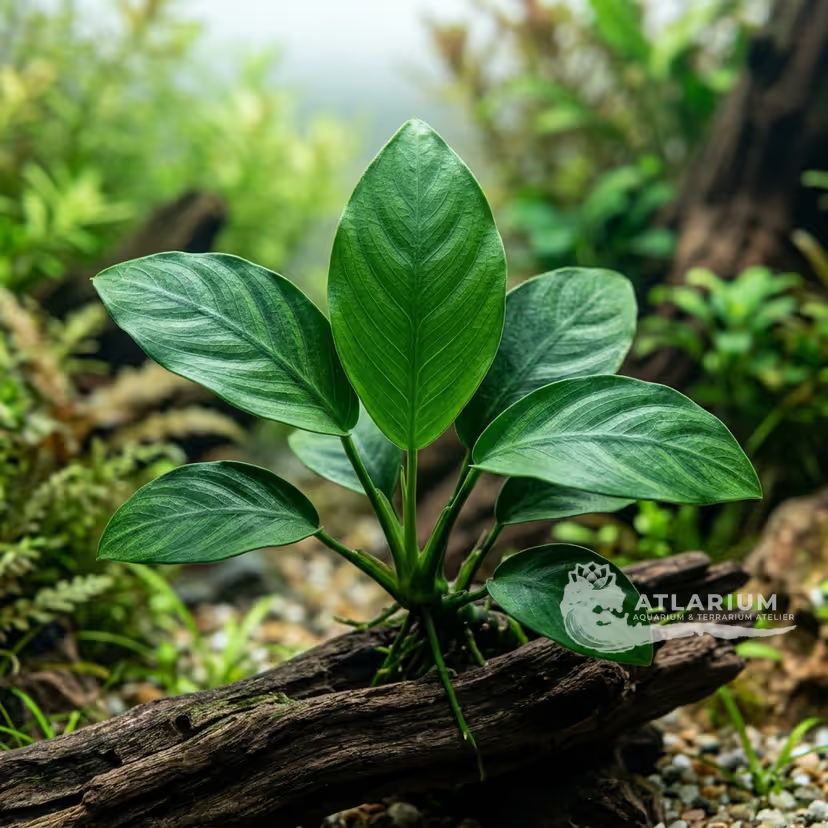
Anubias lanceolata
Plant

Anubias lanceolata

Anubias lanceolata
View details->
Anubias minima
Plant

Anubias minima

Anubias minima

View details->
Anubias
Plant

Anubias

Anubias barteri

View details->
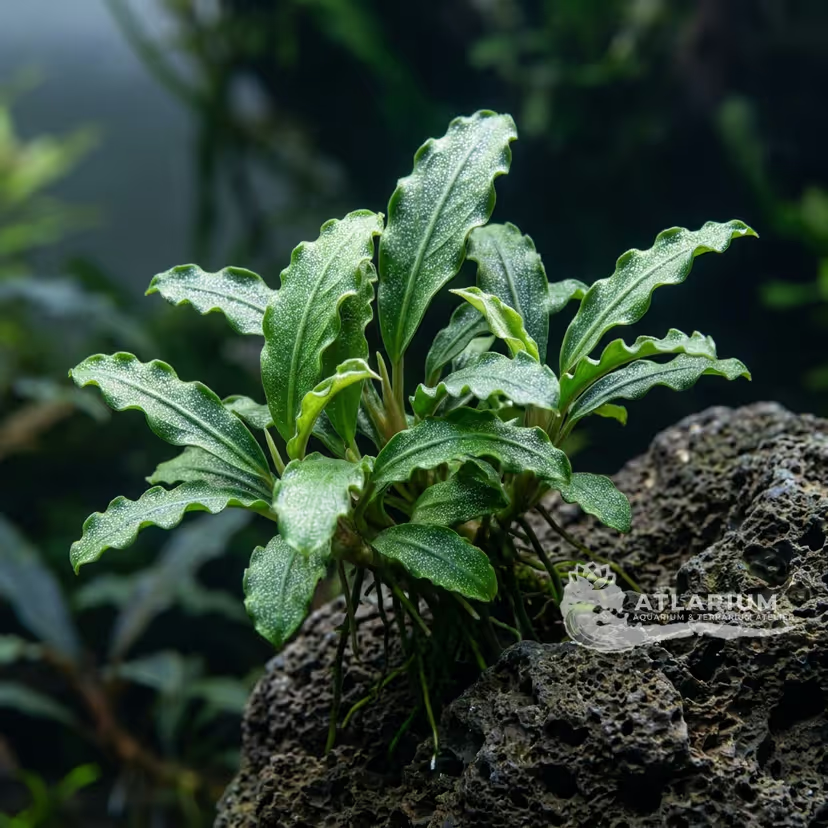
Anubias nana
Plant

Anubias nana

Anubias barteri var. nana
View details->
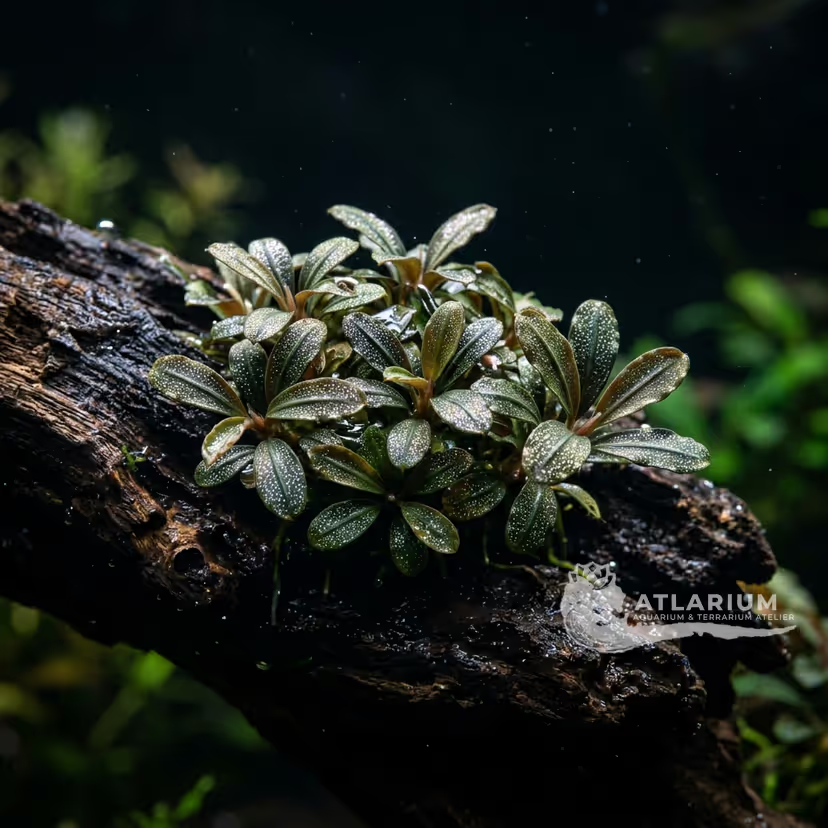
Bucephalandra pygmaea "Bukit Kelam / Sintang"
Plant

Bucephalandra pygmaea "Bukit Kelam / Sintang"

Bucephalandra pygmaea "Bukit Kelam / Sintang"

View details->
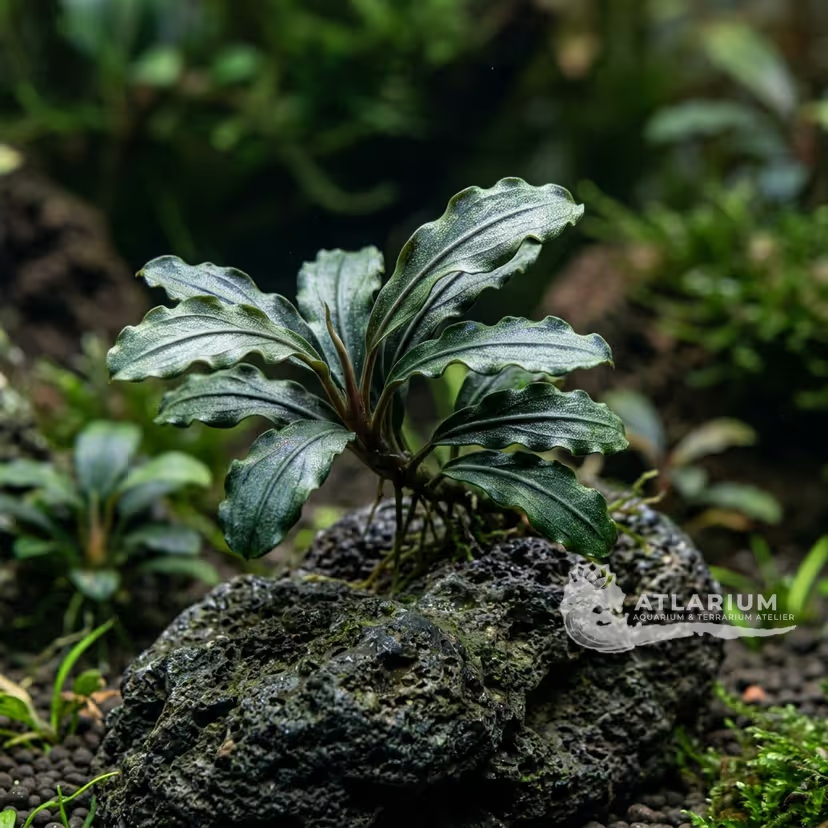
Bucephalandra pygmaea "Kapit"
Plant

Bucephalandra pygmaea "Kapit"

Bucephalandra pygmaea "Kapit"
View details->
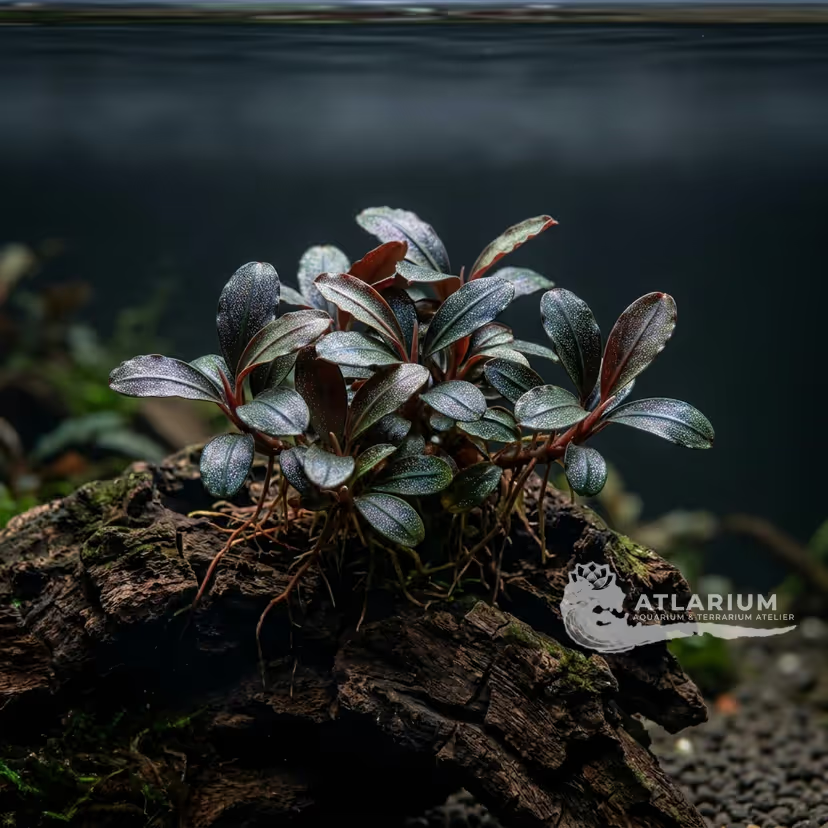
Bucephalandra sordidula
Plant

Bucephalandra sordidula

Bucephalandra sordidula
View details->
Bucephalandra sp. "Bodok"
Plant

Bucephalandra sp. "Bodok"

Bucephalandra sp. "Bodok"

View details->
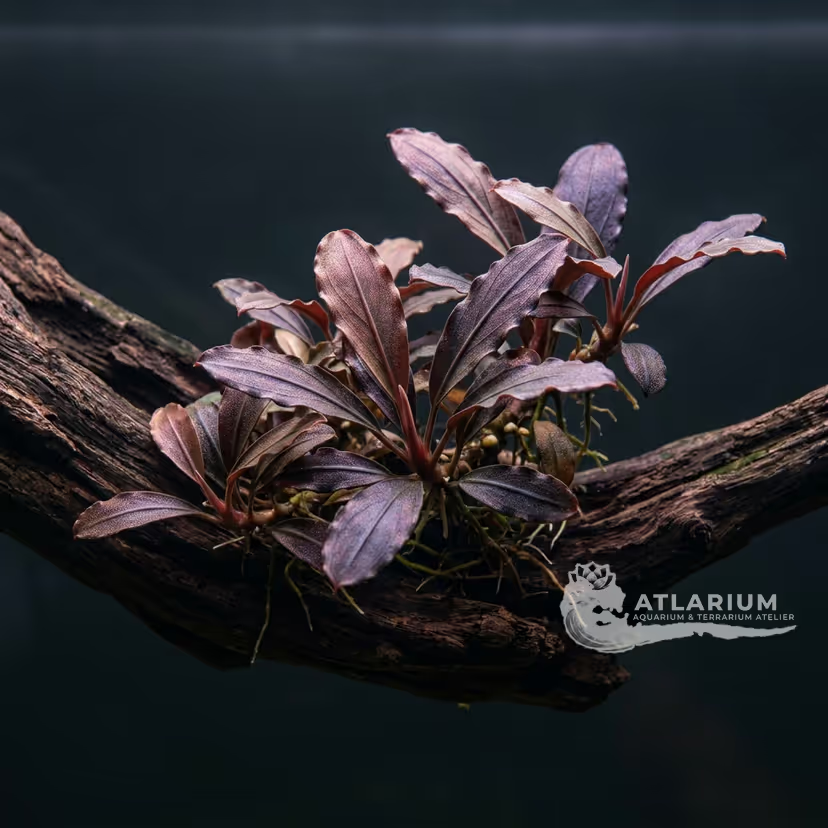
Bucephalandra sp. "Braun-rot narrow"
Plant

Bucephalandra sp. "Braun-rot narrow"

Bucephalandra sp. "Braun-rot narrow"
View details->
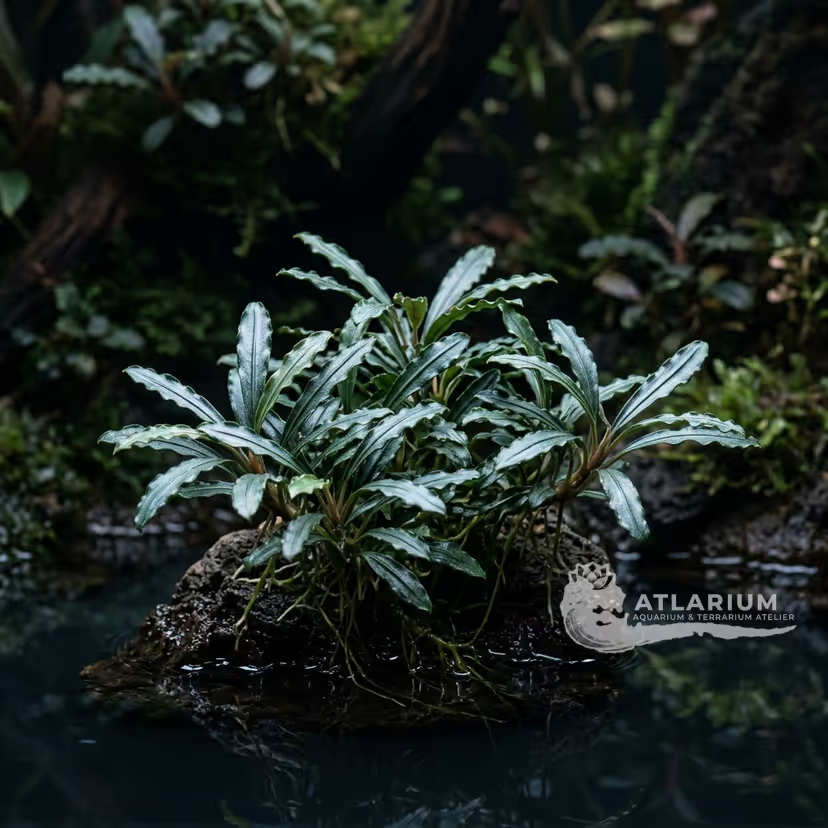
Bucephalandra sp. "Braun-rot" ("Serimbu")
Plant

Bucephalandra sp. "Braun-rot" ("Serimbu")

Bucephalandra sp. "Braun-rot"
View details->
Bucephalandra sp. "Gunung Sumpit"
Plant

Bucephalandra sp. "Gunung Sumpit"

Bucephalandra sp. "Gunung Sumpit"

View details->

Similar care

Cards with similar requirements, difficulty, habitat, and husbandry profile.

Paraguay Mouthbrooder (Bujurquina vittata)

Paraguay Mouthbrooder (Bujurquina vittata)

Bujurquina vittata

View details->
Amazon Cichlasoma (Cichlasoma amazonarum)

Amazon Cichlasoma (Cichlasoma amazonarum)

Cichlasoma amazonarum

View details->
Blue Acara

Blue Acara

Andinoacara pulcher

View details->
Cockatoo Cichlid

Cockatoo Cichlid

Apistogramma cacatuoides

View details->
Kraussii Basketmouth (Caquetaia kraussii)

Kraussii Basketmouth (Caquetaia kraussii)

Caquetaia kraussii

View details->
Dimerus Cichlid

Dimerus Cichlid

Cichlasoma dimerus

View details->
Black Acara (Two-spot Cichlid)

Black Acara (Two-spot Cichlid)

Cichlasoma bimaculatum

View details->
Pike Cichlid (Crenicichla lepidota)

Pike Cichlid (Crenicichla lepidota)

Crenicichla lepidota
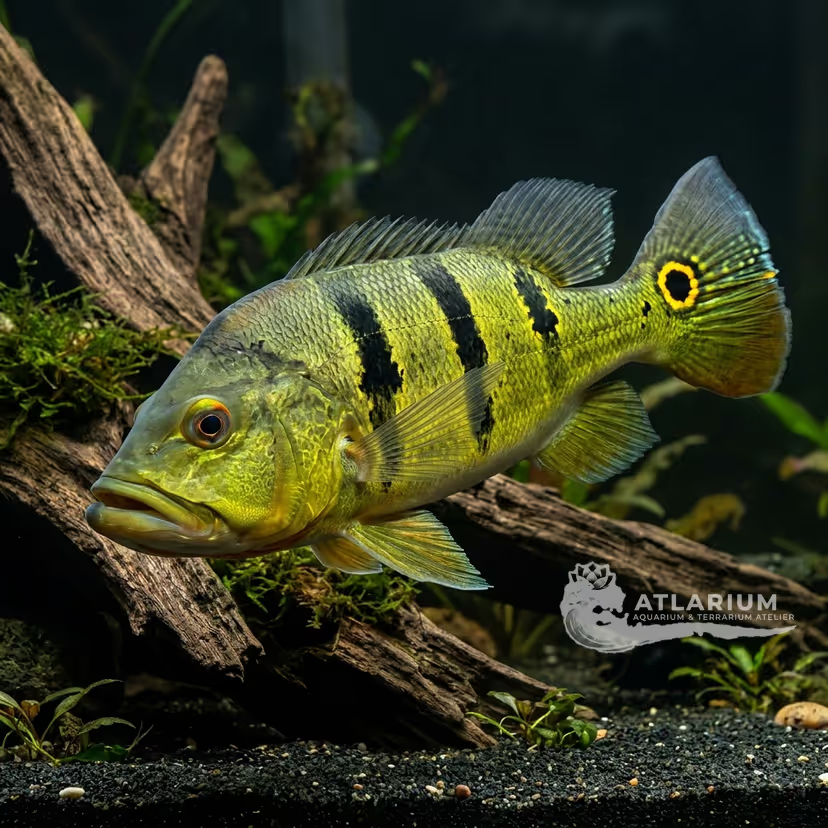
View details->
Peacock Bass (Butterfly Cichla)

Peacock Bass (Butterfly Cichla)

Cichla ocellaris

View details->
Red-eye Krobia

Red-eye Krobia

Krobia xinguensis

View details->
Cascarudo, Armored Catfish

Cascarudo, Armored Catfish

Callichthys callichthys
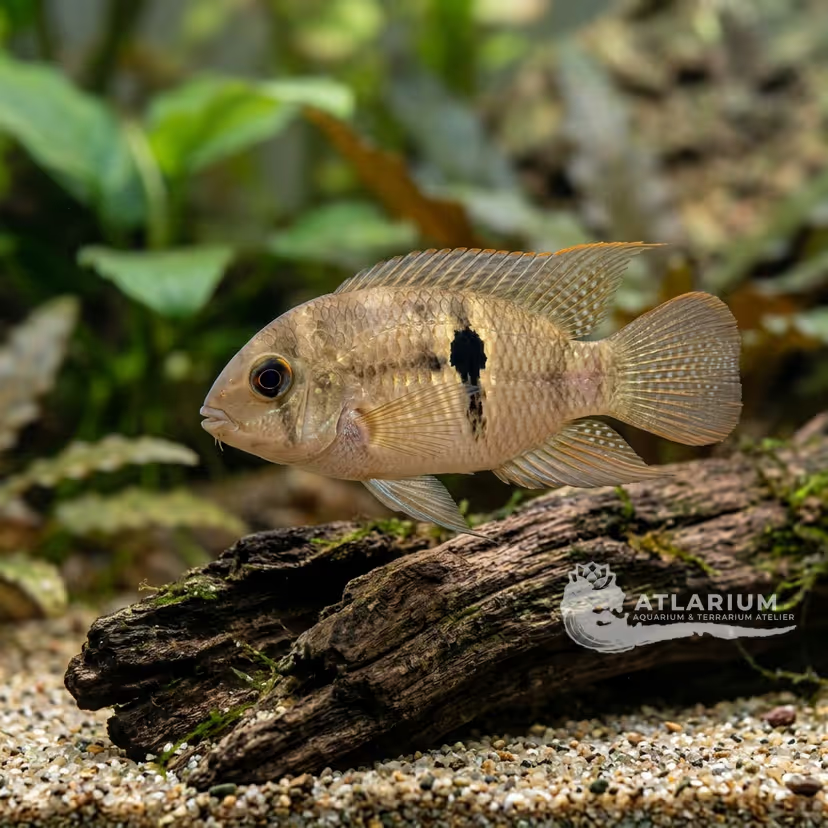
View details->
Keyhole cichlid

Keyhole cichlid

Cleithracara maronii

View details->
Bicolor Blenny

Bicolor Blenny

Ecsenius bicolor

View details->
Umbrella dwarf cichlid

Umbrella dwarf cichlid

Apistogramma borellii
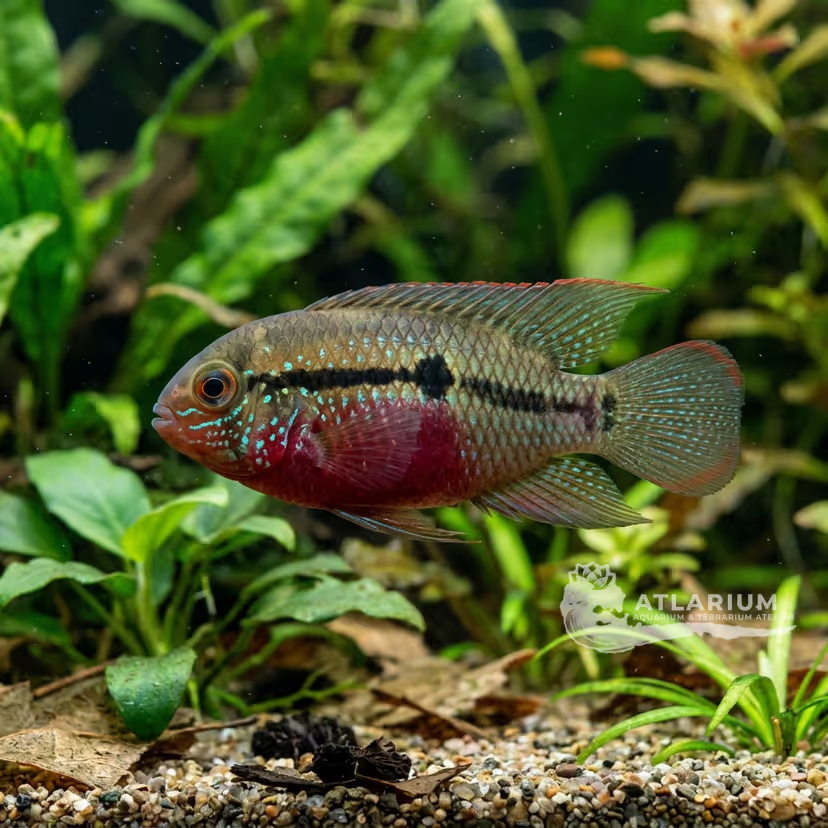
View details->
Redbreast Acara

Redbreast Acara

Laetacara dorsigera

View details->
Bolivian Ram

Bolivian Ram

Mikrogeophagus altispinosus

View details->
Last updated: 06/30/2026
Compressiceps Cichlid (Altolamprologus) (Altolamprologus compressiceps) Care Guide & Tank Setup | Atlarium