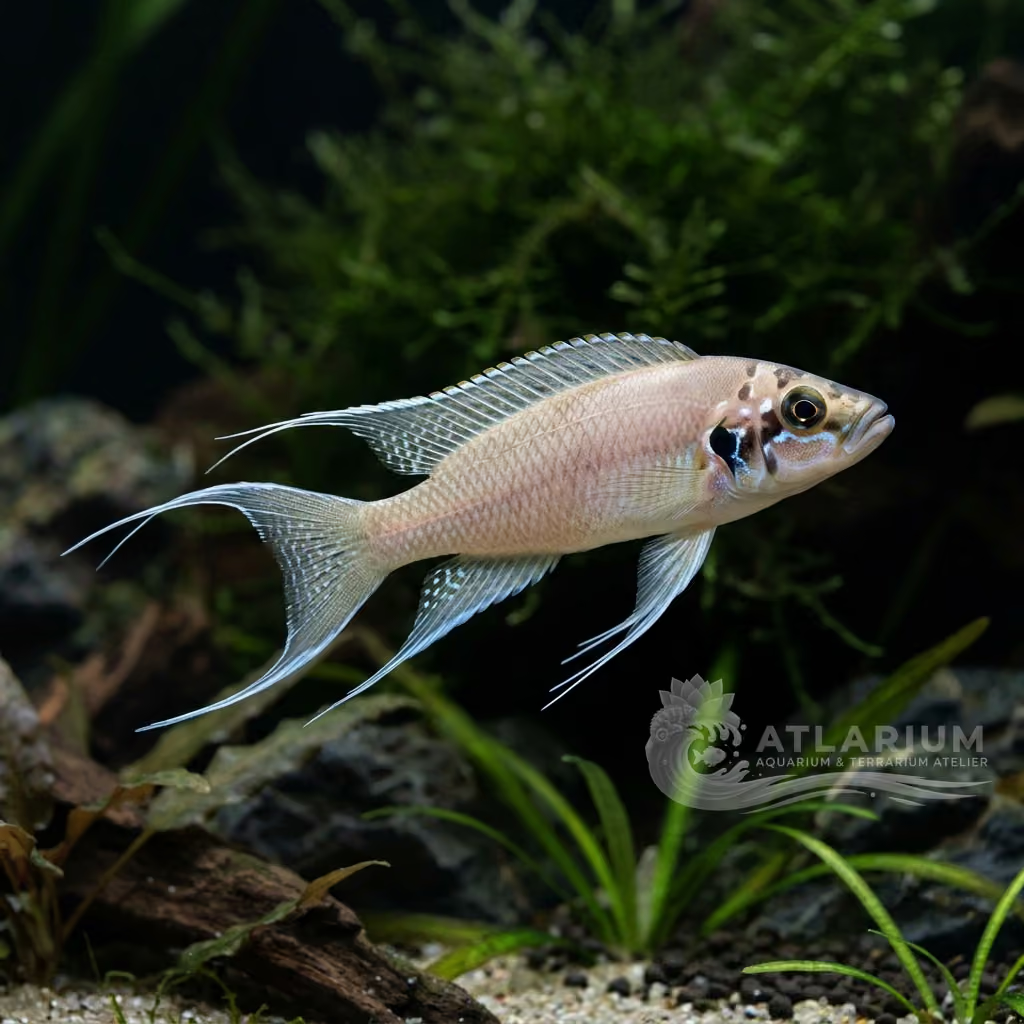
Nicaragua Cichlid (Macaw Cichlid)
Hypsophrys nicaraguensis
The wonderful 'Macaw Cichlid'. One of the brightest and most peaceful Central American cichlids (25 cm for males). Exhibits an incredible mix of gold, neon green and iridescent fuchsia. Notable cave oviparous spawner (exclusive in Central America).
Water Temperature
23 - 28 °C
pH Value
7 - 8
Water type
Freshwater
Tank level
Middle
Adult size
25 cm
Minimum tank volume
>= 300 L
Minimum group
>= 1
GH
8 - 20 dGH
KH
4 - 10 dKH
TDS
160 - 400 ppm
Conductivity
250 - 625 uS/cm

Species description
Geographical Origin and Habitat: Widely distributed in the majestic and calcareous Lake Nicaragua and along the Atlantic watercourses in Costa Rica. Thrives among the immense muddy expanses, basalt rock walls and shady forest banks where it hunts mollusks.
Taxonomy and Morphology: A unique chromatic colossus. Previously known as Cichlasoma nicaraguense. It has a bizarre shape, with a softly rounded head towards a very low lip and mouth oriented towards the ground. Notable size: old males touch 25 cm (10 inches) (heavy and stocky), females often less than half (12-15 cm / 5-6 inches).
Social Behavior: Considering the warmongering nature of most giant Central American cichlids (Midas, Green Terrors), the Macaw shines for docility. Absolutely peaceful and phlegmatic if the tank offers suitable hiding places. Coexists with small swordtails without seeing them as snacks, raging only with harsh defenses against boisterous fish during summer spawning.
Coloration and Sexual Dimorphism: Extraordinary pomp and iridescence. In rare cases of cichlids, the female is the holder of the most glorious livery. She has a body covered in metallic orange-gold, an iridescent neon jade-green forehead and a dazzling intense pink to fuchsia ventral spot and pearly blue spots. Males are much more faded, with a greenish base and a central black spot or broken stripe (depending on mood), but develop the imposing gibbosity or taurine deformed forehead.

Care, breeding and tankmates
Aquarium Setup: Being majestic lake or large river dwellers, they require very long urns (from 150 cm to two meters / 60-80 inches) set up roughly: wide sandy tracts on which to place and scatter heavy stones to outline the ground. Bogwoods lowered or intertwined to create huge hiding places. Appreciates large snail shells on the bottom if you can find them.
Diet and Feeding: Omnivore/Molluscivore (specialized hard chewers). Will voraciously devour any large cichlid granule (good brand vitamin-loaded cichlid sticks and flakes for the young), but will benefit from vegetable supplements, insects and love to crush small snail shells or raw mussel meat in thick frozen slices.
Water Quality: 'Hard' Cichlids from Central American lakes: Tap water par excellence. They demand hard GH with strong saline/calcareous concentrations (GH from 10 to 20) and high alkaline component of the pH (constant over 7.4). Tolerance to poor hygiene or anoxia of turbid water will lead to premature death and epidemic explosion of bulging eyes (Exophthalmos) and dropsy.
Compatibility and Cohabitation: Prime model in large peaceful tap water calcareous tanks without bulky monsters. Golden roommate for schools of large colorful surface Platies mollies and excellent with the timid Firemouth (Meeki) and other peaceful Central American Cichlids. CANCELED any combination with the real and big psychopathic South American stone-breaking giants that would slaughter it out of spite.
Aquarium Breeding: A true rare behavioral prowess in the Central American environment: does not lay sticky (adhesive) eggs. They dig a large, big deep hole well hidden under a root and lay loose free eggs (non-adhesive and opaque) that roll asphyxiatingly on the ground while father and mother struggle to keep them together fanning the water. Exceptional exhibition for the scholarly aquarist.
Risks and Diseases: Lethal Hexamitiasis and rotting fin corrosion guaranteed at 100% in soft sweet waters, poor in hard calcareous nitrates or excessively filthy from undisposed infarction bioload (missed monthly water changes of 50%).

Geographic origin and distribution
Widely distributed in the majestic and calcareous Lake Nicaragua and along the Atlantic watercourses in Costa Rica. Thrives among the immense muddy expanses, basalt rock walls and shady forest banks where it hunts mollusks.
Origin
Tropical oceans and reefsCentral America and Caribbean

Fish profile
- Temperament
- Semi-aggressive
- They have a spunky, territorial temperament that commands respect in the aquarium. While not outright killers, they will fiercely defend their chosen territory. Providing adequate space is the key to managing their aggression.
- Diet
- Omnivore
- In nature, they feed heavily on snails, insects, and plant matter. In the aquarium, they readily accept cichlid pellets, frozen bloodworms, and vegetable-based flakes. Offering live snails can help mimic their natural foraging behaviors.
- Life expectancy
- 8-12 years
- Adult size
- 25 cm
- Sex ratio
- Flexible
- Females are typically more brightly colored than males, which is unusual for cichlids. Males grow significantly larger and develop a slight nuchal hump as they age. Males also possess longer, more pointed dorsal and anal fins.
- Feeding frequency
- Twice daily
- Feed them one to two times daily with an amount they can finish rapidly. Be cautious not to overfeed, especially with high-protein foods. They will actively dig through the substrate searching for leftover morsels.
- Bioload
- Medium to High
- This medium to large cichlid has a high bioload and eats quite messily. Their digging habits also stir up detritus into the water column. Powerful canister filtration is required to keep the water visually and chemically clean.
- Flow
- Stagnant
- They tolerate a moderate water flow, which helps keep the tank clear of the debris they stir up. The current should not be overwhelmingly strong, as they still need calm resting spots. Adequate surface agitation is important for oxygenation.
- Jump risk
- Yes
- Like most large cichlids, they are strong swimmers capable of jumping if frightened. A heavy, secure glass canopy is necessary to keep them safe. Ensure all gaps around equipment are closed off.
- Reproduction
- Oviparous
- They are unique among Central American cichlids as they lay non-adhesive eggs in a pit dug in the substrate. The parents are incredibly aggressive when guarding the nest and the fry. They will often attack the aquarist's hands during tank maintenance.
- Compatibility & tankmates
- With caution
- They are moderately aggressive and should be kept with other similarly sized Central American cichlids. Fast-moving dither fish, like large tetras or barbs, can be included if the tank is large enough. They will terrorize small or timid tank mates.
- Tank level
- Middle
- They primarily inhabit the lower and middle regions of the aquarium. The substrate must be soft sand, as they love to dig and sift extensively. All heavy rocks must be placed directly on the tank glass to prevent structural collapses.

Scientific Parameters & Models
FishBase
Window to the official scientific data of the species
FishBase v25.04Data synced on: 06/15/2026
- Trophic level
- 2.7 ± 0.34 se
- Resilience
- High (less than 15 months)
- Phylogenetic uniqueness (PD50)
- 0.75
- Bayesian Length-Weight
- a = 0.02188, b = 3.05
- VulnerabilityLow vulnerability (10 / 100)

Related species
Recommendations grouped by close relatives, companion choices, and similar care.