Clown Squeaker
Synodontis decorus
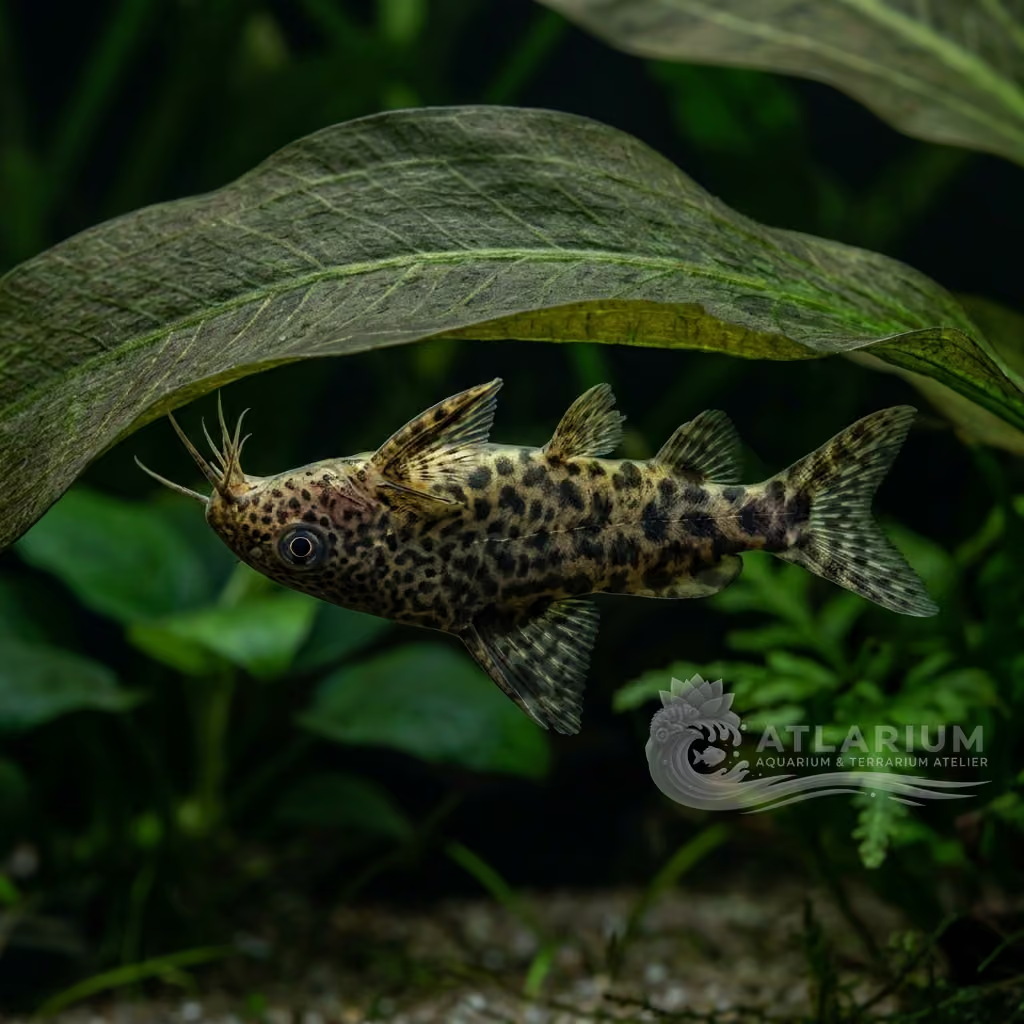
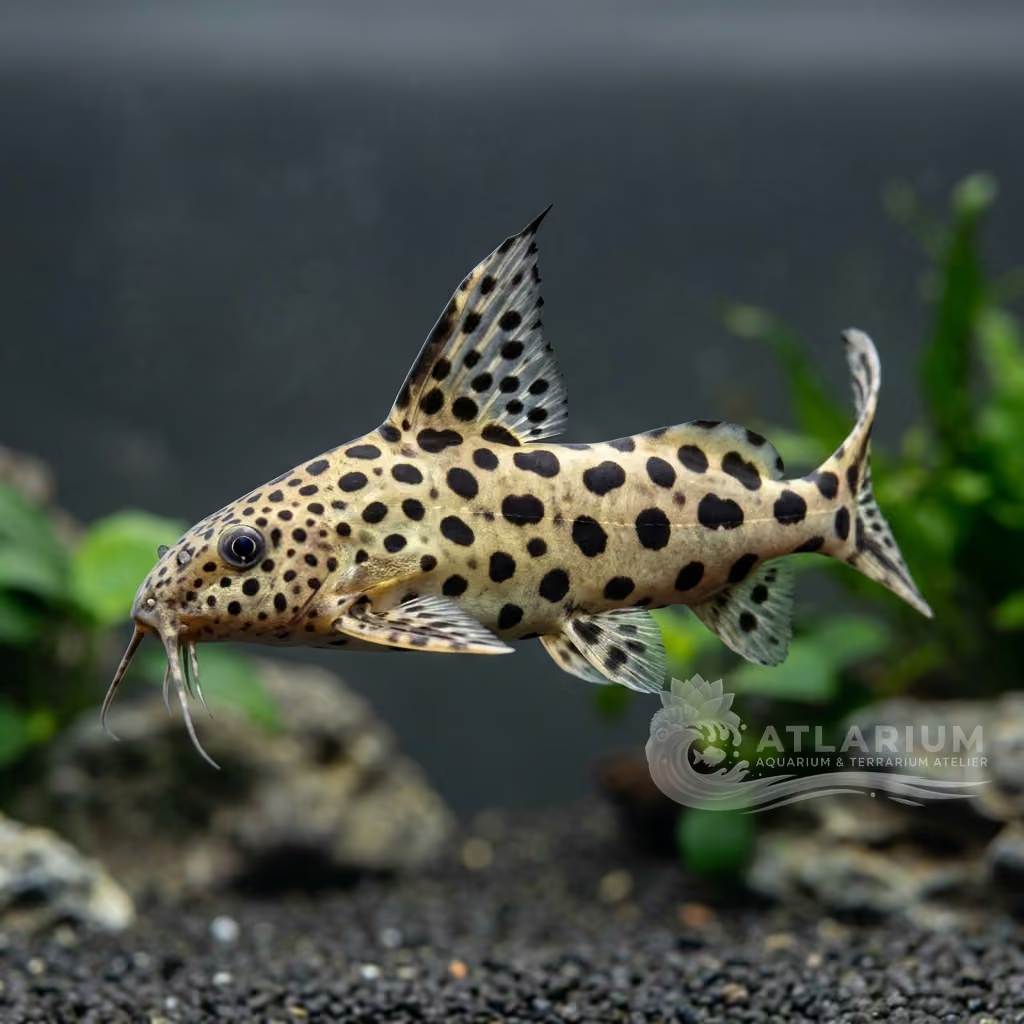
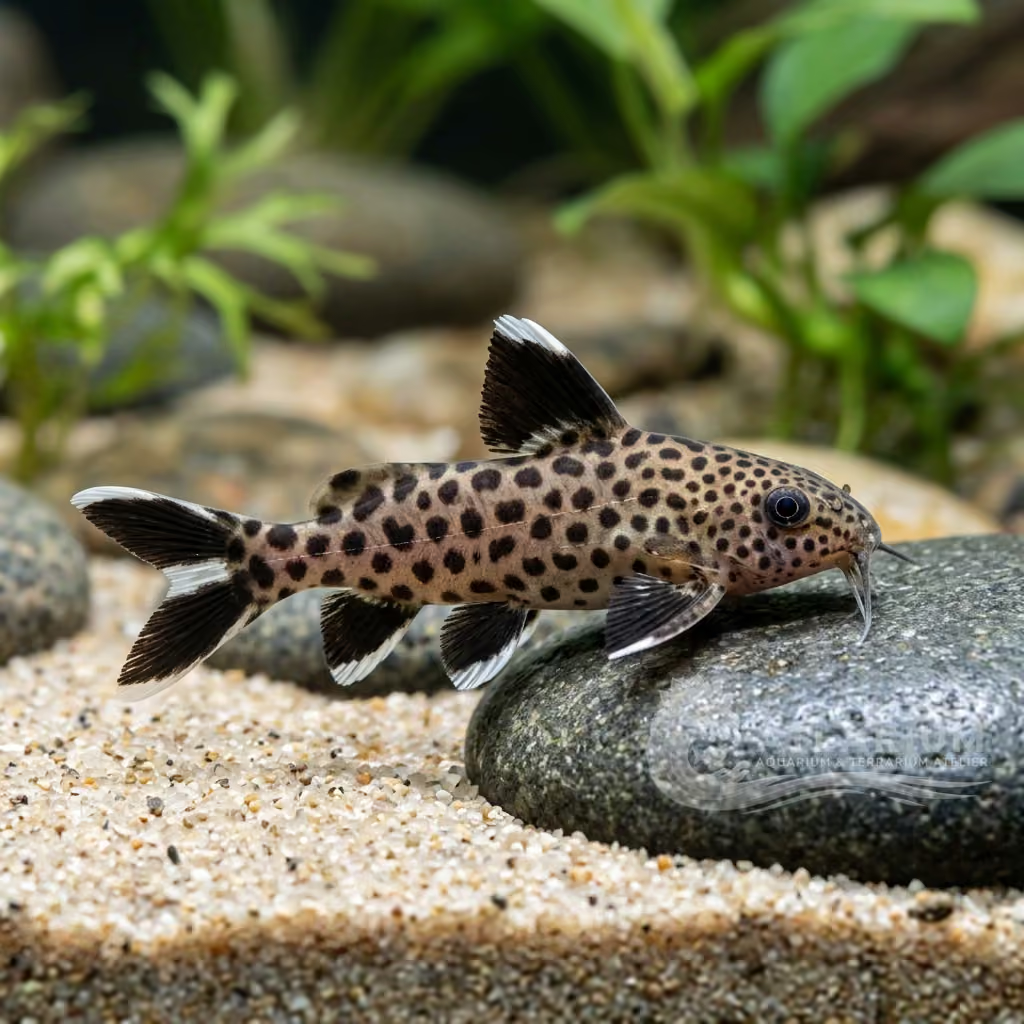
Recognizable by the cream-colored build with large irregular black spots and the incredible filamentous extension of the first ray of the dorsal fin, which waves behind him like a whip.
Water Temperature
22 - 28 °C
pH Value
6 - 7.5
Water type
Freshwater
Tank level
Bottom
Adult size
32 cm
Minimum tank volume
>= 250 L
Minimum group
>= 1
GH
4 - 15 dGH
KH
4 - 15 dKH
TDS
100 - 375 ppm
Conductivity
156 - 586 uS/cm

Species description
Geographical Origin and Habitat: Congo River hydrographic basin (Central Africa). Inhabits the pools and courses of large rivers. In dry seasons the river level drops, exposing the fish to thermal shifts and biochemical variations, making it very robust.
Taxonomy and Morphology: Clown Squeaker (Synodontis decorus). Spectacular armored African catfish (Mochokidae). Extraordinary is its first dorsal fin ray, which develops into a very long and elegant filament, unique among congeners.
Social Behavior: Very peaceful and shy (especially when young), it spends most of the daylight in hibernation under a hollow log, emerging boldly in the evening. Rarely quarrelsome if provided with plenty of hiding places.
Coloration and Sexual Dimorphism: Majestic body, base from creamy white to dark powder pink, dotted everywhere with very large irregular black "polka dots" that extend onto the broad fins. Males show a pointed genital papilla, females are more robust.

Care, breeding and tankmates
Aquarium Setup: Will become imposing: tanks over 150 cm (60 inches). Needs pipes or darkened caves that contain it entirely. Mandatory soft sand so as not to erode the fragile fimbriated barbels used for hunting.
Diet and Feeding: Bulimic omnivore. Absorbs everything: from pellets for carnivorous Cichlids, sinking tablets, large pieces of shrimp, soft zucchini to frozen peas. Greediness can lead to obesity if one or two days of fasting are not guaranteed.
Water Quality: Rather tolerant of values, but very intolerant of nitrogenous pollution accumulated in the tank. Requires excellent biological filtration and regular cleaning siphonings on the bottom (especially under logs).
Compatibility and Cohabitation: Does not feed on other fish intentionally, but swallows whatever fits in its mouth at night (Neons forbidden!). Magnificent with large African Cichlids, Datnioides, Polypterus or large Characins.
Aquarium Breeding: Very rare or almost non-existent in private hobbyist aquariums. In Eastern European and Russian commercial facilities, forced hormonization (pituitary extracts) is the only way to obtain marketable eggs from them.
Risks and Diseases: Armed and toxic fins (in particular the hard pectoral ray); pay extreme attention during capture not to get stuck in the net, or worse, not to suffer a painful lethal sting on the hand.

Geographic origin and distribution
Congo River hydrographic basin (Central Africa). Inhabits the pools and courses of large rivers. In dry seasons the river level drops, exposing the fish to thermal shifts and biochemical variations, making it very robust.
Origin
Tropical oceans and reefsAfrica and Madagascar

Fish profile
- Temperament
- Semi-aggressive
- Their temperament is generally peaceful, bold, and highly entertaining to observe. They are known to exhibit the classic Synodontis behavior of swimming upside down, especially when feeding from the surface or exploring driftwood. They are gentle giants, though they will aggressively defend their favorite cave from intruders.
- Diet
- Omnivore
- Omnivorous and undemanding, they will eagerly consume almost any sinking aquarium food provided to them. Their diet should be centered around high-quality sinking pellets, supplemented heavily with frozen bloodworms, chopped prawns, and earthworms. They also appreciate occasional vegetable offerings, such as cucumber slices or algae wafers.
- Life expectancy
- 15-20 years
- Adult size
- 32 cm
- Sex ratio
- Solitary
- Unlike many other Synodontis species, the Clown Squeaker is relatively tolerant of its own kind if given enough space. They can be kept singly, or in a small group in very large aquariums equipped with multiple distinct hiding places. If kept in groups, minor squabbling may occur, but it rarely leads to serious injury.
- Feeding frequency
- Twice daily
- Feeding them once a day in the evening is usually sufficient to keep them healthy and satiated. They are highly food-motivated and will often quickly learn to come out during the day when food is introduced. Care should be taken to ensure they do not outcompete slower bottom-dwellers for food.
- Bioload
- High
- The Clown Squeaker is a notably large catfish, easily reaching over 10 inches, thus producing a heavy bioload. Their substantial size and hearty appetite mandate the use of powerful canister or sump filtration to maintain water quality. Consistent, large volume water changes are absolutely necessary to prevent the buildup of toxic nitrogenous waste.
- Flow
- Stagnant
- Originating from the Congo basin, they prefer moderate water flow that provides excellent oxygenation. They do not need rapid currents, but gentle, consistent circulation helps keep their environment clean. Good flow also prevents dead spots in large aquariums, ensuring detritus is pushed toward the filter intakes.
- Jump risk
- Yes
- Due to their heavy, bulky bodies, they pose a very low jump risk and are unlikely to leave the water. Nonetheless, a sturdy lid is required for any large aquarium to prevent accidental splashing and to keep out household contaminants. A lid also deters them from accidentally launching themselves if panicked by a sudden vibration.
- Reproduction
- Oviparous
- There are no verifiable reports of successful captive breeding of Synodontis decorus in home aquariums. In the wild, their reproductive cycle is intricately tied to the flooding of the Congo River during the wet season. Commercial breeding is achieved exclusively on large fish farms using hormone injection techniques.
- Compatibility & tankmates
- Peaceful
- They are peaceful giants that do very well in large community tanks with other robust species. Ideal tank mates include large characins, medium-to-large peaceful cichlids, and Gouramis. However, their large mouths mean that any small fish, such as neon tetras, will eventually be eaten during the night.
- Tank level
- Bottom
- They are primarily bottom dwellers, but their large size means they command a significant presence in the lower half of the tank. They love to rest under large pieces of driftwood or inside appropriately sized PVC pipes. They are less nocturnal than other Synodontis and will frequently cruise the bottom during the day.

Scientific Parameters & Models
FishBase
Window to the official scientific data of the species
FishBase v25.04Data synced on: 06/15/2026
- Trophic level
- 2.9 ± 0.3 se
- Resilience
- Medium (1.4 - 4.4 years)
- Phylogenetic uniqueness (PD50)
- 0.5
- Bayesian Length-Weight
- a = 0.01096, b = 3
- VulnerabilityLow vulnerability (22 / 100)

Related species
Recommendations grouped by close relatives, companion choices, and similar care.