Encyclopaedia

FishFreshwaterIntermediate
©AI Generated·Proprietary

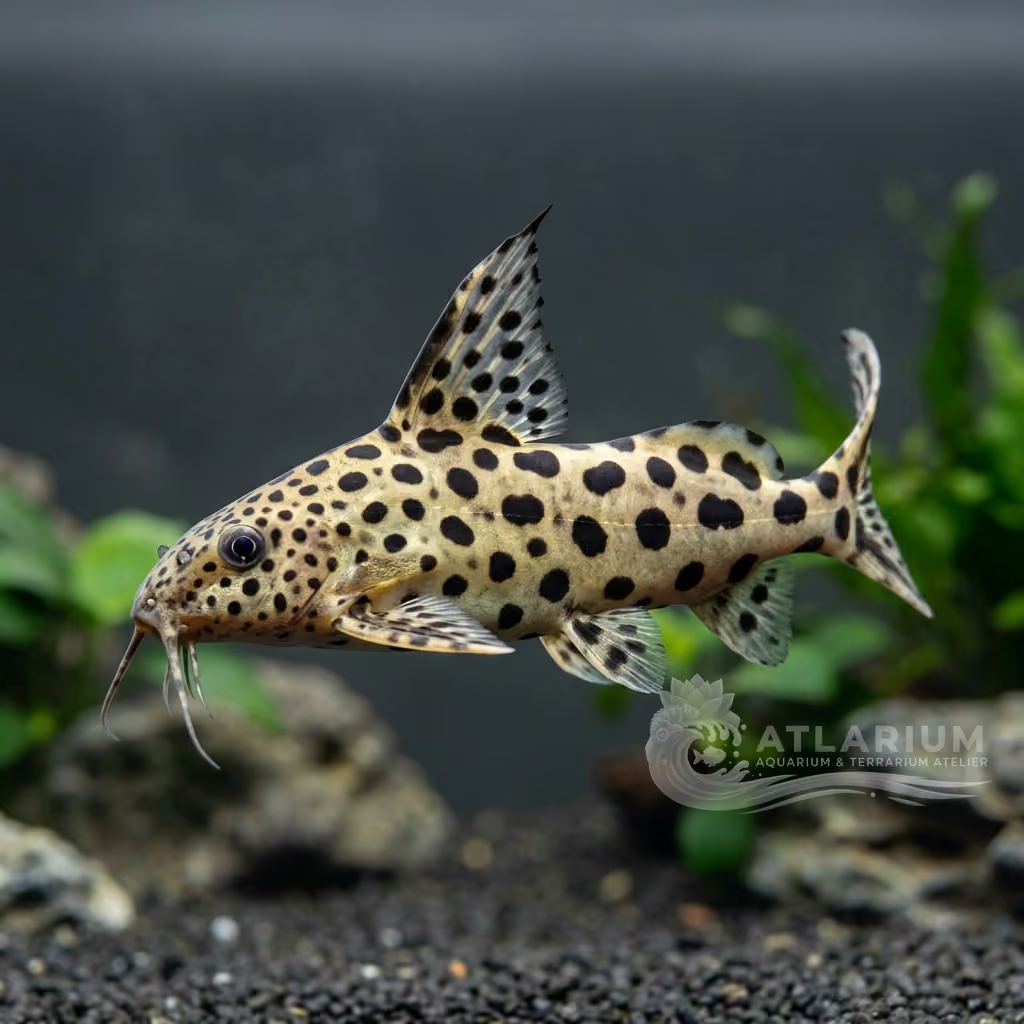
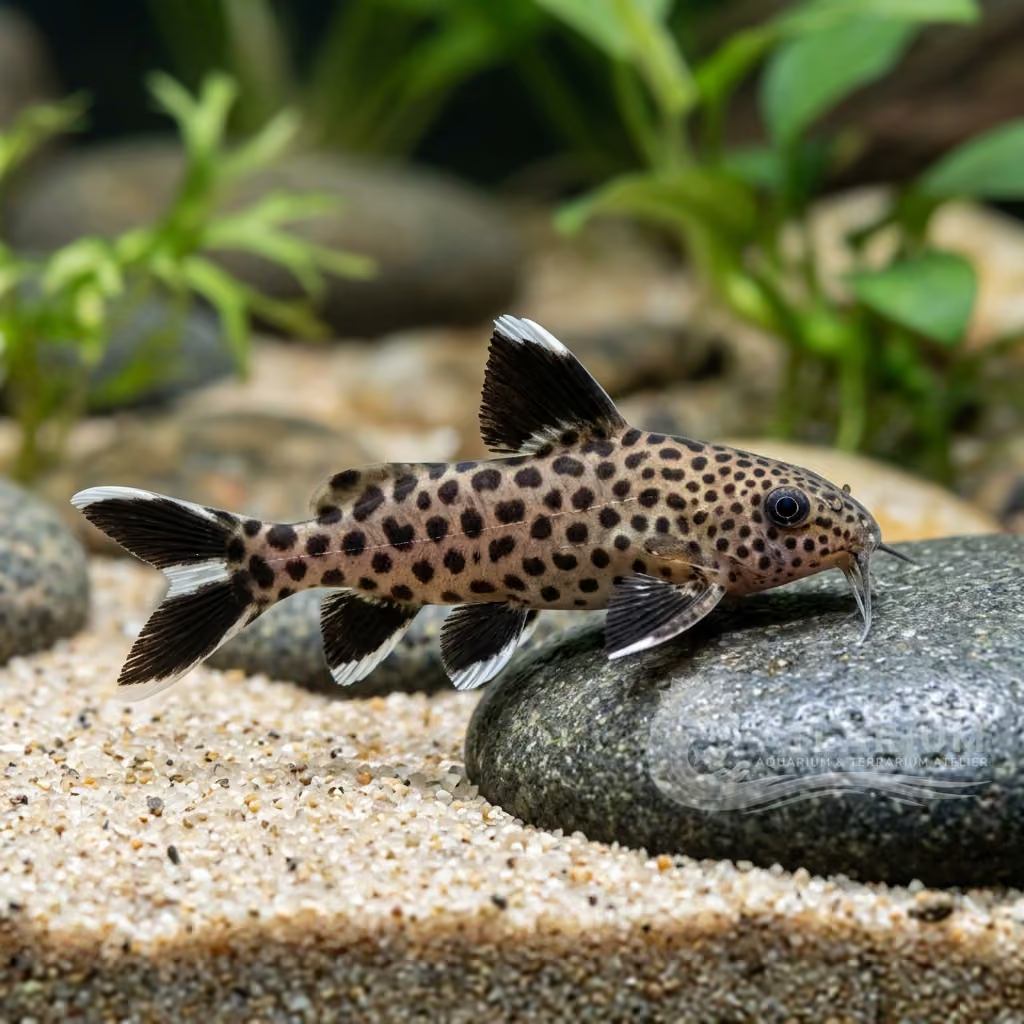
Upside-down catfish

Synodontis nigriventris

The catfish that swims upside-down — a unique behavior in fishkeeping that defies gravity. Pigmentation is reversed from normal fish: the belly is darker than the back (counter-shading), an adaptation to inverted swimming for camouflage when seen from below. Native to the Congo basin. Gregarious and nocturnal: in groups of 3–6+ becomes more confident. Feeds on the underside of leaves and at the water surface. Excellent longevity: 10–15 years. Young swim normally and develop inverted behavior at ~7–8 weeks.

Taxonomy
Class:Actinopteri
Order:Siluriformes
Family:Mochokidae
Genus:Synodontis
Species:Synodontis nigriventris

Share

Check out Upside-down catfish on Atlarium

PracticeRecognition quizzesPhotos, names, origins, and puzzles to review Atlas species.Open quizzes
Water Temperature

21 - 26 °C

pH Value

6 - 8

Water type

Freshwater

Tank level

Surface and middle

Adult size

9.6 cm

Minimum tank volume

>= 75 L

Minimum group

>= 3

GH

7 - 14 dGH

KH

3 - 7 dKH

TDS

135 - 280 ppm

Conductivity

211 - 438 uS/cm

Species description

Geographical Origin and Habitat: Endemic to the immense, sprawling Congo River basin in Central Africa, specifically documented in the Republic of the Congo, Democratic Republic of the Congo, and Cameroon. Synodontis nigriventris (the Upside-Down Catfish) naturally colonizes heavily vegetated, slow-moving marginal zones, deeply flooded riverbanks, and stagnant rainforest pools. These environments are characterized by dense, overhanging vegetation and an absolute abundance of submerged logs, roots, and aquatic plants where they spend their lives grazing the undersides of leaves and branches.
Taxonomy and Morphology: Scientifically classified within the Mochokidae family (the "squeaker" catfishes), it is the most famous member of its genus due to its remarkable evolutionary adaptation. Taxonomically, its specific name "nigriventris" translates directly to "black-bellied." Morphologically, it possesses a stocky, robust, scaleless body equipped with sharp dorsal and pectoral spines (capable of inflicting a painful sting) and complex, branched barbels. Its most defining physical trait is its specialized swim bladder, which allows it to permanently and effortlessly swim upside-down.
Social Behavior: They are exceptionally peaceful, predominantly nocturnal, and highly gregarious catfish. Unlike many territorial Synodontis species, S. nigriventris absolutely relies on a group (minimum 5-6, ideally more) for psychological security. During the day, they form massive, intertwined colonial groups, resting completely upside-down under broad leaves, driftwood overhangs, or inside ceramic tubes. At night, they become highly active, breaking formation to meticulously graze the undersides of plant leaves and the water surface for food.
Coloration and Sexual Dimorphism: Sexual dimorphism is distinct in mature adults. Females are significantly larger (reaching 9-10 cm), vastly plumper across the belly, and exhibit a slightly duller, more muted coloration. Males remain smaller (around 6-7 cm) and possess a more sharply pointed dorsal fin. The coloration represents a unique evolutionary reversal of counter-shading (camouflage). The back (which points downward) is a light, mottled silvery-grey. The belly (which points upward) is starkly dark brown or black, perfectly camouflaging them against the dark river bottom when viewed from above.

Care, breeding and tankmates

Aquarium Setup: The aquarium architecture must cater to their absolute biological need to rest and feed upside-down. A minimum 100-liter tank is required for a group. The layout MUST feature extensive, massive overhanging structures: large pieces of branching driftwood (spider wood), flat slate caves, and dense thickets of broad-leaved plants (like massive Anubias or Amazon Swords). They demand dim lighting; in brightly lit tanks without adequate broad-leaved overhangs, they will suffer from severe chronic stress and refuse to emerge.
Diet and Feeding: In their natural Congo River habitats, they are highly opportunistic omnivores and meticulous surface/leaf grazers, feeding heavily on aquatic insects, crustaceans, and significant amounts of soft algae and detritus scraped from the undersides of submerged structures. In captivity, they are unfussy but require a sinking, omnivorous diet fed after lights out. They eagerly accept high-quality sinking pellets, algae wafers, and frozen bloodworms. They will frequently swim upside-down at the water surface to snatch floating flakes.
Water Quality: Originating from the vast Congo basin, they are incredibly hardy, robust, and highly adaptable to various water parameters. They thrive in standard tropical temperatures (22-26°C / 72-79°F) and are comfortable in slightly acidic to slightly alkaline water (pH 6.5 - 7.5) with moderate hardness. While highly adaptable, they prefer slow to moderate filter flow, mimicking the quiet marginal zones of the Congo River, rather than violent, torrential rapids.
Compatibility and Cohabitation: They are the quintessential peaceful catfish for medium-to-large community aquariums. Due to their peaceful nature and robust size, they can be housed with a massive variety of species. Excellent tankmates include African Tetras (Congo Tetras), medium-sized peaceful Cichlids (Kribensis), Gouramis, and large Rasboras. They are safe with plants and will not eat smaller, fast-swimming fish. You must only avoid aggressively territorial bottom-dwellers (like large, aggressive Plecos or massive Cichlids) that might compete for cave space.
Aquarium Breeding: Breeding is rare but possible in heavily planted, mature aquariums. They are egg-scatterers. To trigger spawning, a heavily conditioned group should be subjected to a simulated rainy season (a massive, cool water change following a dry period). The female will scatter hundreds of slightly adhesive eggs, often aiming them at the undersides of broad leaves or within caves. The adults provide zero parental care and may eat the eggs. The microscopic fry require infusoria and hatch already possessing the instinct to swim upside-down.
Risks and Diseases: The absolute greatest physical risk is mechanical injury during handling; their dorsal and pectoral spines are serrated, highly venomous, and will easily puncture human skin or become permanently tangled in standard aquarium nets (use solid plastic containers to catch them). Medically, they are virtually indestructible if provided with clean water. However, as scaleless fish, they are highly sensitive to copper-based medications and heavy salt treatments.

Geographic Origin and Distribution

Endemic to the immense, sprawling Congo River basin in Central Africa, specifically documented in the Republic of the Congo, Democratic Republic of the Congo, and Cameroon. Synodontis nigriventris (the Upside-Down Catfish) naturally colonizes heavily vegetated, slow-moving marginal zones, deeply flooded riverbanks, and stagnant rainforest pools. These environments are characterized by dense, overhanging vegetation and an absolute abundance of submerged logs, roots, and aquatic plants where they spend their lives grazing the undersides of leaves and branches.

Origin

Africa and Madagascar

Fish profile

Temperament
Peaceful
They are shy, peaceful, and highly social creatures that derive confidence from being in a group. During the day, they will often wedge themselves together in tight crevices, completely upside down. They are completely non-aggressive and prefer to flee from conflict rather than fight. Once acclimated to a quiet tank, they exhibit fascinating grazing behaviors along the undersides of leaves.
Diet
Omnivore
They are omnivorous micro-predators that naturally feed on insects, small crustaceans, and plant matter at the water's surface or under leaves. In captivity, they readily accept high-quality flakes, micro-pellets, and freeze-dried foods that float or sink slowly. They particularly enjoy frozen bloodworms, daphnia, and brine shrimp. They are unique in their ability to feed comfortably from the water's surface while upside down.
Sex ratio
Harem
They are highly gregarious and should always be kept in groups of at least five individuals. In these groups, a specific sex ratio is not important as they do not form pairs or harems. Females are generally plumper and slightly larger than males when mature. Keeping them in groups drastically reduces their shyness and encourages natural schooling behaviors.
Feeding frequency
Once daily
Feeding them small amounts once or twice daily is the best practice. Since they are primarily nocturnal, at least one feeding should occur just as the tank lights go out. This ensures they can eat peacefully without aggressive daytime feeders stealing their food. They will often emerge during the day if they sense food in the water.
Bioload
Medium
This small, peaceful catfish produces a relatively low bioload in the aquarium. They are manageable for appropriately sized community tanks equipped with standard filtration systems. Regular maintenance and partial water changes are still necessary to keep nitrates low and ensure their health. Due to their modest size, they do not overwhelm the biological filtration of a mature setup.
Flow
Strong
Originating from heavily vegetated river basins in the Congo, they prefer a gentle to moderate water flow. Strong, torrential currents will stress them, as they prefer to rest quietly under broad leaves or driftwood. A spray bar is an excellent way to distribute flow evenly without creating harsh currents. Quiet, shaded areas are essential for their well-being.
Jump risk
No
Reproduction
Rare / not documented
Breeding in the home aquarium is possible but challenging, typically requiring a dedicated setup. They breed by scattering their eggs in dark caves or deep recesses, often preferring overturned flowerpots. Conditioning the parents with heavy feedings of live and frozen foods is necessary to induce spawning. The parents exhibit no parental care and should be removed after spawning to prevent them from eating the eggs.
Compatibility & tankmates
Peaceful
Synodontis nigriventris is extremely peaceful and makes a phenomenal addition to community aquariums. They do well with a wide variety of gentle tankmates like tetras, rasboras, Corydoras, and dwarf cichlids. They possess no aggressive tendencies and will not bother small fish or invertebrates. However, they should not be kept with large or aggressive species that might bully or eat them.
Tank level
Top/Middle
They are unique in that they occupy the mid-water and upper levels, intimately tied to the undersides of structures. They famously spend almost their entire lives swimming and resting completely upside down under broad plant leaves or driftwood branches. They rarely rest on the bottom substrate like typical catfish. Providing broad-leaved plants like Anubias or large pieces of bogwood is absolutely mandatory.

Window to the official scientific data of the species

Data synced on: 06/15/2026

Scientific Parameters & Models

Trophic level
2.9 ± 0.36 se
Resilience
High (less than 15 months)
Phylogenetic uniqueness (PD50)
0.5
Bayesian Length-Weight
a = 0.01096, b = 3
VulnerabilityLow vulnerability (10 / 100)

Image gallery

Licensed images linked to the species or, when marked, to the closest representative taxon.

Related species

Recommendations grouped by close relatives, companion choices, and similar care.

Recommended companions

Compatible cards from coherent ecosystems with matching parameters.

Ninja Shrimp
Invertebrate

Ninja Shrimp

Caridina serratirostris

View details->
Anubias barteri var. nana 'Round Leaf'
Plant

Anubias barteri var. nana 'Round Leaf'

Anubias barteri var. nana 'Round Leaf'

View details->
Anubias congensis
Plant

Anubias congensis

Anubias congensis

View details->
Anubias gigantea
Plant

Anubias gigantea

Anubias gigantea

View details->
Anubias lanceolata
Plant

Anubias lanceolata

Anubias lanceolata

View details->
Anubias minima
Plant

Anubias minima

Anubias minima

View details->
Anubias
Plant

Anubias

Anubias barteri

View details->
Anubias nana
Plant

Anubias nana

Anubias barteri var. nana

View details->
Bucephalandra pygmaea "Bukit Kelam / Sintang"
Plant

Bucephalandra pygmaea "Bukit Kelam / Sintang"

Bucephalandra pygmaea "Bukit Kelam / Sintang"

View details->
Bucephalandra pygmaea "Kapit"
Plant

Bucephalandra pygmaea "Kapit"

Bucephalandra pygmaea "Kapit"

View details->
Bucephalandra sordidula
Plant

Bucephalandra sordidula

Bucephalandra sordidula

View details->
Bucephalandra sp. "Bodok"
Plant

Bucephalandra sp. "Bodok"

Bucephalandra sp. "Bodok"

View details->
Bucephalandra sp. "Braun-rot narrow"
Plant

Bucephalandra sp. "Braun-rot narrow"

Bucephalandra sp. "Braun-rot narrow"

View details->
Bucephalandra sp. "Braun-rot" ("Serimbu")
Plant

Bucephalandra sp. "Braun-rot" ("Serimbu")

Bucephalandra sp. "Braun-rot"

View details->
Bucephalandra sp. "Gunung Sumpit"
Plant

Bucephalandra sp. "Gunung Sumpit"

Bucephalandra sp. "Gunung Sumpit"

View details->
Bucephalandra sp. "Kedagang"
Plant

Bucephalandra sp. "Kedagang"

Bucephalandra sp. "Kedagang"

View details->

Similar care

Cards with similar requirements, difficulty, habitat, and husbandry profile.

Rosy Barb

Rosy Barb

Pethia conchonius

View details->
Checker Barb

Checker Barb

Oliotius oligolepis

View details->
Smudge Spot Cory

Smudge Spot Cory

Corydoras similis

View details->
Gold Ring Danio

Gold Ring Danio

Danio tinwini

View details->
African Butterfly Cichlid

African Butterfly Cichlid

Anomalochromis thomasi

View details->
Chocolate Talking Catfish

Chocolate Talking Catfish

Acanthodoras cataphractus

View details->
Giant Danio

Giant Danio

Devario aequipinnatus

View details->
Zebrafish

Zebrafish

Danio rerio

View details->
Pearl Danio

Pearl Danio

Danio albolineatus

View details->
Skunk cory

Skunk cory

Corydoras arcuatus

View details->
Glowlight Danio

Glowlight Danio

Celestichthys

View details->
Bronze cory

Bronze cory

Corydoras aeneus

View details->
Gold Barb

Gold Barb

Barbodes semifasciolatus

View details->
Yoyo Loach

Yoyo Loach

Botia almorhae

View details->
Giant Danio

Giant Danio

Devario malabaricus

View details->
Desana Corydoras

Desana Corydoras

Corydoras desana

View details->
Last updated: 06/30/2026