Polka-dot Squeaker
Synodontis angelicus
The stunning 'Angel Catfish' of the dark Congo rivers. Reaches 25 cm, boasting a jet-black velvet body covered in brilliant white or yellow polka-dots. Unlike its peaceful rift-lake cousins, the Angelicus is a solitary, fiercely territorial bottom-dweller that will violently attack other catfish.
Water Temperature
24 - 28 °C
pH Value
6.5 - 8
Water type
Freshwater
Tank level
Bottom
Adult size
25 cm
Minimum tank volume
>= 300 L
Minimum group
>= 1
GH
5 - 20 dGH
KH
2 - 10 dKH
TDS
95 - 400 ppm
Conductivity
148 - 625 uS/cm

Species description
Geographical Origin and Habitat: Broadly distributed throughout the massive Congo River basin (Zaire, Cameroon). Unlike the Rift Lake Synodontis (which live in bare alkaline rocks), the Angelicus thrives in the dark, soft, acidic blackwaters of flooded jungles, hiding under enormous submerged mahogany root tangles.
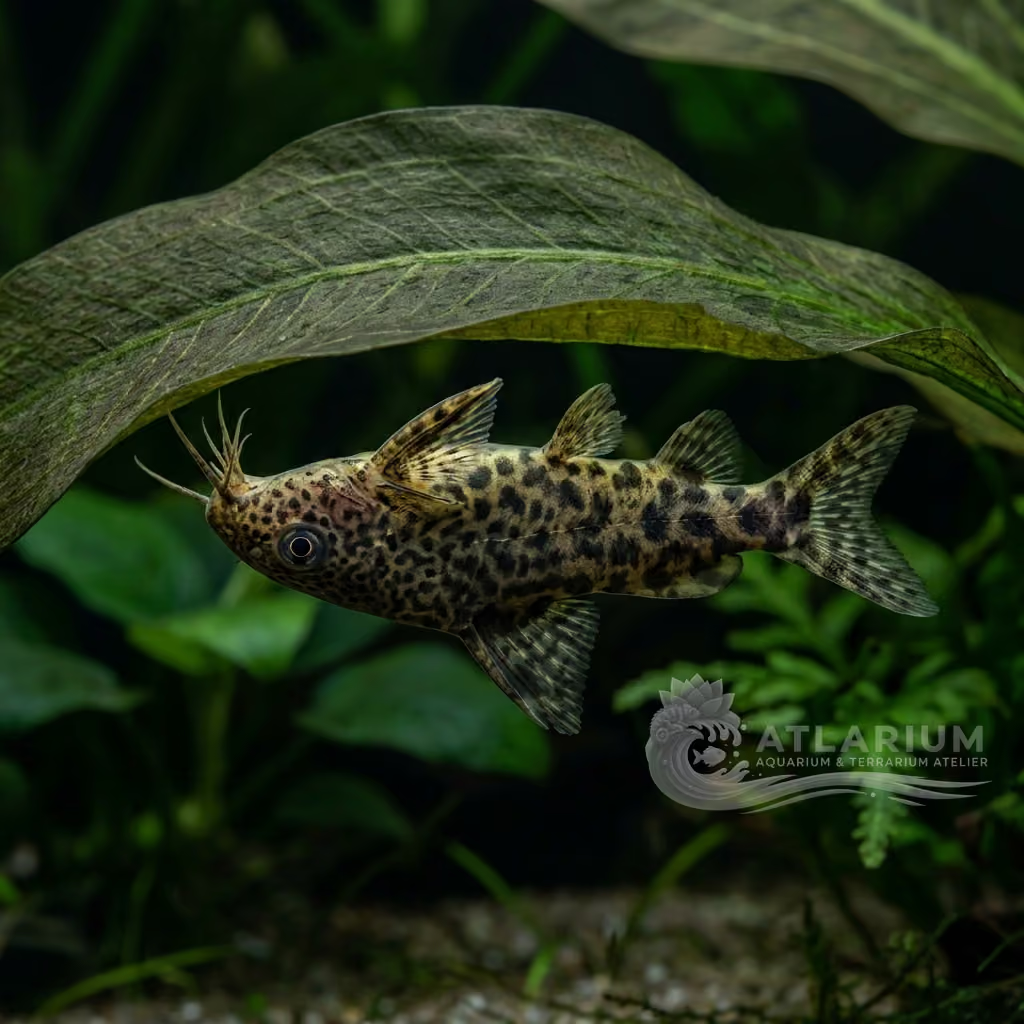
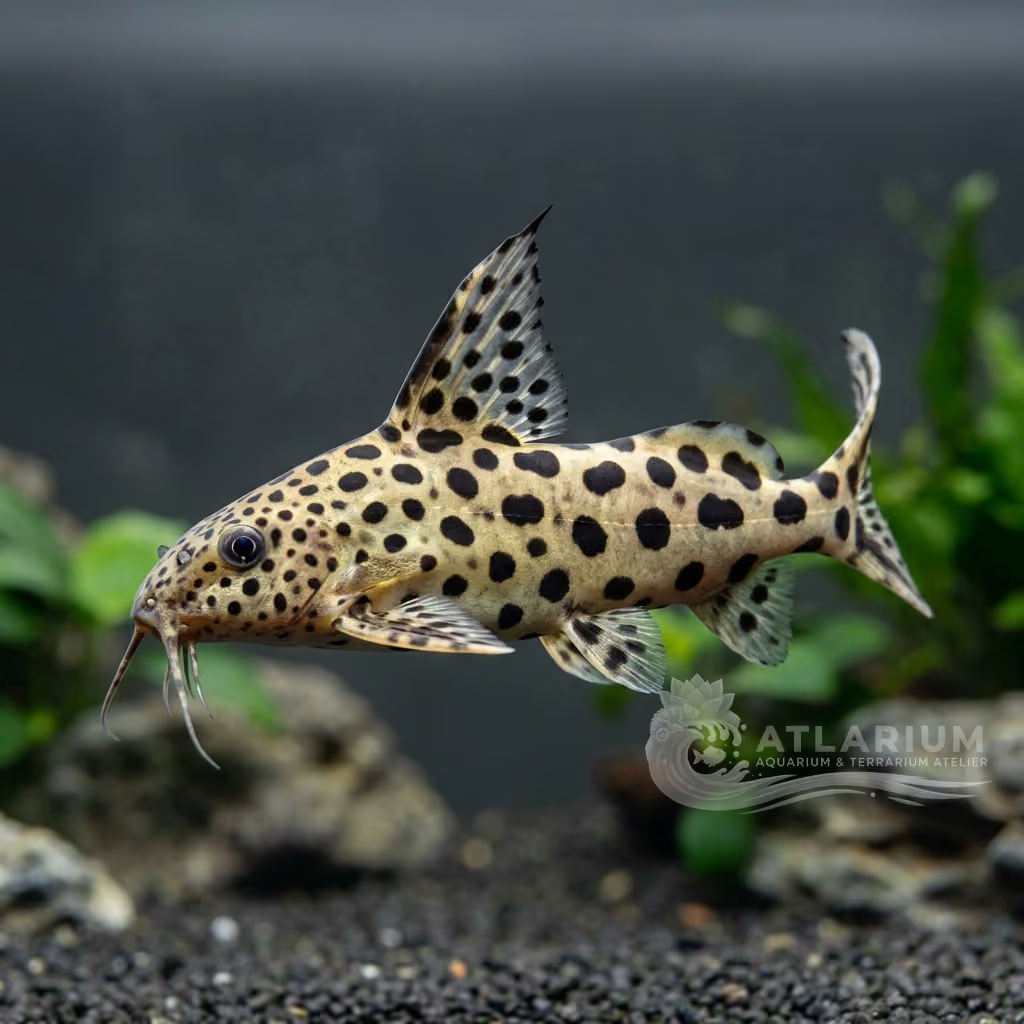
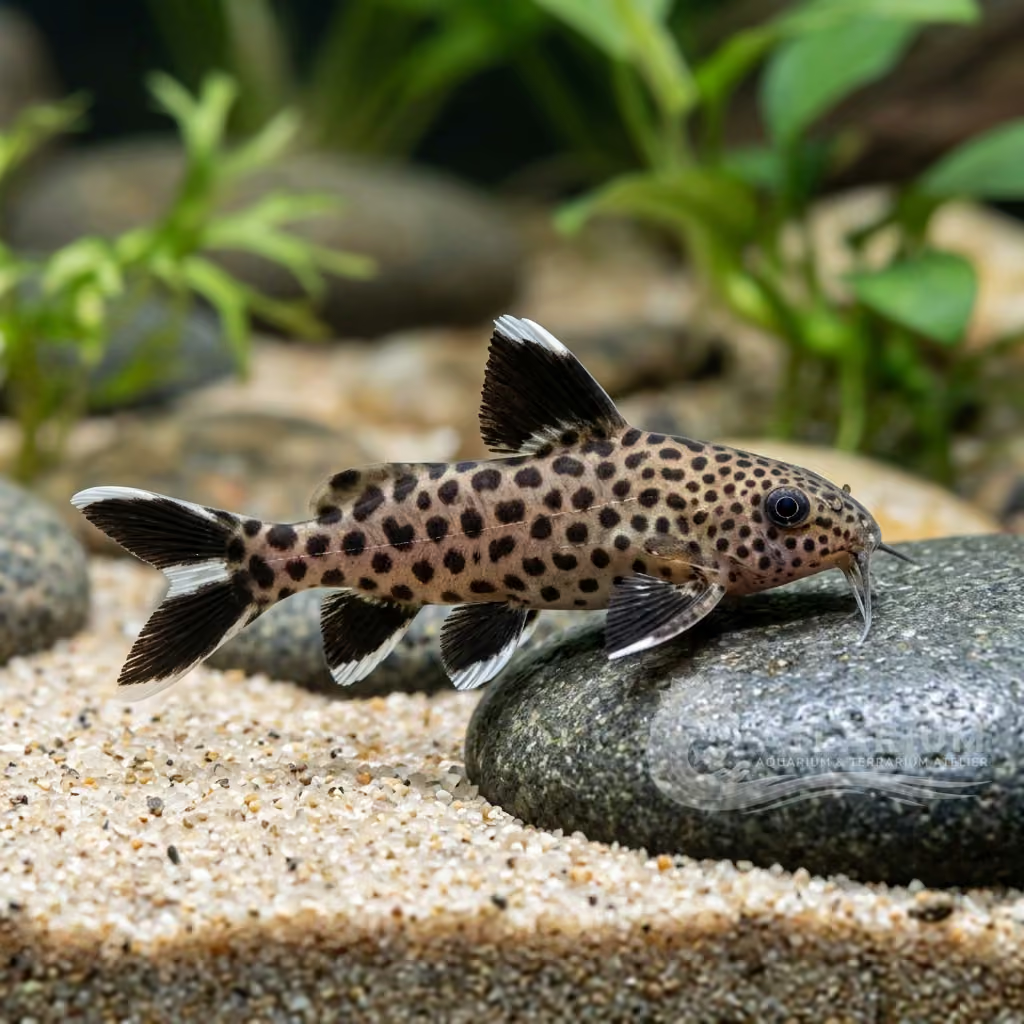
Taxonomy and Morphology: A chunky giant of the Mochokidae family. Reaches 22-25 cm (9-10 inches) and becomes incredibly thick and heavy-bodied. The fleshy mouth is surrounded by thick, highly branched/feathery jet-black sensory barbels. Heavily armored: the first ray of the dorsal and pectoral fins are serrated bone daggers. Like all 'Squeakers', it rubs these pectoral bones against its socket to produce loud, creaking/squeaking noises when distressed or removed from water.
Social Behavior: Stunningly beautiful but highly antisocial. Strictly nocturnal. Spends all daylight hours tightly wedged (often completely upside-down) inside dark tubes or hollow logs. At night, it emerges as the absolute tyrant of the tank floor. AGGRESSION: It is brutally territorial. It despises all other bottom-dwellers (Plecos, Loaches) and has a sheer, murderous hatred for its own kind. Two Angelicus housed together will engage in violent, spiraling battles, stabbing each other with their dorsal spines until one dies.
Coloration and Sexual Dimorphism: Visually spectacular. The base body is pitch-black velvet or intense deep purple, heavily studded with perfectly round, large, brilliant optical white or bright golden-yellow 'polka-dots'. The fins feature striking black-and-white zebra striping. As they age into ancient adults (they can live 15+ years), the black base may slightly fade to a dark grey/olive, and the dots may shrink and multiply. Females are visibly much thicker and rotund than the leaner males.

Care, breeding and tankmates
Aquarium Setup: A heavy, 10-inch fish requiring a footprint of 120-150 cm (4-5 feet) minimum. THE CAVE IS EVERYTHING: You MUST provide wide, dark, opaque PVC pipes, heavy clay pots, or massive hollow driftwood. If it does not have a secure, totally dark cave to squeeze into during the day, it will go insane with stress and thrash around the tank at night. Dim lighting. Water must be tinted with tannins (driftwood/almond leaves). Use fine, soft sand. They will bulldoze delicate plants; use only tough Anubias super-glued to heavy wood.
Diet and Feeding: Voracious Macro-Omnivore/Predator. Can eat massive amounts of food; its belly will swell like a balloon. Feed at lights-out: jumbo sinking carnivore pellets, thick chunks of fish fillet, whole shelled mussels, and giant earthworms. Occasional blanched zucchini helps clear the digestive tract. It will swiftly hunt and eat any small, sleeping fish (Tetras, Corydoras) in the dark.
Water Quality: FATAL ERROR TO AVOID: Do NOT confuse it with Rift Lake Synodontis (Multipunctatus). The Angelicus is from the Congo; it DEMANDS SOFT, slightly acidic water (pH 6.0-7.5), NOT hard alkaline rock-water. Temp 24-28°C (75-82°F). Generates massive waste, requiring oversized, heavy-duty canister filtration or sumps to prevent nitrate poisoning.
Compatibility and Cohabitation: MUST BE KEPT AS A STRICTLY SOLITARY BOTTOM DWELLER. Zero conspecifics, zero Plecos, zero loaches. It should be housed in African Monster Fish setups where it is the sole master of the substrate. Excellent companions are large fish that inhabit the middle/upper water column: huge Congo Tetras, African Butterflyfish, large African Knifefishes, and robust West African River Cichlids.
Aquarium Breeding: Extremely rare and effectively non-existent in private home aquaria. Commercial specimens are almost exclusively bred via hormone injections in Eastern European ponds or collected from the wild.
Risks and Diseases: 1. MURDER OF CONSPECIFICS: Housing two Angelicus in anything smaller than a 500-gallon tank results in lethal stabbing fights over territory. 2. Toxic/Painful spine punctures to the aquarist if handled improperly or caught with standard cloth nets (the serrated bone spines will irreparably tangle in the mesh). 3. Fatal organ failure if placed in the hard, high-pH water of a typical Malawi/Tanganyika Cichlid tank.

Geographic origin and distribution
Broadly distributed throughout the massive Congo River basin (Zaire, Cameroon). Unlike the Rift Lake Synodontis (which live in bare alkaline rocks), the Angelicus thrives in the dark, soft, acidic blackwaters of flooded jungles, hiding under enormous submerged mahogany root tangles.
Origin
Africa and Madagascar

Fish profile
- Temperament
- Semi-aggressive
- Their temperament is best described as semi-aggressive and highly territorial regarding their chosen hiding spot. While peaceful with mid and top-water fish, they can be quite belligerent to any fish that enters their cave. They are highly intelligent, reclusive by day, but very active and entertaining once acclimated.
- Diet
- Omnivore
- These catfish are opportunistic omnivores that will eagerly accept almost anything offered to them. A high-quality diet should consist of sinking catfish pellets, frozen bloodworms, earthworms, and occasional vegetable matter like blanched zucchini. Providing a varied diet ensures their striking polka-dot pattern remains vibrant.
- Life expectancy
- 15-20 years
- Adult size
- 25 cm
- Sex ratio
- Solitary
- They are highly territorial towards their own kind and other similar-looking Synodontis species. Unless housed in a massive aquarium with an abundance of hiding spots, they are best kept as single specimens. If kept in a group, intense fighting will often occur until a dominant individual suppresses the others.
- Feeding frequency
- Twice daily
- They should be fed once a day, preferably just before the aquarium lights are turned off, to mimic their nocturnal nature. They learn quickly to come out for food and can become quite bold during feeding time. Be careful not to overfeed, as they are prone to gorging themselves until their bellies are visibly distended.
- Bioload
- High
- The Angel Squeaker is a relatively large catfish that produces a moderate to high bioload. They are enthusiastic eaters, so a robust filtration system is necessary to handle their waste output. Routine water changes are important, as they are somewhat sensitive to high nitrate levels common in poorly maintained aquariums.
- Flow
- Stagnant
- They originate from the Congo River basin and appreciate moderate water flow with good oxygenation. While they don't require torrential currents, stagnant water should be avoided. The flow helps keep the bottom clean of detritus, which benefits their overall health and prevents barbel infections.
- Jump risk
- No
- Reproduction
- Oviparous
- Captive breeding of Synodontis angelicus in home aquariums is extremely rare and poorly documented. It is believed they are egg-scatterers that require specific seasonal triggers related to rainy seasons to initiate spawning. Most specimens available in the trade are either wild-caught or bred using hormone treatments in commercial fisheries.
- Compatibility & tankmates
- Peaceful
- They are generally peaceful towards similarly sized fish but can be highly territorial towards other bottom-dwellers. They make excellent tank mates for large African tetras, robust cichlids, and peaceful large barbs. They will happily consume any fish small enough to fit in their mouths, so nano fish should be avoided.
- Tank level
- Bottom
- They are dedicated bottom dwellers, though they will occasionally swim upside-down to inspect the underside of driftwood. They require numerous caves, PVC pipes, or large driftwood tangles to hide in during the day. They become significantly more active and explore the mid-levels of the tank after the lights go out.

Scientific Parameters & Models
FishBase
Window to the official scientific data of the species
FishBase v25.04Data synced on: 06/15/2026
- Trophic level
- 2.8 ± 0.3 se
- Resilience
- Medium (1.4 - 4.4 years)
- Phylogenetic uniqueness (PD50)
- 0.5
- Bayesian Length-Weight
- a = 0.01096, b = 3
- VulnerabilityModerate vulnerability (42 / 100)

Related species
Recommendations grouped by close relatives, companion choices, and similar care.