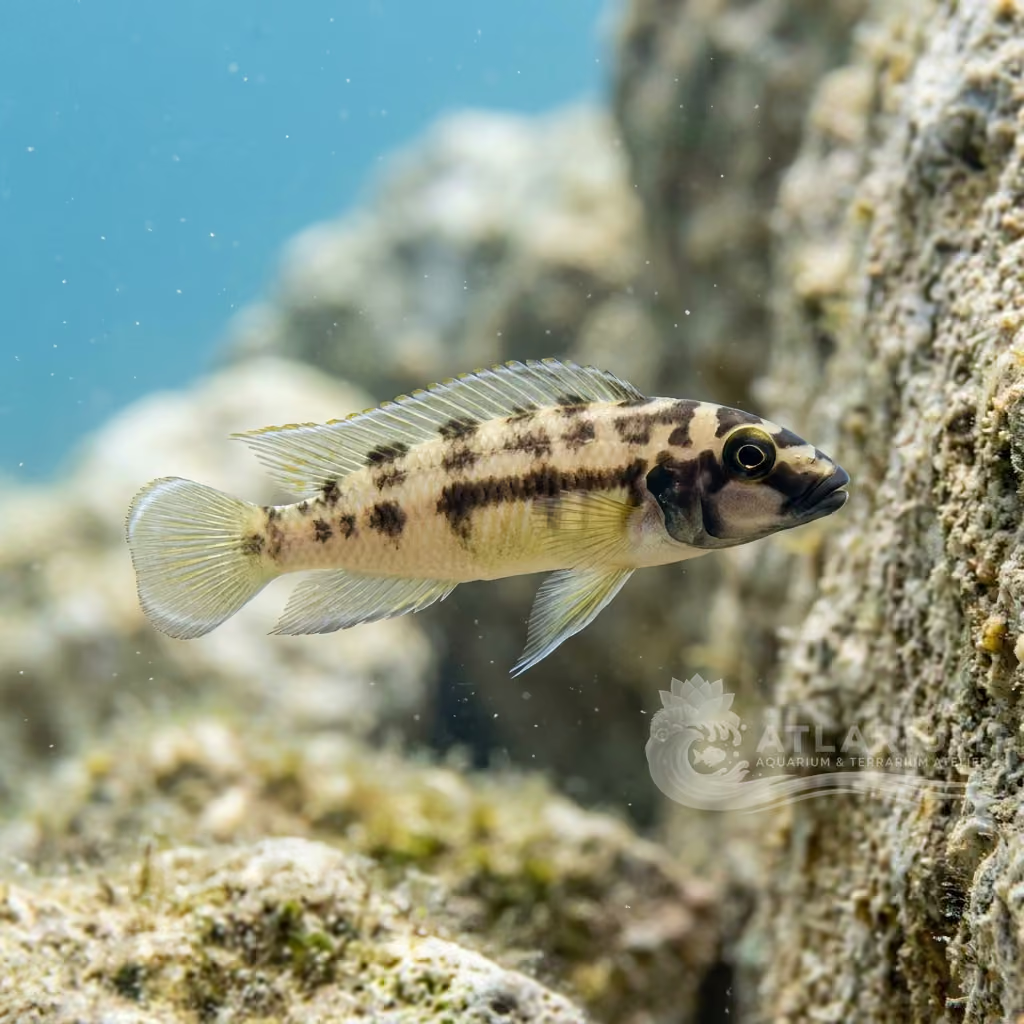
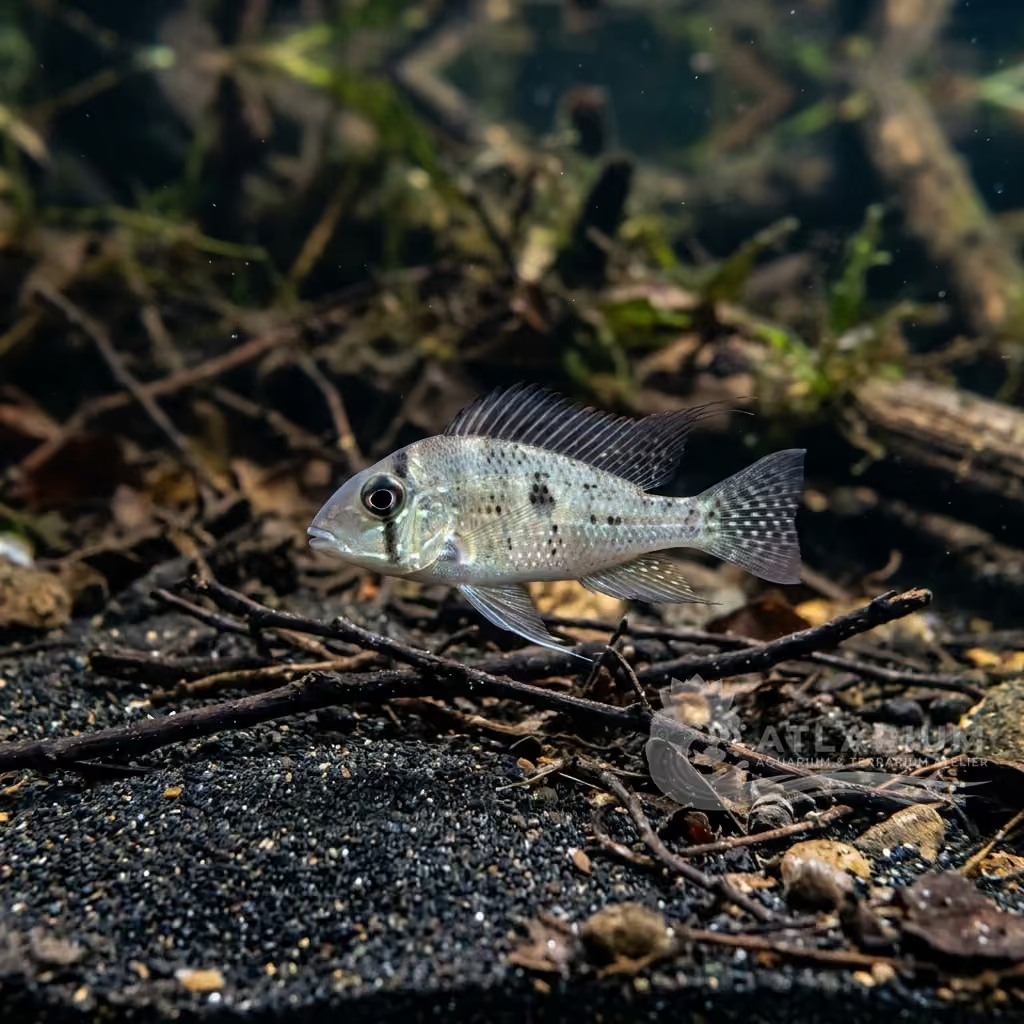
Yellow Firemouth
Thorichthys pasionis
The elusive and rarely elegant 'Yellow Firemouth' (15-17 cm). An alternative for connoisseurs to the classic T. meeki. Lacking the bellicose fire-red mask, the Pasionis conquers with a very delicate palette of lavender iridescences and a vibrant ochre-yellow belly. An assiduous and peaceful sand sifter, it requires hard and crystal-clear water.
Water Temperature
25 - 28 °C
pH Value
7 - 8
Water type
Freshwater
Tank level
Bottom
Adult size
17 cm
Minimum tank volume
>= 180 L
Minimum group
>= 1
GH
10 - 20 dGH
KH
5 - 10 dKH
TDS
200 - 400 ppm
Conductivity
313 - 625 uS/cm

Species description
Geographic Origin and Biotope: FishBase places Thorichthys pasionis on the Atlantic slope of Central America, in the Usumacinta River drainage of Mexico and Guatemala.
Taxonomy and Morphology: FishBase records a maximum length of 17.0 cm SL for male/unsexed specimens.
Social Behaviour: This recovery makes no statement about social behaviour.
Colouration and Sexual Dimorphism: This recovery makes no statement about colouration or sexual dimorphism beyond the separately recorded male/unsexed maximum length.

Care, breeding and tankmates
Verified data: FishBase records Thorichthys pasionis as a freshwater, benthopelagic species, with a pH range of 8.0–9.0 and a temperature range of 26–30 °C. Its listed distribution is the Atlantic slope of the Usumacinta River drainage in Mexico and Guatemala. FishBase lists a maximum length of 17.0 cm SL for male/unsexed specimens and states that the species inhabits rivers and lakes with softer substrate.

Geographic origin and distribution
This species originates from: Centro America (Messico Meridionale, Guatemala - Bacino dell'Usumacinta).
Origin
Tropical oceans and reefsCentral America and Caribbean

Fish profile
- Temperament
- Semi-aggressive
- While generally well-behaved, The Yellow firemouth possesses a semi-aggressive streak that requires careful tank mate selection. They will fiercely defend their chosen territory, especially during feeding or breeding times, but usually ignore fish that stay out of their way. Providing a large enough aquarium with distinct visual boundaries helps mitigate most aggressive tendencies.
- Diet
- Omnivore
- In the wild, The Yellow firemouth is an opportunistic omnivore that consumes a wide variety of plant and animal matter. In captivity, they will readily accept high-quality flakes, pellets, and frozen foods like bloodworms and brine shrimp. Supplementing their diet with blanched vegetables or spirulina-based foods will ensure optimal health and coloration.
- Life expectancy
- 5-8 years
- Adult size
- 17 cm
- Sex ratio
- Pair
- Males and females of The Yellow firemouth are nearly identical in appearance, making visual sexing extremely challenging outside of the breeding season. During spawning, females may appear slightly plumper, while males might develop slightly more intense coloration or specific breeding tubes. When keeping a group, a balanced mix is natural, though purchasing a larger group and letting pairs form organically is the best approach.
- Feeding frequency
- Twice daily
- To maintain optimal digestion, The Yellow firemouth should be fed small meals once or twice a day. It is important to only offer as much food as they can consume entirely within two to three minutes. Overfeeding can lead to severe water quality issues and potentially fatal digestive blockages.
- Bioload
- Medium to High
- The Yellow firemouth generates a moderate bioload, requiring a balanced approach to aquarium filtration. Weekly water changes and regular vacuuming of the substrate are recommended to prevent the accumulation of dissolved organics. An appropriately sized canister filter or a well-designed internal filter is often highly beneficial.
- Flow
- Stagnant
- Originating from moderately flowing streams and rivers, The Yellow firemouth appreciates a steady but not overpowering water current. The flow should be sufficient to ensure good oxygenation and even temperature distribution throughout the tank. Providing areas of both moderate flow and resting zones with lower flow will allow the fish to choose their preferred environment.
- Jump risk
- No
- Reproduction
- Oviparous
- The Yellow firemouth is a substrate spawner that typically selects a flat rock or a cleaned pit in the gravel to lay their eggs. Both parents are usually heavily involved in guarding the breeding site and fanning the eggs to ensure proper oxygenation. Once the fry hatch, the parents continue to provide dedicated care, aggressively defending their young from any potential threats.
- Compatibility & tankmates
- Peaceful
- This species can be somewhat territorial, especially towards conspecifics or similar-looking fish. They should be kept with robust fish that occupy different water levels to minimize aggressive encounters. Providing plenty of visual barriers like plants and driftwood will help reduce tension within the aquarium.
- Tank level
- Bottom
- The Yellow firemouth primarily occupies the middle and lower strata of the aquarium, rarely visiting the very top unless food is present. They enjoy navigating through dense vegetation, driftwood tangles, and rocky caves near the substrate. Ensure the lower half of the tank is well-decorated to provide them with ample territories and hiding spots.

Scientific Parameters & Models
FishBase
Window to the official scientific data of the species
FishBase v25.04Data synced on: 06/15/2026
- Trophic level
- 3.3 ± 0.5 se
- Resilience
- High (less than 15 months)
- Phylogenetic uniqueness (PD50)
- 0.502
- Bayesian Length-Weight
- a = 0.02188, b = 3.05
- VulnerabilityLow vulnerability (11 / 100)

Related species
Recommendations grouped by close relatives, companion choices, and similar care.