Acorus gramineus 'Pusillus'
Acorus gramineus
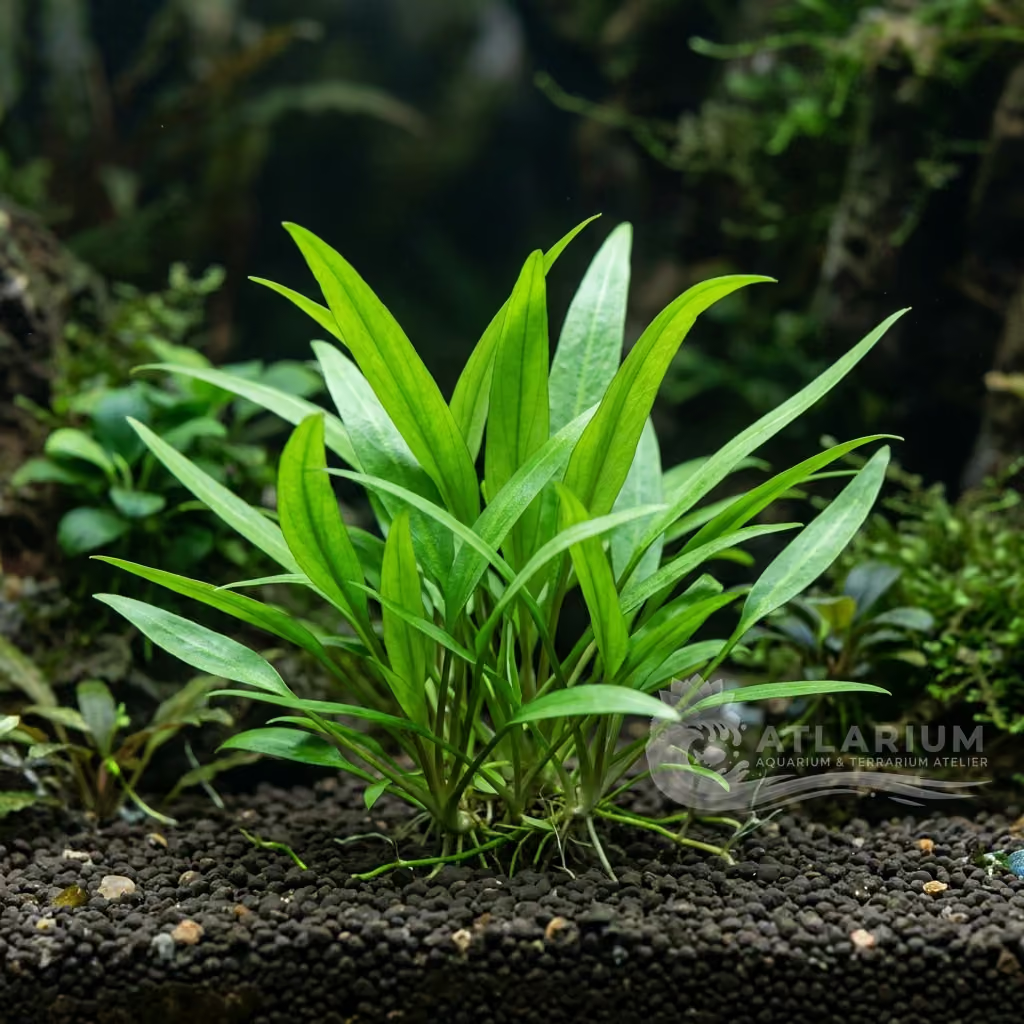
This extremely dwarf marsh cultivar features a rigid, fan-like geometric silhouette. It is strictly a riparian species that requires wet roots and dry foliage, perfect for paludariums or Wabi-Kusa.
Water Temperature
18 - 24 °C
pH Value
6 - 8
Water type
Freshwater
Light
Low
CO2
Low
Expected height
10 cm
Expected width
10 cm
GH
4 - 20 dGH
KH
2 - 15 dKH

Species description
Geographical Origin and Habitat: Native primarily to the temperate and subtropical regions of East Asia, including Japan, Korea, and China. In the wild, Acorus gramineus is strictly a marginal marsh plant. It evolves and thrives exclusively in the extremely shallow, constantly saturated muddy banks of slow-moving streams, rocky shorelines, and damp woodlands. Its entire evolutionary strategy is based on keeping its dense root system permanently waterlogged in the mud, while ensuring its rigid, fan-like leaves remain completely exposed to the open, atmospheric air to photosynthesize effectively.
Taxonomy & Genetics: Biologically belonging to the Acoraceae family, this plant is commonly referred to as the Japanese Sweet Flag. The specific variant 'Pusillus' is a naturally occurring, extremely dwarf cultivar that has been prized in Asian horticulture and bonsai (specifically as a companion accent plant) for centuries. Despite being sold globally in hundreds of thousands of local fish stores as an "aquatic foreground carpeting grass," it is fundamentally and genetically a terrestrial/riparian species, not a true aquatic plant.
Physical Structure: The architecture of the plant is incredibly rigid and disciplined. It features a thick, creeping horizontal rhizome that spreads just below or along the surface of the mud. From this rhizome, incredibly stiff, highly organized, sword-shaped leaves grow strictly upward. Unlike most grasses that form chaotic, tangled clumps, Acorus gramineus 'Pusillus' grows its leaves in a distinct, perfectly flattened, overlapping fan-like arrangement, creating a highly architectural and striking geometric silhouette.
Color & Texture: The leaves are a highly vibrant, solid, and completely opaque bright grass-green or apple-green. The texture is the most immediate giveaway that this is not a true aquatic plant: the leaves are incredibly stiff, fibrous, and almost leathery to the touch. They are physically engineered with thick cellular walls to withstand terrestrial winds, harsh rain, and physical damage from terrestrial grazers, rather than being soft and flexible to sway gracefully in underwater currents.

Care, breeding and tankmates
Lighting & CO2: When grown correctly in its intended environment—a terrarium, riparium, or Wabi-Kusa setup—it requires moderate to bright overhead lighting to thrive. Because its leaves are meant to be in the open air, CO2 injection in the water column is entirely irrelevant. The plant pulls all of its required carbon dioxide directly from the atmosphere, giving it a massive growth advantage over submerged aquatic plants, provided its leaves are kept dry.
Nutrition & Substrate: Acorus gramineus is an incredibly heavy root feeder. The creeping rhizome and dense root system must be planted in a very rich, highly nutritious, and perpetually waterlogged substrate. Premium aquasoils or organic potting soils mixed with sand work perfectly. The golden rule of cultivating this plant is that the substrate must never, ever be allowed to dry out; the roots demand constant saturation to survive.
Water Chemistry: This is a highly resilient, temperate species. Because it originates from regions that experience true seasons, it is highly tolerant of cold water and completely immune to swings in water hardness. It actually prefers and thrives in much cooler, temperate conditions (15-22°C) rather than the intense, suffocating heat of a standard 28°C tropical aquarium. It will gladly grow outdoors in pond margins during the summer.
Space Management & Placement: The placement of this plant is critical to its survival: it MUST be placed in a paludarium, riparium, shallow pond margin, or Wabi-Kusa display where only its roots are submerged in the water, and its foliage is free in the air. If it is placed in a standard aquarium completely underwater, it is being slowly drowned. It possesses a terrifyingly long "death cycle" and will look perfectly healthy and green underwater for 3 to 6 months, deceiving beginners, before it inevitably turns brown, rots, and dissolves into the water column.
Pruning: Maintenance is extremely minimal. As a slow-growing marsh plant, it requires almost no active trimming. Pruning simply involves cosmetic maintenance: use a pair of sharp, fine-tipped scissors to carefully cut away any dead, yellowing, or browning leaves directly from the base of the fan to keep the overall clump looking pristine and green. The rhizome can be cut in half to divide and propagate the plant.
Risks & Diseases: The single greatest risk to this plant is complete submersion by misinformed aquarists. Underwater cultivation is an absolute death sentence, albeit a very slow one. When grown terrestrially, its secondary vulnerability is low ambient humidity or allowing the soil to dry out. The tips of the stiff leaves will rapidly turn brown and crispy if the air in the terrarium is too dry or if the root system is starved of water.

Geographic origin and distribution
Native primarily to the temperate and subtropical regions of East Asia, including Japan, Korea, and China. In the wild, Acorus gramineus is strictly a marginal marsh plant. It evolves and thrives exclusively in the extremely shallow, constantly saturated muddy banks of slow-moving streams, rocky shorelines, and damp woodlands. Its entire evolutionary strategy is based on keeping its dense root system permanently waterlogged in the mud, while ensuring its rigid, fan-like leaves remain completely exposed to the open, atmospheric air to photosynthesize effectively.
Origin
East AsiaSouth and Southeast Asia

Plant profile
- Placement
- Foreground
- A dwarf marsh plant ideal for terrariums. Carefully considering its final size and growth trajectory is important when choosing a location. It typically looks best in the paludarium or foreground zone of the aquascape. Ensure it is not overshadowed by faster-growing background species or large hardscape pieces. Its texture and color provide excellent contrast when positioned against different leaf shapes.
- Botanical form
- Epiphyte, Stem
- This plant is characterized by its specific morphological adaptations. A dwarf marsh plant ideal for terrariums. The leaves possess a distinct texture and structure that adds a unique visual element to the aquascape. When grown under optimal conditions, it exhibits its true botanical form vividly. Its unique structure makes it a valuable addition to diverse aquatic layouts.
- Growth
- Very slow
- The growth pace of this species is generally very slow. A dwarf marsh plant ideal for terrariums. Aquarists should be prepared for its specific growth trajectory to manage the layout effectively. Providing ideal parameters will push its growth to the upper limits of its potential. Environmental stressors or sudden changes can drastically slow down its development.
- Substrate
- High
- A nutrient-rich aqua soil is highly recommended for cultivating this species successfully. A dwarf marsh plant ideal for terrariums. The roots require a soft, porous medium that allows for easy penetration and nutrient uptake. While it can survive in inert substrates like sand or gravel, growth will be noticeably slower and less robust without heavy root tabs. Using a clay-based substrate can also help retain nutrients where the root system can easily access them.
- Column fertilization
- Recommended
- Liquid fertilization is crucial for this plant, as it draws a significant portion of its nutrients directly from the water column. A dwarf marsh plant ideal for terrariums. A comprehensive fertilizer containing nitrogen, phosphorus, potassium, and trace elements should be dosed regularly. Iron supplementation is especially important to maintain its coloration and prevent chlorosis. Dosing should be adjusted based on the plant mass and growth rate observed in the aquarium.
- Root fertilization
- None
- A dwarf marsh plant ideal for terrariums. Heavy root feeding is incredibly beneficial for maximizing the potential of this species. Even in mature tanks, replenishing the substrate with targeted root capsules promotes strong basal growth. A robust root network directly correlates with larger, healthier foliage. Ensure root tabs are buried deeply to prevent nutrient leaching into the water column.
- Trimming
- Occasional
- Regular trimming is required to maintain the desired shape and health of Acorus gramineus 'Pusillus'. Using sharp aquascaping scissors ensures clean cuts that heal quickly without inviting rot. Pruning also encourages denser regrowth and prevents lower portions from being overly shaded. Remove any decaying trimmed leaves promptly to maintain optimal water quality.
- Propagation
- Rhizome division
- A dwarf marsh plant ideal for terrariums. Multiplying this species can be done easily through standard propagation techniques for its type. Carefully dividing or cutting the plant allows aquarists to quickly expand their collection. The resulting segments should be planted or attached securely to encourage rapid establishment. Patience is required, but the success rate is typically very high under good conditions.
- Sensitivity
- Moderate
- Acorus gramineus 'Pusillus' can be somewhat sensitive to sudden fluctuations in water parameters. It may exhibit signs of stress or melt if exposed to abrupt changes in temperature or pH. Algae treatments containing copper or glutaraldehyde should be used with extreme caution around this plant. Maintaining a stable, clean environment is the best defense against health issues.
- Layout role
- Epiphyte, Midground, Nano, paludarium, riparium
- In the aquascape, Acorus gramineus 'Pusillus' serves an important role by adding specific structural elements. It can be used to create focal points or to soften the transition between hardscape and open spaces. The plant's unique texture contrasts beautifully with both fine-leaved and broad-leaved neighbors. Thoughtful integration of this species greatly elevates the natural feel of the display.

Image gallery
Licensed images linked to the species or, when marked, to the closest representative taxon.

Related species
Recommendations grouped by close relatives, companion choices, and similar care.