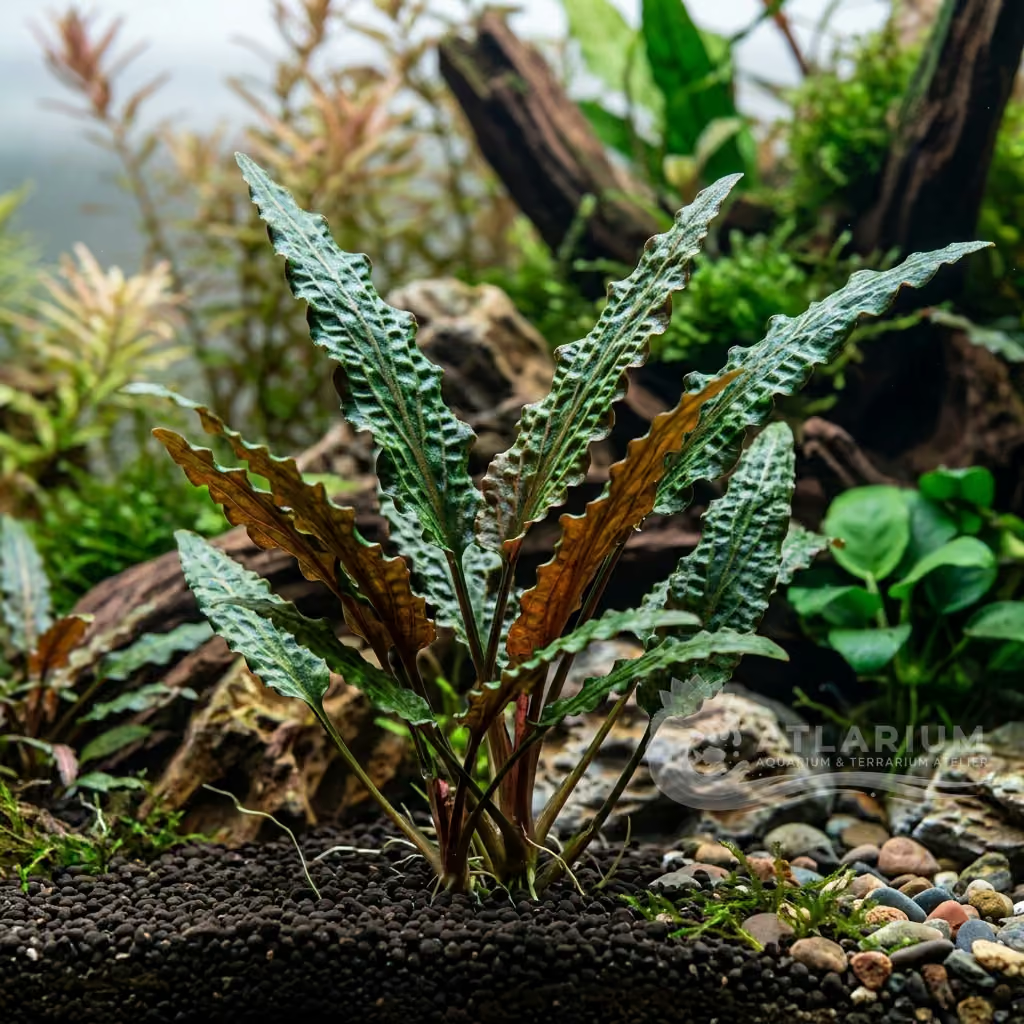
Acorus gramineus
Acorus gramineus
Acorus gramineus is a marsh plant with stiff, sword-shaped green leaves. It is not a true aquatic plant and must be grown in terrariums or paludariums with its roots submerged and leaves exposed.
Water Temperature
4 - 28 °C
pH Value
5 - 7.5
Water type
Freshwater
Light
Medium - High
CO2
Low
Expected height
50 cm
Expected width
20 cm
GH
4 - 20 dGH
KH
0 - 14 dKH

Species description
Geographical Origin and Habitat: Acorus gramineus, commonly known as Japanese sweet flag, is native to East Asia, widely distributed across China, Japan, Korea, and Vietnam. In the wild, it exclusively colonizes marginal marsh environments, growing along the muddy and rocky banks of slow-flowing rivers, shallow mountain streams, and damp forest wetlands. It is not a true aquatic plant; it prefers an amphibious condition where its root system is constantly submerged in water or waterlogged mud, while its stiff leaves develop entirely in the open air.
Taxonomy & Genetics: It belongs to the Acoraceae family, one of the oldest monocot families. Taxonomically, the genus Acorus was long associated with Araceae, but recent genetic and phylogenetic studies have placed it in its own order, Acorales. The species is genetically adapted to temperate and subtropical climates, which grants it extraordinary cold tolerance and morphological stability, resulting in a glacial but constant growth rate.
Physical Structure: The plant features a compact rosette structure with a creeping and branched rhizome, from which thick, cord-like roots arise. The leaves are arranged in an orderly, overlapping fan-like shape at the base. They are linear and lanceolate, resembling thick grass blades, and lack a prominent midrib, instead showing parallel veins typical of monocots.
Color & Texture: The foliage color is bright green or olive green, with a glossy surface that reflects sunlight. To the touch, the leaves reveal their terrestrial nature: they are incredibly stiff, leathery, fibrous, and almost sharp along the margins. This rigid texture is an evolutionary adaptation to support the foliage in the open air and protect it from wind and heavy rain in riparian zones.

Care, breeding and tankmates
Lighting & CO2: When grown in its correct form (emersed in a paludarium), it benefits from moderate to intense light. CO2 injection in the
Water Chemistry: column is entirely useless because the plant, having emersed leaves, draws all necessary carbon dioxide directly from the atmosphere. If underwater cultivation is attempted, CO2 will not prevent its slow drowning.
Nutrition & Substrate: It is a heavy root feeder. It requires a substrate rich in organic matter, clay, and sand. Premium aquasoil or fertilized potting soil for marsh plants is ideal to support its dense root system. Liquid column fertilization is of secondary importance compared to soil richness.
Water Chemistry: Highly tolerant of water chemistry, it tolerates swings in hardness (KH 0-14 dKH) and pH (5.0-7.5). Being a temperate plant, it prefers cool waters, tolerating minimum temperatures down to 4°C and maximums up to 28°C. It does not thrive long-term in warm tropical aquariums kept above 26°C.
Space Management & Placement: Placement is the critical factor: it must never be fully submerged. It is ideal for the emersed transition zone of paludariums, ripariums, or humid terrariums, where the roots can reach the water and the leaves grow free. If placed in a standard aquarium, it will slowly die over a few months.
Pruning: It requires very little maintenance due to its extremely slow growth. Pruning consists solely of cosmetically removing older leaves that yellow or degrade at the base, cutting them close to the rhizome with sharp scissors. The rhizome can be divided to manage the plant's size.
Risks & Diseases: The primary risk is rhizome rot if the plant is forced into fully submerged cultivation in an aquarium. In terrestrial setups with low air humidity, the tips of the leaves can dry out and turn brown. It is not susceptible to common aquatic pests due to the leathery texture of its foliage.

Geographic origin and distribution
Acorus gramineus, commonly known as Japanese sweet flag, is native to East Asia, widely distributed across China, Japan, Korea, and Vietnam. In the wild, it exclusively colonizes marginal marsh environments, growing along the muddy and rocky banks of slow-flowing rivers, shallow mountain streams, and damp forest wetlands. It is not a true aquatic plant; it prefers an amphibious condition where its root system is constantly submerged in water or waterlogged mud, while its stiff leaves develop entirely in the open air.
Origin
East Asia

Plant profile
- Placement
- Midground
- Due to its growth habit and size, it is best suited as a paludarium or background plant depending on the tank size. A marsh plant that is not a true aquatic. Proper placement is crucial to ensure it receives adequate light without shading its neighbors. Grouping several specimens together enhances its visual impact and creates a lush, natural aesthetic. It can be used strategically to draw the eye or soften hardscape transitions.
- Botanical form
- Rosette
- This plant is characterized by its specific morphological adaptations. A marsh plant that is not a true aquatic. The leaves possess a distinct texture and structure that adds a unique visual element to the aquascape. When grown under optimal conditions, it exhibits its true botanical form vividly. Its unique structure makes it a valuable addition to diverse aquatic layouts.
- Growth
- Very slow
- The growth pace of this species is generally slow. A marsh plant that is not a true aquatic. Aquarists should be prepared for its specific growth trajectory to manage the layout effectively. Providing ideal parameters will push its growth to the upper limits of its potential. Environmental stressors or sudden changes can drastically slow down its development.
- Substrate
- High
- A nutrient-rich aqua soil is highly recommended for cultivating this species successfully. A marsh plant that is not a true aquatic. The roots require a soft, porous medium that allows for easy penetration and nutrient uptake. While it can survive in inert substrates like sand or gravel, growth will be noticeably slower and less robust without heavy root tabs. Using a clay-based substrate can also help retain nutrients where the root system can easily access them.
- Column fertilization
- Recommended
- A marsh plant that is not a true aquatic. Water column feeding plays a massive role in the overall vitality of this species. Consistent dosing of micro and macronutrients ensures the leaves remain vibrant and free of deficiencies. It is highly responsive to changes in liquid nutrient levels, making it a good indicator species. Employing a strict dosing schedule will yield the most consistent and impressive results.
- Root fertilization
- None
- A marsh plant that is not a true aquatic. Heavy root feeding is incredibly beneficial for maximizing the potential of this species. Even in mature tanks, replenishing the substrate with targeted root capsules promotes strong basal growth. A robust root network directly correlates with larger, healthier foliage. Ensure root tabs are buried deeply to prevent nutrient leaching into the water column.
- Trimming
- Occasional
- Regular trimming is required to maintain the desired shape and health of Acorus gramineus. Using sharp aquascaping scissors ensures clean cuts that heal quickly without inviting rot. Pruning also encourages denser regrowth and prevents lower portions from being overly shaded. Remove any decaying trimmed leaves promptly to maintain optimal water quality.
- Propagation
- Cuttings
- Propagation is straightforward and typical of its growth habit. A marsh plant that is not a true aquatic. The new cuttings or divisions will quickly develop new roots and continue growing. Meanwhile, the original portion will usually produce new shoots, leading to a denser plant. Ensuring the tools used are sharp and clean prevents tissue damage and rot.
- Sensitivity
- Moderate
- Acorus gramineus can be somewhat sensitive to sudden fluctuations in water parameters. It may exhibit signs of stress or melt if exposed to abrupt changes in temperature or pH. Algae treatments containing copper or glutaraldehyde should be used with extreme caution around this plant. Maintaining a stable, clean environment is the best defense against health issues.
- Layout role
- paludarium, riparium
- In the aquascape, Acorus gramineus serves an important role by adding specific structural elements. It can be used to create focal points or to soften the transition between hardscape and open spaces. The plant's unique texture contrasts beautifully with both fine-leaved and broad-leaved neighbors. Thoughtful integration of this species greatly elevates the natural feel of the display.

Related species
Recommendations grouped by close relatives, companion choices, and similar care.