Encyclopaedia

PlantFreshwaterEasy
©AI Generated·Proprietary

Anubias barteri var. barteri

Anubias barteri var. barteri

Massive, highly adapted jungle rheophyte. Prefers strictly low light and zero CO2, growing extremely slowly attached to submerged wood or river rocks.

Taxonomy
Class:Liliopsida
Order:Alismatales
Family:Araceae
Genus:Anubias
Species:Anubias barteri var. barteri

Share

Check out Anubias barteri var. barteri on Atlarium

PracticeRecognition quizzesPhotos, names, origins, and puzzles to review Atlas species.Open quizzes
Water Temperature

12 - 30 °C

pH Value

5 - 8

Water type

Freshwater

Light

Da bassa ad alta

CO2

Low

Expected height

40 cm

Expected width

40 cm

GH

4 - 20 dGH

KH

0 - 15 dKH

Species description

Geographical Origin and Habitat: Native to the dense, completely shaded tropical rainforests of West Africa. Like all members of the Anubias genus, it is a highly adapted rheophyte. It evolved not in calm lakes, but in fast-flowing, flooded jungle rivers and streams. To survive the brutal, physical force of seasonal floodwaters, it evolved to crush and wrap its massive, wire-like root system around huge submerged boulders and thick pieces of sunken driftwood, ensuring it is never washed away into the ocean.
Taxonomy & Genetics: This is the true, original, "standard" Anubias barteri—the massive, hulking parent species from which almost all other commercial dwarf variants in the aquarium trade (like 'nana', 'petite', and 'glabra') were genetically derived or selectively bred over decades. It is one of the absolute largest, oldest, and most foundational species cultivated in the modern aquarium hobby.
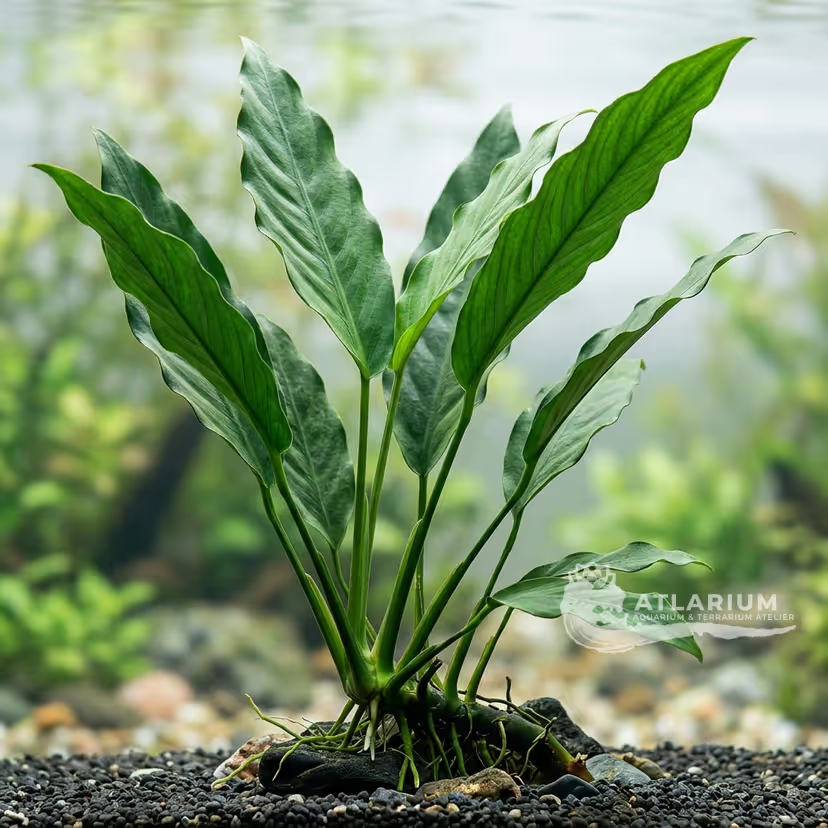
Physical Structure: The physical scale and architecture of this specific variant are truly staggering. It boasts a colossal, sprawling horizontal rhizome that acts as a massive energy reserve. The thick, rigid stems that emerge from this rhizome can effortlessly reach 25 to 40 cm (10-16 inches) in height, dwarfing standard Anubias. The massive, leathery leaves are supported by stems as thick as pencils, and the leaves themselves can easily grow significantly larger than the palm of a human hand.
Color & Texture: The gigantic leaves are distinctly broad, sweeping, and ovate (egg-shaped), universally colored a deep, solid, completely opaque emerald green. The texture of this plant is famously brutal: the leaves are incredibly rigid, thick, and plastic-like to the touch. This extreme, armor-like biological toughness makes it one of the only aquatic plants on earth capable of surviving constant physical abuse and grazing by massive, destructive Central American Cichlids or adult Goldfish.

Care, breeding and tankmates

Lighting & CO2: Despite its massive size, it is an obligate low-light plant that requires absolutely zero CO2 injection to thrive. Because its colossal leaves grow at an almost imperceptible, glacial pace, placing it under high-intensity RGB LEDs or direct sunlight is a fatal error. The massive leaves cannot process the light energy quickly enough, and they will be instantly and permanently smothered in an impenetrable, suffocating black crust of Black Beard Algae (BBA).
Nutrition & Substrate: It is an extreme water-column feeder. The most critical, non-negotiable rule in keeping this titan alive is that the colossal, thick green rhizome MUST NOT be buried under the substrate (sand, gravel, or soil). If the rhizome is smothered, it will rot, turn to toxic mush, and the entire massive plant will dissolve and die. It requires standard liquid fertilization dosed directly into the water column.
Water Chemistry: It is a practically indestructible, prehistoric titan. It thrives effortlessly in standard tropical temperatures (22-28°C) but easily survives drops down to 18°C. More impressively, it completely ignores wild, chaotic fluctuations in pH, severe ammonia spikes, or extreme water hardness. It is the ultimate survivalist plant, capable of thriving in conditions that would instantly kill delicate stem plants.
Space Management & Placement: It is strictly an epiphyte, but its massive, sprawling size dictates its placement in the tank. It must be aggressively tied (using heavy zip ties or thick nylon thread) or superglued to massive pieces of hardscape, ideally in the midground or background. Over the years, it will eventually grow into a massive, sprawling, imposing bush that dominates the visual space around it, making it unsuitable for nano tanks.
Pruning: Pruning is an extremely rare event due to its slow metabolism. Use heavy, sharp pruning shears to cut the massive rhizome completely in half if you wish to artificially propagate the plant. To maintain visual cleanliness, cut any ancient, dying, or heavily algae-choked leaves directly at the base of the thick stem, as close to the rhizome as possible.
Risks & Diseases: Its extreme size, glacial growth rate, and massive leaf surface area make it the absolute perfect, unavoidable host for Black Beard Algae (BBA) and Green Spot Algae (GSA). You MUST keep the aquarium water exceptionally clean, keep organics low, and most importantly, keep the plant heavily shaded by floating plants or towering hardscape to prevent algae colonization.

Geographic Origin and Distribution

Native to the dense, completely shaded tropical rainforests of West Africa. Like all members of the Anubias genus, it is a highly adapted rheophyte. It evolved not in calm lakes, but in fast-flowing, flooded jungle rivers and streams. To survive the brutal, physical force of seasonal floodwaters, it evolved to crush and wrap its massive, wire-like root system around huge submerged boulders and thick pieces of sunken driftwood, ensuring it is never washed away into the ocean.

Origin

Africa and Madagascar

Plant profile

Placement
Background
This species works exceptionally well in the midground of the aquarium, depending on the overall tank size. It should ideally be attached to hardscape materials such as driftwood or rocks using thread or aquarium-safe glue. If planted in the substrate, it is absolutely critical to keep the rhizome exposed above the soil to prevent it from rotting.
Botanical form
Epiphyte, Stem
Anubias barteri var. barteri features prominent, heart-shaped large leaves that stand out in any planted aquarium. The leaves grow from a thick, creeping rhizome that anchors the plant to various surfaces. Its sturdy, leathery foliage is highly resilient, making it a great option for aquariums with herbivorous fish.
Growth
Slow
Like most Anubias species, Anubias barteri var. barteri exhibits a steady but slow growth rate. You can expect it to produce only one or two new leaves per month under standard aquarium conditions. Providing slightly higher carbon dioxide levels and optimal fertilization can marginally speed up this process, but it remains a slow grower. This slow pace makes it an excellent choice for low-maintenance setups.
Substrate
None
Anubias barteri var. barteri relies entirely on an exposed rhizome system, functioning beautifully as a tied or glued epiphyte on wood and rocks. Planting this species in fine substrates or deep soils is detrimental, as burying the rhizome severely limits oxygen exchange and induces tissue rot. Its long, tough anchoring roots may gradually reach into the top layer of an inert gravel bed, but they primarily extract macro and micronutrients suspended in the water. Because it lacks a demand for substrate fertility, this plant is perfect for bare-bottom aquariums or setups with purely decorative sands.
Column fertilization
Recommended
Liquid fertilization in the water column is the primary and most effective method for feeding Anubias barteri var. barteri. A comprehensive liquid fertilizer applied weekly or bi-weekly will provide all the necessary trace elements and macronutrients. Since it is a slow grower, lean dosing is highly recommended to avoid excess nutrients accumulating in the water.
Root fertilization
None
Root tabs or nutrient-rich substrates are generally unnecessary for Anubias barteri var. barteri. Because it is an epiphyte that prefers to be attached to hardscape, its roots primarily serve an anchoring function rather than a nutrient-absorbing one. Even if planted in the substrate, the plant relies more heavily on water column fertilization than root feeding.
Trimming
Occasional
Trimming is rarely required due to its very slow growth rate. When pruning is necessary, simply cut the leaves as close to the rhizome as possible using sharp aquascaping scissors. Always remove any yellowing, damaged, or algae-covered leaves to maintain the plant's aesthetic appeal and overall health.
Propagation
Rhizome division
Propagating Anubias barteri var. barteri is a simple and straightforward process. You simply cut the main rhizome into two or more pieces, ensuring each new section has at least three to four healthy leaves attached. These new sections can then be tied or glued to new pieces of hardscape, where they will eventually develop into full plants.
Sensitivity
Moderate
This plant is incredibly hardy and tolerates a wide range of water parameters and temperatures. However, its slow-growing, broad leaves are particularly susceptible to spot algae and black beard algae if light intensity is too high. It is recommended to place it in shaded areas of the aquarium to mitigate this risk.
Layout role
Epiphyte, Background
Its unique leaf shape makes it an excellent classic midground structural element. It is often used to bridge the gap between different aquascaping elements or provide shelter for small fish and shrimp. The rich green foliage provides a strong visual anchor and adds a sense of maturity to the aquascape.

Image gallery

Licensed images linked to the species or, when marked, to the closest representative taxon.

Related species

Recommendations grouped by close relatives, companion choices, and similar care.

Variants and close relatives

Same atlas type, nearby scientific identity, genus, or family.

Anubias barteri var. angustifolia

Anubias barteri var. angustifolia

Anubias barteri var. angustifolia

View details->
Anubias barteri var. caladiifolia

Anubias barteri var. caladiifolia

Anubias barteri var. caladiifolia

View details->
Anubias barteri var. coffeifolia

Anubias barteri var. coffeifolia
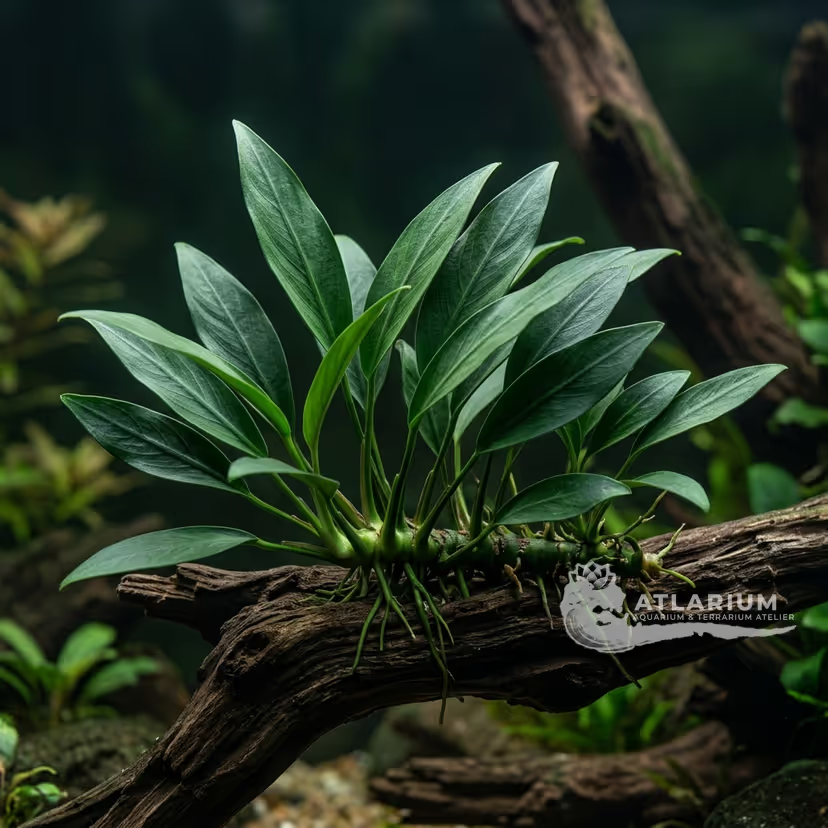
Anubias barteri var. coffeifolia

View details->
Anubias barteri var. glabra

Anubias barteri var. glabra
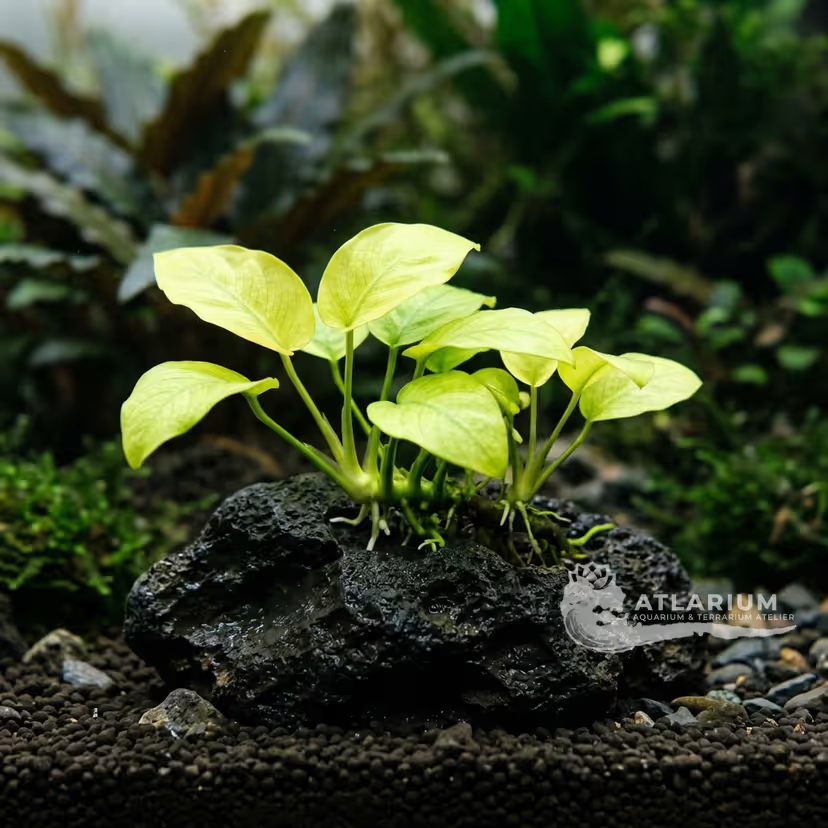
Anubias barteri var. glabra

View details->
Anubias barteri var. nana 'Golden Heart'
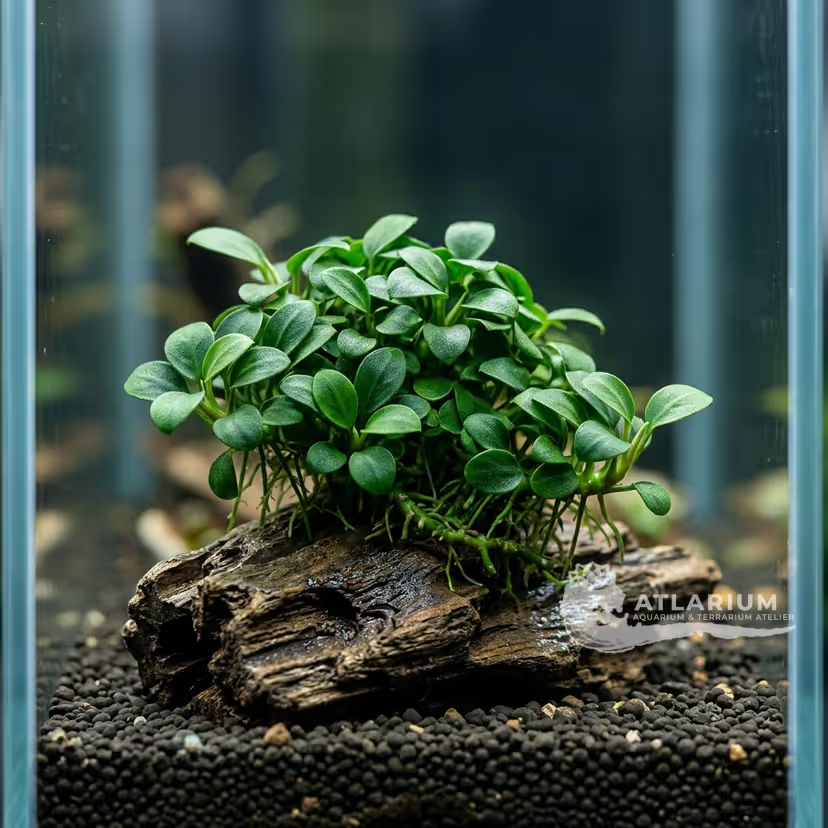
Anubias barteri var. nana 'Golden Heart'

Anubias barteri var. nana 'Golden Heart'

View details->
Anubias barteri var. nana 'Petite' ('Bonsai')

Anubias barteri var. nana 'Petite' ('Bonsai')

Anubias barteri var. nana 'Petite'

View details->
Anubias nana

Anubias nana

Anubias barteri var. nana

View details->
Anubias barteri var. nana 'Round Leaf'
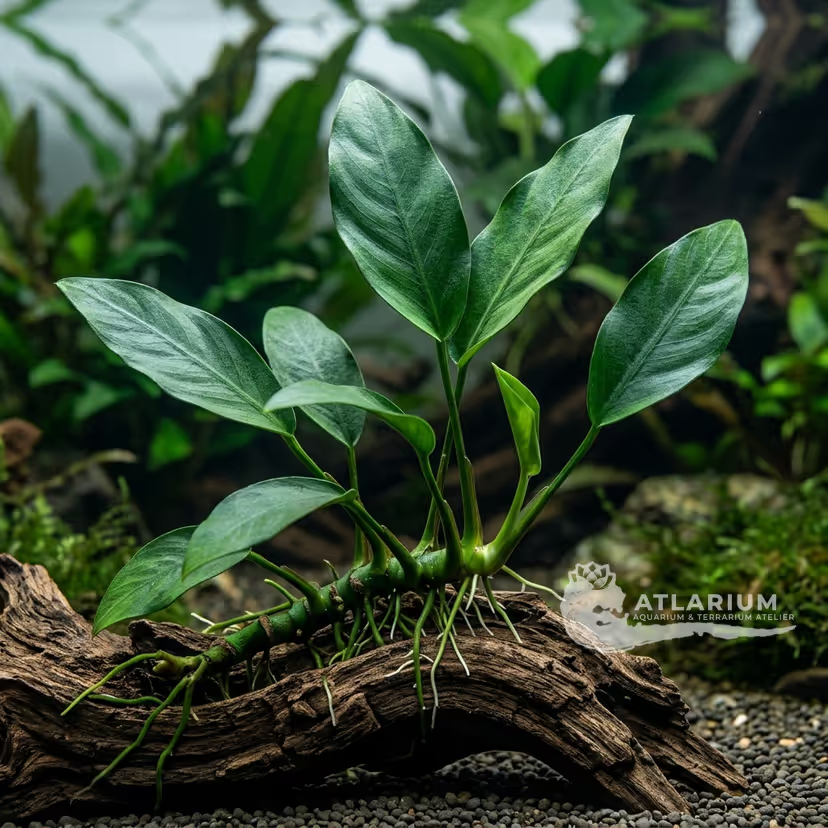
Anubias barteri var. nana 'Round Leaf'

Anubias barteri var. nana 'Round Leaf'

View details->
Anubias

Anubias

Anubias barteri

View details->
Anubias nana

Anubias nana

Anubias barteri var. nana

View details->
Anubias "nangi"

Anubias "nangi"

Anubias "nangi"

View details->
Anubias gilletii

Anubias gilletii

Anubias gilletii

View details->
Anubias heterophylla

Anubias heterophylla

Anubias heterophylla

View details->
Anubias gracilis

Anubias gracilis

Anubias gracilis

View details->
Anubias afzelii

Anubias afzelii

Anubias afzelii

View details->
Pynaert's Anubias

Pynaert's Anubias

Anubias pynaertii

View details->

Recommended companions

Compatible cards from coherent ecosystems with matching parameters.

Ramshorn Snail
Invertebrate

Ramshorn Snail

Planorbella duryi

View details->
Orange dwarf crayfish (CPO)
Invertebrate

Orange dwarf crayfish (CPO)

Cambarellus patzcuarensis "Orange"

View details->
Malaysian Trumpet Snail
Invertebrate

Malaysian Trumpet Snail

Melanoides tuberculata

View details->
Bladder snail
Invertebrate

Bladder snail

Physella acuta

View details->
Amblystegium riparium

Amblystegium riparium

Amblystegium riparium

View details->
Cherry Shrimp
Invertebrate

Cherry Shrimp

Neocaridina davidi

View details->
Montezuma dwarf crayfish
Invertebrate

Montezuma dwarf crayfish

Cambarellus montezumae

View details->
Ninja Shrimp
Invertebrate

Ninja Shrimp

Caridina serratirostris

View details->
Swamp dwarf crayfish
Invertebrate

Swamp dwarf crayfish

Cambarellus puer

View details->
Zebra Nerite Snail
Invertebrate

Zebra Nerite Snail

Vittina natalensis

View details->
Green babaulti shrimp
Invertebrate

Green babaulti shrimp

Caridina cf. babaulti "Green"
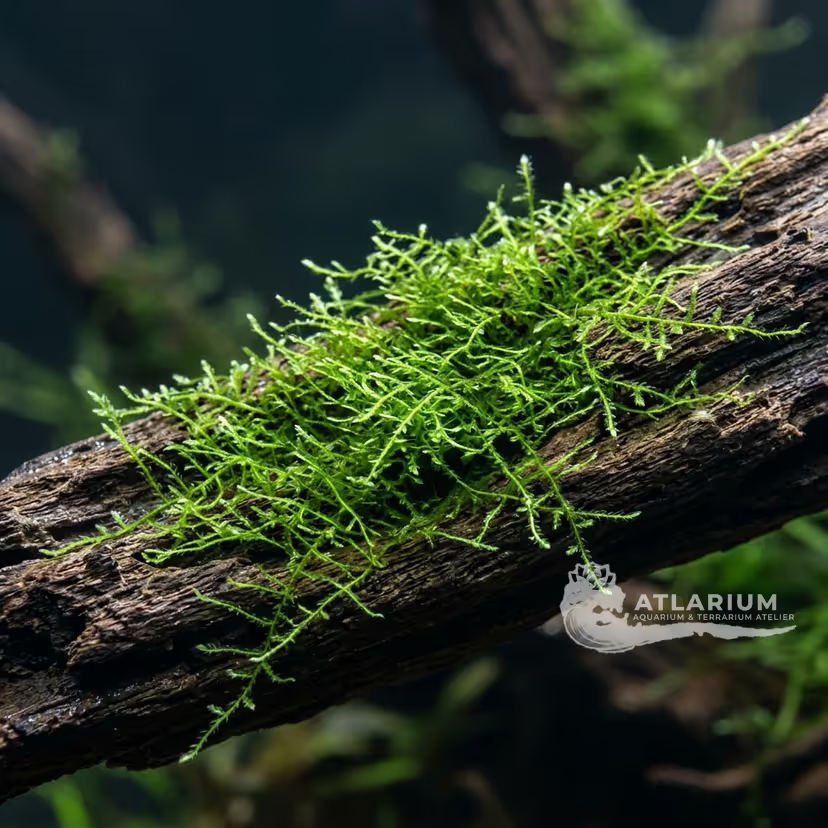
View details->
Amblystegium serpens

Amblystegium serpens
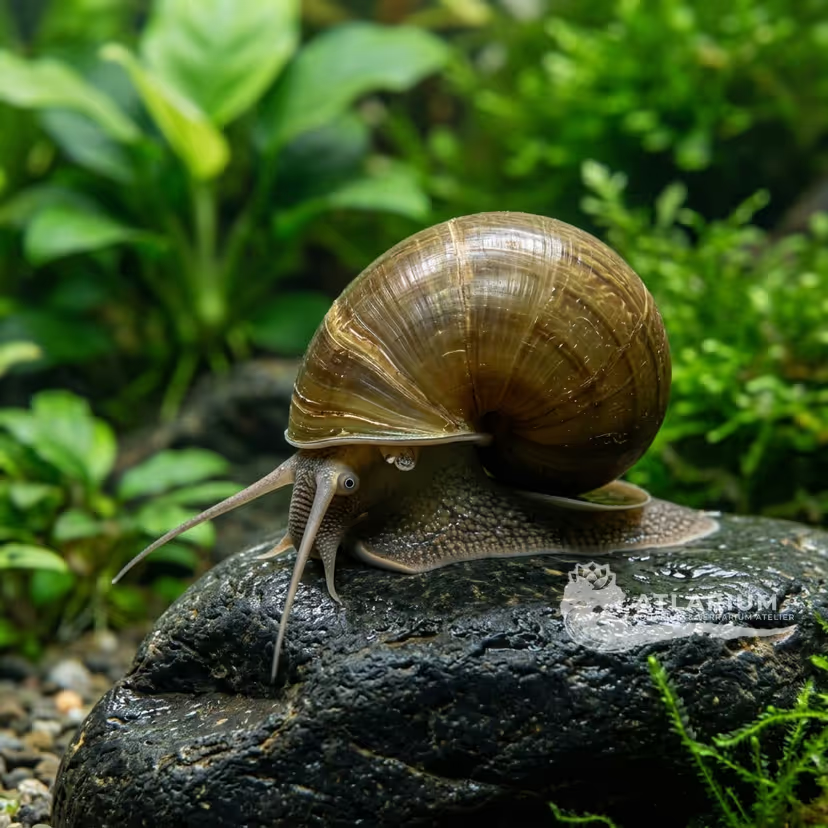
Amblystegium serpens

View details->
Asian apple snail
Invertebrate

Asian apple snail

Pila ampullacea

View details->
Channelled apple snail
Invertebrate

Channelled apple snail

Pomacea canaliculata

View details->
Chinese mystery snail
Invertebrate

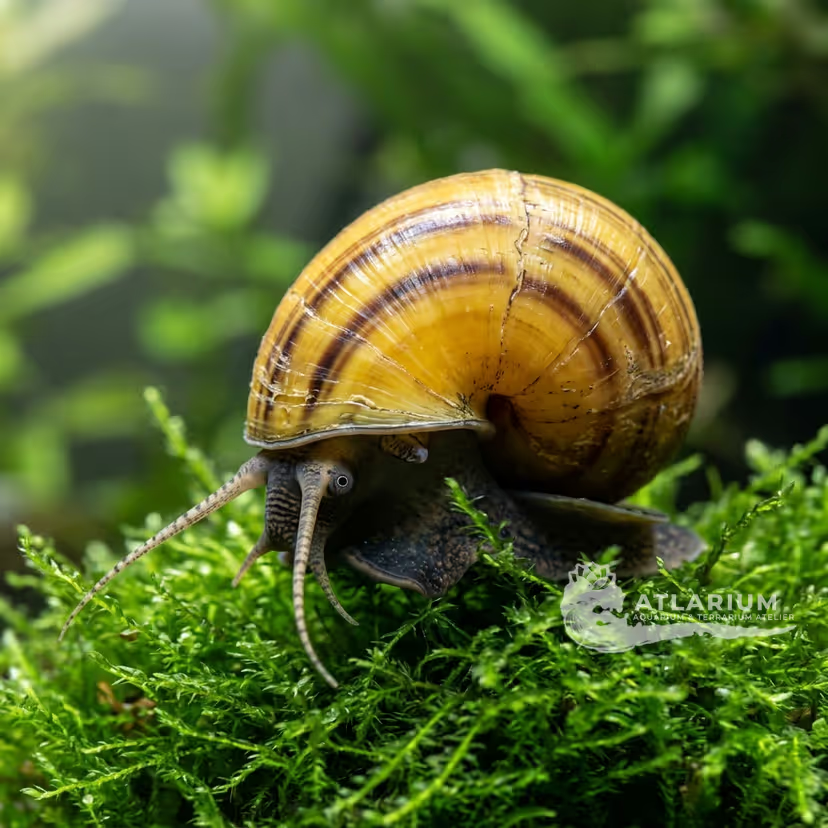
Chinese mystery snail

Cipangopaludina chinensis

View details->
Ear pond snail
Invertebrate

Ear pond snail

Radix auricularia

View details->

Similar care

Cards with similar requirements, difficulty, habitat, and husbandry profile.

Anubias congensis

Anubias congensis

Anubias congensis

View details->
Anubias gigantea

Anubias gigantea

Anubias gigantea

View details->
Anubias lanceolata

Anubias lanceolata
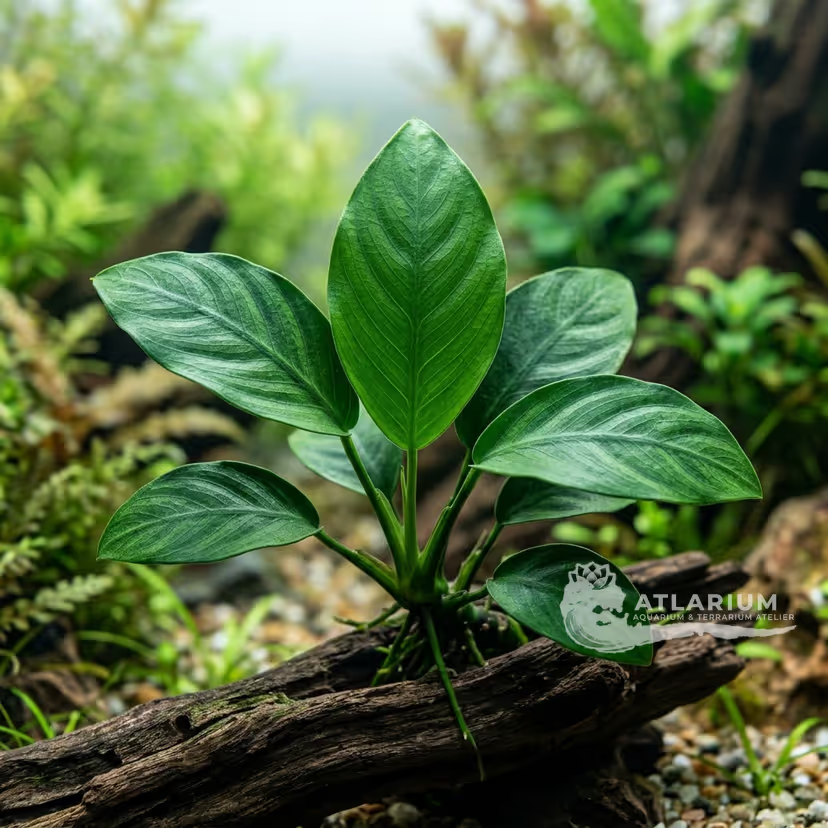
Anubias lanceolata

View details->
Anubias minima

Anubias minima

Anubias minima

View details->
Arrowhead Anubias

Arrowhead Anubias

Anubias hastifolia

View details->
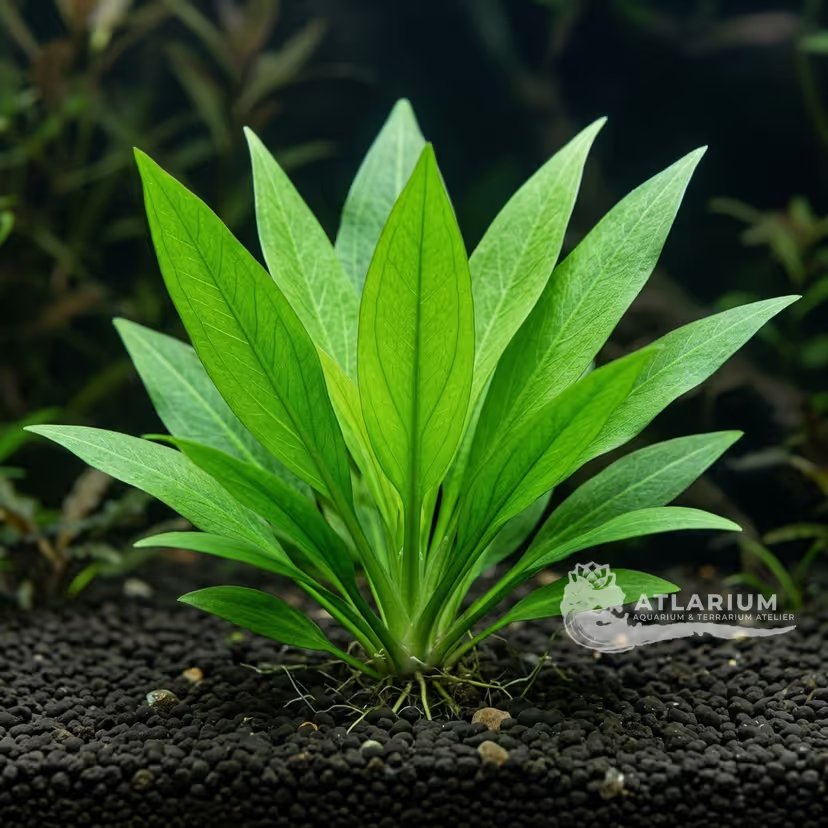
Pygmy Bucephalandra

Pygmy Bucephalandra

Bucephalandra pygmaea
View details->
Cryptocoryne beckettii "Viridifolia"

Cryptocoryne beckettii "Viridifolia"

Cryptocoryne beckettii "Viridifolia"

View details->
Aponogeton rigidifolius

Aponogeton rigidifolius
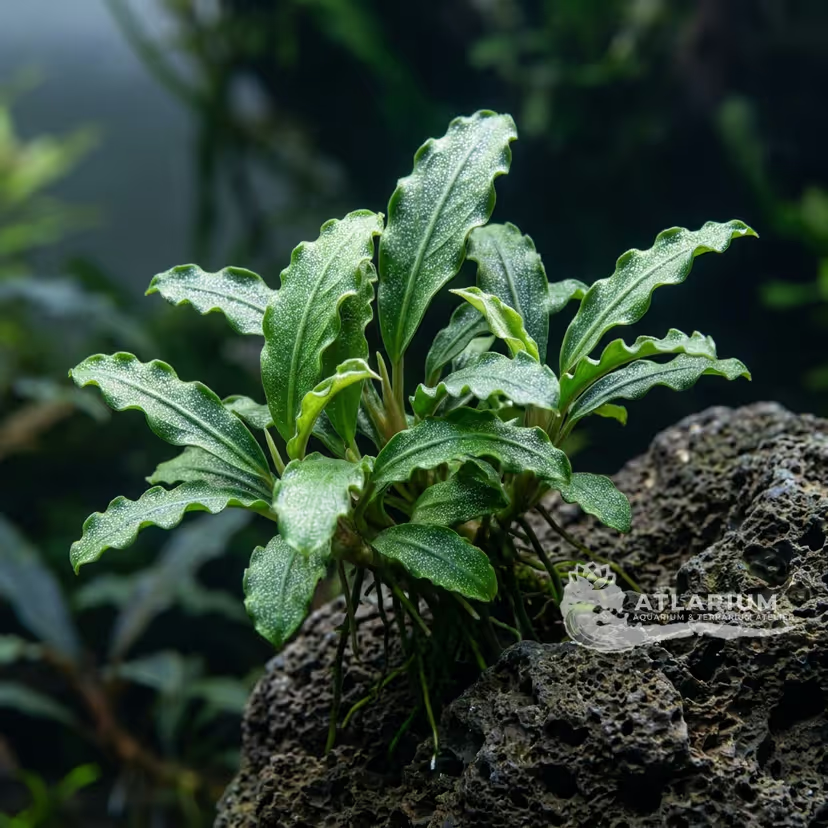
Aponogeton rigidifolius

View details->
Bucephalandra pygmaea "Bukit Kelam / Sintang"
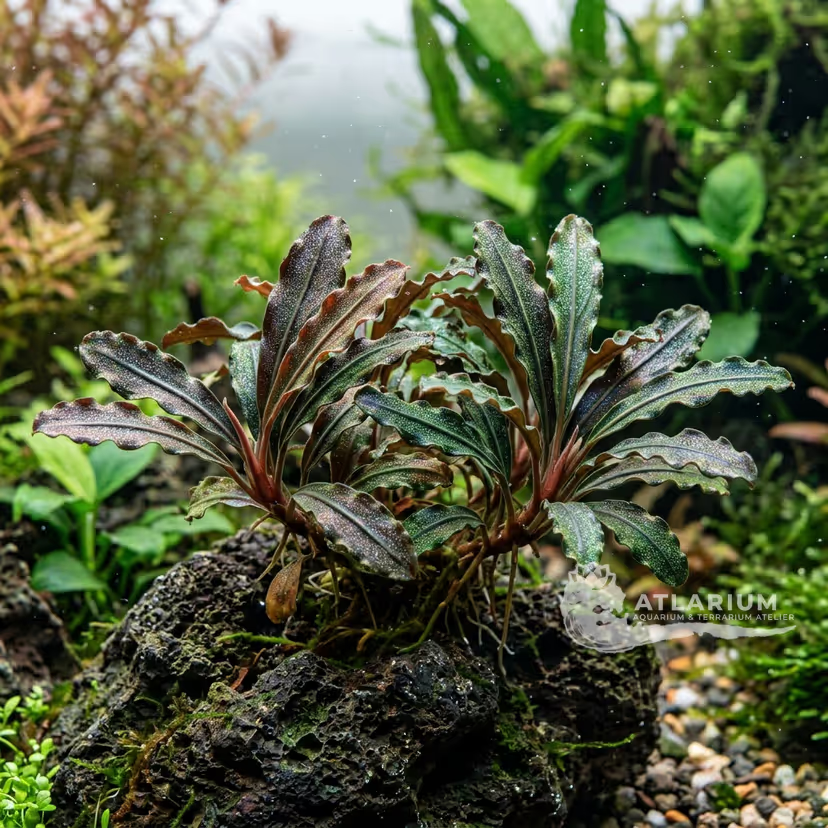
Bucephalandra pygmaea "Bukit Kelam / Sintang"

Bucephalandra pygmaea "Bukit Kelam / Sintang"

View details->
Bucephalandra sp. "Kedagang"

Bucephalandra sp. "Kedagang"
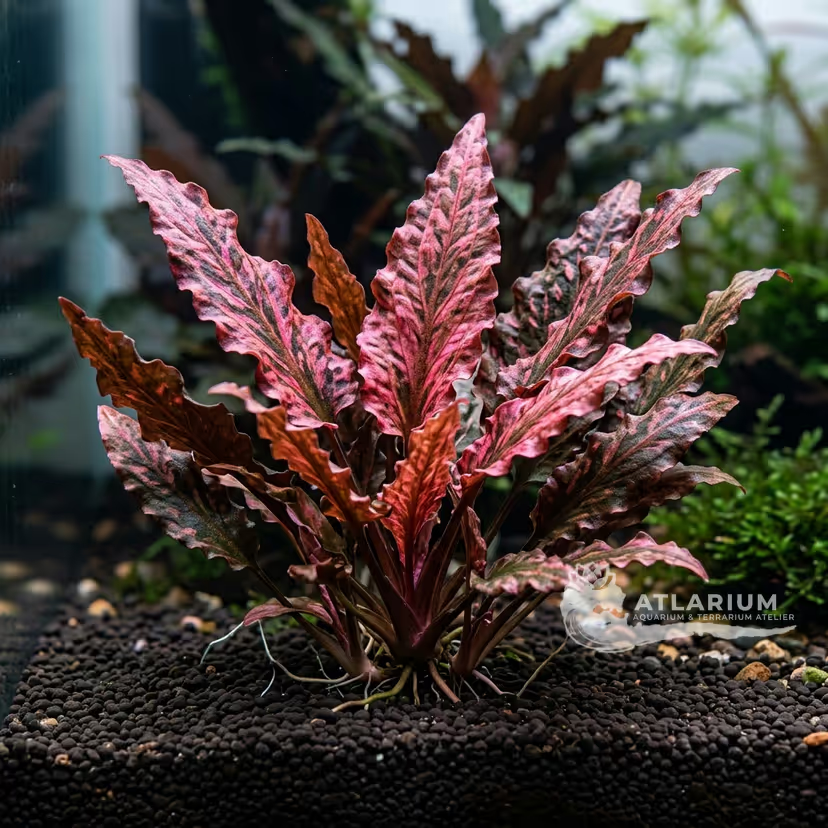
Bucephalandra sp. "Kedagang"

View details->
Cryptocoryne beckettii "Petchii Pink"

Cryptocoryne beckettii "Petchii Pink"

Cryptocoryne beckettii "Petchii Pink"

View details->
Buce

Buce

Bucephalandra

View details->
Ammannia latifolia

Ammannia latifolia
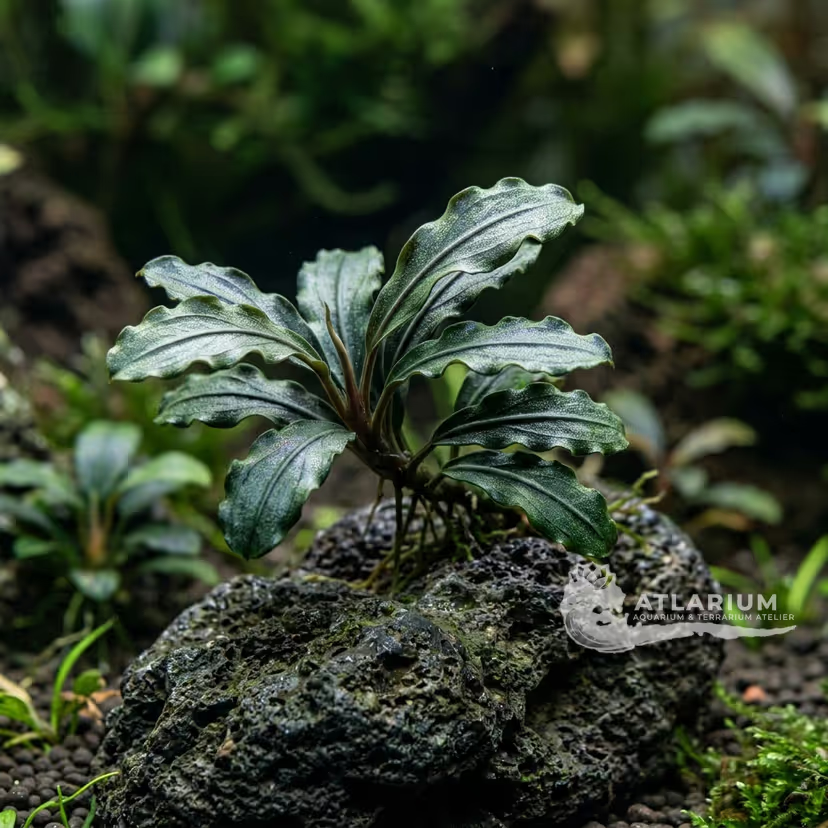
Ammannia latifolia

View details->
Bucephalandra sordidula

Bucephalandra sordidula

Bucephalandra sordidula

View details->
Bucephalandra sp. "Braun-rot narrow"

Bucephalandra sp. "Braun-rot narrow"
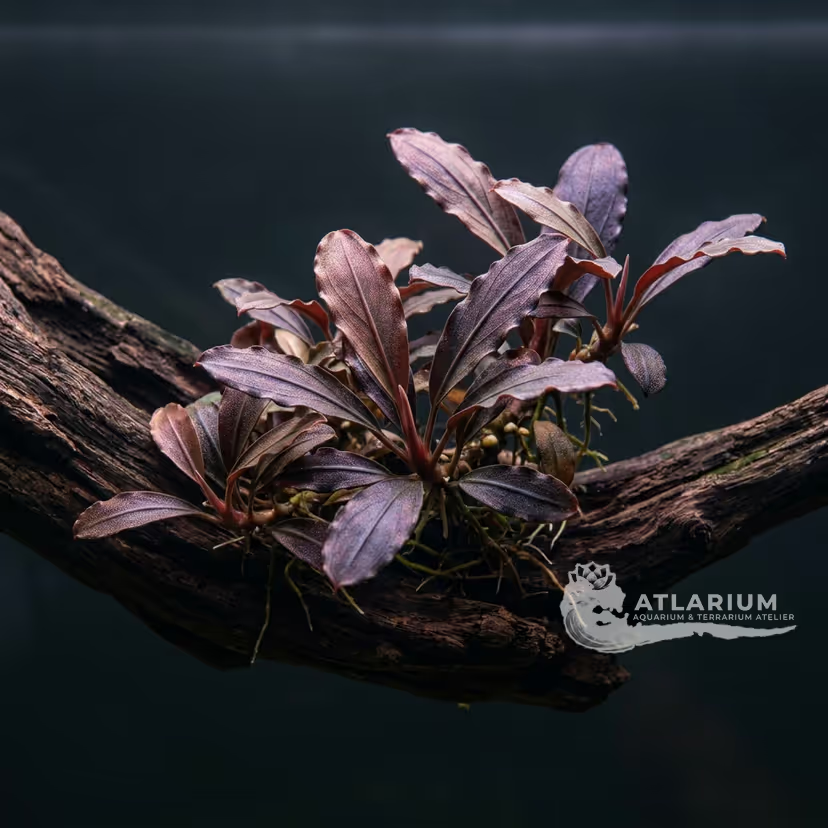
Bucephalandra sp. "Braun-rot narrow"

View details->
Bucephalandra sp. "Braun-rot" ("Serimbu")

Bucephalandra sp. "Braun-rot" ("Serimbu")

Bucephalandra sp. "Braun-rot"

View details->
Last updated: 06/30/2026
Anubias barteri var. barteri Care Guide & Tank Setup | Atlarium