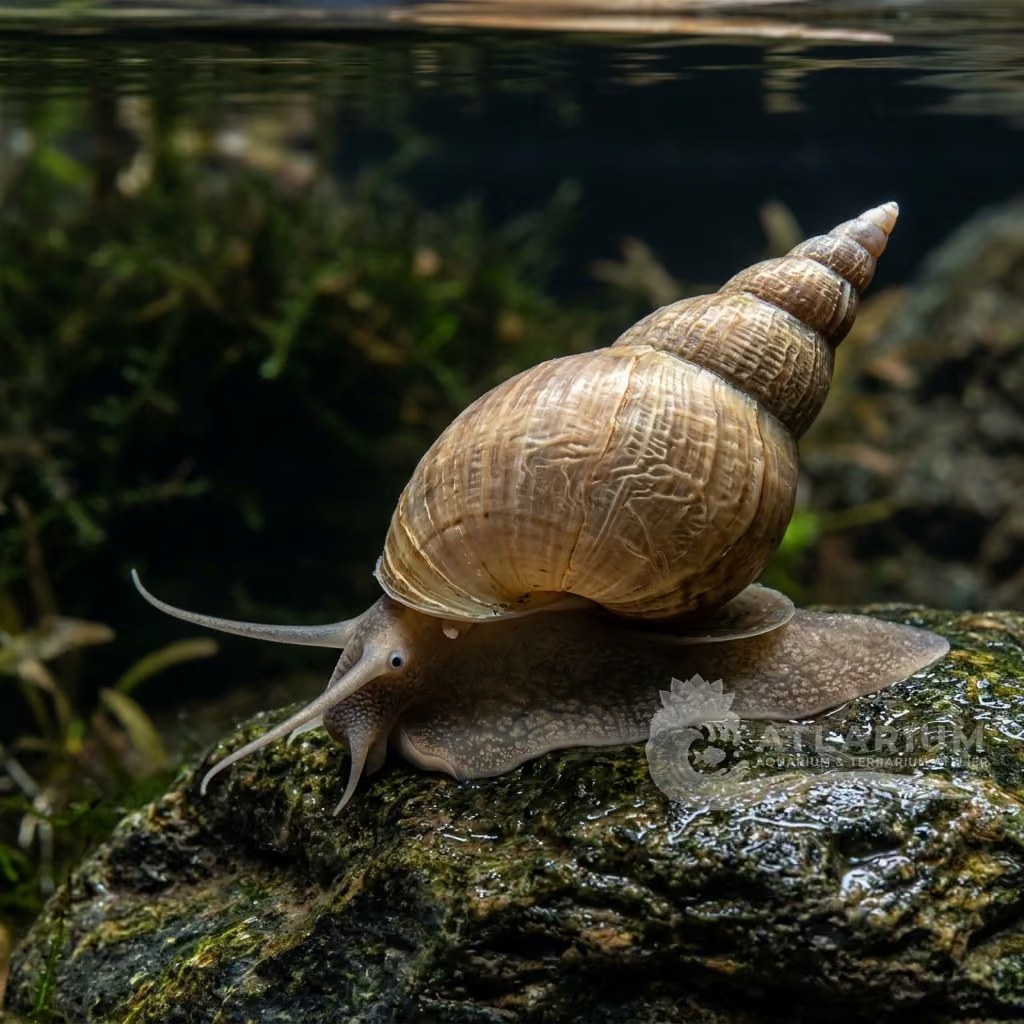
Channelled apple snail
Pomacea canaliculata
Channelled apple snail: aquarium gastropod in the family Ampullariidae, useful for biofilm, light algae, and substrate cleanup. Geographical Origin and Habitat: The Channeled Apple Snail...
Water Temperature
20 - 28 °C
pH Value
7 - 8.4
Water type
Freshwater
Invertebrate type
Freshwater snail
Adult size
7 cm
Minimum group
>= 1
GH
6 - 20 dGH
KH
3 - 15 dKH
TDS
120 - 450 ppm
Ecological role
Scavenger
Copper sensitivity
High

Species description
Geographical Origin and Habitat: The Channeled Apple Snail (*Pomacea canaliculata*) is a colossal, infamously voracious aquatic gastropod natively endemic to the vast, warm tropical and sub-tropical river basins, immense wetlands, and slow-moving swamps of South America (Argentina, Brazil, Paraguay, and Uruguay). Their natural biotope is defined by incredibly dense, submerged aquatic vegetation and flooded marshlands, where they aggressively consume massive quantities of fresh plant matter.
Taxonomy: Scientifically classified within the Ampullariidae family, they are true giants of the freshwater world. Fully mature adults can reach an absolutely monstrous 7.0 to 10.0 centimeters (2.8-4.0 inches) in diameter, achieving the size of a human fist or a baseball. Unlike the Mystery Snail (*P. diffusa*), the shell of *P. canaliculata* features deeply indented "channels" (sutures) between the spirals. They possess a lung, gills, an extendable breathing siphon, and an incredibly robust, saw-like radula engineered specifically for tearing through tough, living plant stems.
Social Behavior: They are heavily armored, massively active, and entirely peaceful toward fish, but they are an absolute, unparalleled biological terror to aquatic plants. They are constantly in motion, using their immense size and strength to physically bulldoze through the aquarium, easily uprooting anything in their path. Because of their lung-and-siphon breathing system, they frequently climb to the top of the tank, extend their long tube to the surface, pump their lung full of air, and drop heavily back to the bottom.
Coloration and Sexual Dimorphism: Sexual dimorphism is visually non-existent to the casual observer; male and female differentiation requires careful examination of the shell opening. The shell coloration is highly variable but generally less brilliant than the heavily bred Mystery Snail. The massive shell usually features a deeply banded pattern of dark brown, olive-green, and yellowish-gold stripes. An albino (golden-yellow shell with a pale white body) variant is also highly common in the aquarium trade.

Care, breeding and tankmates
Tank Setup: The aquarium architecture MUST accommodate their monstrous adult size and their absolute destruction of vegetation. A minimum 150-liter (40-gallon) tank is absolutely mandatory for a single adult.
CRITICAL WARNING: You CANNOT keep this snail in a planted aquarium. They will completely deforest and consume every single living plant, right down to the roots, within days. The tank MUST feature only heavy driftwood, massive rocks, or artificial plastic plants. A tight lid with a 3-inch air gap is mandatory for them to breathe and breed.
Diet and Feeding: They are ravenous, uncompromising herbivores and macro-phytes (plant eaters). Unlike Mystery Snails, *P. canaliculata* actively Hunts and eats living plants. In the bare aquarium, their massive appetite MUST be fueled daily to prevent starvation. They MUST be fed massive quantities of fresh, calcium-rich vegetables (entire blanched zucchini halves, whole romaine lettuce leaves, spinach, kale) and dozens of heavy sinking algae wafers every single day. Their feeding requirements are closer to a large pleco than a standard snail.
Water Quality: Originating from the swamps of South America, they thrive in standard tropical heat (22-28°C / 72-82°F). However, their massive size and ravenous appetite mean they produce an unbelievable, astronomical amount of physical waste. Flawless, over-engineered mechanical and biological filtration, combined with massive 50% weekly water changes, is unconditionally mandatory to prevent lethal Ammonia spikes. They strictly require hard, highly alkaline water (GH 8-20, pH 7.5 - 8.5) to maintain their massive, thick calcium shells.
Compatibility and Tankmates: Compatibility requires careful planning. While peaceful toward fish, they are massive, clumsy bulldozers that will crush small, delicate bottom-dwelling fry. They MUST NEVER be housed with aggressive, snail-crushing Cichlids or massive Loaches. Because they eat all plants, they must be housed with fish that tolerate bare or rock-only scapes. Excellent companions include fast-swimming schooling fish (Tetras, Barbs) and large, robust bottom-dwellers (Plecos, large Corydoras).
Aquarium Breeding: Breeding is prolific and highly destructive if released into the wild (which is why they are banned in many countries/states). Breeding is triggered by high water temperatures and heavy feeding. The female will crawl completely out of the water at night and deposit a massive, bright pink, hardened egg clutch containing hundreds to thousands of eggs on the dry glass above the waterline. If the massive pink clutch is not immediately removed and destroyed, hundreds of ravenous baby snails will hatch and completely overrun the tank.
Risks and Diseases:
CRITICAL LEGAL WARNING: *Pomacea canaliculata* is considered one of the top 100 worst invasive alien species in the world, devastating rice crops globally. Transporting them across borders is highly illegal in many jurisdictions (including the EU and parts of the US). The greatest physical risk to the snail is shell degradation in soft water. The greatest risk to the aquarium is massive, lethal water fouling from their immense waste output if filtration is inadequate.

Geographic origin and distribution
The Channeled Apple Snail (*Pomacea canaliculata*) is a colossal, infamously voracious aquatic gastropod natively endemic to the vast, warm tropical and sub-tropical river basins, immense wetlands, and slow-moving swamps of South America (Argentina, Brazil, Paraguay, and Uruguay). Their natural biotope is defined by incredibly dense, submerged aquatic vegetation and flooded marshlands, where they aggressively consume massive quantities of fresh plant matter.
Origin
Extra-Amazon South AmericaNorth America

Invertebrate profile
- Diet
- Biofilm grazer
- They are apex aquatic herbivores with a relentless appetite for virtually all living plant matter. They will completely decimate a planted aquarium in a matter of days, eating everything from delicate stems to tough anubias. Their diet must be heavily subsidized with huge amounts of lettuce, carrots, and dense sinking pellets.
- Ecological role
- Scavenger
- In their native habitat, they rapidly clear choked waterways of dense vegetation. In an aquarium setting, their massive food intake translates into an equally massive bioload. They require aggressive, oversized filtration and frequent water changes to prevent the water quality from rapidly deteriorating.
- Adult size
- 7 cm
- Jump risk
- Yes
- Driven by an intense instinct to lay eggs on dry surfaces, females are notorious escape artists. They will easily push up unsecured lids and crawl out of the aquarium, which often results in a fatal fall. A heavy, tightly clamped lid is absolutely critical to prevent them from escaping the tank.
- Shock sensitivity
- High
- This species is extraordinarily hardy and highly adaptable to poor conditions in the wild, even surviving in polluted or low-oxygen waters. In the aquarium, they rarely suffer from shock unless subjected to extreme, instant temperature changes. Despite their hardiness, maintaining stable, clean water ensures their best health and lifespan.
- Calcium and minerals
- High
- Generating and supporting their massive, golf-ball-sized (or larger) shells requires extraordinary amounts of calcium. The aquarium water must be maintained at a high pH and GH to prevent the shell from eroding under its own weight. Copious dietary calcium via specialized foods and cuttlebone is absolutely essential.
- Molting
- Shell growth
- As gastropods, they do not molt; they continuously expand their shell outward from the opening. Healthy, rapid growth often results in distinct, thick ridges or channels along the shell whorls. Poor water quality or low calcium will immediately cause the new shell growth to become thin, brittle, and deformed.
- Reproduction
- Variable
- They reproduce prolifically when a male and female are present. The female will crawl far above the water to lay massive, bright pink, highly visible egg masses that look like raspberries. To control their population, aquarists must simply remove and crush or freeze these easily identifiable egg clutches before they hatch.
- Compatibility & tankmates
- Peaceful
- Despite their destructive tendencies towards plants, they are peaceful towards fish and other invertebrates. They can be safely housed with medium to large peaceful fish like goldfish or larger tetras. They are highly incompatible with planted tanks and aggressive snail-eating fish like large cichlids or pufferfish.

Image gallery
Licensed images linked to the species or, when marked, to the closest representative taxon.

Related species
Recommendations grouped by close relatives, companion choices, and similar care.