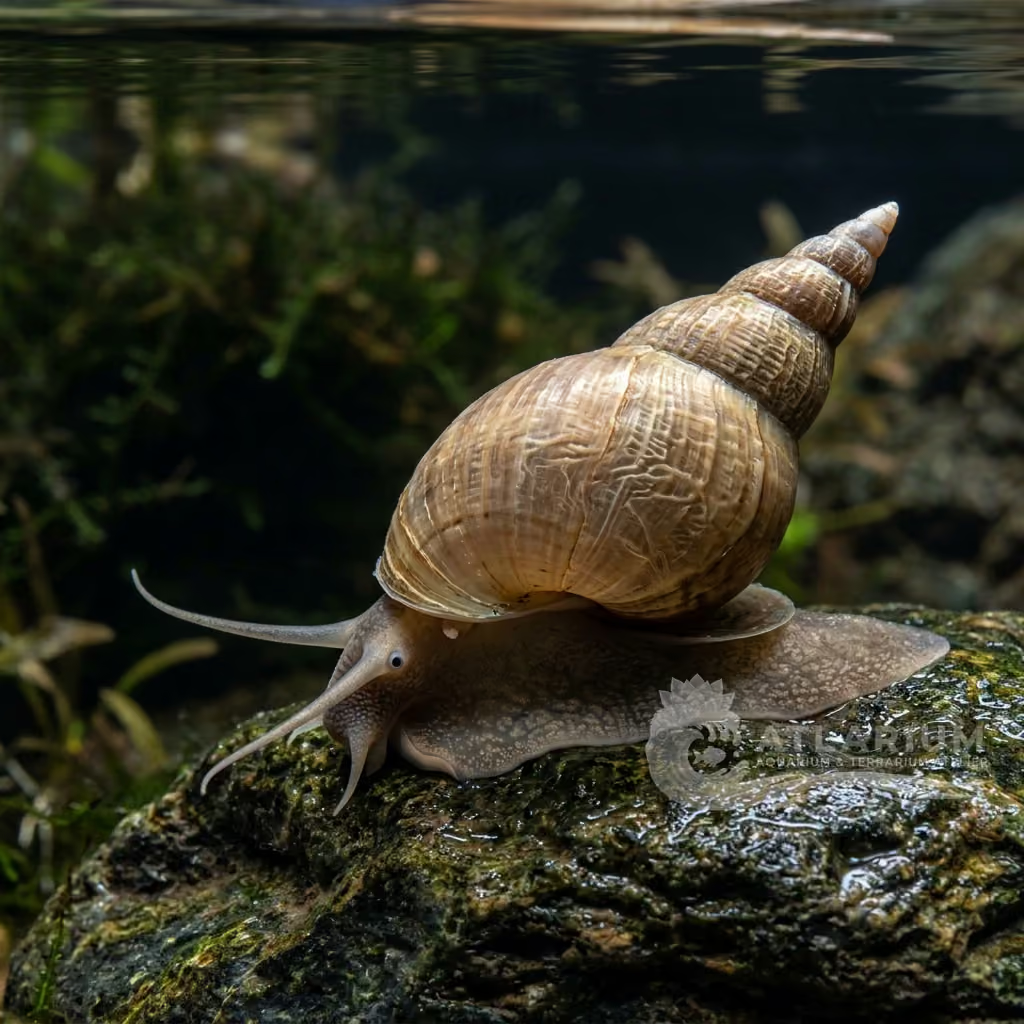
Towuti rabbit snail
Tylomelania towutensis
Towuti rabbit snail: aquarium gastropod in the family Pachychilidae, useful for biofilm, light algae, and substrate cleanup. Geographical Origin and Habitat: The Towuti Rabbit Snail...
Water Temperature
20 - 28 °C
pH Value
7 - 8.4
Water type
Freshwater
Invertebrate type
Freshwater snail
Adult size
7 cm
Minimum group
>= 1
GH
6 - 20 dGH
KH
3 - 15 dKH
TDS
120 - 450 ppm
Ecological role
Scavenger
Copper sensitivity
High

Species description
Geographical Origin and Habitat: The Towuti Rabbit Snail (*Tylomelania towutensis*) is a majestic, highly specialized freshwater gastropod natively endemic exclusively to Lake Towuti, the largest tectonic lake in the Malili Lakes system of Sulawesi, Indonesia. Their natural biotope is defined by incredibly clear, highly oxygenated, strictly alkaline, and extremely hard water. They spend their entire lives endlessly patrolling the warm, sandy lake bottoms and rocky shoals, functioning as heavy-duty, substrate-bound scavengers.
Taxonomy: Scientifically classified within the Pachychilidae family alongside the Orange Rabbit Snail, they share the identical massive, elongated conical morphology. Fully mature adults routinely reach 7.0 to 9.0 centimeters (2.8-3.5 inches) in shell length. They possess the trademark "Rabbit Snail" features: a long, deeply grooved, spiraling shell that drags behind them, a hard operculum (trapdoor), gills for underwater respiration, and a long, drooping snout flanked by two long, rabbit-like sensory tentacles.
Social Behavior: They are completely peaceful, heavily armored, and famously slow-moving. Their behavior is strictly methodical and substrate-focused. Due to their massive shells, they do not swim and are extremely poor climbers, rarely venturing far up the aquarium glass. Instead, they spend their days bulldozing through the sand, using their highly flexible, elephant-like proboscis (snout) to dig deep into crevices and substrate layers, vacuuming up massive amounts of detritus and decaying organic matter.
Coloration and Sexual Dimorphism: Like all *Tylomelania*, sexual dimorphism is visually non-existent, requiring dissection to determine male from female. While they share the same shell shape as the Orange Rabbit Snail, their coloration is distinctly darker and moodier. The deeply ridged, heavily textured shell is typically dark mahogany, deep olive, or pitch black, often severely eroded white at the tip. Their fleshy body and drooping snout are typically a deep, mottled black, heavily studded with tiny golden or yellow specks.

Care, breeding and tankmates
Tank Setup: The aquarium architecture MUST strictly replicate the unique environmental conditions of Lake Towuti. A minimum 75-liter (20-gallon) tank is required.
CRITICAL REQUIREMENT: The substrate MUST consist of soft sand or extremely fine, smooth gravel. Sharp, coarse gravel will brutally lacerate their massive soft foot, and deep rock structures will permanently trap their dragging shells, causing lethal starvation. The tank should feature open, sandy plains and smooth, flat river stones.
Diet and Feeding: They are ravenous detritivores and opportunistic omnivores.
CRITICAL WARNING: Like all large Rabbit Snails, if they are not fed enough, they CAN and WILL consume soft, delicate aquarium plants to satiate their massive appetite. Their diet MUST be heavily supplemented daily. They require large quantities of high-quality sinking omnivore wafers, powdered spirulina, and copious amounts of blanched vegetables (zucchini, carrots, spinach). They also continuously graze on decaying Catappa leaves.
Water Quality: Originating from the tectonic lakes of Sulawesi, their biological requirements are incredibly strict: WARM, highly alkaline, and extremely HARD water. They possess zero tolerance for cold water; they require tropical heat (26-30°C / 79-86°F). They unconditionally require hard water (GH 6-15, pH 7.5 - 8.5) rich in dissolved calcium. Keeping them in soft, acidic water (below pH 7.0) is a death sentence; it will rapidly dissolve their massive shells, causing catastrophic osmotic shock.
Compatibility and Tankmates: Compatibility is heavily restricted by their strict need for hot, hard, alkaline water. They are the perfect, gentle giants for specialized Sulawesi biotope setups. They are excellent, harmless companions for Sulawesi Shrimp (e.g. Cardinal Shrimp) or small, peaceful, heat-loving community fish. They MUST NEVER be housed with aggressive, snail-eating predators (massive Loaches, large Cichlids, Pufferfish) that will effortlessly attack their exposed, slow-moving bodies or flip them over.
Aquarium Breeding: Breeding the Towuti Rabbit Snail is a slow, fascinating process. They are livebearers (viviparous); females incubate eggs internally. The female expels a distinct, milky, gelatinous egg sac onto the substrate, which dissolves within minutes to reveal a single, fully formed miniature Rabbit Snail. Because they reproduce incredibly slowly (producing only one baby every few weeks), they are highly prized in the hobby and will absolutely NEVER overpopulate a tank or become a "pest."
Risks and Diseases: The absolute greatest physical risk is slow, agonizing death from massive shell degradation caused by keeping them in standard, soft-water community tanks; high pH, extremely hard water, and tropical heat are unconditionally mandatory. The second major risk is lethal starvation caused by their heavy shells getting permanently wedged in coarse gravel or tight rocks. Finally, they will decimate delicate aquatic plants if their massive daily appetite is not fully satiated with heavy vegetable feeding.

Geographic origin and distribution
The Towuti Rabbit Snail (*Tylomelania towutensis*) is a majestic, highly specialized freshwater gastropod natively endemic exclusively to Lake Towuti, the largest tectonic lake in the Malili Lakes system of Sulawesi, Indonesia. Their natural biotope is defined by incredibly clear, highly oxygenated, strictly alkaline, and extremely hard water. They spend their entire lives endlessly patrolling the warm, sandy lake bottoms and rocky shoals, functioning as heavy-duty, substrate-bound scavengers.
Origin
North AmericaEurope, Mediterranean, and West AsiaSouth and Southeast AsiaEast Asia

Invertebrate profile
- Diet
- Biofilm grazer
- The primary diet of Tylomelania towutensis consists of various types of algae, biofilm, and decaying plant matter found on aquarium surfaces. It is an excellent clean-up crew member but may require supplemental feeding. Sinking algae wafers and blanched vegetables should be provided if natural food sources are depleted.
- Ecological role
- Scavenger
- In its natural habitat, Tylomelania towutensis plays a crucial role as a detritivore and primary consumer, helping to process organic waste. By constantly grazing on algae and detritus, it prevents excessive nutrient buildup and keeps surfaces clean. This ecological function translates perfectly into the closed ecosystem of a home aquarium.
- Adult size
- 7 cm
- Jump risk
- Yes
- While Tylomelania towutensis lacks the ability to physically jump, it is known to occasionally climb above the water line or out of the tank entirely. This wandering behavior can sometimes lead to fatal desiccation if they fall onto the floor. A tightly fitted lid or a wide rim is highly recommended to keep them safely enclosed.
- Shock sensitivity
- High
- Tylomelania towutensis is remarkably sensitive to sudden fluctuations in water parameters, particularly temperature, pH, and hardness. Rapid changes can induce osmotic shock, leading to lethargy, shell damage, or death. A slow drip acclimation process over several hours is highly recommended when introducing it to a new tank.
- Calcium and minerals
- High
- Adequate calcium levels are absolutely critical for Tylomelania towutensis to develop and maintain a strong, healthy shell. Soft, acidic water will gradually erode the shell, exposing the snail to infection and premature death. Hobbyists should supplement the water column or diet with cuttlebone, coral skeleton, or specialized mineral blocks.
- Molting
- Shell growth
- Unlike crustaceans, Tylomelania towutensis is a gastropod and does not undergo a molting process to grow. Instead, it continuously adds new calcified layers to the aperture of its existing shell as it matures. Therefore, observing continuous, healthy shell growth lines without pitting or cracks is the best indicator of its well-being.
- Reproduction
- Variable
- The reproductive strategy of Tylomelania towutensis varies, but many require specific conditions such as brackish water to successfully yield viable offspring. While they may lay eggs frequently in a freshwater aquarium, the larvae often fail to develop without the proper salinity. This trait makes them ideal for aquarists who wish to avoid overpopulation issues.
- Compatibility & tankmates
- Peaceful
- Tylomelania towutensis is entirely peaceful and possesses no means to harm other tank inhabitants, making it perfect for community setups. It should not, however, be kept with aggressive loaches, pufferfish, or large crayfish that will prey on it. Ideal tank mates include small tetras, rasboras, and dwarf shrimp.

Image gallery
Licensed images linked to the species or, when marked, to the closest representative taxon.

Related species
Recommendations grouped by close relatives, companion choices, and similar care.