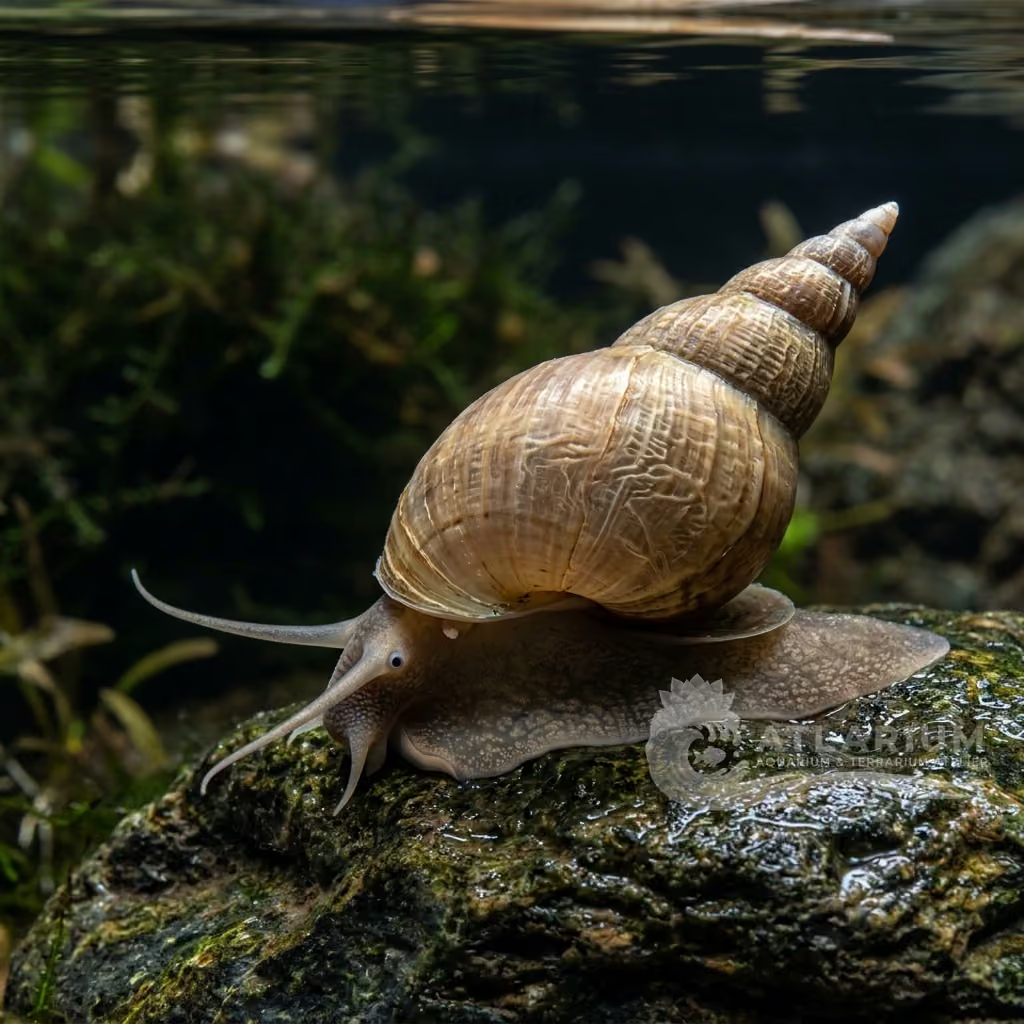
Mystery apple snail
Pomacea diffusa
Mystery apple snail: aquarium gastropod in the family Ampullariidae, useful for biofilm, light algae, and substrate cleanup. Geographical Origin and Habitat: The Mystery Snail,...
Water Temperature
20 - 28 °C
pH Value
7 - 8.4
Water type
Freshwater
Invertebrate type
Freshwater snail
Adult size
5 cm
Minimum group
>= 1
GH
6 - 20 dGH
KH
3 - 15 dKH
TDS
120 - 450 ppm
Ecological role
Scavenger
Copper sensitivity
High

Species description
Geographical Origin and Habitat: The Mystery Snail, scientifically classified as the Spike-topped Apple Snail (*Pomacea diffusa*, formerly confused with *P. bridgesii*), is an incredibly popular, massive freshwater gastropod natively endemic to the vast Amazon River Basin system in South America (Brazil, Bolivia, Paraguay, and Peru). Their natural biotope is defined by slow-moving, heavily vegetated rivers, murky swamps, and flooded shallow wetlands where they constantly scour the muddy bottom for decaying organic matter.
Taxonomy: Scientifically classified within the Ampullariidae (Apple Snail) family, they are enormous, biologically complex creatures. Fully mature adults can reach an impressive 4.0 to 5.0 centimeters (1.5-2.0 inches) in diameter. Unlike tiny pest snails, they possess a distinct, flat-topped spire on their shell. Their biology is astoundingly unique: they possess gills for breathing underwater, a lung to breathe atmospheric air via a long, extendable "siphon" tube that they stretch to the surface, and an operculum (a hard "trapdoor") to seal their shell.
Social Behavior: They are entirely peaceful, massively active, and highly entertaining omnivorous scavengers. Unlike nocturnal snails, Mystery Snails are highly active during the day. They possess zero aggression and completely ignore all fish and shrimp. They are famous for their comical behavior known as "parasnailing"—climbing to the highest point in the aquarium (often the glass or tall plants), releasing their grip, and floating gracefully down to the bottom on the water currents.
Coloration and Sexual Dimorphism: Unlike Nerites, Mystery Snails are NOT hermaphrodites; there are distinct males and females, though sexing them requires observing their anatomy closely when extended. Due to decades of commercial captive breeding, their coloration is spectacularly diverse. The smooth, golf-ball-sized shells come in a massive array of solid, brilliant colors: golden yellow, rich jade green, deep blue, vibrant magenta, bright ivory, and dark chestnut/black. The muscular foot can be either pale white or dark black-blue.

Care, breeding and tankmates
Tank Setup: The aquarium architecture MUST flawlessly accommodate their massive adult size, heavy waste production, and unique breeding habits. A minimum 40-liter (10-gallon) tank is absolutely mandatory for a single adult; their waste output is immense. The tank MUST have a tight-fitting lid, but crucially, the water level MUST be dropped at least 2-3 inches below the lid. This exposed glass gap is unconditionally mandatory because females must completely leave the water to deposit their massive egg clutches.
Diet and Feeding: They are massive, voracious omnivores and ravenous scavengers.
CRITICAL DISTINCTION: Unlike the invasive *Pomacea canaliculata*, the Mystery Snail (*P. diffusa*) possesses soft, delicate teeth and CANNOT eat healthy, living aquarium plants; they only eat dead, decaying plant matter. However, they CANNOT survive on algae alone. Their massive diet MUST be heavily supplemented daily. Copious amounts of premium sinking algae wafers, fish food leftovers, and specifically, calcium-rich blanched vegetables (zucchini, spinach, green beans) are unconditionally mandatory.
Water Quality: Originating from the Amazon, they demand stable tropical heat (22-26°C / 72-79°F). However, their most critical, uncompromising biological requirement is HARD water. They STRICTLY require hard, alkaline water (GH 8-20, pH 7.2 - 8.4) rich in dissolved calcium. Keeping them in soft, acidic water (below pH 7.0) is a horrific death sentence; the acidity will rapidly dissolve, pit, and erode their massive, delicate calcium-carbonate shells, exposing their internal organs and causing agonizing death. Flawless filtration is mandatory due to their immense bioload.
Compatibility and Tankmates: Compatibility is excellent due to their peaceful nature, but their long, flowing sensory tentacles make them highly vulnerable targets. They MUST NEVER be housed with aggressive fin-nippers (like Tiger Barbs, Serpae Tetras, or Pea Puffers) or massive, crushing Cichlids that will relentlessly bite their tentacles off, forcing the snail to seal its trapdoor and slowly starve to death. Excellent companions include peaceful schooling fish (Tetras, Rasboras, Guppies), Corydoras, and peaceful dwarf shrimp.
Aquarium Breeding: Breeding is incredibly easy, prolific, and completely unique. They are NOT pest snails; they will not secretly overrun your tank. Breeding is triggered by high-protein food and leaving an exposed gap of glass above the waterline. In the dead of night, the female will crawl entirely out of the water and deposit a massive, bright pink, hardened "cocoon" clutch containing 50-200 eggs on the dry glass. If you do not want babies, the massive pink clutch is extremely easy to see, snap off, and discard.
Risks and Diseases: The absolute greatest physical risk is agonizing death from massive shell degradation caused by keeping them in soft, acidic water lacking calcium; hard, alkaline water is unconditionally mandatory. The second major risk is lethal starvation; owners falsely believe they are just "algae eaters" and fail to feed them heavy sinking wafers and vegetables. Finally, escaping is a massive risk if the tank is uncovered; they will fall out and easily crack their heavy, fragile shells on the floor.

Geographic origin and distribution
The Mystery Snail, scientifically classified as the Spike-topped Apple Snail (*Pomacea diffusa*, formerly confused with *P. bridgesii*), is an incredibly popular, massive freshwater gastropod natively endemic to the vast Amazon River Basin system in South America (Brazil, Bolivia, Paraguay, and Peru). Their natural biotope is defined by slow-moving, heavily vegetated rivers, murky swamps, and flooded shallow wetlands where they constantly scour the muddy bottom for decaying organic matter.
Origin
Tropical oceans and reefsAmazon, Orinoco, and GuianasNorth America

Invertebrate profile
- Diet
- Biofilm grazer
- Mystery snails are enthusiastic scavengers and omnivores that eagerly consume uneaten fish food, blanched vegetables like zucchini, and specialized algae wafers. While they excel at cleaning up detritus, they generally ignore healthy live plants, preferring dead or decaying vegetative matter. Supplementing their diet with calcium-rich foods ensures proper shell development and overall vitality.
- Ecological role
- Scavenger
- These snails serve as excellent cleanup crew members in the freshwater aquarium, breaking down organic waste and consuming excess food. Their constant foraging helps prevent the accumulation of decaying matter, thereby improving water quality. However, they produce a fair amount of bioload themselves, so proper filtration remains essential.
- Adult size
- 5 cm
- Jump risk
- Yes
- While mystery snails do not 'jump,' they are notorious for their tendency to climb out of the water, especially females seeking a place to lay eggs. They can easily escape an open-topped aquarium and quickly dry out and perish on the floor. A tight-fitting lid is an absolute necessity to ensure their safety and containment within the tank.
- Shock sensitivity
- High
- Pomacea diffusa can be quite sensitive to sudden shifts in water parameters, particularly fluctuations in temperature, pH, and hardness. Rapid changes can induce stress, leading to a retracted state, poor shell growth, or even death. A careful drip acclimation process is highly recommended when introducing them to a new aquatic environment.
- Calcium and minerals
- High
- A continuous and easily accessible supply of calcium is absolutely critical for the maintenance and growth of their large, impressive shells. Insufficient calcium levels will result in thin, brittle, or pitted shells, leaving the snail vulnerable to injury and disease. Hobbyists often provide cuttlebone, crushed coral, or specialized invertebrate mineral supplements to maintain optimal hardness.
- Molting
- Shell growth
- As gastropods, mystery snails do not undergo a molting process like crustaceans do. Instead, they continually add new calcified material to the leading edge of their shell as they grow. This steady growth requires a constant supply of dietary calcium and hard, alkaline water to prevent shell erosion.
- Reproduction
- Variable
- Mystery snails are gonochoristic, meaning they have distinct male and female sexes, unlike many other hermaphroditic snails. Females climb above the water line to deposit large, distinctively pink, hard egg clutches on the aquarium glass or lid. This unique reproductive strategy prevents accidental overpopulation, as the egg clutches can be easily removed if no offspring are desired.
- Compatibility & tankmates
- Peaceful
- These peaceful snails are widely compatible with most small, non-aggressive freshwater fish and other peaceful invertebrates. They should never be housed with notorious snail-eaters such as loaches, pufferfish, or large aggressive cichlids. Their long, delicate tentacles present a tempting target for fin-nipping fish like certain barbs or tetras.

Image gallery
Licensed images linked to the species or, when marked, to the closest representative taxon.

Related species
Recommendations grouped by close relatives, companion choices, and similar care.