Bucephalandra pygmaea "Bukit Kelam / Sintang"
Bucephalandra pygmaea
Endemic to the Bukit Kelam granitic slopes in Borneo, this highly adaptable epiphyte offers dark leaves and survives perfectly in low-tech setups.
Water Temperature
20 - 26 °C
pH Value
6 - 7.5
Water type
Freshwater
Light
Low
CO2
Low
Expected height
5 cm
Expected width
5 cm
GH
4 - 20 dGH
KH
0 - 10 dKH

Species description
Geographical Origin and Habitat: Endemic exclusively to the island of Borneo (Indonesia), specifically localized around the Sintang regency and the dark, granitic slopes of Bukit Kelam (Black Rock). This specific variant is a true rheophyte (a plant that thrives in fast-flowing water). It evolved to violently anchor itself to porous jungle rocks and submerged wood along the margins of torrential rainforest streams. It lives an extreme amphibious lifestyle, growing emersed in high humidity during the dry season and surviving completely submerged during violent monsoon floods.
Taxonomy & Genetics: First introduced to the global hobby around 2011, it is scientifically classified under the Araceae family as Bucephalandra pygmaea, though in the trade it is universally known by its cultivar name "Wavy Green." Taxonomically, it is arguably the most important Bucephalandra in the world because it is one of the only variants that has been successfully tissue-cultured on a massive, commercial scale, saving it from the severe overharvesting and near-extinction facing other wild Bucephalandra species in Borneo.
Physical Structure: Like an Anubias, the foundation of this plant is an incredibly tough, woody, creeping rhizome. It does not grow tall; instead, the rhizome crawls tightly across the hardscape, sending out thick, fleshy, white anchoring roots that act like concrete clamps. The leaves emerge tightly clustered from the rhizome. While the species is named "pygmaea," this specific variant is actually quite large for a Bucephalandra, with mature leaves easily reaching 3 to 5 cm (1-2 inches) in length, forming a dense, sprawling bush over time.
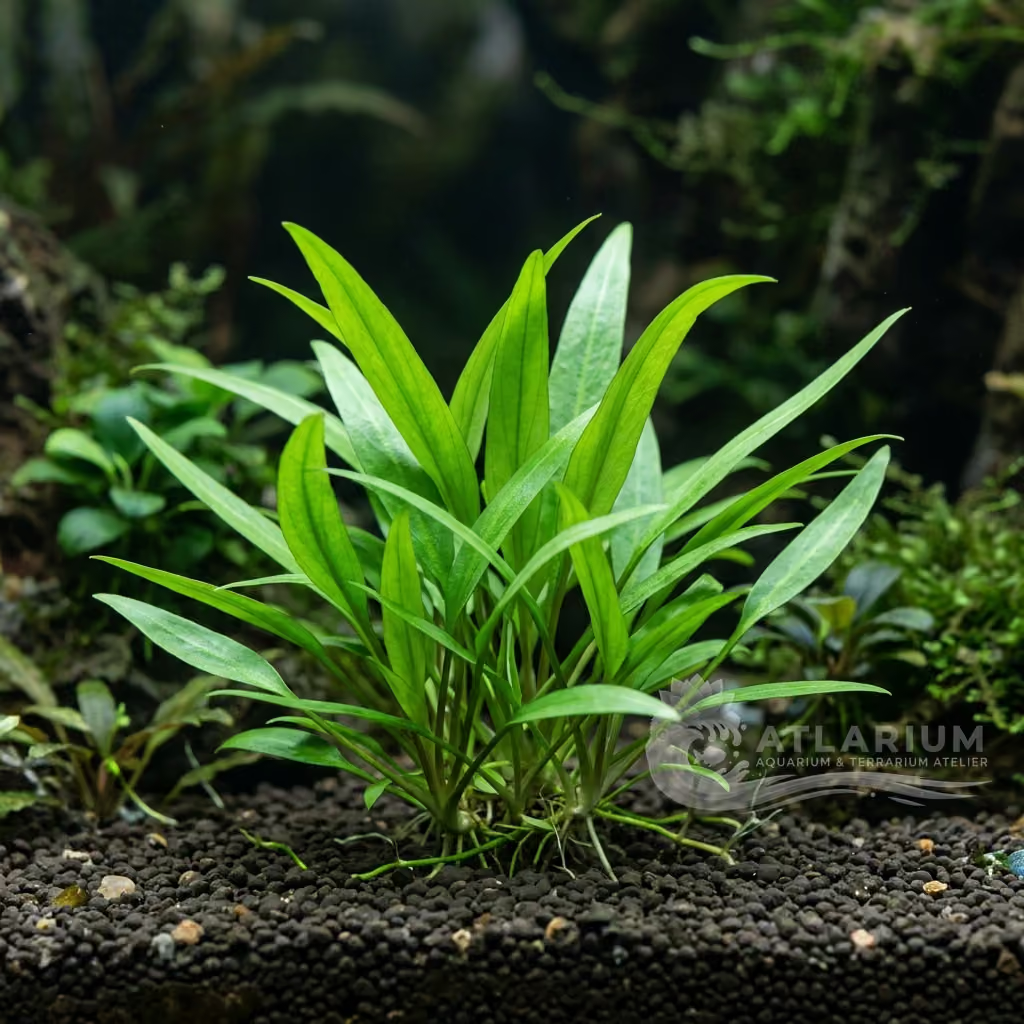
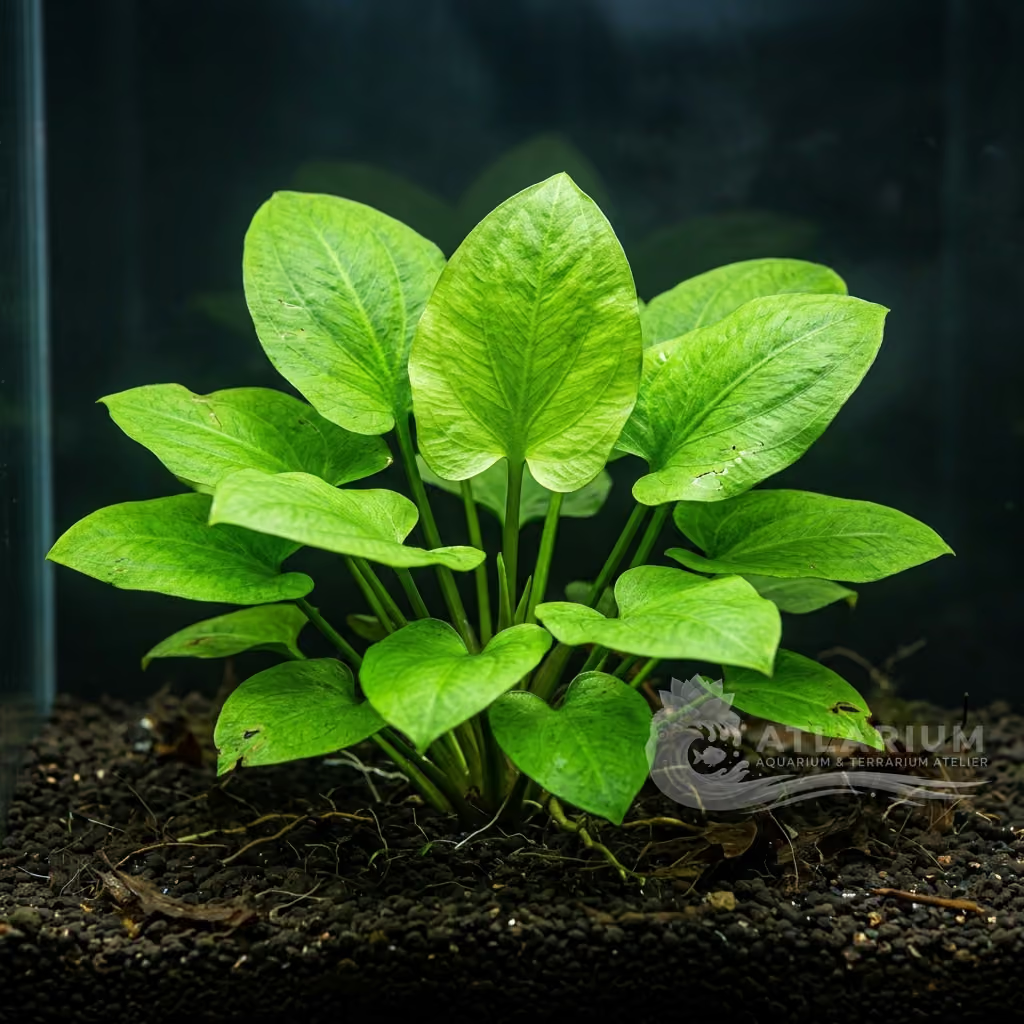
Color & Texture: Unlike the extremely rare, dark-purple or blue Bucephalandra species, the "Wavy Green" variant is defined by its incredibly vibrant, solid, bright apple-green coloration. The leaves are notoriously stiff, leathery, and incredibly tough. The defining physical characteristic is the intensely ruffled, wavy, heavily undulated margins of every leaf. Under strong aquarium lighting, the leaves frequently exhibit tiny, shimmering white dots (stomata), making the plant look like it has been lightly dusted with silver glitter.

Care, breeding and tankmates
Lighting & CO2: It is an extremely forgiving, low-tech powerhouse. It will happily survive and grow in deeply shaded, low-light aquariums. However, to maintain a tight, compact bush, moderate lighting is recommended. While CO2 injection is absolutely not necessary for its survival, injecting pressurized CO2 is highly recommended. Because Bucephalandra grow agonizingly slowly, CO2 acts as a massive accelerator, forcing the plant to push out new wavy leaves much faster and significantly reducing the risk of algae colonization on the slow-growing foliage.
Nutrition & Substrate: This plant is a strict epiphyte. It requires absolutely no substrate and must NEVER be planted into aquasoil, sand, or gravel. The plant feeds entirely from the water column. It must be attached directly to hardscape (wood or rock) using cyanoacrylate gel superglue, cotton thread, or simply wedged into a tight crevice. The thick white roots will eventually fuse to the hardscape. The water column should be dosed with a comprehensive liquid fertilizer containing potassium and trace minerals to fuel leaf production.
Water Chemistry: It is a highly adaptable, virtually indestructible survivor. While it prefers the soft, slightly acidic blackwater conditions of its native Borneo (pH 6.0 - 7.0), it effortlessly adapts to hard tap water and high pH. It prefers standard tropical temperatures (22-26°C). However, the absolute most critical requirement is extreme water quality and high flow. Coming from torrential jungle streams, it despises stagnant water; strong filter flow is required to keep its slow-growing, leathery leaves free of detritus.
Space Management & Placement: Because of its creeping rhizome and dense, wavy foliage, it is the ultimate foreground and midground detailing plant. It is widely used by professional aquascapers to cover unsightly transitions between wood and rocks. It should be glued in dense clusters along the lower branches of driftwood or tucked into the crevices of Dragon Stone or Seiryu stone. It provides an immediate sense of age and wild maturity to any hardscape layout.
Pruning: Pruning is rarely required due to its notoriously slow growth rate. However, to propagate the plant or manage a massive, overgrown bush, simply use sharp, curved scissors to cleanly sever the creeping woody rhizome. Ensure the cut piece contains at least 4 to 5 healthy leaves and a few white roots. You can immediately superglue the cut rhizome piece to a new piece of rock to start an entirely new colony. Never tear the leaves by hand.
Risks & Diseases: The absolute greatest threat to any Bucephalandra is "Buce Melt," triggered by sudden, massive fluctuations in water chemistry (especially CO2 or ammonia spikes). The plant will respond to the stress by literally dissolving its leaves into a slimy mush within 24 hours. The second greatest threat is Black Beard Algae (BBA) and Green Spot Algae (GSA). Because the leaves grow so slowly and live for years, they are prime real estate for algae if flow is poor or nutrients are unbalanced.

Geographic origin and distribution
Endemic exclusively to the island of Borneo (Indonesia), specifically localized around the Sintang regency and the dark, granitic slopes of Bukit Kelam (Black Rock). This specific variant is a true rheophyte (a plant that thrives in fast-flowing water). It evolved to violently anchor itself to porous jungle rocks and submerged wood along the margins of torrential rainforest streams. It lives an extreme amphibious lifestyle, growing emersed in high humidity during the dry season and surviving completely submerged during violent monsoon floods.
Origin
South and Southeast Asia

Plant profile
- Placement
- Epiphyte
- This epiphyte is perfectly suited for the foreground or midground of the aquascape. Bucephalandra pygmaea "Bukit Kelam / Sintang" should be attached directly to hardscape materials such as wood or porous rocks. Burying its rhizome in the substrate will cause it to rot and die off. Its small, dark green leaves provide an excellent textural contrast when placed in crevices.
- Botanical form
- Epiphyte, Stem
- Bucephalandra pygmaea "Bukit Kelam / Sintang" is characterized by its small, dark green leaves that adapt well to submerged life. The foliage often displays tiny silver speckles on the surface, adding to its visual appeal under strong lighting. It grows from a creeping rhizome that firmly attaches to surfaces using strong, specialized roots. The plant occasionally produces beautiful small white underwater flowers.
- Growth
- Slow
- Like most Bucephalandra species, Bucephalandra pygmaea "Bukit Kelam / Sintang" exhibits a notoriously slow growth rate even under optimal conditions. The addition of CO2 injection can slightly increase the speed of development and improve leaf density. You can expect only a few new leaves per month from a healthy rhizome. Patience is key when cultivating this plant.
- Substrate
- None
- This popular variant of Bucephalandra pygmaea requires no specialized substrate, as it performs strictly as an epiphyte in the planted aquarium. It utilizes its thick, specialized roots to bind tenaciously to rocks, wood, and other structural hardscape components. The rhizome demands continuous exposure to oxygenated water; if buried, it will rapidly deteriorate and die. All nutrient uptake is facilitated through the leaves and exposed roots from the surrounding water, making substrate fertility irrelevant.
- Column fertilization
- Recommended
- Liquid fertilization is the preferred method for feeding Bucephalandra pygmaea "Bukit Kelam / Sintang". A comprehensive fertilizer containing iron and micronutrients will enhance its small, dark green appearance. Dosing should be kept lean to prevent algae from outcompeting its slow growth. Regular water column dosing ensures the leaves remain healthy and vibrant.
- Root fertilization
- None
- Root fertilization is entirely unnecessary for Bucephalandra pygmaea "Bukit Kelam / Sintang" as it does not rely on substrate nutrients. Its roots serve primarily as anchors to grip onto hardscape elements rather than for nutrient uptake. Any root tabs placed in the soil will not directly benefit the plant. Instead, focus entirely on water column enrichment.
- Trimming
- Occasional
- Trimming Bucephalandra pygmaea "Bukit Kelam / Sintang" is rarely needed due to its exceptionally slow growth habit. When necessary, use sharp aquascaping scissors to cut the rhizome cleanly, ensuring each separated piece has several healthy leaves. Remove any decaying or older leaves at the base to encourage fresh growth. Regular pruning of damaged foliage helps keep the plant looking pristine.
- Propagation
- Rhizome division
- Propagation of Bucephalandra pygmaea "Bukit Kelam / Sintang" is easily achieved by simply dividing the main rhizome. Ensure that each cut segment contains a growing tip and at least three or four established leaves for best results. Use superglue or cotton thread to attach the newly separated rhizomes to fresh hardscape. Over time, these cuttings will establish their own root systems and continue to creep along the surface.
- Sensitivity
- Moderate
- Bucephalandra pygmaea "Bukit Kelam / Sintang" is somewhat sensitive to sudden fluctuations in water parameters, which can trigger leaf melt. It is also highly susceptible to black beard algae and green spot algae on its slow-growing leaves. Maintaining stable CO2 levels, consistent maintenance, and clean water is crucial to prevent these issues. It generally prefers slightly acidic to neutral water conditions with good flow.
- Layout role
- Epiphyte, Midground, Nano
- Bucephalandra pygmaea "Bukit Kelam / Sintang" serves as an exquisite detailing plant in natural, forest, or jungle style aquascapes. The small, dark green leaves offer a beautiful contrast against bright green mosses and light-colored rocks. It works wonderfully for highlighting small focal points or filling gaps in the hardscape structure. Its relatively compact size makes it ideal for both large setups and nano aquariums.

Image gallery
Licensed images linked to the species or, when marked, to the closest representative taxon.

Related species
Recommendations grouped by close relatives, companion choices, and similar care.