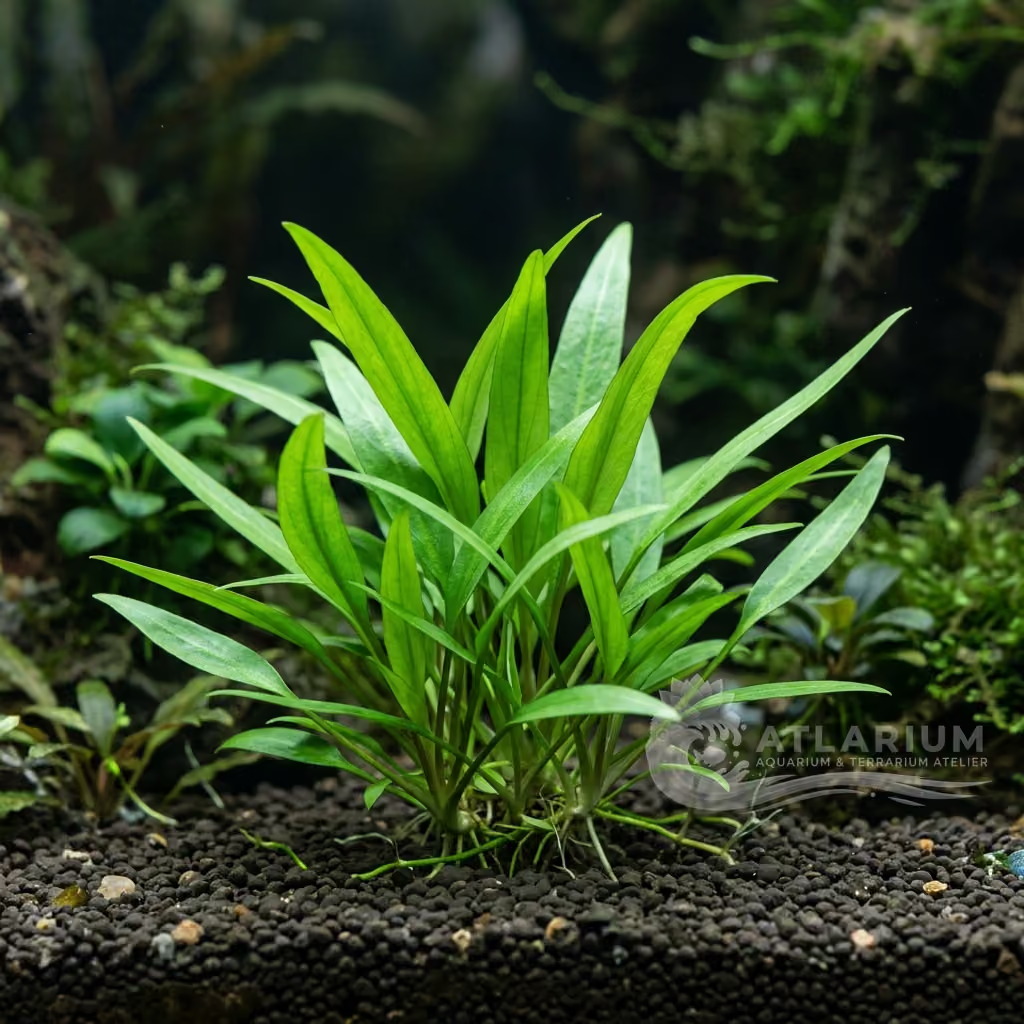
Bucephalandra sp. "Bodok"
Bucephalandra sp. "Bodok"
An elite, shade-loving micro-rheophyte from the remote Bodok region of Borneo. Its specialized structure tightly grips underwater stones in fast currents.
Water Temperature
20 - 26 °C
pH Value
6 - 7.5
Water type
Freshwater
Light
Low
CO2
Low
Expected height
5 cm
Expected width
5 cm
GH
4 - 20 dGH
KH
0 - 10 dKH

Species description
Geographical Origin and Habitat: Endemic exclusively to the remote, isolated river systems of the Bodok region in West Kalimantan, Borneo. This extremely specialized, unnamed variant (Bucephalandra sp. "Bodok") is an elite micro-rheophyte. It has evolved to survive by cementing itself fiercely to porous, moss-covered rocks along the margins of fast-flowing, highly oxygenated jungle streams. It thrives deep beneath the impenetrable Bornean rainforest canopy, completely adapted to living in heavy shade and surviving massive, violent seasonal monsoonal floods.
Taxonomy & Genetics: Like many newly discovered variants, "Bodok" has not yet received a formal scientific species classification and is traded simply by its catch location. However, its genetics are profoundly unique. It is famously classified in the hobby as a "micro" or "nano" Bucephalandra. It is highly prized by elite collectors and competition aquascapers for its extreme genetic dwarfism, completely distinguishing it from common, large-leaved commercial variants like "Wavy Green" or "Broad Leaf."
Physical Structure: The structural architecture of "Bodok" is microscopic, incredibly dense, and strictly crawling. It features a tiny, hard, woody rhizome that creeps horizontally like a vine, locking onto rocks with surprisingly thick white roots. The leaves are the defining feature: they are spectacularly small (barely 0.5 to 1 cm in length), perfectly rounded, and slightly cupped (convex). It does not grow upward; instead, the tiny rhizome branches repeatedly, forming a solid, impenetrable, prehistoric-looking carpet over hardscape.
Color & Texture: The coloration is a rich, completely solid, vibrant dark emerald-green. Unlike metallic or purple variants, "Bodok" rarely flushes red or blue, maintaining a pristine, glowing green aesthetic. The tiny, round leaves are incredibly thick, leathery, and stiff, completely lacking the delicate, papery texture of stem plants. Under high-intensity LED lighting, the dark green leaves are completely dusted with microscopic, iridescent silver dots (stomata), causing the tiny creeping carpet to sparkle brilliantly underwater.

Care, breeding and tankmates
Lighting & CO2: It is an extreme shade-loving epiphyte. It MUST be protected from direct, blasting, high-intensity lighting, which will quickly stunt its growth and invite devastating algae. It thrives best in the deep shadows cast by large driftwood branches. While it can theoretically survive without CO2, injecting pressurized CO2 is absolutely mandatory in a high-end aquascape. Because its growth rate is agonizingly, painfully slow, CO2 acts as a vital catalyst to force the tiny rhizome to branch and form a dense carpet.
Nutrition & Substrate: Like all Bucephalandra, "Bodok" is an obligate epiphyte. It MUST NEVER be buried in aquasoil, sand, or gravel; burying the microscopic woody rhizome will instantly suffocate and rot the plant. It feeds entirely from the water column. It must be meticulously glued (using cyanoacrylate gel) directly to porous rocks or rough driftwood. To fuel the production of its tiny, glittering leaves, the water column must be dosed with a high-quality liquid fertilizer rich in trace minerals.
Water Chemistry: Originating from the untouched blackwater streams of Borneo, it demands pristine water quality. It prefers soft, slightly acidic water (pH 6.0 - 6.8) and cooler tropical temperatures (20-25°C). The single most critical environmental requirement is relentless, sweeping water flow. Because the plant is microscopic and grows agonizingly slowly, it is a massive magnet for detritus. High flow is required to physically blast dirt off the tiny, round leaves, preventing suffocation and devastating algae outbreaks.
Space Management & Placement: Due to its microscopic size, extreme rarity, and creeping carpet-like growth, it is the ultimate "jewel" plant for detailing nano-aquariums. It should never be used in the background or hidden. Glue tiny clusters of "Bodok" directly to the prominent, high-flow tips of your central driftwood, or use it to completely encrust the foreground crevices of Seiryu stone. It creates a stunning, ancient, moss-like texture that makes hardscape look like it has been submerged for decades.
Pruning: Pruning is almost completely unnecessary due to its terrifyingly slow growth rate. If propagation is required, use surgical-grade, fine-tipped spring scissors to cleanly sever the creeping micro-rhizome. Ensure the cut clone possesses at least 5-6 healthy tiny leaves and its own white gripping roots. Use the smallest possible drop of cyanoacrylate superglue to attach the precious clone to a new rock. Never tear the tiny leaves by hand, as it will destroy the fragile rhizome.
Risks & Diseases: The absolute greatest threat to this ultra-rare micro-variant is "Buce Melt." Any sudden instability in water chemistry (ammonia spikes, CO2 fluctuations, or uncycled tanks) will cause the plant to panic and dissolve its priceless tiny leaves into slime within 24 hours. The second greatest threat is Black Beard Algae (BBA). Because the leaves are tiny and grow so slowly, a BBA outbreak will completely swallow and permanently destroy the plant if water flow or CO2 is inadequate.

Geographic origin and distribution
Endemic exclusively to the remote, isolated river systems of the Bodok region in West Kalimantan, Borneo. This extremely specialized, unnamed variant (Bucephalandra sp. "Bodok") is an elite micro-rheophyte. It has evolved to survive by cementing itself fiercely to porous, moss-covered rocks along the margins of fast-flowing, highly oxygenated jungle streams. It thrives deep beneath the impenetrable Bornean rainforest canopy, completely adapted to living in heavy shade and surviving massive, violent seasonal monsoonal floods.
Origin
South and Southeast Asia

Plant profile
- Placement
- Epiphyte
- A robust and attractive Bucephalandra variant. As a classic epiphyte, it is meant to be placed directly onto the hardscape. It fits perfectly into the crevices of rocks or along the branches of driftwood. Ensure it receives adequate flow to prevent detritus buildup on its slow-growing leaves. Proper placement highlights its natural beauty and promotes healthy attachment.
- Botanical form
- Rhizome
- This plant is characterized by its specific morphological adaptations. A robust and attractive Bucephalandra variant. The leaves possess a distinct texture and structure that adds a unique visual element to the aquascape. When grown under optimal conditions, it exhibits its true botanical form vividly. Its unique structure makes it a valuable addition to diverse aquatic layouts.
- Growth
- Very slow
- Under optimal conditions with high light and CO2, the growth rate is considered very slow. A robust and attractive Bucephalandra variant. In lower tech setups, it will grow significantly slower and may adapt its morphology. Regular pruning may be necessary to maintain a compact growth form over time. Its growth speed is directly correlated with the availability of light, CO2, and dissolved nutrients.
- Substrate
- None
- A robust and attractive Bucephalandra variant. This plant is an epiphyte and should never have its rhizome buried in the substrate. Doing so will lead to rot and eventual death. Instead, it must be attached to hardscape materials such as wood or rocks using thread or aquarium-safe glue. Over time, its roots will naturally grip the surfaces.
- Column fertilization
- Recommended
- A robust and attractive Bucephalandra variant. Water column feeding plays a massive role in the overall vitality of this species. Consistent dosing of micro and macronutrients ensures the leaves remain vibrant and free of deficiencies. It is highly responsive to changes in liquid nutrient levels, making it a good indicator species. Employing a strict dosing schedule will yield the most consistent and impressive results.
- Root fertilization
- None
- A robust and attractive Bucephalandra variant. Since it does not grow in the substrate, traditional root tabs are entirely ineffective. This plant relies almost exclusively on its exposed root system and leaves to absorb nutrients directly from the water flow. Maintaining a rich water column is therefore the primary method of fertilization. Occasional use of liquid root-stimulators in the water can help establish new growth.
- Trimming
- Occasional
- Trimming is rarely needed due to the slow growth rate. When necessary, simply cut the rhizome with clean, sharp scissors to remove old or damaged sections. Avoid cutting individual leaves unless they are decaying, as this will not encourage new growth from the cut stem.
- Propagation
- Rhizome division
- A robust and attractive Bucephalandra variant. Propagation is achieved by carefully cutting the rhizome into smaller pieces. Each new piece must have at least three to four healthy leaves and a portion of the root system to survive. Use very sharp, sterilized scissors to make a clean cut and prevent infection. The new segments can then be reattached to other areas of the hardscape.
- Sensitivity
- Moderate
- This plant is sensitive to sudden changes in water parameters, which can trigger leaf melt. It is also susceptible to algae growth on its leaves if placed under very intense light without adequate CO2. Stable conditions and good water flow are essential for its long-term health.
- Layout role
- Epiphyte, Midground, Nano
- It serves as an excellent detail plant for midground or foreground areas, adding texture and unique colors. Its small size and epiphytic nature make it perfect for naturalizing hardscape transitions. It is highly valued in aquascaping for creating focal points in nano tanks or intricate details in larger layouts.

Image gallery
Licensed images linked to the species or, when marked, to the closest representative taxon.

Related species
Recommendations grouped by close relatives, companion choices, and similar care.