Anubias heterophylla
Anubias heterophylla
Monumental Central African epiphyte. Survives in extreme low-light environments and requires no CO2 to fuel its glacial growth pace anchored to rocks.
Water Temperature
12 - 30 °C
pH Value
5 - 8
Water type
Freshwater
Light
Da bassa ad alta
CO2
Low
Expected height
60 cm
Expected width
60 cm
GH
4 - 20 dGH
KH
0 - 15 dKH

Species description
Geographical Origin and Habitat: Endemic to the massively forested, humid tropical river basins of the Democratic Republic of Congo, Cameroon, and Angola in Central and West Africa. It is a monumental rheophyte that evolved to survive in extremely deep, shaded jungle rivers and rocky, fast-flowing tributaries. To withstand the immense, tearing force of seasonal floods, it evolved a gargantuan, creeping root system specifically engineered to aggressively wrap around and bind permanently to massive submerged boulders and heavy, sunken tree trunks. The overarching canopy plunges its habitat into near darkness, perfectly adapting the plant for extreme low-light aquariums.
Taxonomy & Genetics: First formally described by the German botanist Heinrich Gustav Adolf Engler in 1879, Anubias heterophylla is a true, genetically distinct species within the Anubias genus. The Latin specific epithet "heterophylla" translates roughly to "different leaves" or "diverse leaves," which refers directly to the plant's extraordinary biological ability to produce highly varied leaf shapes (from narrowly elliptical to broadly lanceolate) on the exact same rhizome depending on environmental conditions, age, and water current.
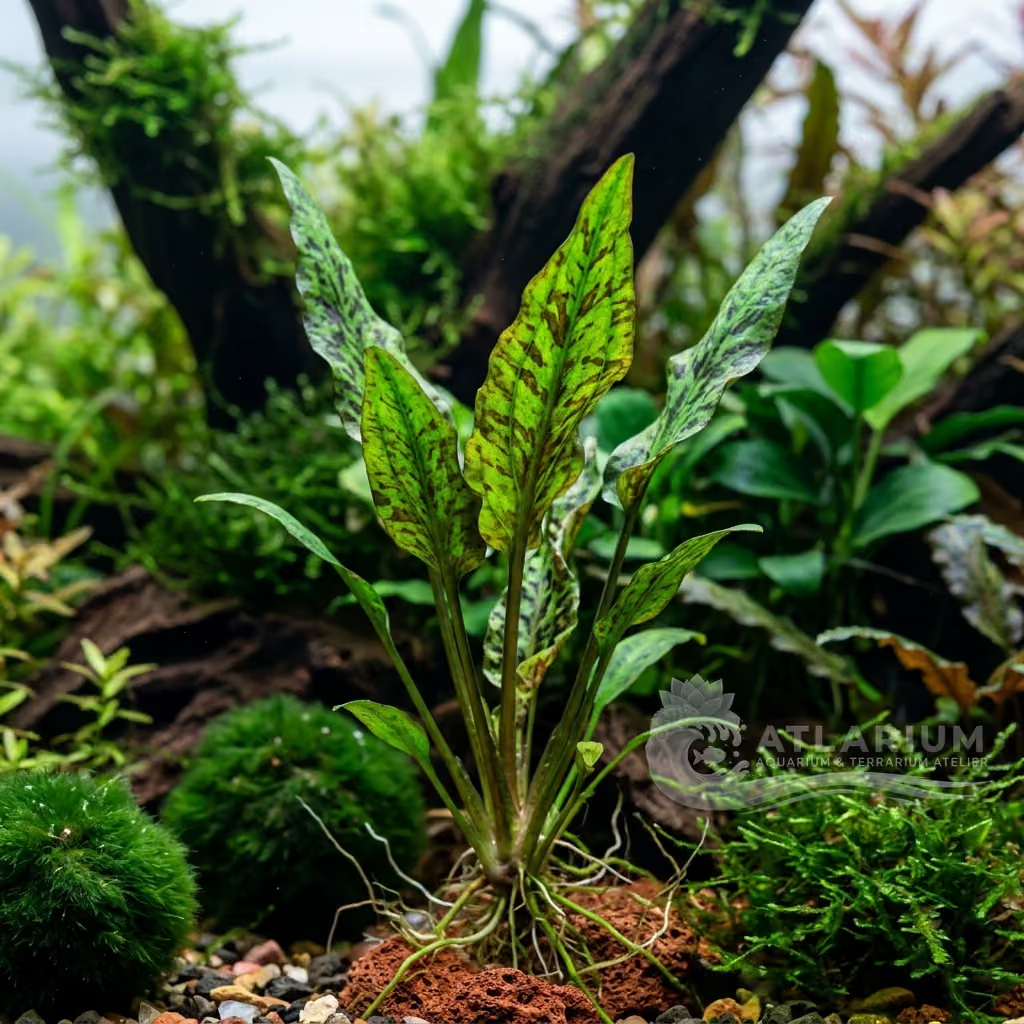
Physical Structure: The physical scale and structural architecture of this species are genuinely breathtaking. It produces a colossal, creeping horizontal rhizome that becomes as thick and tough as real wood over time. The exceptionally long, rigid stems grow strictly upright and support massive, highly elongated, spear-shaped leaves that frequently exhibit beautifully undulating or wavy margins. This is an absolute titan among epiphytes, with mature leaves easily capable of reaching 25-40 cm (10-16 inches) in length alone.
Color & Texture: The massive, wavy, spear-shaped leaves are universally colored a solid, intensely opaque, dark emerald green. The texture of the plant is notoriously brutal and armor-like: the leaves are phenomenally thick, heavily ridged, and highly coriaceous (leathery), feeling almost exactly like stiff plastic or thick cardboard. This extreme cellular toughness makes the plant completely indestructible and entirely immune to being destroyed or eaten by giant herbivorous fish like massive Plecos, Goldfish, or large Cichlids.

Care, breeding and tankmates
Lighting & CO2: It is strictly an obligate, extreme low-light epiphyte and absolutely requires no CO2 injection to survive. Because its colossal leaves grow at a glacial, almost imperceptible pace, exposing this massive plant to intense LED lighting or direct sun is a fatal error. The plant physically cannot process the light energy fast enough, guaranteeing the beautiful, undulating leaves will be instantly and permanently smothered in suffocating black crusts of Black Beard Algae (BBA). It must be kept deeply shaded in the aquarium.
Nutrition & Substrate: This colossal titan feeds exclusively from the water column. The massive, creeping rhizome MUST NEVER BE BURIED under the substrate (sand, gravel, or soil) under any circumstances, or the entire plant will rapidly rot, turn to toxic mush, and die. It requires absolutely no substrate. Instead, it absorbs all essential macro and micro nutrients directly through its massive leaves and thick, wire-like root system via comprehensive liquid fertilization dosed directly into the water.
Water Chemistry: It is a prehistoric, practically unkillable survivor. It thrives effortlessly in standard tropical temperatures (22-28°C) but easily tolerates much cooler water. Most importantly, it completely ignores wild, chaotic fluctuations in pH, severe ammonia spikes, or extreme water hardness. It can survive in soft, highly acidic blackwater biotopes just as easily as it thrives in the hard, liquid rock of a Rift Lake Cichlid setup. It is the ultimate indestructible centerpiece for unstable water conditions.
Space Management & Placement: Because of its truly gigantic size, incredibly long upright stems, and massive wavy leaves, it must be utilized exclusively as a dominant background centerpiece in very large aquariums. The massive rhizome must be aggressively attached—using cyanoacrylate superglue, thick zip ties, or heavy stainless-steel wire—to a massive piece of heavy driftwood or a very large rock. It is completely unsuitable for nano tanks, as a single towering leaf will completely block the entire display.
Pruning: Pruning is almost non-existent due to its incredibly slow, glacial metabolic growth rate. To artificially propagate the plant, use heavy, sharp pruning shears to cut the massive, woody rhizome completely in half. To maintain the pristine visual purity of the display, simply cut any ancient, yellowing, or heavily algae-covered leaves directly at the base of the incredibly thick stem, as close to the main rhizome as physically possible.
Risks & Diseases: The plant suffers from virtually no biological diseases, melting, or nutritional deficiencies. Its glacial growth rate and massive, broad leaf surface area make it the absolute perfect, unavoidable host for Green Spot Algae (GSA) and Black Beard Algae (BBA). You MUST keep the aquarium water exceptionally clean, keep organics low, and most importantly, keep the plant heavily shaded by towering hardscape or floating plants to prevent algae crusts.

Geographic origin and distribution
Endemic to the massively forested, humid tropical river basins of the Democratic Republic of Congo, Cameroon, and Angola in Central and West Africa. It is a monumental rheophyte that evolved to survive in extremely deep, shaded jungle rivers and rocky, fast-flowing tributaries. To withstand the immense, tearing force of seasonal floods, it evolved a gargantuan, creeping root system specifically engineered to aggressively wrap around and bind permanently to massive submerged boulders and heavy, sunken tree trunks. The overarching canopy plunges its habitat into near darkness, perfectly adapting the plant for extreme low-light aquariums.
Origin
Africa and Madagascar

Plant profile
- Placement
- Background
- It is best placed in the midground to background of the aquarium. Attach it to wood or rocks using thread or glue. Ensure the rhizome is not buried in the substrate to avoid rotting.
- Botanical form
- Rhizome
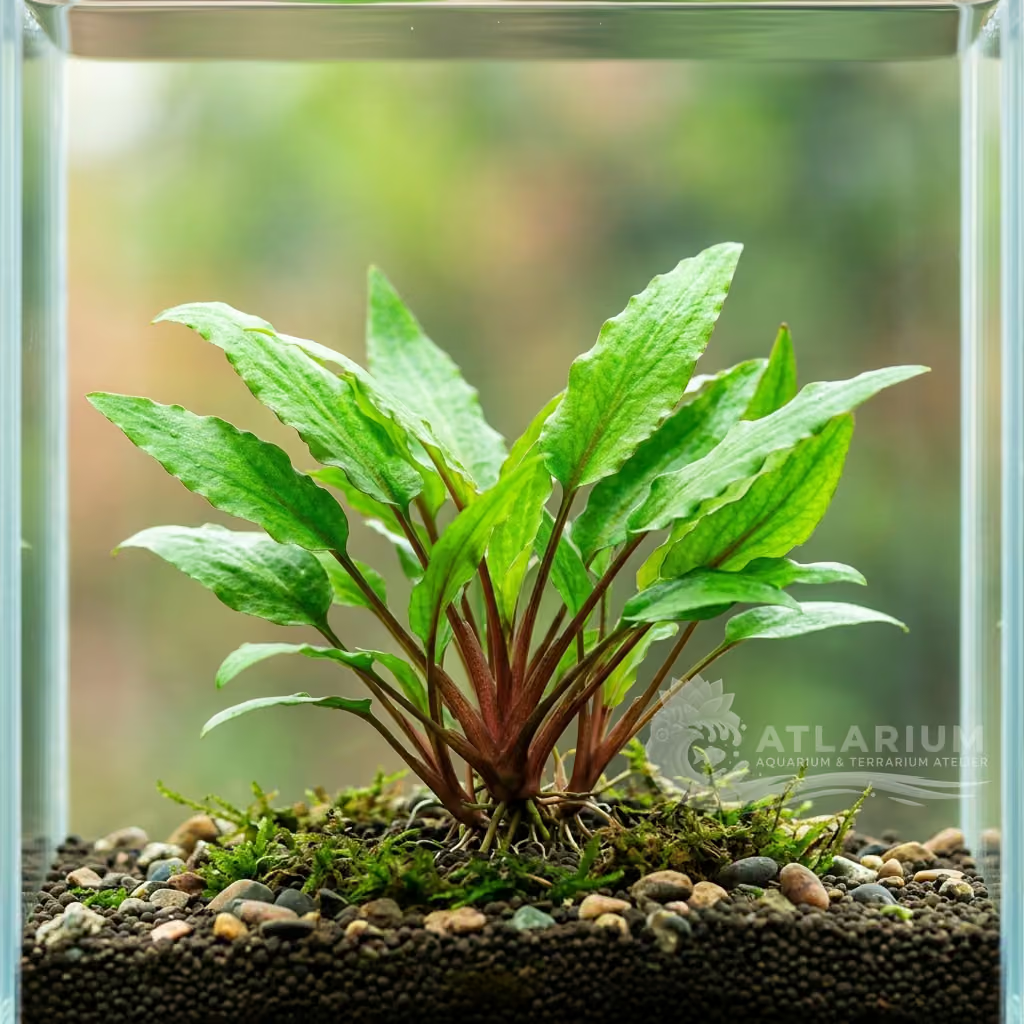
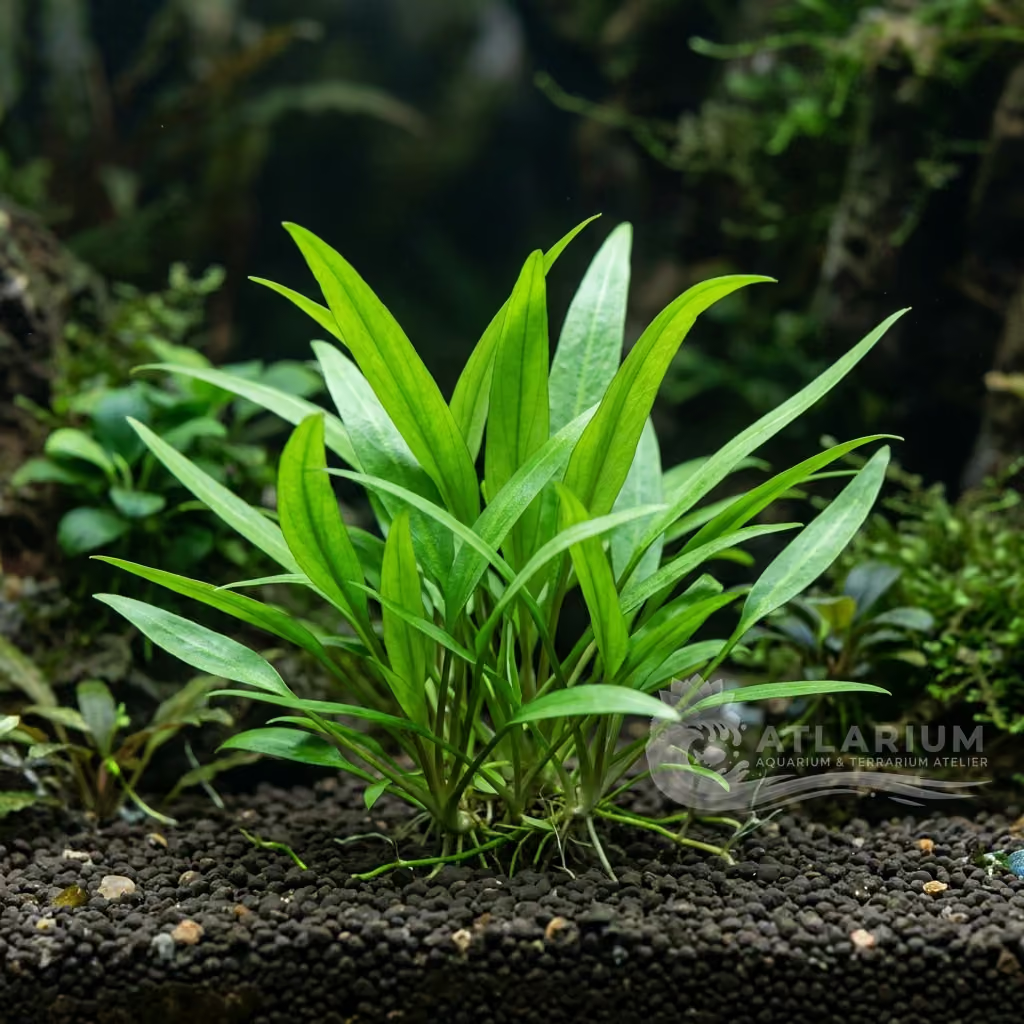
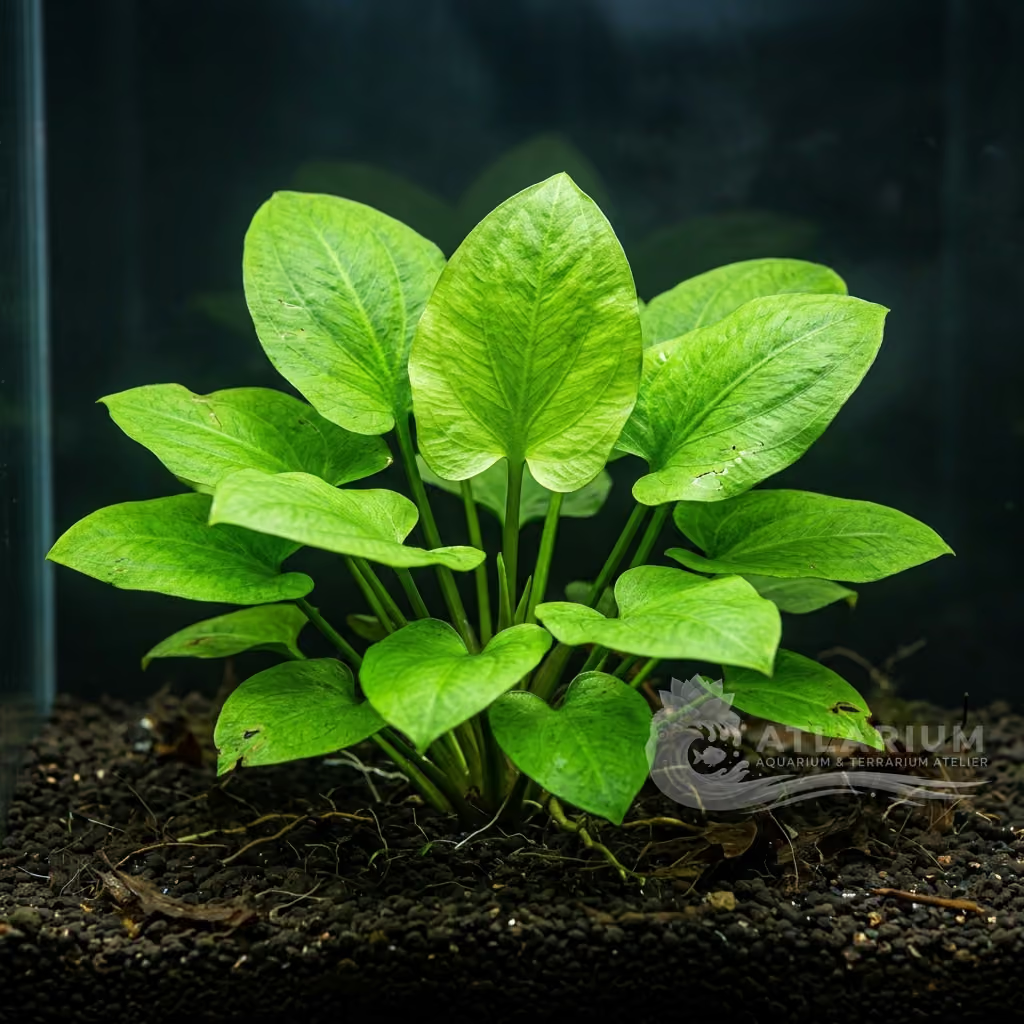
- It features elongated, wavy-edged leaves that vary somewhat in shape. The leaves are light to medium green and grow from a creeping rhizome. It provides a slightly different look than the standard nana.
- Growth
- Very slow
- It exhibits a very slow growth rate, typical of the Anubias genus. It requires very little maintenance and rarely needs pruning. It does perfectly well without added CO2.
- Substrate
- None
- Anubias heterophylla shares the typical avoidance of buried substrates characteristic of its genus, preferring to grow firmly attached to structural elements in the aquarium. Its robust root network is designed to clamber over the uneven surfaces of rocks and driftwood, holding the plant steady against water movement. Attempting to plant its thick rhizome in gravel or soil will inevitably cause it to suffocate and deteriorate. It absorbs all necessary life-sustaining minerals from the water column, meaning a completely bare tank bottom is just as suitable as an elaborate, layered substrate system.
- Column fertilization
- Recommended
- It absorbs nutrients directly from the water column. A basic liquid fertilizer dosed sparingly is ideal. Potassium and iron will help keep the leaves healthy and brightly colored.
- Root fertilization
- None
- Root fertilizers are ineffective for this epiphyte. Its roots are designed to grip hardscape surfaces firmly. It does not extract nutrients from the substrate.
- Trimming
- Occasional
- Pruning is rarely necessary. Just remove any old or algae-covered leaves by cutting the stem close to the rhizome. This helps the plant maintain its vigor and appearance.
- Propagation
- Rhizome division
- Propagate by dividing the rhizome into smaller sections with a sharp blade. Make sure each section has a few leaves and roots. Attach them to new hardscape locations.
- Sensitivity
- Moderate
- It is sensitive to bright light, which can quickly lead to algae covering its leaves. Shaded placement is highly recommended. Burying the rhizome is fatal to the plant.
- Layout role
- Midground, Background
- Its wavy, elongated leaves add a nice textural variation to the midground. It contrasts well with both broad-leaved and fine-leaved plants. It helps create a natural, established look.

Image gallery
Licensed images linked to the species or, when marked, to the closest representative taxon.

Related species
Recommendations grouped by close relatives, companion choices, and similar care.