Aponogeton boivinianus
Aponogeton boivinianus
Massive, high-energy bulb plant from fast-flowing Madagascar rivers. Demands intense lighting and heavy nutrients for explosive, large-scale growth.
Water Temperature
16 - 33 °C
pH Value
6 - 8
Water type
Freshwater
Light
Da media ad alta
CO2
Medium
Expected height
80 cm
Expected width
50 cm
GH
4 - 20 dGH
KH
7 - 21 dKH

Species description
Geographical Origin and Habitat: Endemic exclusively to the fast-flowing, rocky rivers and torrential streams of Madagascar, particularly in the northern and eastern regions of the island. It is a highly specialized, aquatic bulb plant (geophyte) that evolved to survive in extremely dynamic environments. During the dry season, when riverbeds dry up entirely, the massive subterranean bulb goes completely dormant, storing massive energy reserves. When the torrential rainy season returns and the rivers flood, the bulb explodes back into life, sending massive, heavily textured leaves shooting to the surface to catch the intense tropical sunlight.
Taxonomy & Genetics: First described by the French botanist Henri Ernest Baillon in 1894, Aponogeton boivinianus is an undisputed titan within the Aponogetonaceae family. True specimens of boivinianus are highly prized and relatively rare in the commercial hobby, as they are notoriously difficult to breed via seeds in captivity and require specialized tissue culture or sustainable harvesting of the massive, woody bulbs directly from Madagascar.
Physical Structure: The foundational architecture of the plant is an enormous, woody subterranean tuber (bulb) that can grow as large as a baseball. From this massive energy reserve, an incredibly explosive, dense rosette of leaves emerges. The stems are remarkably long and powerful, supporting truly gargantuan leaves that can easily eclipse 50-80 cm (20-30 inches) in length and 8 cm (3 inches) in width. The plant is a towering behemoth that completely dominates any space it occupies.
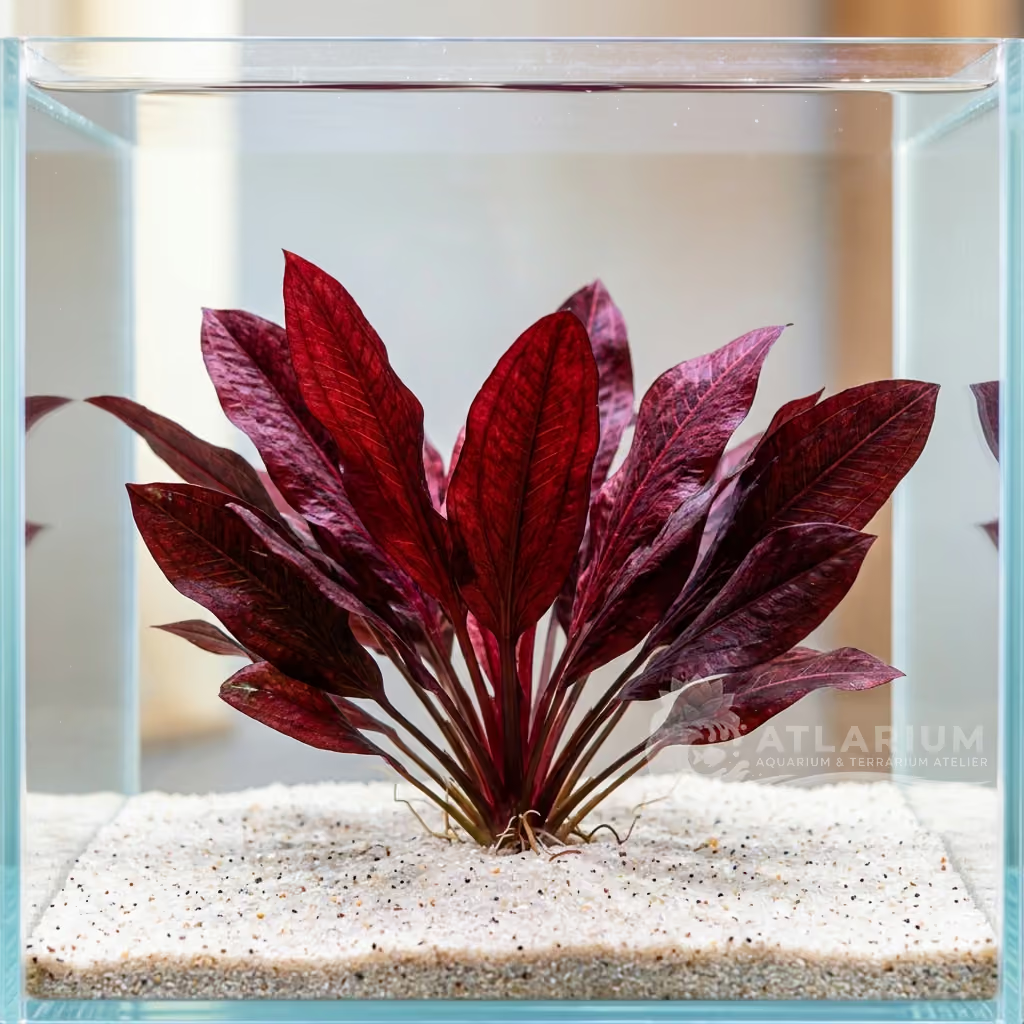
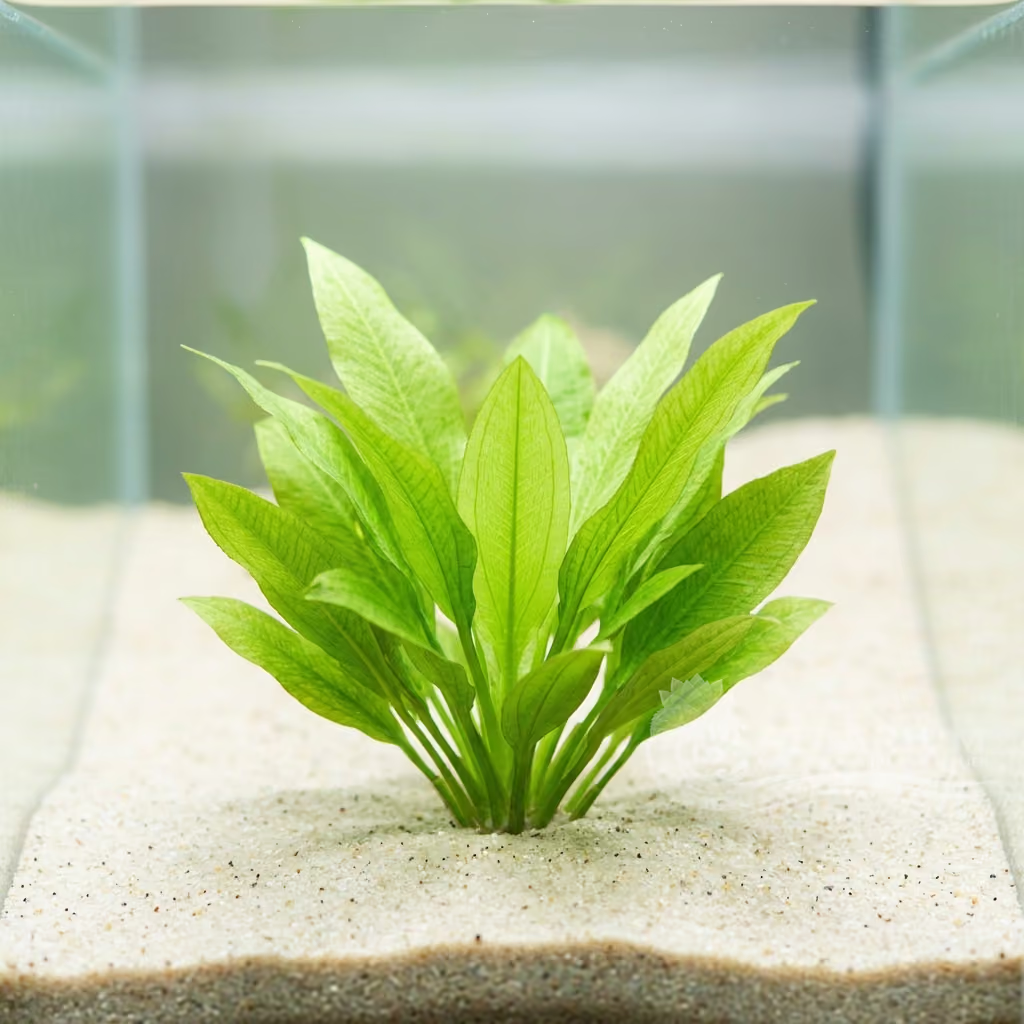
Color & Texture: This is where Aponogeton boivinianus earns its legendary status. The leaves are not flat; they are insanely bullate (heavily blistered, crinkled, and puckered) across their entire surface, resembling dark green seersucker fabric or melted plastic. The deepest parts of the crinkles are a dark emerald, while the raised blisters are highly translucent and catch the light brilliantly. Young, emerging leaves are often a stunning, translucent olive-brown or bronze before maturing into a solid, vibrant dark green.

Care, breeding and tankmates
Lighting & CO2: Unlike slow-growing epiphytes, this massive bulb plant is a high-energy powerhouse. It demands medium to extremely intense RGB LED lighting to fuel its explosive growth rate and produce its signature massive, deeply crinkled leaves. While it can theoretically survive without CO2, injecting pressurized CO2 is highly recommended to unlock its true gargantuan potential and prevent the massive leaves from melting. High energy input directly translates to thicker, more deeply textured foliage.
Nutrition & Substrate: It is an aggressive, monstrous root feeder. The massive, woody bulb MUST be planted into a very deep, incredibly rich, nutrient-dense substrate. Deep aquasoil heavily spiked with iron-rich root tabs is mandatory. A thin layer of inert sand or gravel will absolutely starve this plant to death. The roots extending from the bulb will easily rip through the entire bottom of a large aquarium in a matter of weeks, aggressively hunting for buried macronutrients.
Water Chemistry: Because it originates from the fast-flowing rivers of Madagascar, it absolutely demands pristine, highly oxygenated water with strong, torrential flow. It strongly prefers slightly cooler tropical temperatures (20-25°C) and will rapidly exhaust itself and melt if kept in hot water (28°C+). It prefers slightly acidic to neutral pH and soft to moderately hard water. High water flow is critical to keep its massive, crinkled leaves clean of debris.
Space Management & Placement: This is the ultimate, undisputed background or solitary centerpiece plant for massive aquariums (100+ gallons / 400+ liters). It grows so explosively large and wide that a single mature bulb can completely eclipse half of a standard 55-gallon tank, plunging everything below it into total darkness. It must be placed in the far background, directly in the path of the filter outlet, allowing its massive, crinkled leaves to stream violently in the current.
Pruning: Due to its explosive growth rate, heavy pruning is frequently required. To prune, use long scissors to cut the oldest, outermost, or excessively long leaves as close to the top of the bulb as physically possible. Never cut a leaf halfway across the blade, as it will rot. If the plant becomes too massive, you must mercilessly prune up to 60% of the leaves to prevent it from completely blocking all light in the aquarium.
Risks & Diseases: The absolute greatest risk is the infamous "Aponogeton Bulb Rot" and the mandatory dormancy period. If the bulb is buried too deeply or damaged, it will rapidly rot into foul-smelling mush. More importantly, this plant is biologically programmed to go dormant. After 8-12 months of explosive growth, it will suddenly stop growing and drop its leaves. The bulb MUST be removed, placed in cold, damp sand in the dark for 2 months to rest, and then replanted, or it will exhaust itself and die permanently.

Geographic origin and distribution
Endemic exclusively to the fast-flowing, rocky rivers and torrential streams of Madagascar, particularly in the northern and eastern regions of the island. It is a highly specialized, aquatic bulb plant (geophyte) that evolved to survive in extremely dynamic environments. During the dry season, when riverbeds dry up entirely, the massive subterranean bulb goes completely dormant, storing massive energy reserves. When the torrential rainy season returns and the rivers flood, the bulb explodes back into life, sending massive, heavily textured leaves shooting to the surface to catch the intense tropical sunlight.
Origin
Africa and Madagascar

Plant profile
- Placement
- Background
- Due to its enormous size, it should strictly be placed in the background or as a solitary centerpiece in very large aquariums. The bulb should be planted so that the tip remains slightly above the substrate to prevent rot. Ensure it has plenty of horizontal and vertical space, as its leaves can easily stretch across the tank.
- Botanical form
- Tuber
- This stunning plant features very large, transparent, deeply textured (bullated) leaves that can be dark green to brownish. The leaves are sturdy but flexible, designed to sway gracefully in strong water currents. It grows from a central bulb and can develop a massive root system over time.
- Growth
- Fast
- Once acclimated, it grows remarkably fast, sending up large leaves in rapid succession. The speed of growth is heavily dependent on nutrient availability and strong lighting. It may occasionally enter a natural dormant phase where growth halts completely and leaves die back.
- Substrate
- High
- Aponogeton boivinianus develops a massive bulb that requires a deep, nutrient-dense substrate to flourish. An active aqua soil or a laterite-rich base layered under gravel is highly recommended to fuel its rapid, large-scale foliage growth. A depth of at least 6-8 cm (2.5-3 inches) is essential to accommodate the extensive root network and prevent the large bulb from becoming uprooted. Heavy root feeding is critical during its active growth phase, as its massive leaves demand high mineral uptake directly from the soil.
- Column fertilization
- Recommended
- While root feeding is its primary mode of nutrient uptake, it also benefits from water column supplementation. A complete liquid fertilizer ensures that the rapidly growing leaves have access to immediate trace elements. Adequate potassium in the water column helps prevent pinholes in its expansive foliage.
- Root fertilization
- Required
- A nutrient-rich substrate is absolutely mandatory for long-term success with this species. Frequent addition of high-quality root tabs directly beneath the bulb will fuel its aggressive growth. Without robust root fertilization, the plant will exhaust its bulb reserves and slowly decline.
- Trimming
- Occasional
- Trimming mainly involves removing older, damaged, or decaying leaves at the base near the bulb. Never cut the leaves in half; always remove the entire leaf stem cleanly. During its resting phase, you may need to remove all dying foliage and leave the bulb undisturbed.
- Propagation
- Seeds
- Propagation in the home aquarium is quite difficult and usually relies on the plant flowering and producing seeds. Splitting the bulb is highly risky and often leads to the death of the plant due to rot. Most aquarists purchase new bulbs rather than attempting to propagate them manually.
- Sensitivity
- Moderate
- The bulb is susceptible to rot if completely buried under a heavy or compacted substrate. It thrives in cooler water with strong flow and may suffer in high-temperature environments. It requires a resting period periodically, which shouldn't be mistaken for the plant dying.
- Layout role
- Background
- It acts as a dramatic, dominant focal point in large aquascapes, drawing the eye immediately. The heavy texture of its leaves creates a stunning contrast against smooth hardscape or fine stem plants. Its size and flow make it ideal for river manifold setups mimicking fast-flowing streams.

Image gallery
Licensed images linked to the species or, when marked, to the closest representative taxon.

Related species
Recommendations grouped by close relatives, companion choices, and similar care.