Aponogeton natans
Aponogeton natans
Versatile South Asian bulb plant. Needs moderate to intense lighting to prevent excessive petiole elongation and to support full submerged foliage.
Water Temperature
20 - 31 °C
pH Value
5 - 8
Water type
Freshwater
Light
Medium - High
CO2
Low - High
KH
2 - 14 dKH

Species description
Geographical Origin and Habitat: Aponogeton natans is native to the tropical regions of South Asia, widely distributed in India, Sri Lanka, and Bangladesh. It populates temporary water bodies, ponds, swamps, and slow-flowing rivers. This species has evolved to adapt to climates strongly influenced by monsoons. During the rainy season it grows submerged in floodplains, while in the dry season, when the water recedes, it survives thanks to the bulb buried in the damp mud, entering a state of vegetative dormancy.
Taxonomy & Genetics: Taxonomically it belongs to the Aponogetonaceae family and the genus Aponogeton. The specific designation 'natans' derives from Latin and refers to its strong tendency to develop floating leaves on the water surface. At the genetic level, it has molecular adaptations that allow it to rapidly modify the structure of leaves from submerged (thin and flexible) to emersed/floating (thicker and cutinized) in response to the water level.
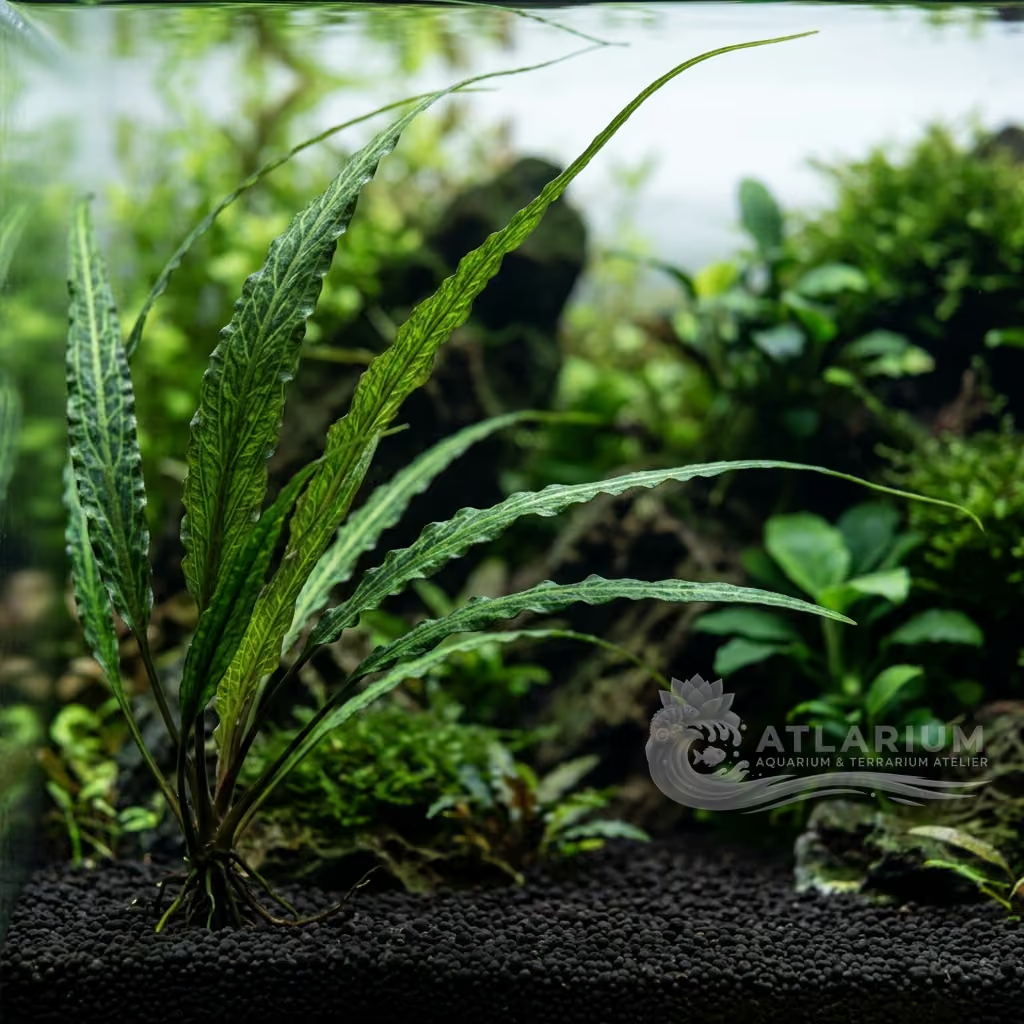
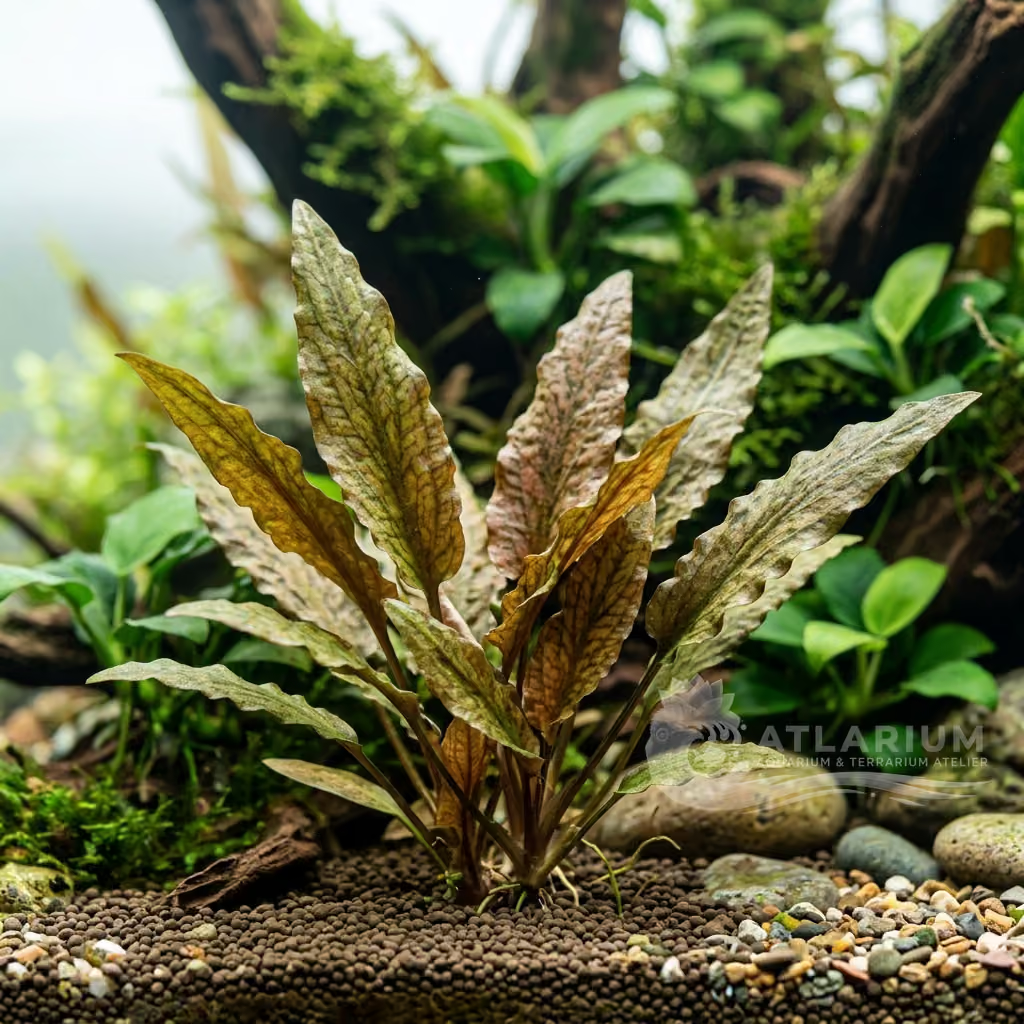
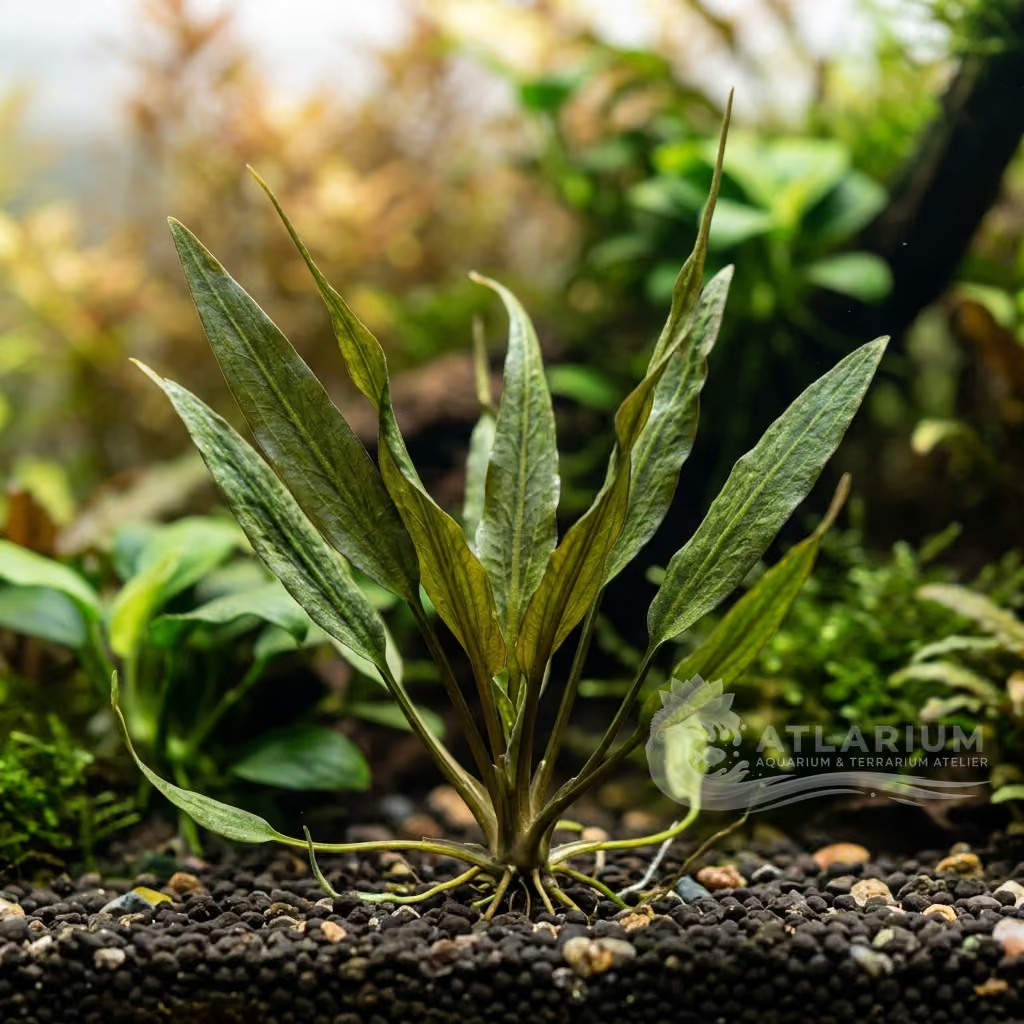
Physical Structure: The plant develops from a rounded underground tuber. It produces a basal rosette of petiolate leaves. Submerged leaves are lanceolate, slightly wavy along the margins, and supported by flexible petioles. As the plant matures or the water level decreases, it develops very long petioles that carry floating elliptical or lanceolate leaves to the surface, similar to water lily leaves but narrower.
Color & Texture: Submerged leaves show a light green or olive green color with a translucent and delicate texture. Floating leaves, on the other hand, present a glossy dark green coloration on the upper page, with a leathery, shiny, and water-repellent texture to withstand direct solar radiation and evaporation. The veins are parallel and run longitudinally along the leaf.

Care, breeding and tankmates
Lighting & CO2: Requires moderate to intense lighting. If light is insufficient, the plant tends to leg out, excessively lengthening the petioles without developing healthy leaves. CO2 injection promotes lush growth and more compact submerged leaves, reducing the immediate tendency to produce only floating leaves.
Nutrition & Substrate: Like all Aponogeton species, it is a demanding plant from a nutritional standpoint at the root level. It requires a fertile and deep substrate. Supplementing with fertilizer tablets rich in iron and potassium placed in the soil near the bulb is highly recommended to support metabolism.
Water Chemistry: Adapts to a wide range of water chemistry, tolerating pH from 5.0 to 8.0 and a hardness KH between 2 and 14 dKH. The ideal cultivation temperature is between 20°C and 31°C. Avoid accumulation of nitrates and phosphates, which can induce early flowering and the consequent rest phase.
Space Management & Placement: Should be placed in the midground or background of the aquarium. Due to the development of floating leaves, it is important to monitor the surface space: if floating leaves become too numerous, they can excessively shade the light for the plants below, which will suffer.
Pruning: Pruning consists of removing older or damaged submerged leaves by cutting the petiole close to the bulb. If you want to keep the plant in submerged form, newly formed floating leaves must be systematically cut before they reach the water surface.
Risks & Diseases: The main risk is tuber rot due to an anaerobic substrate; the bulb should not be buried completely but left partially visible. Furthermore, after a period of intense growth and flowering, the plant may lose all its leaves: in this case, the bulb must be allowed to rest in cool water.

Geographic origin and distribution
Aponogeton natans is native to the tropical regions of South Asia, widely distributed in India, Sri Lanka, and Bangladesh. It populates temporary water bodies, ponds, swamps, and slow-flowing rivers. This species has evolved to adapt to climates strongly influenced by monsoons. During the rainy season it grows submerged in floodplains, while in the dry season, when the water recedes, it survives thanks to the bulb buried in the damp mud, entering a state of vegetative dormancy.
Origin
South and Southeast Asia

Plant profile
- Placement
- Midground
- Ideally suited for the background or as a striking midground specimen in larger aquariums. Its long, flowing leaves require ample vertical space to stretch out fully. It should be positioned where its foliage will not completely shade out shorter foreground plants.
- Botanical form
- Rosette, Tuber
- Characterized by elongated, somewhat translucent leaves that gracefully sway in the water current. The plant grows from a tuberous rhizome and can produce beautiful floating leaves if allowed. It frequently sends up long stalks bearing delicate, aesthetically pleasing inflorescences.
- Growth
- Fast
- This plant exhibits a fast growth rate, especially when provided with high light and CO2 supplementation. It will quickly send out new leaves and can rapidly reach the surface of the aquarium. Like other Aponogeton species, it may periodically experience a dormancy phase.
- Substrate
- High
- Aponogeton natans demands a nutrient-dense rooting environment to support both its submerged leaves and rapid flowering stalks. A generous layer of commercial aqua soil, typically 5-7 cm deep, gives its root system the space and minerals needed for robust health. Supplemental root fertilization is highly beneficial, especially during active blooming periods when the plant's energy demands peak. The tuber must be partially exposed above the soil level to prevent anaerobic rot while the roots delve deep into the substrate.
- Column fertilization
- Recommended
- Regular dosing of liquid fertilizers into the water column is highly recommended to support its rapid growth. Supplying adequate potassium and trace elements ensures the leaves remain vibrant and free of pinholes. It efficiently absorbs dissolved nutrients directly through its large leaf surfaces.
- Root fertilization
- Required
- A nutrient-rich substrate or root tabs placed near the tuber will greatly benefit its development. A strong root system helps anchor the plant and supplements its nutrient intake from the water column. Avoid burying the crown of the tuber to prevent rot.
- Trimming
- Occasional
- Pruning involves removing older, decaying, or damaged leaves by cutting them close to the base. If floating leaves are not desired, they can be continuously snipped off to encourage more submerged growth. Regular trimming keeps the plant looking tidy and prevents it from blocking too much light.
- Propagation
- Seeds
- Propagation is typically achieved through seeds resulting from successful pollination of its flowers. Vegetative reproduction via rhizome splitting is uncommon and can be detrimental to the mother plant. Seeds should be collected and sown in shallow, nutrient-rich water for optimal germination.
- Sensitivity
- Moderate
- Generally hardy, but it can be sensitive to sudden extreme shifts in water parameters. It requires a distinct resting phase where growth ceases and leaves may die back. Maintaining stable conditions and respecting its dormancy period are key to long-term success.
- Layout role
- Midground, Background
- Functions brilliantly as a dynamic background plant that adds vertical interest and a sense of movement. Its trailing leaves create a natural, jungle-like aesthetic in the aquarium. It contrasts well against densely planted stem plants or broad-leaved species.

Related species
Recommendations grouped by close relatives, companion choices, and similar care.