Aponogeton ulvaceus
Aponogeton ulvaceus
Aponogeton ulvaceus: a magnificent bulb plant of the Aponogetonaceae family with curled, translucent leaves, ideal for the background of large aquariums.
Water Temperature
18 - 34 °C
pH Value
4.5 - 7.5
Water type
Freshwater
Light
Medium - High
CO2
Low - High
Expected height
70 cm
KH
2 - 15 dKH

Species description
Geographical Origin and Habitat: Aponogeton ulvaceus is native to Madagascar, where it grows in the beds of fast-flowing streams and rivers as well as in stagnant water bodies. In nature, it lives anchored to the muddy or sandy substrate thanks to its large tuber. This plant experiences dry seasons when water almost completely disappears; during this period, it enters a vegetative rest phase, losing its foliage, only to regenerate rapidly when the rains return with fresh and vigorous leaves.
Taxonomy & Genetics: It belongs to the Aponogetonaceae family and is one of the most iconic species of the genus Aponogeton. At the genetic level, it presents high variability, resulting in differences in leaf width and twisting depending on the exact geographical origin of the clone. It is a monocotyledonous plant adapted to deep aquatic life, whose genetics allow it to produce extremely thin leaves to maximize gas exchange in the water.
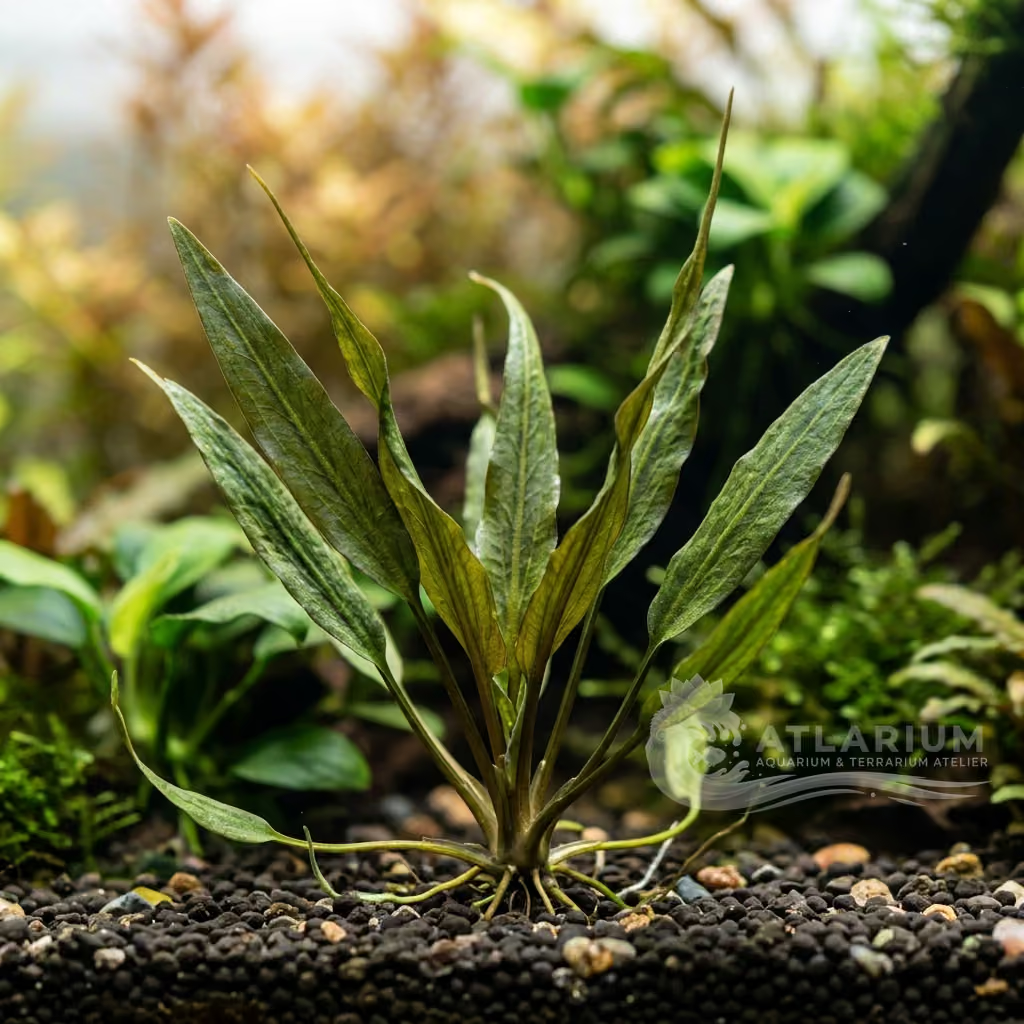
Physical Structure: The plant develops from a spherical or elongated tuber, which serves as a nutrient reservoir. A rosette of very large petiolate leaves emerges from the tuber, which can reach 50-70 cm in length. The leaves have a characteristic ribbon shape with strongly wavy and curled margins, winding spirally around themselves. This adaptation reduces resistance to water currents in rivers.
Color & Texture: The foliage has a bright green, sometimes light lime green hue, with a unique texture: the leaves are translucent and so thin they appear almost made of plastic or wax. The light passing through them creates beautiful transparency effects in the aquarium. The surface texture is smooth but rippled by the marginal undulation, with clearly visible longitudinal veins.

Care, breeding and tankmates
Lighting & CO2: Requires moderate to intense lighting to support its rapid growth. The intake of CO2, although not strictly mandatory in tanks with rich fertilization, significantly improves the thickness and brightness of the leaves, preventing biogenic decalcification.
Nutrition & Substrate: It is a heavy root feeder. It requires a deep, rich, and fertile substrate; using fertilizer tablets rich in iron and macroelements inserted near the bulb is essential to prevent the plant's decline and support leaf growth.
Water Chemistry: Tolerates temperatures between 18°C and 34°C, although the ideal temperature is between 22°C and 26°C. It prefers an acidic or neutral pH (4.5-7.5) and soft to moderately hard water. It is sensitive to the accumulation of dissolved organic substances, requiring regular water changes.
Space Management & Placement: Due to its imposing size and leaf expansion, it must be placed strictly in the background of the aquarium. A single plant can visually dominate the space, so a free area of at least 20-30 cm must be left around it so as not to suffocate neighboring species.
Pruning: Pruning consists of cutting away the older outer leaves that begin to deteriorate or show signs of necrosis at the base. If the plant produces flower stalks directed to the surface, these can be pruned at the base to prevent them from consuming excessive resources from the bulb.
Risks & Diseases: The main risk is bulb rot if planted too deep or in a substrate depleted of oxygen; the bulb should only be buried two-thirds of the way. Additionally, the plant periodically requires a rest period at cooler temperatures (15-18°C) without leaves to regenerate the tuber.

Geographic origin and distribution
Aponogeton ulvaceus is native to Madagascar, where it grows in the beds of fast-flowing streams and rivers as well as in stagnant water bodies. In nature, it lives anchored to the muddy or sandy substrate thanks to its large tuber. This plant experiences dry seasons when water almost completely disappears; during this period, it enters a vegetative rest phase, losing its foliage, only to regenerate rapidly when the rains return with fresh and vigorous leaves.
Origin
Africa and Madagascar

Plant profile
- Placement
- Background
- Due to its immense size and striking appearance, this plant is best suited as a solitary centerpiece or background plant in very large aquariums. Its spiraling, light-green leaves demand space and will quickly overshadow smaller surrounding plants if not given enough room. It should be planted where it can grow unimpeded.
- Botanical form
- Rosette, Tuber
- Aponogeton ulvaceus is famous for its wide, translucent, light-green leaves that form tight, elegant spirals as they grow toward the surface. The plant grows from a large tuber and can easily reach 60 cm or more in height and width. Its unique twisted foliage provides an incredibly dynamic texture.
- Growth
- Fast
- This species exhibits an explosive growth rate, capable of producing several large leaves per week under optimal conditions. It thrives with CO2 injection and strong lighting, which fuel its rapid expansion. Because of this fast growth, it can quickly deplete nutrients from the water column if not fertilized regularly.
- Substrate
- High
- This fast-growing bulbous plant demands a deep, highly nutrient-rich substrate to support its massive leaf development. The bulb should be partially exposed above the substrate to prevent rot, while its extensive root system penetrates deeply to anchor the plant. A clay-based active soil or heavy fertilization with root tabs is essential for sustained growth and vigor.
- Column fertilization
- Recommended
- Aggressive liquid fertilization is highly recommended to keep up with its rapid metabolism. Dosing a comprehensive fertilizer will ensure the plant has the necessary elements to maintain its large biomass. Frequent dosing is necessary in brightly lit, CO2-injected tanks to prevent nutrient bottoming out.
- Root fertilization
- Required
- A deep, nutrient-rich substrate is crucial for Aponogeton ulvaceus, as it develops a substantial root system from its tuber. Supplementing the substrate with root tabs directly beneath the plant will support sustained, robust growth. Ensure the tuber is not completely buried in the substrate to prevent rotting.
- Trimming
- Occasional
- Trimming is frequently required to keep this plant from taking over the entire aquarium. Older, decaying leaves, or those that have grown too large and block too much light, should be snipped off near the tuber. Always use sharp scissors to make clean cuts and avoid damaging the core of the plant.
- Propagation
- Seeds
- Propagation is primarily achieved through seeds, as the plant frequently sends beautiful, multi-stalked white flowers to the water surface. If pollinated, the seeds can be collected and sown in shallow, nutrient-rich water. Splitting the tuber is generally not recommended, as it often leads to rot.
- Sensitivity
- Moderate
- While generally hardy, Aponogeton ulvaceus undergoes a natural dormancy period where it will drop all its leaves. During this resting phase, the tuber should be left in a cooler, dim environment or left undisturbed in the tank until it sprouts again. It is sensitive to being overshadowed by other plants during its initial growth phase.
- Layout role
- Background
- Aponogeton ulvaceus is the ultimate showpiece plant, ideal for creating a dramatic focal point in large aquascapes. Its spiraling leaves provide an unparalleled sense of motion and texture. It contrasts beautifully with dark green background plants or dark hardscape materials.

Related species
Recommendations grouped by close relatives, companion choices, and similar care.