Aponogeton madagascariensis var. madagascariensis
Aponogeton madagascariensis
Aponogeton madagascariensis var. madagascariensis: a spectacular and challenging bulb plant of the Aponogetonaceae family, famous for its skeletal grid-like leaves.
Water Temperature
5 - 33 °C
pH Value
4.5 - 6.5
Water type
Freshwater
Light
Medium - High
CO2
Low - High
Expected height
50 cm
Expected width
30 cm
KH
2 - 12 dKH

Species description
Geographical Origin and Habitat: Aponogeton madagascariensis is native to the cold and rapid running waters of eastern Madagascar. It populates mountain streams, rainforest rivers, and shaded springs with crystal-clear and oxygen-rich waters. The tuber anchors firmly among pebbles and rocky crevices, constantly lapped by strong currents. In nature, it experiences cool temperatures year-round and waters free of accumulated organic substances, a fundamental aspect to reproduce in captivity.
Taxonomy & Genetics: It belongs to the Aponogetonaceae family and the genus Aponogeton. The 'madagascariensis' variety has a genetic heritage that codes for the characteristic fenestrated shape of the leaves. This exceptional skeletal morphology is an evolutionary adaptation to reduce resistance to strong water currents and optimize carbon dioxide absorption in rapid waters, minimizing the thickness of the leaf tissue.
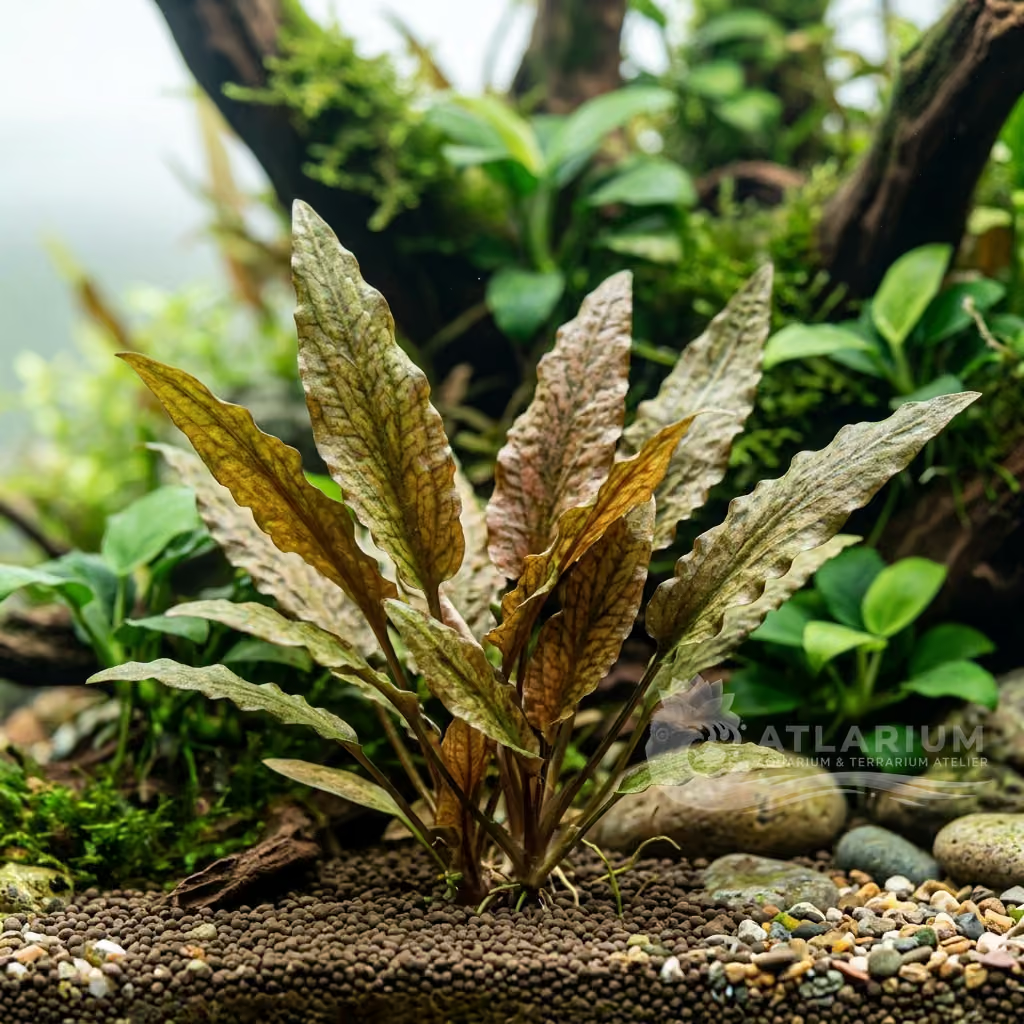
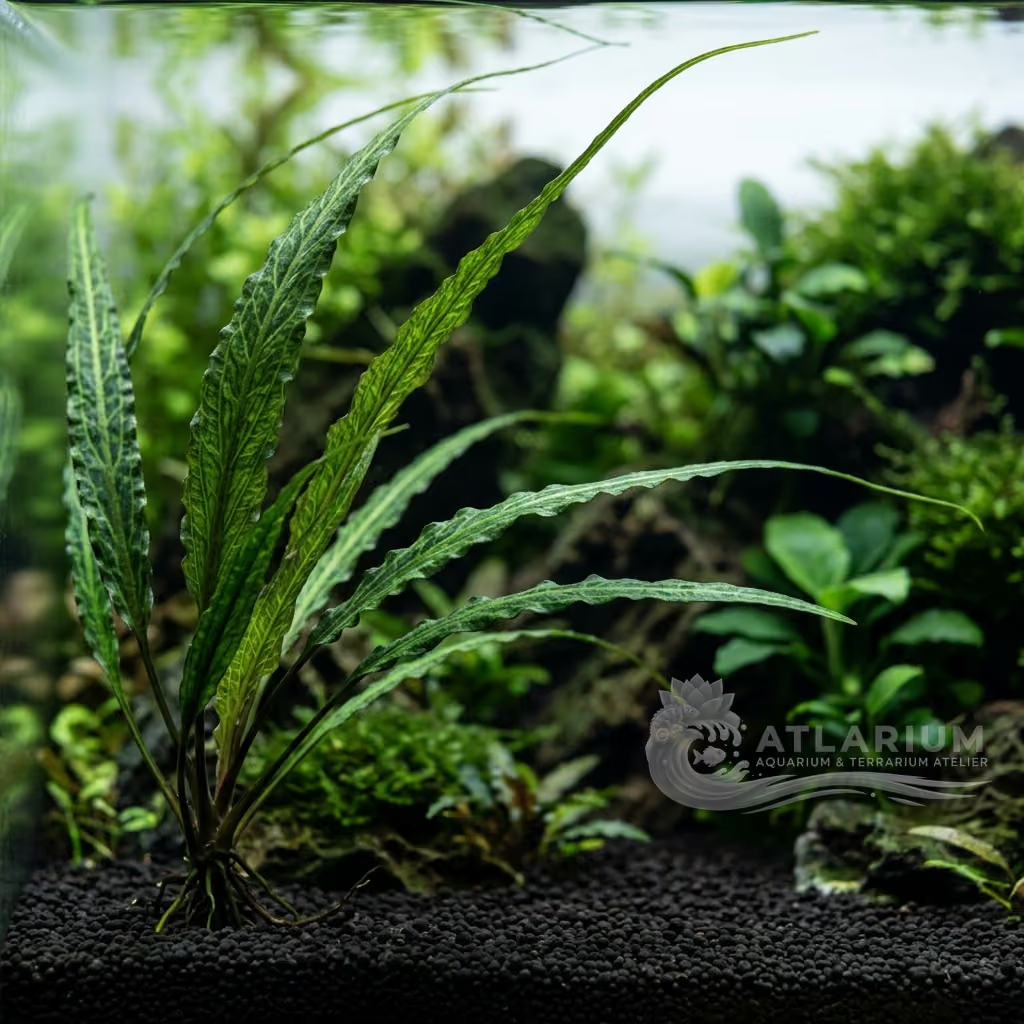
Physical Structure: The plant develops from a robust globose tuber. It produces a basal rosette of erect leaves, supported by long rigid petioles. The structure of the leaf blade is unique: the internal mesophyll tissue is almost entirely missing, leaving exposed a geometric network of longitudinal and transverse veins resembling a grid or lace. It can reach considerable heights (30-50 cm), expanding in spacious aquariums.
Color & Texture: The leaves show a dark olive green or brownish-green coloration, sometimes reddish in younger shoots. The texture is rigid and skeletal, feeling like fine synthetic netting to the touch. This extraordinary lace structure creates an exceptional visual and transparency effect, allowing light and water to flow freely through the leaf without obstacles.

Care, breeding and tankmates
Lighting & CO2: Prefers moderate lighting. Light that is too intense promotes the growth of filamentous algae that can settle in the holes of the leaf grid, suffocating photosynthesis. A constant CO2 supply is highly recommended to stimulate rapid growth and leaf regeneration.
Nutrition & Substrate: It is a heavy root feeder. It requires a fertile and deep substrate, with frequent additions of fertilizer tablets containing iron and trace elements placed near the bulb. Avoid compact soils that limit oxygen supply to the roots.
Water Chemistry: It is a demanding plant. Requires cool water (ideal 18-22°C, maximum 24°C), acidic or neutral pH (5.0-6.5), and a KH hardness of 2 to 12 dKH. Temperatures above 24°C for prolonged periods lead to rapid leaf decay and decomposition of the bulb.
Space Management & Placement: Should be placed in the midground or background of large aquariums. It requires a strong and constant water flow, preferably near the filter outlet, to emulate its native mountain streams and keep the leaves free of organic debris that could clog the grid.
Pruning: Pruning consists of cutting away damaged or algae-covered outer leaves at the base of the petiole with sharp scissors. Flower stalks, if produced, should be cut at the base to prevent the plant from consuming too much energy at the expense of the tuber's health.
Risks & Diseases: The main risk is the deposition of debris on the skeletal leaves, which causes the growth of parasitic algae that are difficult to remove. In addition, the bulb requires a cold vegetative rest phase every year: if the leaves start to die, the bulb should be removed and stored in a damp container at 15°C.

Geographic origin and distribution
Aponogeton madagascariensis is native to the cold and rapid running waters of eastern Madagascar. It populates mountain streams, rainforest rivers, and shaded springs with crystal-clear and oxygen-rich waters. The tuber anchors firmly among pebbles and rocky crevices, constantly lapped by strong currents. In nature, it experiences cool temperatures year-round and waters free of accumulated organic substances, a fundamental aspect to reproduce in captivity.
Origin
Africa and Madagascar

Plant profile
- Placement
- Midground
- Best placed as a solitary centerpiece in the midground or background. It needs enough space to display its large, sprawling leaves. Avoiding shaded areas is critical for optimal growth and leaf formation.
- Botanical form
- Rosette, Tuber
- Renowned for its unique skeletonized leaves that lack tissue between the veins, giving a lace-like appearance. The leaves grow from a central bulb and can reach impressive lengths. It is an aquatic bulbous plant that is truly unique in the botanical world.
- Growth
- Fast
- Growth can be relatively fast under optimal conditions, producing new leaves frequently. However, it requires a resting period where growth naturally slows down. During this dormancy, the bulb should be left in cooler water or removed and stored in damp sand.
- Substrate
- High
- The famous Madagascar Lace Plant is highly demanding and strictly requires a clean, nutrient-rich substrate to prevent the bulb from rotting. It prefers a somewhat porous, well-oxygenated aqua soil or gravel blend that allows its roots to breathe while still supplying heavy nutrients. The bulb should be planted no more than halfway into a 5-8 cm deep soil bed, with root tabs buried deeply to fuel its unique lattice-like leaves. Excellent substrate water circulation is critical, as stagnant soil easily leads to tuber decay.
- Column fertilization
- Recommended
- Liquid fertilizers are highly beneficial, particularly those containing iron and potassium. Regular dosing helps maintain the delicate leaf structure and prevents holes from expanding unnaturally. A balanced macro and micro nutrient column supply supports its continuous growth phase.
- Root fertilization
- Required
- A nutrient-rich substrate or the addition of root tabs near the bulb is highly recommended. The bulb stores energy but relies heavily on root uptake during active growth. Caution should be taken not to bury the bulb completely to prevent rotting.
- Trimming
- Occasional
- Old or damaged leaves should be trimmed close to the bulb to maintain a clean appearance. Removing decaying matter prevents algae growth on the delicate leaf structures. Avoid cutting the bulb or roots unnecessarily.
- Propagation
- Seeds
- Propagation is typically done by seed, as the plant can produce a solitary flower spike above the water surface. Splitting the bulb is risky and not generally recommended for home aquarists. Seeds must be kept wet and germinated in shallow water.
- Sensitivity
- Moderate
- Extremely sensitive to poor water quality, algae growth, and high temperatures. Prone to a resting phase where it may shed all its leaves, which is a natural process. It prefers cooler water temperatures compared to most tropical aquatic plants.
- Layout role
- Midground, Background
- Serves as a dramatic focal point or centerpiece in the aquarium due to its unusual texture. Its lace-like leaves provide excellent contrast against solid-leaved background plants. Best used in larger setups where its size can be properly accommodated.

Related species
Recommendations grouped by close relatives, companion choices, and similar care.