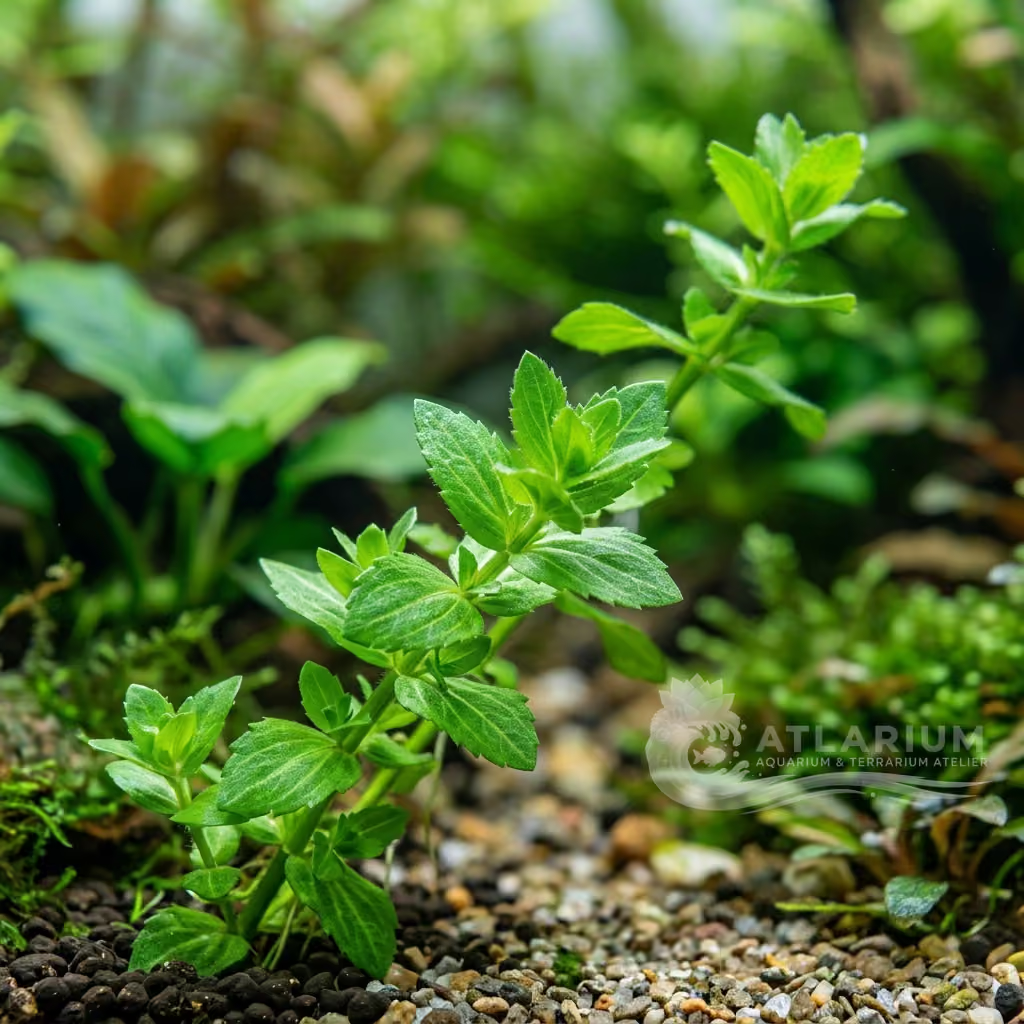
Aciotis acuminifolia
Aciotis acuminifolia
Aciotis acuminifolia is a rare, delicate stem plant featuring beautiful bronze-green leaves with vivid purple-red undersides. It demands intense lighting, CO2 injection, and very soft water.
Water Temperature
18 - 30 °C
pH Value
5 - 7
Water type
Freshwater
Light
High
CO2
Low - High
Expected height
40 cm
Expected width
8 cm
KH
0 - 7 dKH

Species description
Geographical Origin and Habitat: Aciotis acuminifolia is native to the warm and humid regions of tropical South America, with wild populations widely distributed along the Amazon River basin and within the river systems of Guyana, Venezuela, and northern Brazil. It typically inhabits the shaded marginal zones of slow-flowing streams (igapós), forest swamps, and periodically flooded muddy ditches. In these environments, it grows partially submerged in calm, extremely soft, warm waters that are heavily loaded with humic acids released by decaying forest organic matter.
Taxonomy & Genetics: It belongs to the Melastomataceae family, a botanical group rarely represented in the aquarium hobby but famous for the beauty of the foliage of its terrestrial species. The genus Aciotis comprises delicate marsh herbs. Aciotis acuminifolia is considered a collector's species, characterized by a highly specialized genetic make-up for life in acidic and oligotrophic environments. Its genetic expression responds visibly to the amount of bioavailable iron and light intensity, drastically modifying leaf pigmentation to protect chloroplasts.
Physical Structure: It features an erect but slender and delicate stem structure, with quadrangular stems that grow vertically, reaching a height of about 30-40 cm in the aquarium and a spread of about 8 cm. The leaves are arranged in opposite, decussate pairs, having a lanceolate-elliptic shape with finely serrated margins and a very pronounced acuminate tip. The plant develops thin, delicate roots that require a soft substrate to spread without damage from compaction.
Color & Texture: The coloration of Aciotis acuminifolia is unique and fascinating: the submerged leaves present a bronze-green or dark olive-green upper side with purple hues, while the underside shines with an extremely vivid and bright purple-red or magenta. Under very intense light and acidic water, the entire leaf can take on saturated red colors. The leaf texture is finely veined, soft, thin, and almost velvety to the touch, reflecting light softly.

Care, breeding and tankmates
Lighting & CO2: It requires intense and constant lighting (high-output LEDs) to stimulate growth and prevent the internodes from stretching excessively, which would make the stem weak. Stable CO2 injection (20-30 mg/L) is an absolute requirement to avoid vegetative stasis and subsequent leaf melting, which would lead to the plant's death.
Nutrition & Substrate: A fertile, acidic, and iron-rich substrate (active aquasoil) is crucial to feed the delicate roots.
Water Chemistry: Very demanding regarding chemical parameters: it requires very soft (KH 0-7 dKH, ideally 0-2 dKH) and acidic water (pH 5.0-7.0, ideally below 6.5). The optimal temperature is between 18°C and 30°C, preferring stable temperatures around 24-26°C. It does not tolerate hard or calcium-rich waters.
Space Management & Placement: Its moderate height and width make it perfect for the midground or as an accent plant in dense groups. Individual stems should be planted spaced about 2 cm apart to ensure that the intense light penetrates to the base of the clump, preventing premature lower leaf drop.
Pruning: Pruning must be done with extreme care due to the fragility of the stem. It is recommended to cut the apical part with sharp pruning scissors and replant it in the substrate. The remaining portion will produce new lateral shoots, but the recovery rate is moderate, and it should not be subjected to too frequent or drastic pruning.
Risks & Diseases: The primary risk is sudden melting of the plant if placed in hard water or with high KH. Vegetative tips can blacken or stop growth in case of iron deficiencies or CO2 imbalances. Being a slow-growing and delicate species, it is easily overwhelmed by hair algae if the tank is not perfectly balanced.

Geographic origin and distribution
Aciotis acuminifolia is native to the warm and humid regions of tropical South America, with wild populations widely distributed along the Amazon River basin and within the river systems of Guyana, Venezuela, and northern Brazil. It typically inhabits the shaded marginal zones of slow-flowing streams (igapós), forest swamps, and periodically flooded muddy ditches. In these environments, it grows partially submerged in calm, extremely soft, warm waters that are heavily loaded with humic acids released by decaying forest organic matter.
Origin
Amazon, Orinoco, and GuianasExtra-Amazon South America

Plant profile
- Placement
- Midground
- Due to its growth habit and size, it is best suited as a midground plant depending on the tank size. This delicate species requires meticulous care. Proper placement is crucial to ensure it receives adequate light without shading its neighbors. Grouping several specimens together enhances its visual impact and creates a lush, natural aesthetic. It can be used strategically to draw the eye or soften hardscape transitions.
- Botanical form
- Stem
- Botanically, it displays a fascinating arrangement of foliage and stems or rhizomes. This delicate species requires meticulous care. The leaf shape, venation, and overall structure are defining characteristics of this species. Its morphology can shift slightly depending on whether it is grown submersed or emersed. It provides exceptional structural diversity to any planted aquarium.
- Growth
- Slow
- The growth pace of this species is generally moderate. This delicate species requires meticulous care. Aquarists should be prepared for its specific growth trajectory to manage the layout effectively. Providing ideal parameters will push its growth to the upper limits of its potential. Environmental stressors or sudden changes can drastically slow down its development.
- Substrate
- High
- This delicate species requires meticulous care. This species thrives best when planted in an active, nutrient-dense substrate. Inert gravels will require constant supplementation with root capsules to provide adequate nutrition. The substrate should be deep enough to accommodate its root structure securely. A well-aerated substrate prevents anaerobic pockets and ensures optimal root health and expansion.
- Column fertilization
- Recommended
- This delicate species requires meticulous care. Water column feeding plays a massive role in the overall vitality of this species. Consistent dosing of micro and macronutrients ensures the leaves remain vibrant and free of deficiencies. It is highly responsive to changes in liquid nutrient levels, making it a good indicator species. Employing a strict dosing schedule will yield the most consistent and impressive results.
- Root fertilization
- None
- This delicate species requires meticulous care. Heavy root feeding is incredibly beneficial for maximizing the potential of this species. Even in mature tanks, replenishing the substrate with targeted root capsules promotes strong basal growth. A robust root network directly correlates with larger, healthier foliage. Ensure root tabs are buried deeply to prevent nutrient leaching into the water column.
- Trimming
- Occasional
- Regular trimming is required to maintain the desired shape and health of Aciotis acuminifolia. Using sharp aquascaping scissors ensures clean cuts that heal quickly without inviting rot. Pruning also encourages denser regrowth and prevents lower portions from being overly shaded. Remove any decaying trimmed leaves promptly to maintain optimal water quality.
- Propagation
- Cuttings
- This delicate species requires meticulous care. Multiplying this species can be done easily through standard propagation techniques for its type. Carefully dividing or cutting the plant allows aquarists to quickly expand their collection. The resulting segments should be planted or attached securely to encourage rapid establishment. Patience is required, but the success rate is typically very high under good conditions.
- Sensitivity
- Moderate
- Aciotis acuminifolia can be somewhat sensitive to sudden fluctuations in water parameters. It may exhibit signs of stress or melt if exposed to abrupt changes in temperature or pH. Algae treatments containing copper or glutaraldehyde should be used with extreme caution around this plant. Maintaining a stable, clean environment is the best defense against health issues.
- Layout role
- accent, Midground
- In the aquascape, Aciotis acuminifolia serves an important role by adding specific structural elements. It can be used to create focal points or to soften the transition between hardscape and open spaces. The plant's unique texture contrasts beautifully with both fine-leaved and broad-leaved neighbors. Thoughtful integration of this species greatly elevates the natural feel of the display.

Related species
Recommendations grouped by close relatives, companion choices, and similar care.