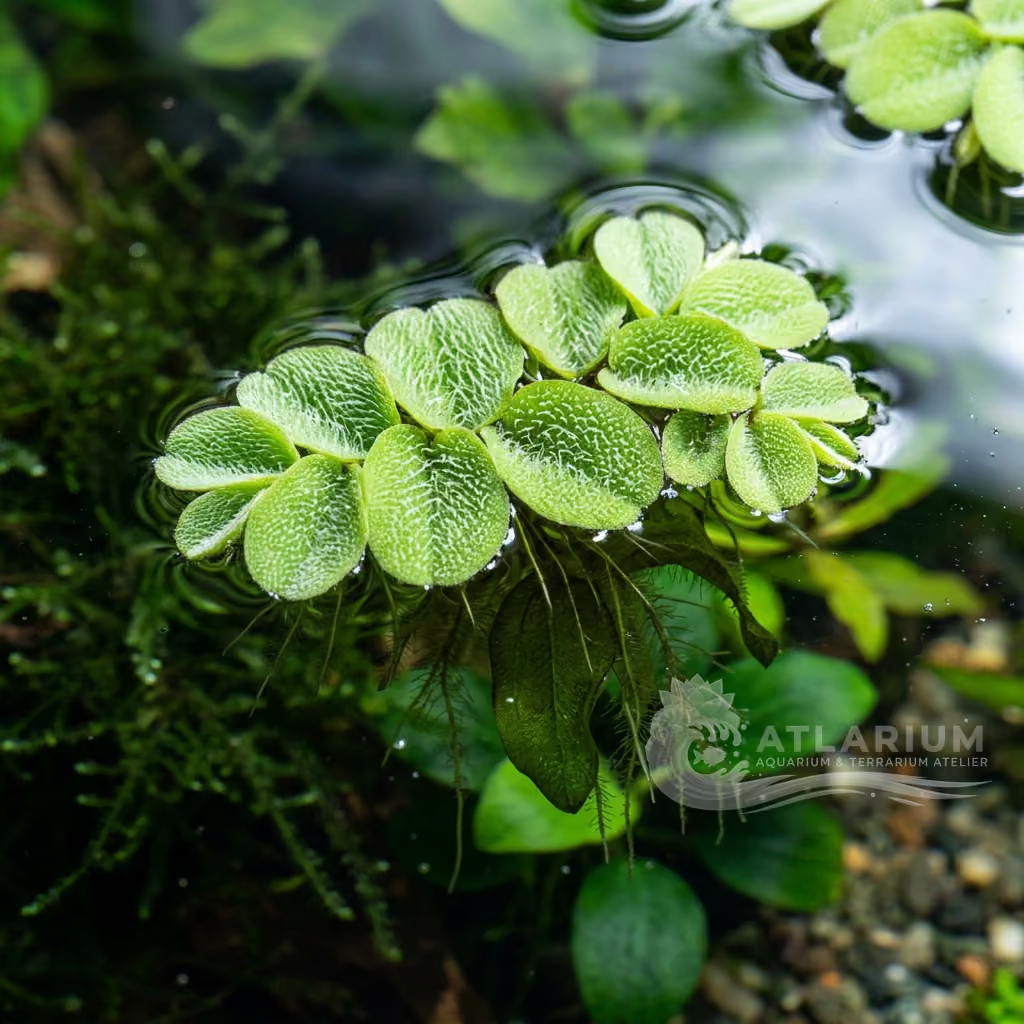
Azolla pinnata
Azolla pinnata
A highly efficient, microscopic free-floating fern native to tropical Africa and Asia, featuring a geometric, feather-like leaf structure and velvet texture.
Water Temperature
18 - 28 °C
pH Value
6 - 8
Water type
Freshwater
Light
High
CO2
Low
Expected height
2 cm
Expected width
5 cm
GH
4 - 20 dGH
KH
0 - 12 dKH

Species description
Geographical Origin and Habitat: Endemic heavily to the tropical and subtropical regions of Africa, Asia, and parts of Australia, Azolla pinnata (frequently called the Feathered Mosquito Fern) is a brutally efficient, microscopic free-floating aquatic fern. It evolved to colonize the completely stagnant, still surfaces of shallow lakes, deeply shaded tropical swamps, and nutrient-saturated drainage ditches. To survive floating on the water's surface tension, it developed a phenomenally complex, geometric leaf structure and a highly advanced symbiotic relationship with nitrogen-fixing cyanobacteria.
Taxonomy & Genetics: Azolla pinnata is a true aquatic fern belonging to the Salviniaceae family. Taxonomically, it is easily distinguished from the American Azolla species (like A. filiculoides) by its highly specific macroscopic shape. The Latin specific epithet "pinnata" literally translates to "feathered," which perfectly describes the plant's highly organized, triangular, feather-like branching structure. Its aggressive genetic integration with cyanobacteria makes it one of the most effective and invasive biological nitrogen fixers on the planet.
Physical Structure: The architecture of this microscopic fern is extraordinarily beautiful and highly geometric. It lacks true roots in the substrate, relying entirely on a tiny, fragile, floating central stem. From this central axis, microscopic scale-like leaves branch out in a strictly pinnate (feather-like), distinctly triangular shape, unlike the chaotic, clumpy growth of other Azolla species. Fine, feathery rootlets dangle straight down into the water column beneath the plant. Individual fronds are barely 1-2 cm wide but rapidly interlock.
Color & Texture: The tiny, overlapping scale-leaves are entirely coated in microscopic, water-repellent hairs (trichomes) that grant the plant a notoriously soft, velvet-like texture, preventing it from ever sinking. Under standard, moderate lighting, the plant is a vibrant, velvety light-green or emerald. However, under high-intensity lighting or when starved of certain nutrients, it undergoes a dramatic morphological defense shift, flushing an intensely deep, rusty crimson-red or dark burgundy.

Care, breeding and tankmates
Lighting & CO2: It is an extremely high-energy, fast-growing surface weed. Under low light, it will grow at a steady, manageable pace and remain bright green. However, if blasted with intense, high-energy LED lighting, it will multiply at a terrifying, exponential rate and trigger its dramatic deep-red stress coloration. Because it floats completely exposed to the open air, it draws 100% of its required carbon dioxide directly from the atmosphere. Injecting pressurized CO2 into the aquarium provides absolutely no benefit.
Nutrition & Substrate: This plant requires absolutely zero substrate, as it never touches the bottom of the tank. It is an unparalleled biological filter and water-column scavenger. While it absorbs phosphorus directly from the aquarium water via its dangling, feathery rootlets, its true power lies in its symbiotic cyanobacteria, which allows it to pull pure nitrogen directly from the atmosphere. It rapidly consumes heavy metals and excess nitrates, making it an aggressive, elite purifier for heavily stocked, nutrient-rich aquariums.
Water Chemistry: It is an incredibly robust, virtually unkillable, invasive survivor. It thrives effortlessly in standard tropical temperatures (20-28°C) but easily tolerates cooler water. It completely ignores chaotic pH fluctuations and extreme water hardness. The single, absolute requirement for its survival is water flow: it demands completely stagnant, dead-still water. Strong surface agitation, splashing filter returns, or turbulent powerheads will rapidly drown, batter, and disintegrate the delicate, floating geometric fern.
Space Management & Placement: It exists exclusively on the water surface. Because its growth rate is terrifyingly exponential (capable of doubling its entire biomass every 3 to 5 days), space management is a brutal, never-ending battle. It will rapidly interlock its triangular fronds to form a solid, velvet-like, impenetrable mat that blocks 100% of the light from reaching the submerged aquarium below. It is fantastic for shading shy fish, but a total death sentence for demanding submerged stem plants.
Pruning: Pruning is a relentless, mandatory weekly chore. Because it multiplies exponentially by fragmentation, you must use a net to physically scoop out and discard massive handfuls of the floating carpet every single week. If the mat becomes too thick, the lower layers will be crushed underwater, where they will instantly rot and cause a catastrophic, toxic ammonia spike. Dispose of the excess responsibly (compost); never flush it down the sink, as it is a highly invasive ecological threat.
Risks & Diseases: The plant itself is completely immune to aquatic disease and algae. The absolute primary risk is the extreme danger it poses to the REST of the aquarium ecosystem. If neglected for even two weeks, its exponential growth will completely suffocate the surface, permanently blocking all oxygen and gas exchange, causing the fish below to suffocate to death, while simultaneously blocking all light and killing every submerged plant. It demands aggressive, ruthless weekly harvesting without fail.

Geographic origin and distribution
Endemic heavily to the tropical and subtropical regions of Africa, Asia, and parts of Australia, Azolla pinnata (frequently called the Feathered Mosquito Fern) is a brutally efficient, microscopic free-floating aquatic fern. It evolved to colonize the completely stagnant, still surfaces of shallow lakes, deeply shaded tropical swamps, and nutrient-saturated drainage ditches. To survive floating on the water's surface tension, it developed a phenomenally complex, geometric leaf structure and a highly advanced symbiotic relationship with nitrogen-fixing cyanobacteria.
Origin
Africa and MadagascarEurope, Mediterranean, and West AsiaSouth and Southeast AsiaEast AsiaAustralia, New Guinea, and Oceania

Plant profile
- Placement
- Floating
- It is a surface-dwelling floating plant that provides an excellent canopy for the aquarium. It should be allowed to drift freely or contained within a floating ring to prevent it from covering the entire surface. It is particularly useful for shading Anubias or Cryptocoryne species that prefer lower light environments.
- Botanical form
- Floating, Fern
- This floating fern is characterized by its triangular or feathery frond shape, giving it a somewhat more structured look than other Azolla species. The small, overlapping leaves are water-repellent, ensuring the plant stays afloat. It develops short, feathery roots that extend down into the water column.
- Growth
- Fast
- In an aquarium with good lighting and nutrient availability, Azolla pinnata grows extremely fast. It can double its mass in mere days, actively stripping excess nutrients from the water and suppressing algae growth. Frequent culling is necessary to keep it from completely blocking out light to the lower sections of the tank.
- Substrate
- None
- Like other members of its genus, this fern floats freely and requires zero substrate for survival or structural anchoring. Its fine, feathery roots hang vertically into the water column to efficiently absorb dissolved liquid fertilizers. The lack of substrate dependency makes it an excellent choice for bare-bottom tanks or heavily stocked setups prioritizing water column nutrient management.
- Column fertilization
- Recommended
- Because it lacks a connection to the soil, it is entirely dependent on water column fertilization. Dosing a high-quality liquid fertilizer will ensure it receives the necessary micronutrients for healthy growth and coloration. Care should be taken to ensure it does not outcompete submerged plants for nutrients.
- Root fertilization
- None
- Root fertilization is fundamentally inapplicable to Azolla pinnata. Substrate nutrients are entirely out of reach for this floating fern, meaning all its nutritional needs must be met via the water.
- Trimming
- Occasional
- Trimming is not a practice used with this plant. Instead, aquarists must physically remove portions of the floating mat using a net or hands. Regular removal is essential to maintain a healthy balance of light and gas exchange in the aquarium. Never dispose of this plant in natural waterways.
- Propagation
- Division, Fragmentation
- Propagation is simple and automatic, occurring through vegetative fragmentation. As the fronds grow and branch out, pieces naturally detach to form new, independent plants. This rapid, passive propagation means it can quickly repopulate the surface after a heavy trimming.
- Sensitivity
- Moderate
- Azolla pinnata prefers still to gently moving water, as strong surface currents or splashing from filter returns can damage its fronds and cause them to rot. It is also susceptible to decay if the tops of its leaves are constantly wet from condensation. It handles a broad range of temperatures but grows best in warmer conditions.
- Layout role
- Floating
- It acts as a natural shade cloth, dimming the light for the aquascape below while providing a beautiful, textured surface cover. The small, trailing roots offer an excellent grazing and hiding spot for shrimp and fry. The reddish tint it can achieve provides a unique pop of color at the very top of the tank.

Image gallery
Licensed images linked to the species or, when marked, to the closest representative taxon.

Related species
Recommendations grouped by close relatives, companion choices, and similar care.