Salvinia molesta
Salvinia molesta
Salvinia molesta is an incredibly fast-growing floating fern, ideal for the aquarium surface where it provides shade and shelter. Its rapid proliferation makes it an excellent choice for nutrient export and light management in freshwater setups.
Water Temperature
10 - 32 °C
pH Value
5 - 8
Water type
Freshwater
Light
Medium to High
CO2
High
KH
0 - 21 dKH

Species description
Geographical Origin and Habitat: Originally hailing from southeastern Brazil, Salvinia molesta has become a globally widespread aquatic species, rapidly colonizing ecosystems due to its extraordinary adaptability and reproductive efficiency. It thrives in calm, stagnant waters such as lakes, ponds, and slow-moving streams, where it forms dense surface mats. Its massive presence can dramatically alter light penetration and oxygen levels in natural habitats, leading to its notorious status as an invasive species.
Taxonomy & Genetics: Salvinia molesta belongs to the Salviniaceae family, a small group of floating aquatic ferns, and the genus Salvinia. Unlike flowering plants, ferns reproduce via spores, although in Salvinia molesta, vegetative reproduction through fragmentation is the dominant and highly effective mode. Its genetic classification distinguishes it from other Salvinia species by its specific leaf morphology and its sexually sterile nature, which paradoxically does not hinder its prolific growth.
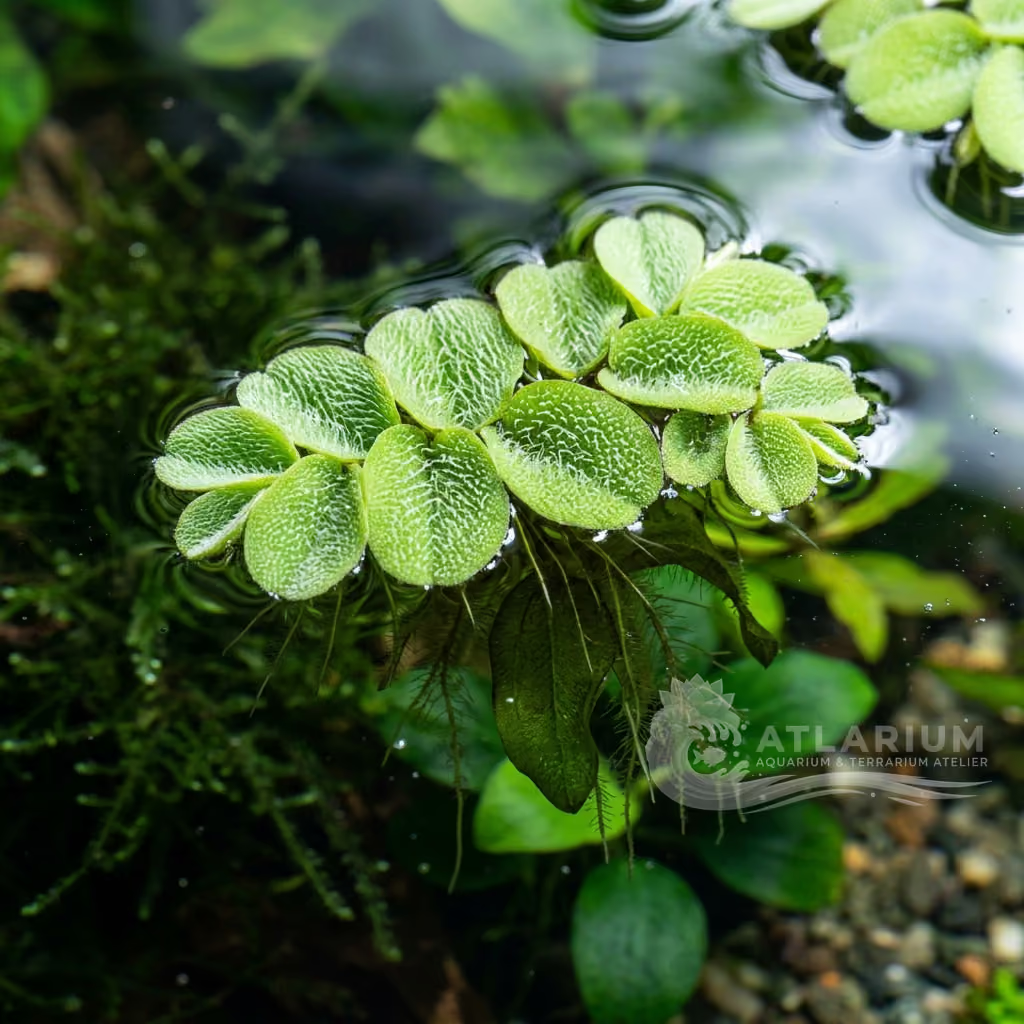
Physical Structure: The physical structure of Salvinia molesta is characterized by horizontal floating rhizomes from which leaves emerge in whorls of three. Two leaves are oval, velvety, and float on the water surface, while the third is submerged, finely dissected, and functions as a root, absorbing nutrients and stabilizing the plant. The floating leaves are covered with unique water-repellent hairs, which trap air and contribute to the plant's exceptional buoyancy. This configuration allows the fern to rapidly form a dense surface mat.
Color & Texture: The emergent leaves of Salvinia molesta display a vibrant green coloration, which can vary in intensity depending on lighting and available nutrients, tending towards a darker green under strong light. Their surface is distinctly velvety to the touch, a characteristic due to the presence of stiff, water-repellent trichomes that form an "air cage" structure. This texture not only aids flotation but also gives it a unique appearance, while the submerged "roots" are brownish-black, creating a visual contrast underwater.

Care, breeding and tankmates
Lighting & CO2: Salvinia molesta thrives across a wide spectrum of light conditions, from medium to high, which significantly boosts its already very fast growth rate. More intense light encourages more vibrant color and compact growth, but it is crucial to monitor for excessive shading that might inhibit the growth of underlying plants. It does not require CO2 supplementation as it absorbs carbon directly from the atmosphere and dissolved compounds, making it an extremely low-maintenance plant for beginners.
Nutrition & Substrate: As a floating plant, Salvinia molesta draws all its nutrients directly from the
Water Chemistry: Salvinia molesta is exceptionally tolerant of a broad range of water chemistry parameters, making it suitable for almost any freshwater aquarium. It prefers temperatures between 10.0 and 32.0 C, pH values ranging from 5.0 to 8.0, and a carbonate hardness (KH) between 0.0 and 21.0. However, more stable conditions and adequate nutrients over time will promote more robust growth and greater density, while extreme fluctuations can cause stress.
Space Management & Placement: The placement of Salvinia molesta is naturally on the water surface, where it forms a floating carpet that provides shade and refuge. It is essential to manage its expansion to prevent it from completely covering the surface, which could suffocate underlying plants and reduce gas exchange. Using floating barriers or containment rings can help circumscribe its area, ensuring a portion of the surface remains free for light penetration and oxygenation.
Pruning: Pruning Salvinia molesta is a frequent and necessary operation given its extremely rapid growth. It simply involves physically removing excess plants from the aquarium surface, either manually with a net or gently by hand. This practice not only controls the density of the coverage but also prevents excessive shading that could harm submerged plants and reduce water oxygenation.
Risks & Diseases: Salvinia molesta is generally robust and rarely suffers from diseases, but it can show nutritional deficiencies if the water is too poor, manifesting as yellowing leaves or stunted growth. It is crucial to prevent an excessive accumulation of decaying plant material, which can lead to a decline in water quality and algae problems. Close monitoring for snails or aquatic insects is advisable, although they rarely pose a serious threat.

Geographic origin and distribution
Originally hailing from southeastern Brazil, Salvinia molesta has become a globally widespread aquatic species, rapidly colonizing ecosystems due to its extraordinary adaptability and reproductive efficiency. It thrives in calm, stagnant waters such as lakes, ponds, and slow-moving streams, where it forms dense surface mats. Its massive presence can dramatically alter light penetration and oxygen levels in natural habitats, leading to its notorious status as an invasive species.
Origin
Extra-Amazon South America

Plant profile
- Placement
- Floating
- The proper placement for Salvinia molesta is exclusively floating on the water surface, preferably in an area with calm or minimal water movement. The hairy upper surface of the leaves must remain dry; constant splashing or submersion will inevitably lead to rot and plant decay. Once established on the surface, it forms a very dense and impenetrable mat that completely shades the lower areas of the tank. Care must be taken to ensure it does not suffocate the water surface and prevent proper gas exchange.
- Botanical form
- Floating
- Salvinia molesta boasts a distinctive structure consisting of pairs of large, folding floating leaves and a third, highly divided leaf that acts as a root submerged in the water. The upper leaves are covered with unique, egg-beater-shaped trichomes that trap air and provide incredible buoyancy and water resistance. As the plant matures and becomes crowded, the leaves often fold upward against each other, creating a thick, multi-layered mat. This specialized botanical form is the reason for its unparalleled success as a floating aquatic fern.
- Growth
- VERY_FAST
- The growth rate of Salvinia molesta is famously explosive and frequently considered invasive if not strictly controlled. Under intense lighting and high nutrient conditions, it can double its biomass in merely a few days, rapidly choking out the water surface. Aquarists must be prepared for rigorous, weekly removal of excess plant matter to prevent it from blocking all light to submerged flora. This incredibly fast growth makes it an exceptional tool for pulling excess nutrients out of the water.
- Substrate
- None
- Like other species in its genus, Salvinia molesta is entirely unbothered by the composition of the aquarium substrate. It is a strictly free-floating fern, relying on its submerged, root-like modified leaves to absorb everything it needs directly from the water. Whether the tank has sand, gravel, nutrient-rich soil, or is completely bare makes absolutely no difference to the plant's development. This independence from the substrate makes it incredibly versatile for any setup.
- Column fertilization
- Recommended
- Comprehensive liquid column fertilization is absolutely essential to sustain the rapid growth and large biomass of Salvinia molesta. A robust dosing regime that includes nitrogen, potassium, phosphorus, and a generous array of trace elements is required. Given its fast metabolism, the plant will quickly exhibit signs of iron or potassium deficiency if the water column is neglected. Daily or weekly liquid dosing will ensure the thick leaves remain healthy, robust, and deeply colored.
- Root fertilization
- None
- There is no need whatsoever to utilize root tabs or enriched substrate for Salvinia molesta. Since it lacks true roots and never anchors into the aquarium bed, it cannot access nutrients buried in the gravel or soil. Its entire nutrient intake mechanism is specialized for absorption directly from the surrounding water column. Aquarists can entirely disregard root fertilization practices when maintaining this particular floating species.
- Trimming
- Regular
- Maintenance involves physically removing excess plants from the water surface rather than trimming them with scissors. Scooping out a portion of the colony weekly prevents it from blocking too much light. Ensure that discarded plants are disposed of properly and never introduced into local waterways. Regular thinning keeps the remaining plants healthy and vibrant.
- Propagation
- Cuttings
- Propagating Salvinia molesta requires zero effort from the aquarist, as it naturally reproduces at a staggering rate through asexual fragmentation. The plant constantly extends its rhizome, producing new sets of leaves that easily detach to form independent plants. Even a tiny fragment left in the water can regenerate into a massive colony in a very short time. To control its spread, one simply needs to scoop out the excess and dispose of it responsibly, as it is a known invasive species in the wild.
- Sensitivity
- Moderate
- While generally hardy, Salvinia molesta is sensitive to strong surface agitation and excessive splashing, which can sink or damage its delicate leaves. It also dislikes condensation dripping onto its surface in closed-lid aquariums. High humidity combined with poor ventilation can lead to leaf rot. Ensure adequate airflow above the water surface for best results.
- Layout role
- Floating, Background
- In the aquascape, Salvinia molesta serves to create a natural, shaded environment reminiscent of a tropical stream or pond. The dangling roots provide a sense of depth and offer excellent hiding places for fry and small fish. It helps to diffuse intense lighting, creating a softer mood for the tank. Additionally, it aids in biological filtration by absorbing excess nutrients.

Related species
Recommendations grouped by close relatives, companion choices, and similar care.