Azolla cristata
Azolla filiculoides subsp. cristata
Endemic to the Americas, this highly specialized free-floating aquatic fern forms dense mats, utilizing symbiotic cyanobacteria to fix nitrogen.
Water Temperature
18 - 28 °C
pH Value
6 - 8
Water type
Freshwater
Light
High
CO2
Low
Expected height
2 cm
Expected width
5 cm
GH
4 - 20 dGH
KH
0 - 12 dKH

Species description
Geographical Origin and Habitat: Endemic to the Americas, Azolla cristata (commonly known as the Carolina Mosquito Fern) is a highly specialized, free-floating aquatic fern. It thrives exclusively in completely stagnant, still-water environments such as deeply shaded swamps, marshlands, quiet ponds, and the calm edges of slow-moving rivers stretching from North America down to South America. It is an evolutionary marvel that survives by floating on the surface tension of the water, utilizing an incredibly unique symbiotic relationship with cyanobacteria (Anabaena azollae) housed within its leaf cavities to pull nitrogen directly from the atmosphere.
Taxonomy & Genetics: Azolla cristata is a true aquatic fern belonging to the Salviniaceae family. Taxonomically, it is frequently confused in the commercial trade with its close cousin Azolla filiculoides. However, A. cristata is generally smaller, more compact, and features slightly different microscopic leaf branching patterns. The genetic integration of the nitrogen-fixing cyanobacteria within its leaves makes it one of the fastest-growing and most biologically significant floating plants on the entire planet.
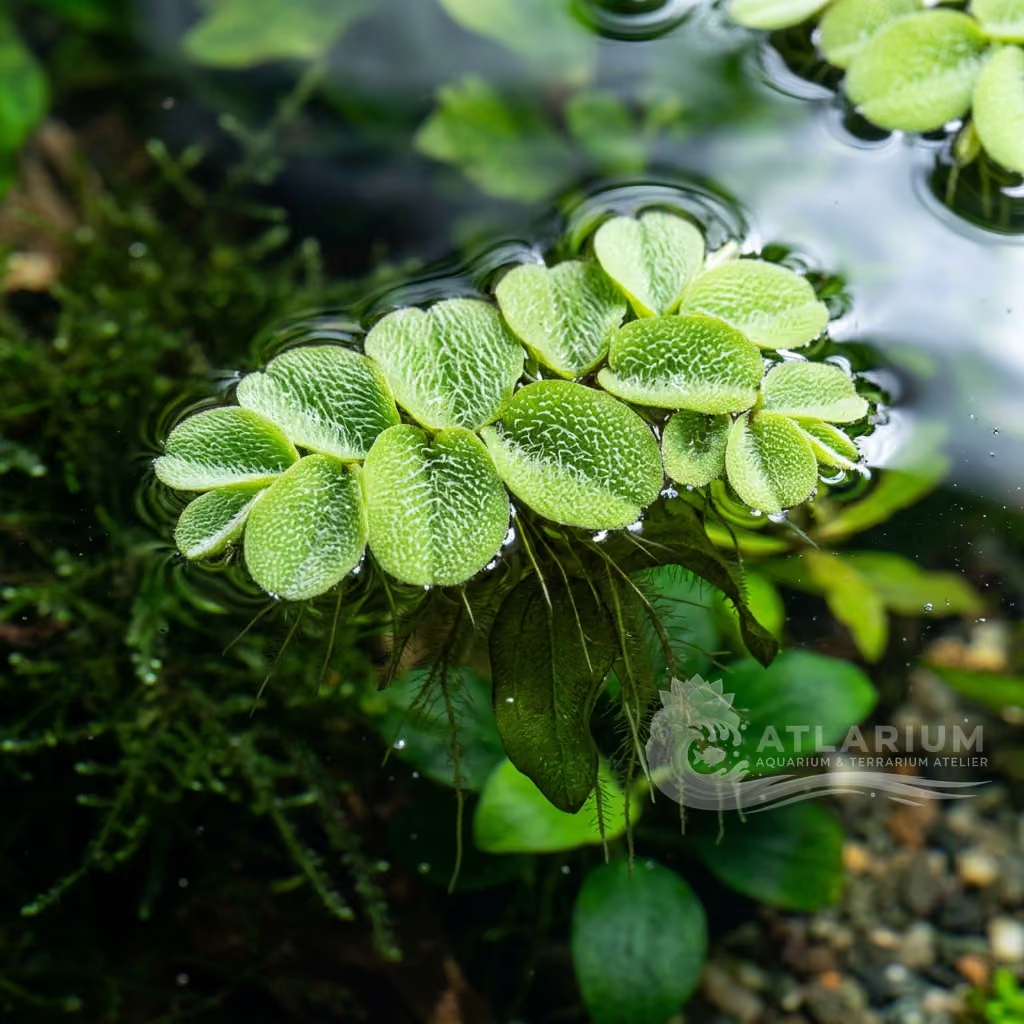
Physical Structure: The physical architecture of this plant is microscopic, fractal, and exceptionally complex. It lacks true roots or stems in the traditional sense; instead, it consists of a tiny, fragile, floating central rhizome from which microscopic, overlapping, scale-like leaves branch out in a tightly alternating, geometric pattern. Fine, hair-like rootlets dangle just millimeters below the surface into the water column. Individual plants are tiny (1-2 cm), but they rapidly interlock to form a dense, impenetrable floating mat.
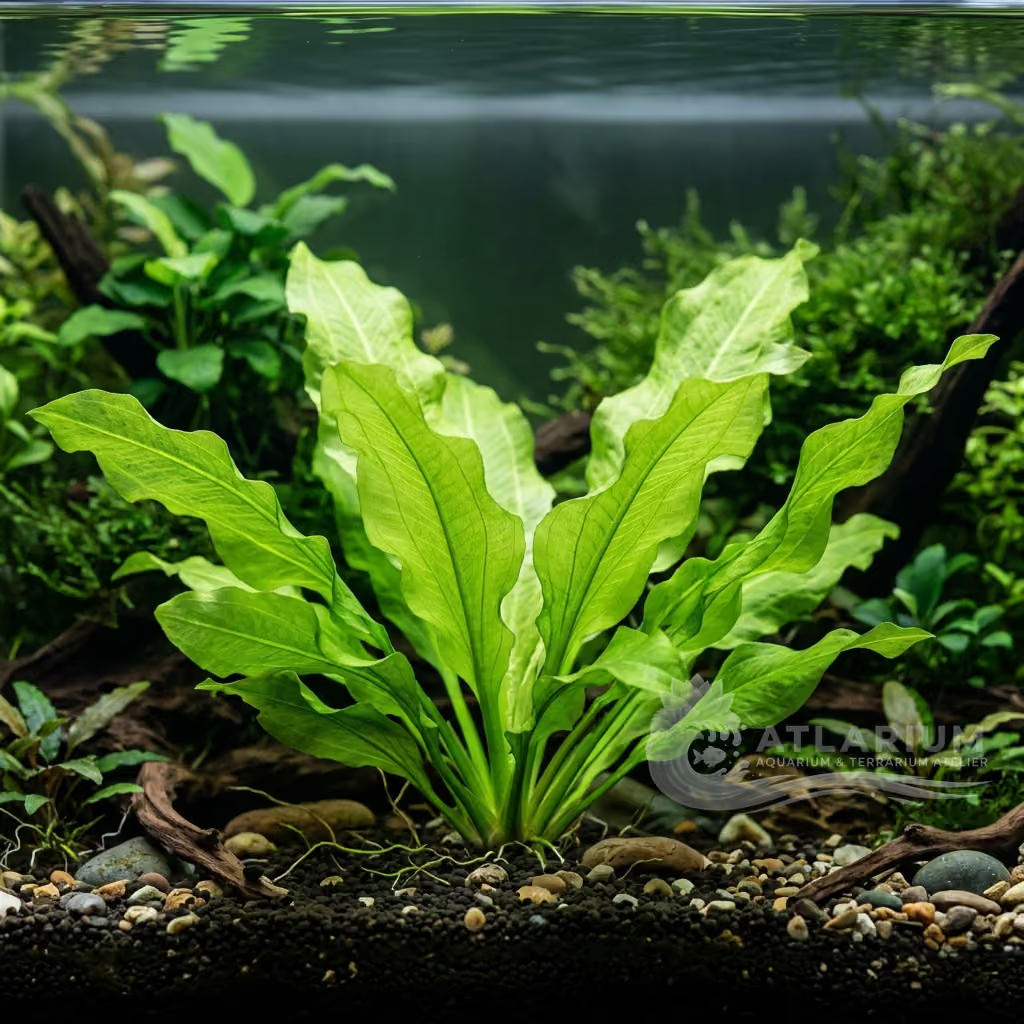
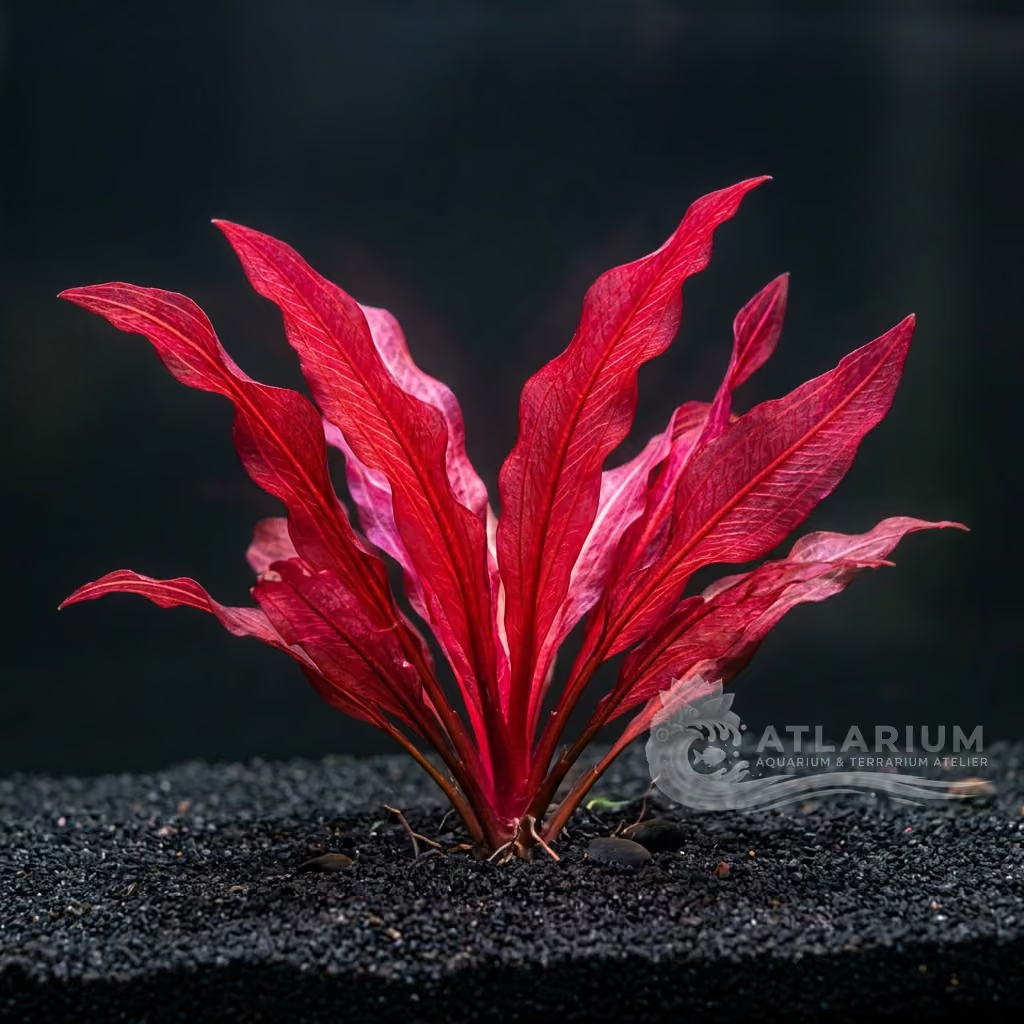
Color & Texture: The microscopic, overlapping scale-like leaves are completely covered in tiny, water-repellent hairs (trichomes) that give the plant a distinct, soft, velvet-like texture and prevent it from sinking. Under moderate lighting, the plant is a vibrant, velvety light-green. However, when exposed to high-intensity lighting or cold water, it undergoes a spectacular morphological defense mechanism, flushing an incredibly deep, rich crimson-red or purplish-burgundy, creating a stunning visual contrast on the water surface.

Care, breeding and tankmates
Lighting & CO2: It is an extreme high-energy floating plant that thrives under intense lighting. While it can survive in low light, it will remain strictly green and grow sparsely. To unlock its famous, spectacular deep crimson-red coloration, it MUST be blasted with extremely intense, high-energy LED lighting. Because it floats completely on the water surface, it has infinite, unrestricted access to atmospheric CO2. Therefore, injecting pressurized CO2 into the aquarium water provides absolutely zero benefit to this plant.
Nutrition & Substrate: This plant requires absolutely no substrate, as it never touches the bottom of the tank. It is the ultimate water-column scavenger. While it absorbs phosphorus and potassium from the aquarium water via its tiny dangling rootlets, it is entirely unique in that it fixes its own nitrogen directly from the air using its symbiotic cyanobacteria. It acts as an incredibly powerful, microscopic biological filter, rapidly ripping heavy metals and excess organic waste out of the water column to fuel its exponential growth.
Water Chemistry: It is an incredibly resilient, invasive weed. It thrives in standard tropical temperatures (22-28°C) but easily tolerates much colder water. It ignores pH fluctuations and water hardness entirely. However, the single most critical factor for its survival is water flow. Azolla cristata absolutely demands completely stagnant, still water. Strong surface agitation from filter outflows, powerheads, or airstones will violently drown, batter, and rapidly kill the delicate, floating fern.
Space Management & Placement: It is exclusively a surface-dwelling floating plant. Because its growth rate is literally exponential (capable of doubling its entire biomass every 3 to 5 days under intense light), space management is a constant, brutal battle. It will rapidly interlock to form a solid, impenetrable, velvet-like mat that blocks 100% of the light from reaching the submerged aquarium below. It is excellent for shading extremely shy, light-sensitive fish, but a death sentence for demanding submerged stem plants.
Pruning: Pruning is a relentless, weekly chore. Because it multiplies exponentially by fragmentation, you must use a net to physically scoop out and discard massive handfuls of the floating mat every single week. Never allow the mat to become more than 1 cm thick, as the lower layers will be pushed underwater, rot, and cause a massive ammonia spike. Dispose of it responsibly (compost or dry it completely); never flush it down the drain, as it is a highly invasive species.
Risks & Diseases: The plant itself is entirely immune to disease or algae (since it floats above the water). The primary risk is to the REST of the aquarium. If left unchecked, its exponential growth will completely suffocate the surface, blocking all gas exchange and causing the fish below to suffocate from oxygen depletion, while simultaneously blocking all light and killing every submerged plant. It requires aggressive, ruthless weekly harvesting.

Geographic origin and distribution
Endemic to the Americas, Azolla cristata (commonly known as the Carolina Mosquito Fern) is a highly specialized, free-floating aquatic fern. It thrives exclusively in completely stagnant, still-water environments such as deeply shaded swamps, marshlands, quiet ponds, and the calm edges of slow-moving rivers stretching from North America down to South America. It is an evolutionary marvel that survives by floating on the surface tension of the water, utilizing an incredibly unique symbiotic relationship with cyanobacteria (Anabaena azollae) housed within its leaf cavities to pull nitrogen directly from the atmosphere.
Origin
North AmericaAmazon, Orinoco, and GuianasExtra-Amazon South AmericaCentral America and Caribbean

Plant profile
- Placement
- Floating
- It floats entirely on the surface, making it perfect for open-topped aquariums or paludariums where it can be viewed from above. It serves as an excellent natural shade provider for anubias, bucephalandra, and other low-light epiphytes. It should be corralled if the entire surface should not be covered.
- Botanical form
- Floating, Fern
- Azolla cristata forms small, compact, and highly branched fronds with tiny, overlapping leaves that resemble microscopic pine branches. The leaves feature fine, water-repellent hairs on their upper surface, keeping the plant buoyant. Its roots are relatively short and feathery compared to other floating plants like Pistia.
- Growth
- Fast
- The growth rate is exceptionally fast, especially in warm, nutrient-rich environments with intense lighting. It can quickly multiply to blanket the entire water surface in a short period. This rapid growth makes it a great ally against algae but requires the aquarist to be diligent with removal.
- Substrate
- None
- This aquatic floating fern thrives purely on the water surface, requiring no substrate whatsoever for anchoring or nutrition. Its fine rootlets are suspended in the water column, efficiently extracting free-floating macronutrients directly from the environment. Because it obtains everything it needs from the water and air, the composition of the aquarium's substrate has no impact on its growth.
- Column fertilization
- Recommended
- Liquid fertilization is the sole method of providing necessary elements (other than nitrogen) to this plant. A complete liquid fertilizer dosed directly into the water column will ensure healthy, dense growth. It readily absorbs whatever is available in the water, often acting as a biological filter.
- Root fertilization
- None
- Because it is a free-floating fern with roots that never touch the substrate, root fertilization is entirely irrelevant. Nutrients in the substrate are inaccessible to Azolla cristata unless they leach into the water column.
- Trimming
- Occasional
- There is no need for scissors; simply scoop out excess growth with a net or by hand. It is vital to thin out the population regularly to prevent it from forming a thick, impenetrable mat that blocks light and oxygen exchange. Always discard excess plants in the trash, never into natural bodies of water.
- Propagation
- Division, Fragmentation
- Propagation occurs continually through vegetative division. The brittle fronds naturally break apart as they grow, and each tiny fragment will develop into a new, full-sized cluster. Sexual reproduction via spores is rare in the home aquarium.
- Sensitivity
- Moderate
- This plant dislikes strong surface agitation and splashing from filter returns, which can submerge and drown the fronds. It prefers high humidity but can be susceptible to rot if water consistently drips onto it from a condensation cover. It handles a wide temperature range but thrives in warmer, tropical setups.
- Layout role
- Floating
- Its primary function is to provide top-cover, reducing light intensity and offering hiding places for surface-dwelling fish and fry. The delicate, textured mat it forms is aesthetically pleasing, particularly when it displays a mix of green and red hues. It adds a natural, swamp-like or jungle feel to the aquascape.

Image gallery
Licensed images linked to the species or, when marked, to the closest representative taxon.

Related species
Recommendations grouped by close relatives, companion choices, and similar care.